
From Climate Knowledge to Action: How African Universities Can Change the Outcome
/
Across Africa, universities and research institutions are not just generators of climate knowledge – they are essential engines of societal resilience. As the continent faces intensifying climate impacts – from devastating droughts to coastal erosion and environmental degradation – the mandate of the continent’s higher education sector has expanded. The imperative is to move beyond publishing papers to directly enabling adaptation that protects lives, livelihoods, ecosystems, and development gains. This shift from knowledge to actionable practice has become a core measure of institutional relevance and service to society.
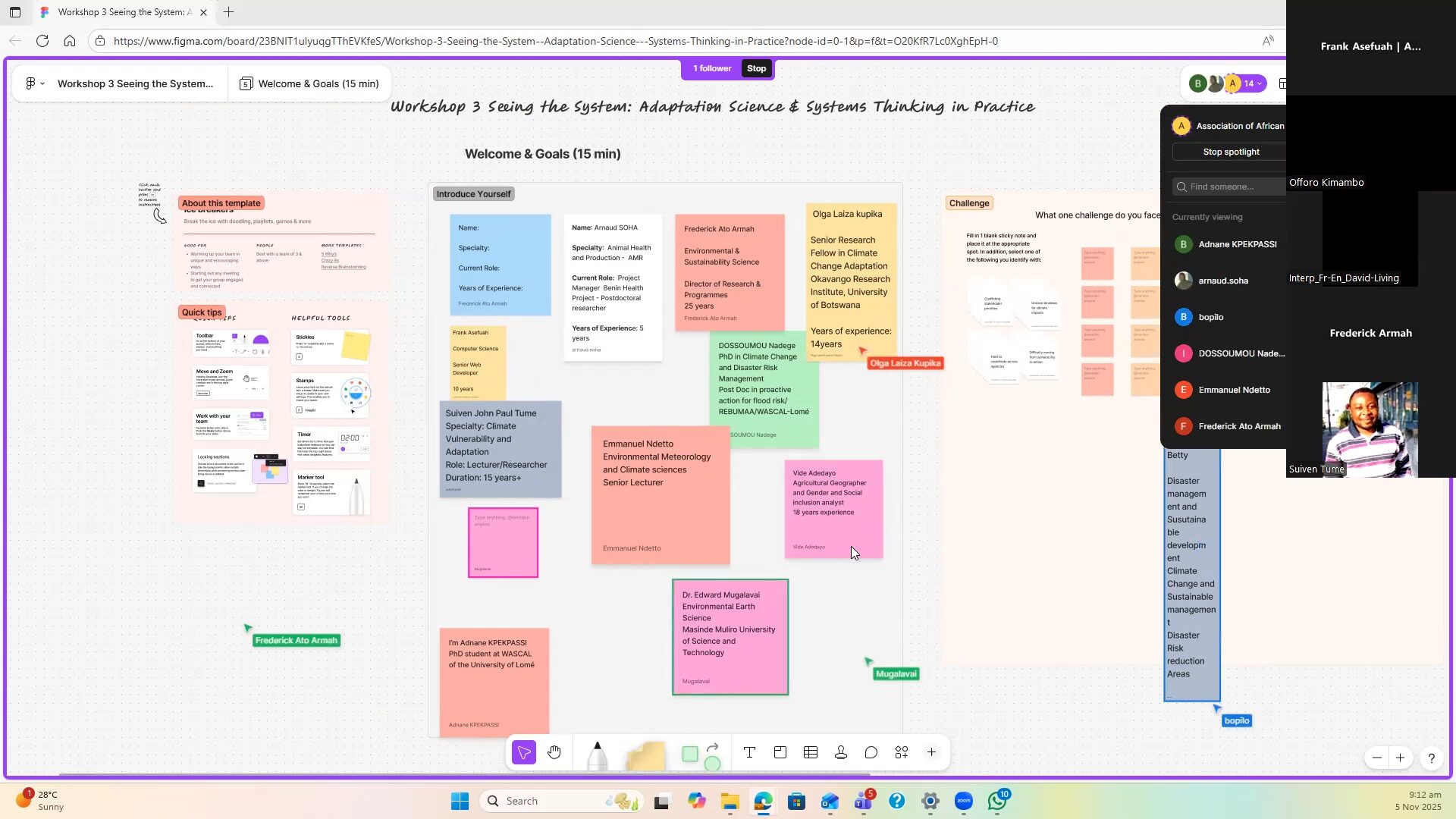
The Climate-focused Organizational Capacity Assessment Tool (CO-CAT) Virtual Living Labs capacity-building workshops, launched on 22 October 2025 and running through March 2026, are a structured initiative co-convened by the Association of African Universities and its partners. The workshops aim to collaboratively co-design and implement the CO-CAT to support African universities and research institutions in assessing, understanding, and strengthening their institutional capacity for climate adaptation research. Bringing together 20 competitively selected African universities and institutions, the Living Labs’ discussions reveal that effective adaptation is a negotiated pathway, shaped by data accessibility, institutional incentives, policy windows, power dynamics, and the urgent realities of vulnerable communities.
Why the Research to Action Gap Persists
A consensus from the Living Labs is that climate science is not failing because it is absent, rather, because it is difficult to move from data and models to decisions and implementation in real contexts. Participants of the second session titled Bridging Science, Data and Action on Climate, noted that localised data is often limited, inconsistent, missing, outdated, or too coarse to support decision-making at the scales where adaptation is implemented. Where datasets exist, many institutions face challenges around data standards, accessible repositories, and the practical problem of selecting methods and models that match the decision being made.
This reality leads to another challenge – interpretation and translation. Climate evidence is technically complex, and uncertainty is intrinsic to climate projections, risk assessments, and forecasting. Participants described the difficulty of interpreting technical outputs in ways that policymakers, practitioners, and communities can apply without oversimplifying the science. To address this challenge, they emphasised the importance of simplified communication tools such as GIS layers, hazard maps, and infographics, that can translate scientific insight into actionable information for diverse stakeholders. A strategy to convert evidence into formats that can be used in zoning decisions, agriculture planning, public health preparedness, infrastructure investment, and early warning systems.
The Living Labs workshops have also demonstrated that translation and interpretation alone are not enough if institutions are structurally disconnected from the spaces where decisions are made. Weak coordination platforms for climate planning, limited communities of practice, low uptake of research findings in decision-making, and insufficient integration of decision-makers into research processes were also identified. In other words, even excellent science can fail to matter if it does not enter the institutional routes through which plans are financed, regulations are enforced, or programmes are delivered. The practical insight here is that climate adaptation research impact depends on institutional design choices. Universities need internal mechanisms that make external engagement routine rather than exceptional, and that treat translation as a research function rather than an afterthought.
The Concept of Adaptation
The workshop revealed a foundational issue: institutions often operate without a shared, precise understanding of adaptation. It is interpreted in multiple ways including anticipatory action, reactive coping, post-impact recovery, resilience-building, and general sustainability. Conceptual confusion leads to fragmented efforts and the risk of maladaptation (actions that appear to reduce risk but inadvertently increase vulnerability, deepen inequity, lock in future risk, raise emissions, or consume resources with low long-term value). Through the discussions it was revealed why conceptual confusion matters. For example, if a team frames adaptation as post-impact response, it may prioritise disaster risk reduction measures without addressing longer-term structural vulnerability. If adaptation is framed only as anticipatory planning, it may overlook coping strategies that communities already use and that could be strengthened. If resilience is treated as a slogan rather than a measurable outcome, institutions struggle to demonstrate whether interventions reduced vulnerability or simply shifted it.
Participants also explored the limits and controversies of adaptation science in practice. They noted the difficulty of determining what works, in which contexts, and why, the absence of universally accepted success metrics, and the risk of maladaptation. Examples of maladaptation that cut across many contexts include interventions that advantage one group while exposing another, inputs and technologies that exclude those without access, or infrastructure rebuilt without addressing the underlying drivers of exposure.
Within this conceptual debate, the principles of locally-led adaptation emerged as an important reference point for grounding adaptation in lived realities. According to the participants, adaptation cannot be meaningfully defined without considering who leads decisions, whose knowledge shape priorities, and how power and accountability are distributed across research and implementation processes. Locally-led adaptation reframes adaptation as a pre-designed technical solution, an ongoing, context-specific process rooted in local agency, learning, and feedback. By foregrounding inclusive decision-making, recognition of local and Indigenous knowledge, flexibility over time, and attention to equity, these principles provided a practical lens for evaluating whether adaptation pathways genuinely reduce vulnerability or simply repackage existing development approaches under a new label. A key learning was the practical distinction between incremental and transformational adaptation, and the crucial awareness that an « adaptation » label does not guarantee a positive outcome. Such research will ultimately be judged on its ability to avoid harm and to justify the appropriateness of its chosen pathway within a specific context.
Engaging the Policy Ecosystem: From Awareness to Influence
When institutions are unable to engage confidently with relevant policy frameworks, they risk missing collaboration opportunities, facing barriers to funding, and failing to position their research within national planning and decision-making cycles. A key challenge identified during the Living Labs was limited familiarity with several African and regional frameworks, which can constrain regional collaboration and reduce awareness of continental priorities and available financing windows. Participants highlighted a range of frameworks that shape research priorities and implementation space, including National Adaptation Plans, Nationally Determined Contributions, the Sustainable Development Goals, disaster risk reduction frameworks, Green Climate Fund country strategies, local development plans, regional agreements, and sectoral policies covering water, health, agriculture, energy, and biodiversity. These insights underscore the importance of viewing policy engagement not as a final dissemination step, but as an integral part of the research process, one that begins at project design, when research questions are framed, partners are identified, and pathways to implementation are deliberately map.
The Role of Power, Equity, and Ethics
A defining contribution of the sessions was the clarity they brought to how power dynamics shape climate adaptation research. Power shapes who define research agendas, who controls funding, who has access to data, whose interpretations are treated as authoritative, and who receives authorship, ownership, and visibility. Key concerns raised were the marginalization of women, local communities, and vulnerable groups as well as local actors being positioned as data collectors while external partners retain control over outputs and recognition.
In terms of equity, the discussion moved beyond gender to meaningful inclusion of all affected groups. These are groups often overlooked in climate policy and research processes including people without stable housing, undocumented migrants and refugees, indigenous and nomadic communities, persons with disabilities, invisible disabilities, elderly persons living alone, residents of informal settlements, artisanal workers without legal recognition, widows and landless farmers, and climate-displaced populations in conflict-affected or remote areas. The practical point is that adaptation research fails when it assumes a generic community and overlooks who cannot access information, who cannot travel to water points, who is excluded by documentation requirements, or who is invisible in data systems.
To ensure equitable participation, it must be intentionally designed into research and policy processes. By reshaping how agendas are set, how knowledge is valued, and how benefits, responsibilities, and recognition are distributed. The participants during the Power, People & Planet: Centering Gender, Equity & Ethics in Climate Adaptation Research session, emphasised the importance of shared decision-making in defining research questions, respect for multiple knowledge systems, including indigenous and community-based knowledge, and transparency in the allocation of resources, data, and credit across partners. Equitable participation was also framed as a practical and operational, requiring research processes to align with the lived realities of communities, including time constraints, mobility limitations, social roles, and communication practices. Participants also highlighted the need for fair compensation, safe spaces for marginalised voices, and continuous engagement that moves beyond extractive consultation toward genuine co-design, where communities contribute to defining indicators, interpreting findings, and shaping adaptation pathways.
Discussions on ethics sharpened the difference between extractive research and reciprocal research. Extractive research includes using local knowledge without consent or citation, collecting data without returning results, pursuing donor priorities without community relevance, exploiting power imbalances in partnerships, capturing intellectual property based on community knowledge without benefit-sharing, and treating communities as data sources rather than collaborators. And reciprocal research includes co-creating agendas around community priorities, shared ownership of data and outcomes, returning findings before publication, building long-term partnerships, hiring community members as co-researchers, budgeting for feedback and validation, and ensuring research leaves communities better off.
The CO-CAT Living Lab workshops identified a set of interlinked factors that are shaping the practical, context-sensitive design of the Climate-focused Organizational Capacity Assessment Tool (CO-CAT). The tool is being informed to examine whether institutions can work with imperfect data while strengthening data practices over time, interpret climate evidence and uncertainty responsibly, translate outputs into accessible decision-support tools, and build internal routines that connect researchers to policymakers, practitioners, and communities. The tool assesses whether institutions can operate across disciplines and sectors, legitimise multiple knowledge systems, anticipate friction in partnerships, and convene coalitions around shared evidence and outcomes. It further evaluates how institutions embed equity and ethical reciprocity into research and partnership practices as core principles, rather than treating them as compliance requirements. Another key function is to examine an institution’s capacity to confidently navigate the policy landscape, align research with national and continental frameworks, and translate findings into implementable instruments with realistic monitoring loops. Ultimately, CO-CAT is designed not to label institutions, but to support honest diagnosis and strategic strengthening.
A Call to Africa’s Higher Education Leadership
The challenge before stakeholders requires institutional transformation. African universities are uniquely positioned to anchor the continent’s climate resilience, but only through a reorganization of structures, incentives, and partnerships for impact. The CO-CAT initiative represents a proactive step by the continental higher education community to build the necessary capacity. This is a call to vice-chancellors, research funders, policymakers, and development partners to join this essential journey. The imperative is to move beyond documenting the climate crisis and toward orchestrating the solution, translating knowledge into action, and extending impact from campuses to communities.
Catégories
Pays
Piliers de CLARE
Thèmes de CLARE
Sujets de CLARE
Publié
Projets CLARE
Partenaires de CLARE