
Blending Tradition and Science for Disaster Warnings: Why Community Knowledge is Crucial for Early Warning Systems
/
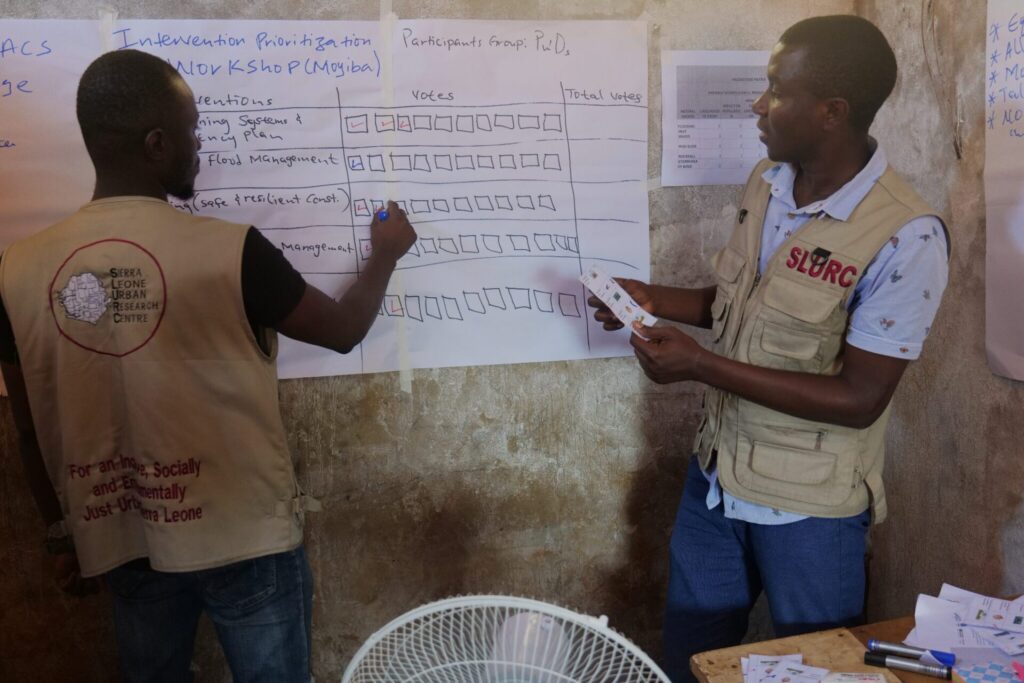
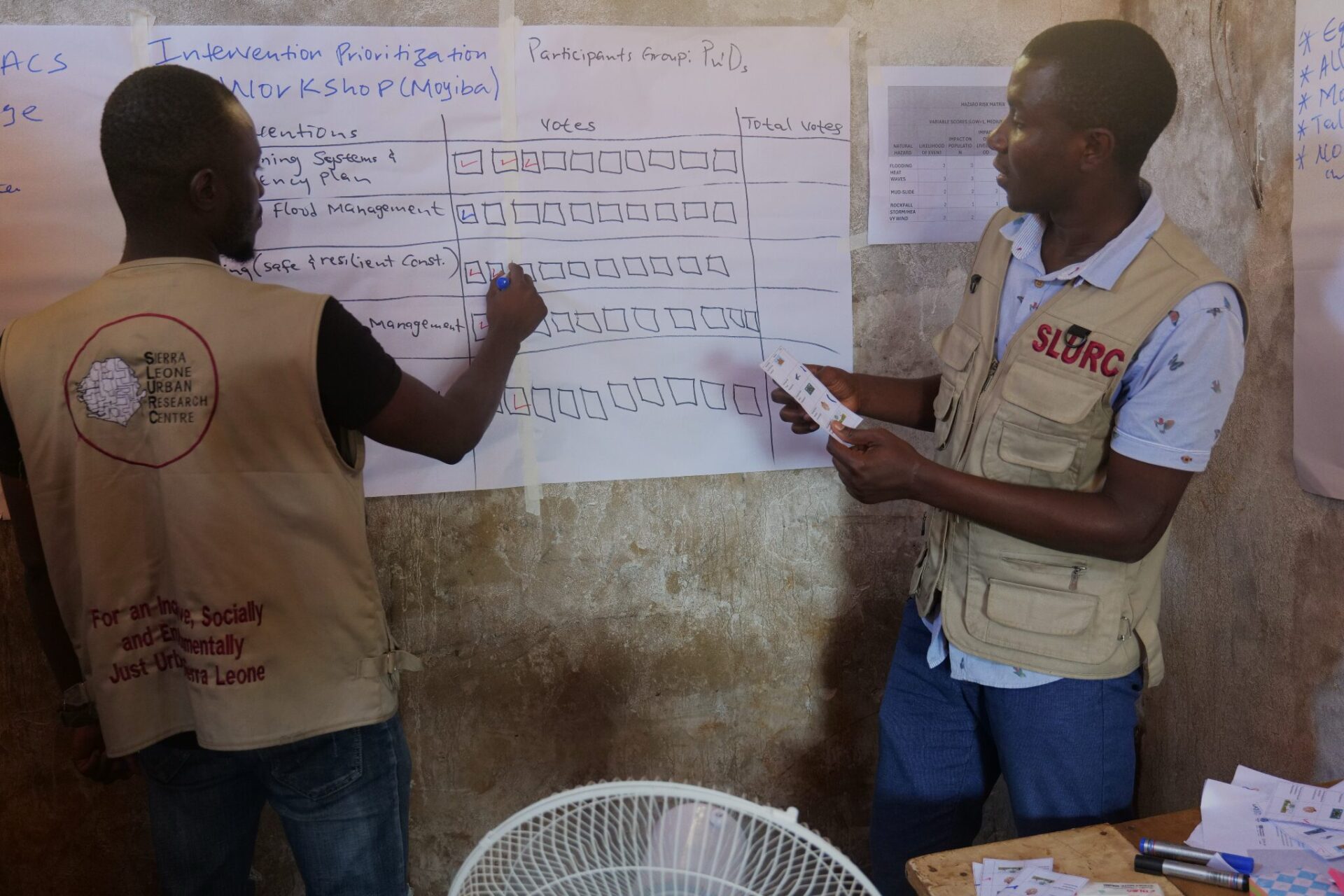
SLURC Research Officer, Ishmail, showing the ticked/picked priorities for intervention from a community member during the engagement. Photo Fasalie Kamara_SLURC
Disaster early warning defies conventional science for detecting and identifying hazards. In the hillside community of Moyiba, in the eastern part of Freetown, a woman’s leader recounts a story about her neighbour who dreamt that a hanging boulder would break loose and crush her home. Heeding the premonition, she voluntarily relocated. Weeks later, the hanging boulder (rock) fell exactly as foreseen by the lady, destroying the empty room. Had she stayed, she would have lost her life and property.
This story was shared during a four-day engagement by The Sierra Leone Urban Research Centre (SLURC) with the Moyiba community to rank community intervention priorities. The revelation was a poignant reminder that community knowledge and belief systems can mitigate disaster risk. Listening to the community and addressing hazards through their perspectives helps mitigate their impact.
Ranking Community Intervention Priorities from the Ground Up
Over four days, October 14 to 17, 2025, the SLURC Urban TRACS team sat with residents of Moyiba to collectively identify and rank climate resilience, health, and adaptation priorities. The process was deeply inclusive, involving persons with disabilities, single mothers and widows, youth and elders, and other key local actors such as chiefs, the women’s leader, the youth leader, and the Peripheral Health Staff. This engagement and diverse participation ensured that the community’s understanding of risks, along with their solutions and recommendations, formed the foundation of a climate-resilient programme shaped by their lived realities.
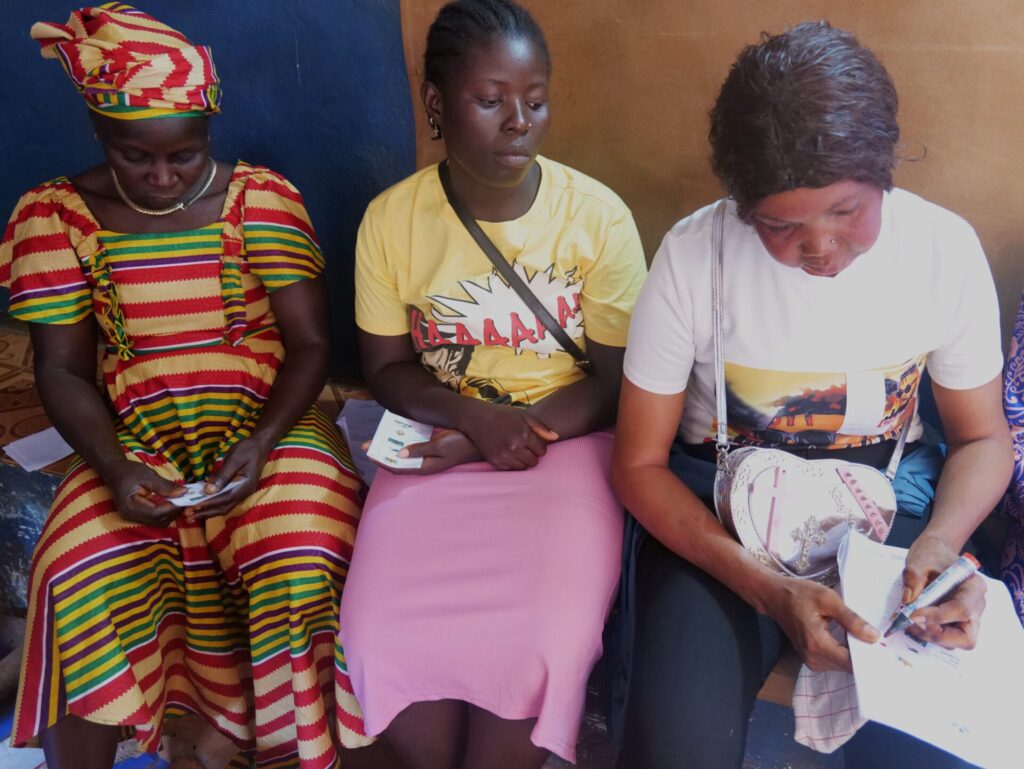
The community women’s group voted for the priority intervention for their community. Photo Fasalie Kamara_SLURC
The discussions were centred around key interventions, including Early Warning Systems & Community Plans (Community Preparedness), Drainage and Flood Management, Dumpsite/Solid Waste Management, Housing (safe, resilient construction; retrofitting; wind, flood, and fire risk), and Tree Planting & Ecosystem Restoration. The dialogues revealed local insights into hazards, recommended community solutions that work for them.
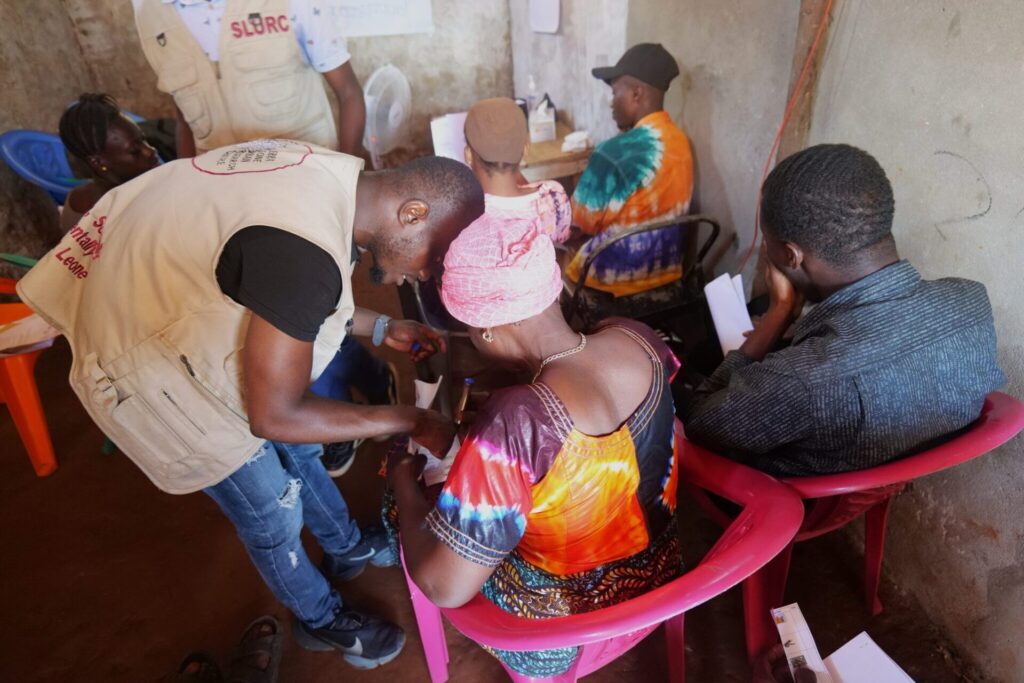
SLURC Research Officer, Juldeh, guiding a physically challenged person on the voting process for intervention pick. Photo: Fasalie Kamara _Slurc
Key Insights and Recommended Solutions
Early Warning Systems & Community Plans (Community Preparedness): The touching story shared by the women’s leader about her neighbour emphasised the importance of early warning as a mitigating strategy to save lives and property. The community needs a system that may integrate both traditional and scientific monitoring methods to ensure safety before a disaster strikes.
Housing: The community offered a practical solution for safe and resilient housing. Avoid constructing houses in waterways and wetlands, train local builders (masons & carpenters) to support the community in the low-cost maintenance of homes, resistance to flooding, wind, and fire risk, and introduce and enforce byelaws that keep drainages clean to mitigate flooding
Tree Planting and Ecosystem Restoration: The community encourages planting economic trees that serve dual purposes: restoring the ecosystem and providing economic benefits. A widow shared the success of the economic trees in their compound.“The mango and pear trees we planted saved our home from wind and provided us with an income,” she said with a smile. She was happy that her family made income from the mango and pear trees planted to protect their home.
Co-Creating Solutions, Not Just Ranking Priorities
The four-day engagement with the Moyiba community was not only a listing and ranking of intervention priorities. The process helped validate local knowledge and honour their contributions. By listening to their stories of dreams, the practical advice on resilient housing, and the proven benefits of planting economic trees, the community is co-creating an intervention informed by insight and evidence for the Moyiba.
Categories
Countries
CLARE Pillars
CLARE Themes
CLARE Topics
Published
CLARE Projects
CLARE Partners