
Story of change: Informing Bhutan’s approach to managing uncultivated land in a changing climate
Published on
Authored by Binaya Pasakhala and Amina Maharjan
CLARE Stories of Change are snapshots of how research and capacity strengthening initiatives that the programme supports are contributing to specific changes on the ground in support of resilience to climate change and natural hazards. They help illustrate how CLARE is enabling socially inclusive and sustainable climate resilience, as outlined in the CLARE Theory of Change.
What changed?
The Good Governance Committee (GGC) of the National Council of Bhutan incorporated learning and evidence from the SUCCESS project into a report to Parliament on fallow (uncultivated) land and absentee households, which has since been approved by the country’s National Council. The report outlines the factors contributing to underutilization and abandonment of farmlands, including climate-related factors such as temperature changes, increasing water scarcity, and outmigration exacerbated by climate challenges.
The report also makes recommendations based on learning from work with the SUCCESS project on how legislation and policy changes could help to address outmigration, land use and agricultural support, including the creation of a fallow land bank and innovative packages for youth.
The learnings from SUCCESS project in Nepal informed relevant sections of Bhutan’s 13th Five-Year Plan. The report continues to serve as a reference document on how the country addresses climate-related issues in its broader planning.
“We are beginning to grasp the intricate and dynamic nature of this issue and recognize that addressing this burgeoning concern requires systems thinking. Our prior desk study had not fully illuminated the complexity, but the firsthand experiences and engagements with Nepalese parliamentarians, government officials, and ICIMOD colleagues have provided us with invaluable insights to inform our policy recommendations.” — Dasho Phuntsho Rapten, Chair of the Good Governance Committee at the National Council of Bhutan.
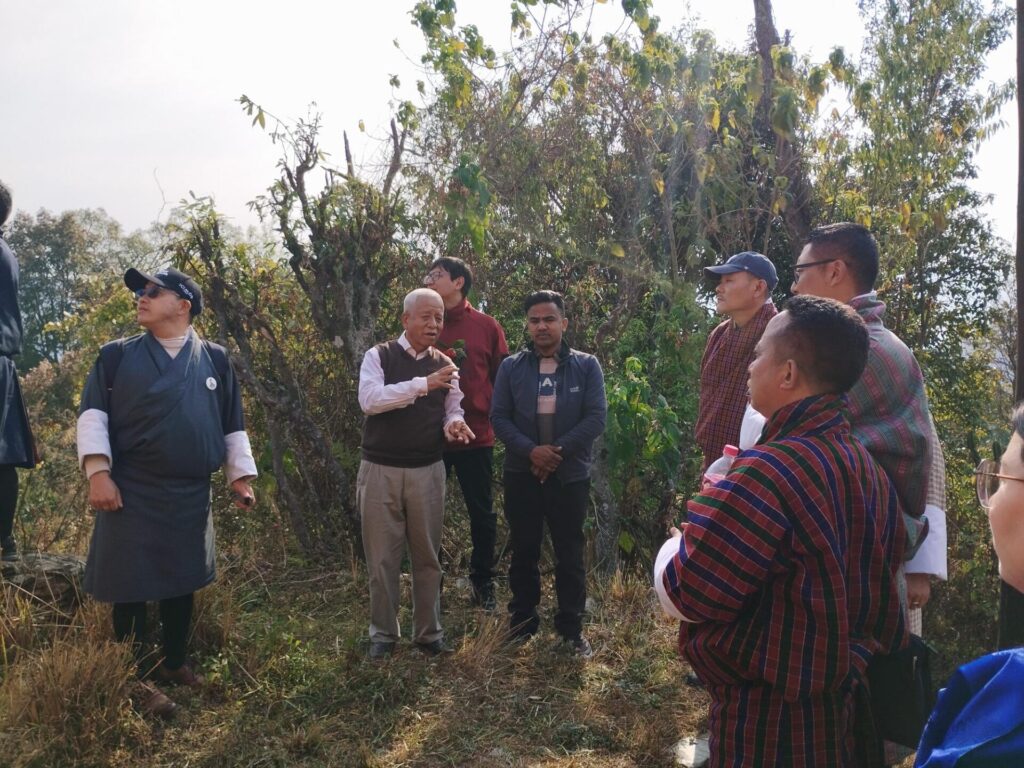
Photo credit: Avash Pandey
Why does it matter?
Many mountain areas across the Hindu Kush Himalayan region face a growing challenge: rapid depopulation from rural mountain areas. Climate change is placing increased stress on rural communities, particularly women, and marginalised groups, driving many farmers to abandon their land. Changing rainfall patterns, for example, pose serious hurdles to agricultural sustainability. Drying up of water sources results in water scarcity that can lead to irrigation problems, and extreme rainfall events that trigger floods and landslides, damaging crops and cropping lands.
In both Bhutan and Nepal, this trend of outmigration is leading to significant issues, including urban growth as well as an increase in fallow land and abandoned households. These shifts have broader socio-economic, and ecological implications in rural areas, disproportionately affecting women, elderly population, and marginalised groups, having limited access to services and labour support. Therefore, the opportunity for these countries to learn from each other’s experiences, facilitated by the SUCCESS project in collaboration with HIREAP, was greatly appreciated and informative.
By addressing the mounting challenge of rural outmigration and the factors that drive it, implementation of the GGC recommendations is expected to support the rural population of Bhutan – strengthening their climate resilience and supporting them to stay in and support their communities.
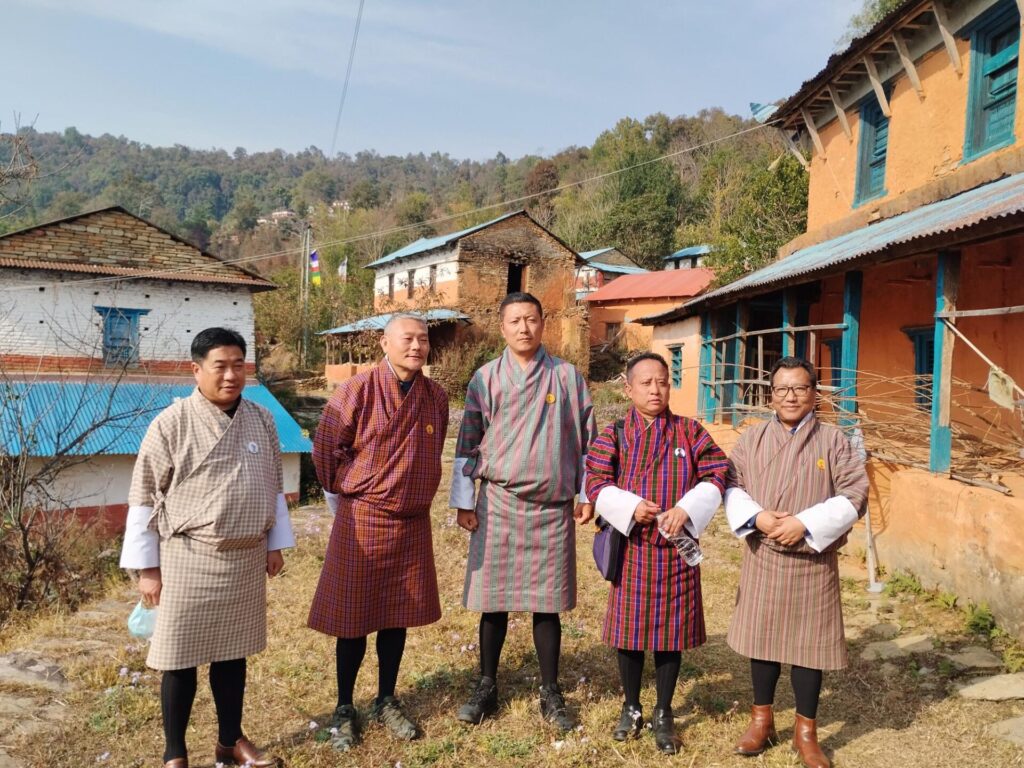
Photo credit: Avash Pandey
What did CLARE do to contribute?
The SUCCESS and Regional teams at ICIMOD Nepal, along with Nepal Institute of Development Studies (NIDS), facilitated and provided technical inputs on a 10-day learning exchange visit for the members of Bhutan’s GGC to learn about outmigration and fallow land issues in Nepal. With financial support of The Himalayan Resilience Enabling Action Programme (HIREAP) of the Foreign, Commonwealth and Development Office (FCDO) at ICIMOD, the GGC delegation travelled to Nepal, where they visited SUCCESS fields sites to learn about outmigration and fallow land issues and see the challenges faced by communities firsthand. The GGC delegation also met with Nepali Parliamentarians to discuss Nepal’s approach to tackling outmigration, learning about various policy instruments, its implementation and success/failures, and ultimately incorporating those into their report.
SUCCESS team at ICIMOD is organizing a visit of the GCC members to Mustang in 2026, to learn how local communities are using both outmigration and climate knowledge towards building successful farm-based enterprises. This trip is expected to provide better insights on high-altitude adaptation, connectedness, and, community enterprises in rural mountain areas.
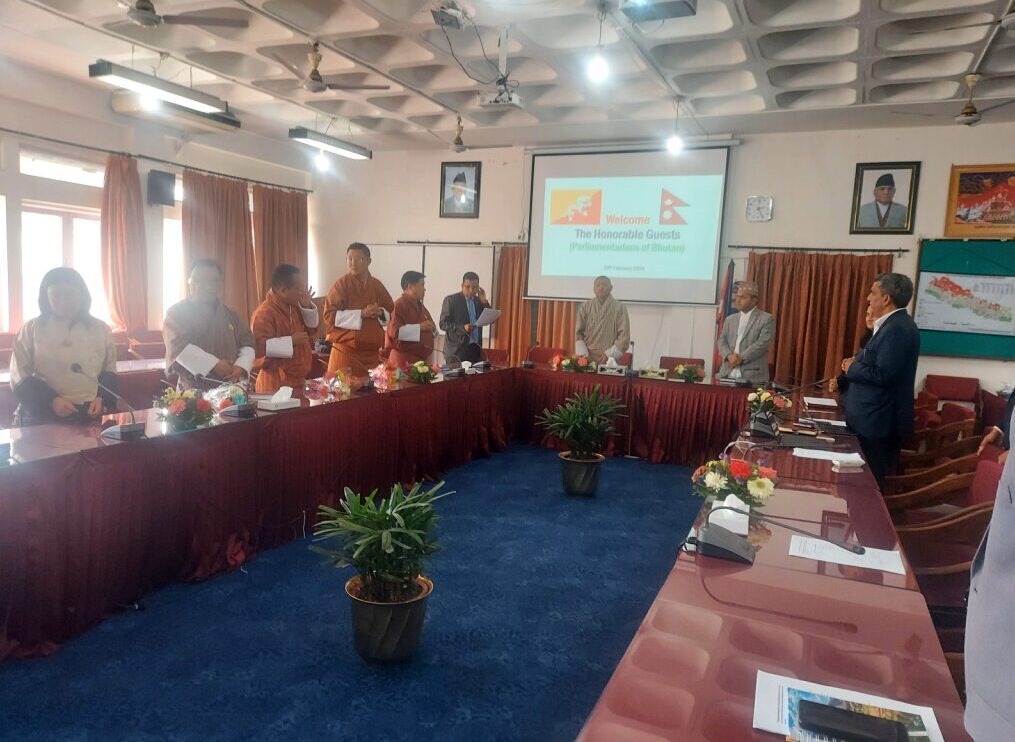
Photo credit: Avash Pandey
Learn more:
- Understanding the challenges of rural outmigration in Nepal and Bhutan
- A review report on Satong and Gungtong. Prepared by Good Governance Committee 2025.
About SUCCESS
SUCCESS seeks to generate new knowledge on the evaluation of adaptations that involve migration, mobility and immobility and to promote evidence-based narratives on the role of migration in the challenge of adapting to climate risks.
Categories
Countries
CLARE Projects
CLARE Pillars
CLARE Themes
CLARE Topics
CLARE Partners