

Raising Adaptation Impact and Ambition (RAIA) project launch
/
Authored by the RAIA project team
The climate and adaptation narrative is shifting from a narrow focus on adaptation and resilience, seen as abstract concepts, to one that emphasises opportunity, security, and well-functioning societies.
For too long, the conversation has been dominated by academic and economic analyses, particularly around the cost of inaction. While important, these discussions tend to resonate mainly within small circles of researchers and experts, gaining little traction beyond academia.
What is needed is a reframing that speaks to immediate, tangible benefits across the entire social spectrum. Climate adaptation must be understood not only as a defensive response to risk, but as a driver of social stability, economic opportunity, and human security whether in relation to health, livelihoods, or resilience to disease and other emerging threats.
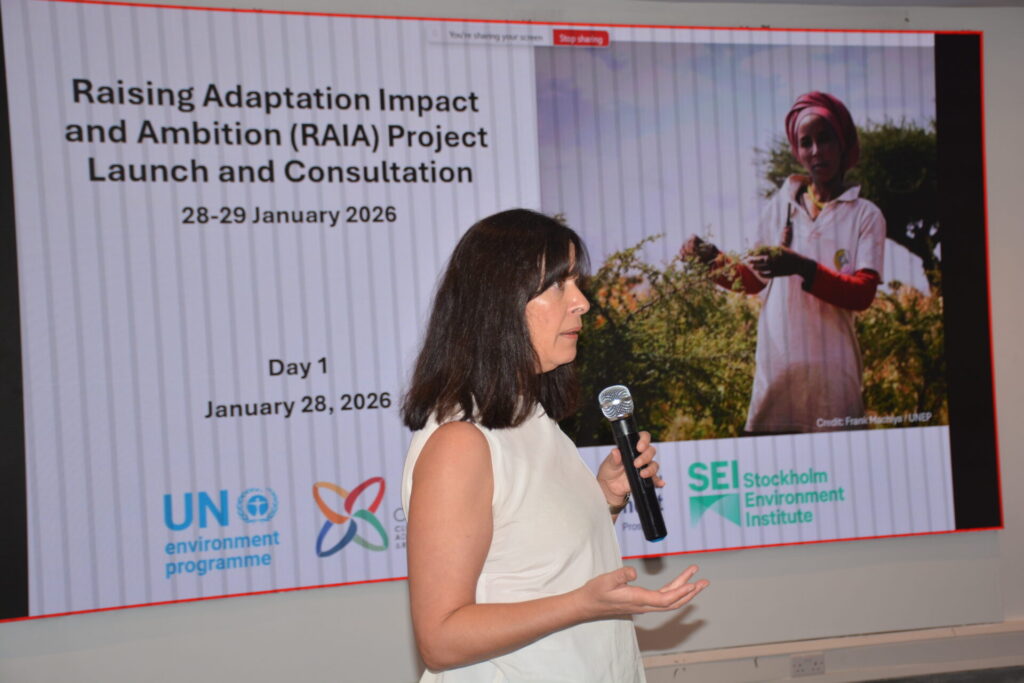
Against this background CLARE launched the Raising Adaptation Impact and Ambition (RAIA) project on 28–29 January 2026 in Nairobi, Kenya. The project is led by the United Nations Environment Programme (UNEP) in partnership with the Stockholm Environment Institute, Africa Centre. RAIA aims to address persistent gaps in economic evidence, research capacity, and policy tools needed to support effective climate adaptation in developing countries.
Economic analysis for adaptation
Speaking at the launch, Jessica Troni, Head of Adaptation at UNEP, explained that the RAIA programme emerged from a critical gap observed while supporting countries implementing National Adaptation Plans: the lack of robust, country-level economic analysis for adaptation.
She noted that while global estimates such as those referenced in the Adaptation Gap Report exist, they rely heavily on global models and offer limited actionable insight for national decision-making. Key elements such as adaptation costs, links to emissions scenarios, cascading and systemic risks, and broader economic interactions are often missing.
Without country-specific research that directly engages policymakers, she emphasised, progress on adaptation will remain slow not only in Africa, but across much of the developing world.
Troni also highlighted the political economic challenges surrounding adaptation. Despite strong evidence showing that the benefits of adaptation often far outweigh the costs, investment levels remain insufficient due to short political cycles, weak enforcement mechanisms, and limited public finance.
As climate impacts increase and adaptation costs rise, she stressed that economic research must play a stronger role in reshaping how policies are designed, budgets allocated, and laws enforced.
RAIA, she noted, is intentionally designed to produce policy-relevant research, communicated in accessible language, and capable of demonstrating impact within a tight implementation timeline.
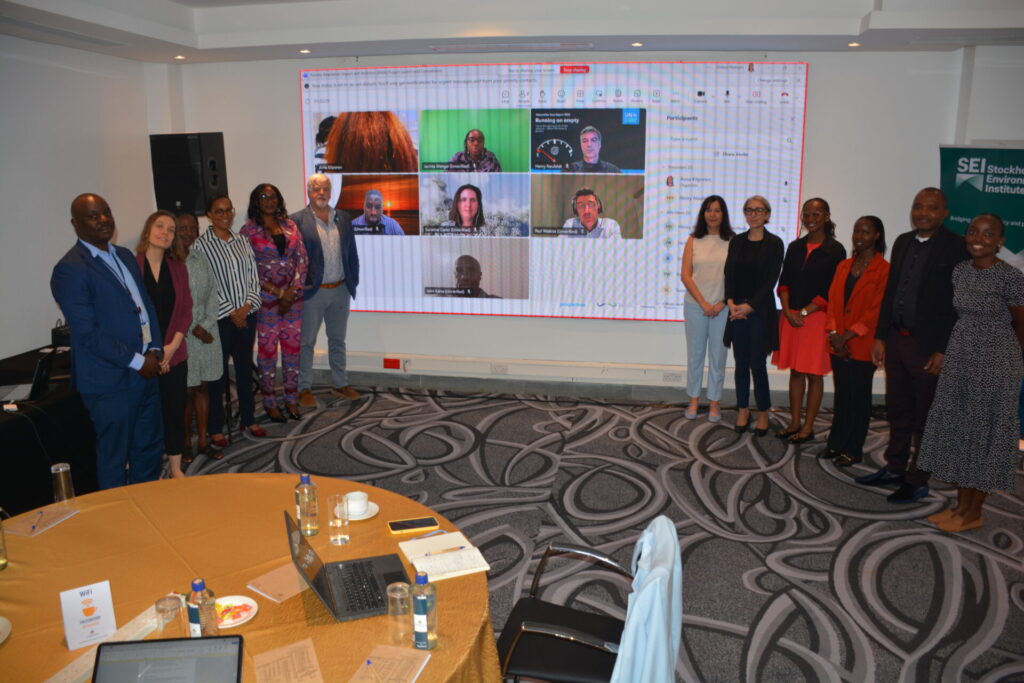
Credit: Pauline Macharia / SEI.
Climate adaptation policy and finance
The launch workshop brought together climate finance specialists and economists from across Africa to consult on how economic research can better support climate adaptation policy and finance. Over the two days, participants were introduced to the project’s objectives, scope, and methodology, with a strong focus on closing evidence gaps around the economic costs of climate change, the benefits of adaptation, and the risks of inaction.
Discussions emphasised that adaptation remains underrepresented in national planning, budgeting, and economic models, and that existing tools often underestimate real-world climate risks.
The meeting also focused on strengthening the research–policy nexus. Sessions explored how research can be co-designed with governments, aligned with policy priorities, and communicated in ways that resonate beyond academic audiences.
Through this approach, RAIA seeks to bridge the science–policy divide by strengthening the capacity of economic researchers to produce policy-relevant analysis and by promoting the uptake of this evidence in government plans, policies, and strategies that support climate-resilient development pathways.
SEI Africa Centre Director Niall O’Connor emphasised that climate change is no longer a distant risk, but a force already reshaping economies, growth trajectories, and inequality across countries. He noted that while governments face competing development priorities, the economic decisions made today will define climate outcomes for decades.
Yet adaptation remains underfunded and often misdirected because existing economic frameworks fail to capture the full costs of climate impacts or the true value of adaptation, including avoided losses, resilience, and long-term development benefits leaving the most vulnerable communities disproportionately exposed.
He explained that RAIA aims to close this gap by integrating climate science with rigorous, policy-relevant economic analysis to support better decision-making. By moving beyond purely academic outputs, the project will generate practical evidence to help governments allocate scarce resources more efficiently and equitably, embed adaptation into national planning and investment strategies, and mobilise increased public and private finance.
Adaptation is strategic investment
Ultimately, RAIA seeks to demonstrate that adaptation is not an emergency cost, but a strategic investment in economic stability, resilience, and sustainable development.
This one-year project is structured around a competitive grant programme targeting climate, economic, and policy researchers, as well as key practitioners across 10 African countries, with the aim of supporting up to 12 policy-oriented research projects.
Research grants will be awarded to organisations selected through a consortium-led process, with projects expected to align with these thematic areas; quantifying the economic costs of climate impacts and adaptation responses; identifying financial, economic, regulatory or market-based instruments to support climate action; and supporting the tracking, allocation and value capture of adaptation finance budgets.
CLARE co-lead from FCDO, Manuela Di Mauro, expressed support for research that strengthens how adaptation finance flows are estimated, and that the gap in the sector has created a need for greater transparency, improved methodologies, and clearer communication around the adaptation finance.
Categories
Countries
CLARE Pillars
CLARE Themes
CLARE Topics