

Local Settings & Materials Offer a Platform to Gain Better Understanding of Pastoralists’ Conflicts in Northern Kenya
/
By Derick Ansyijar Kuule – Department of Environmental Management, Makerere University in Kampala, Uganda
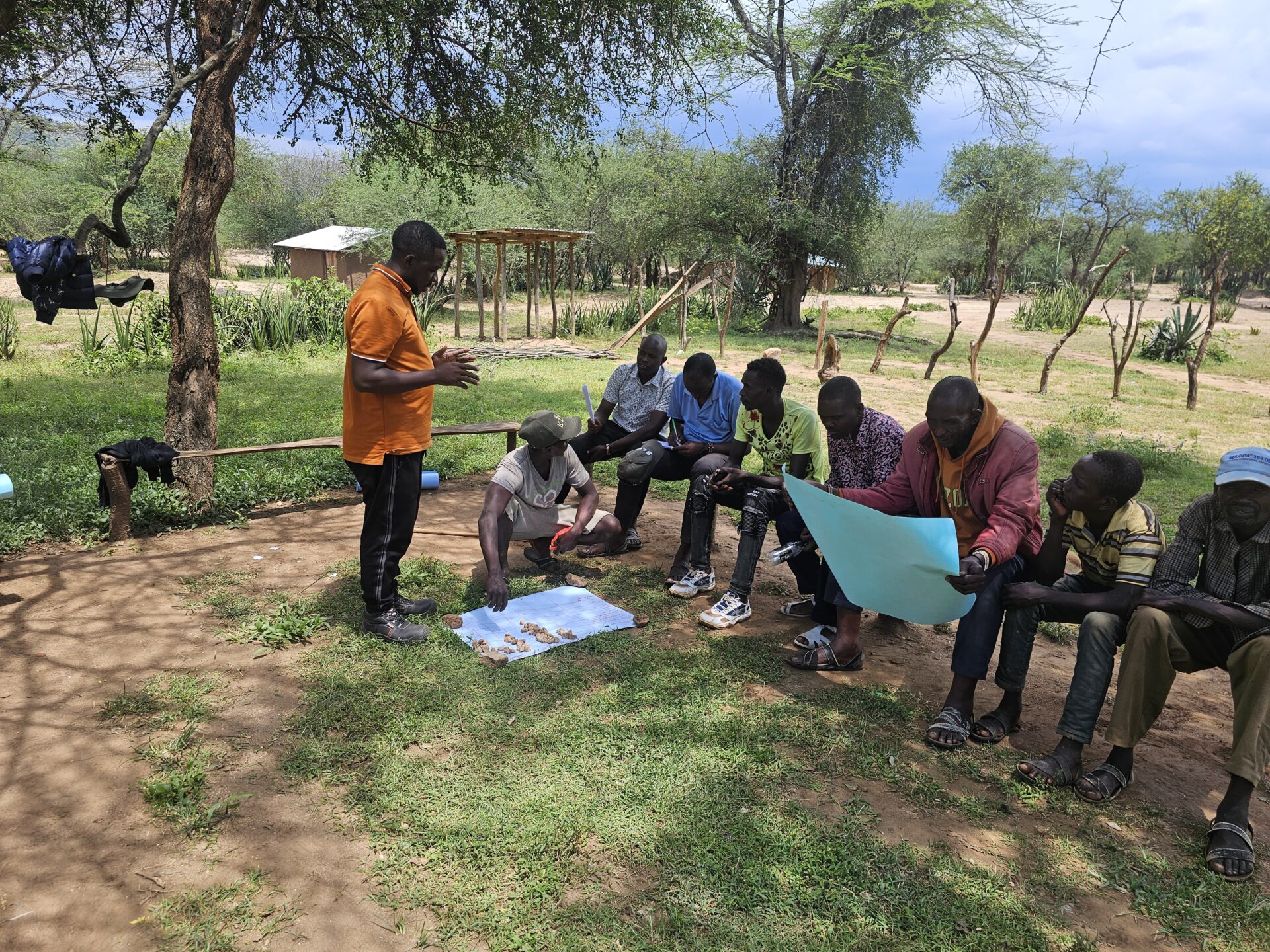
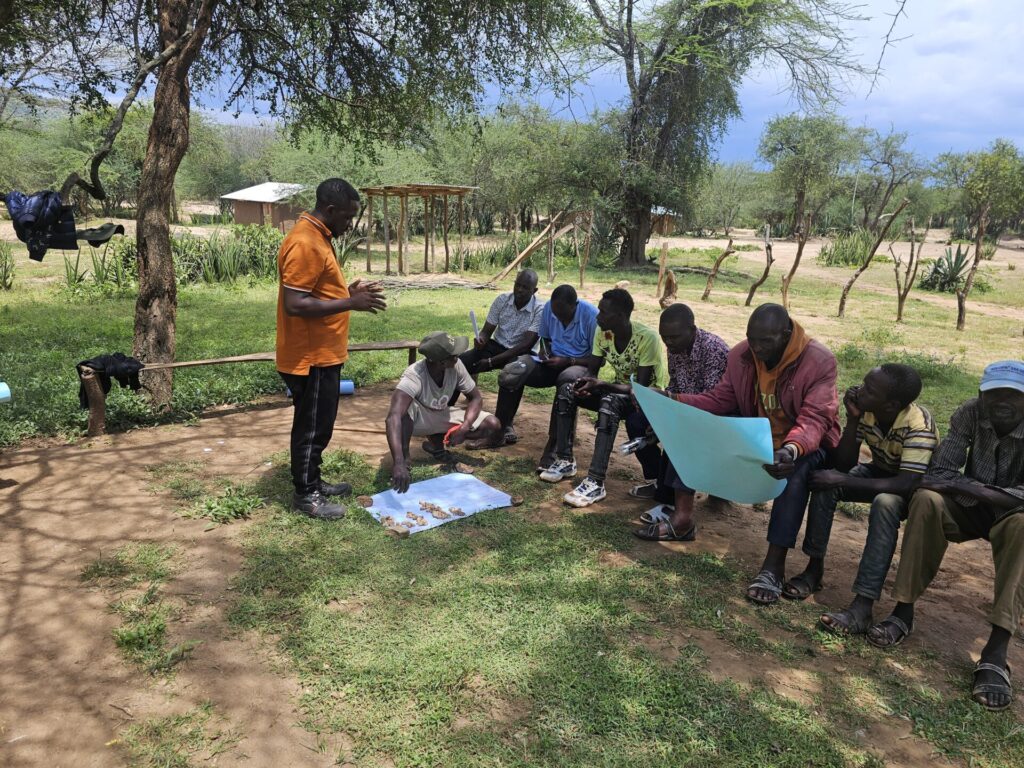
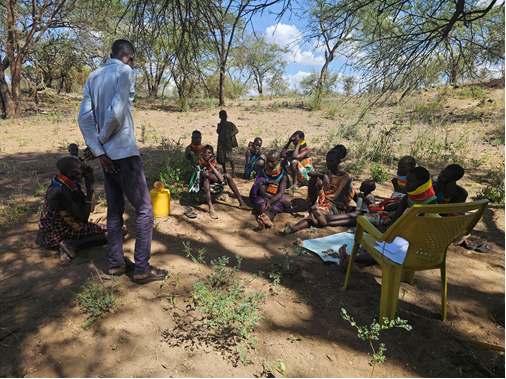
Small groups of men and women sat under a couple of trees in the rural areas of northeastern Kenya Figure 2, away from the comfort of air-conditioned rooms, with none of them possessing a university degree, but well equipped with knowledge about the conflicts in their community. The big branched trees like Balanite aegyptiaca (Sokoria in Pokot language) offered shade and comfort to the groups, while acting as the meeting room with a soothing wave of a rare cold breeze in this hot environment. The trees and other locally available materials like the bare ground and small stones formed some of the essential materials needed by the local community members to provide credible insights into the local dynamics of conflicts in their area.
This set everyone, including the male and female members of the community, in the mood to share their knowledge and perspective of the local conflict. Staring at the cheerful faces of the individuals under the comfort of the gigantic trees triggered a reminder that ecosystem services from trees in these pastoral communities need to be conserved more than before, for the current and future generations.
The investigation was set out to accrue in-depth information of the community members’ understanding of the conflict system in these areas. Additionally, the focus was also to characterize the different types of conflicts and their driving factors, based on local knowledge of the community members. Group discussions with male and female members of these communities, were not only good at compelling them to disclose the nature of conflicts but also offered an avenue to gather detailed information on the multiple conflict types and the local context under which the conflicts take place.
Questions on the local community members’ definition and characterization of conflicts and their driving forces formed some of the key questions posed to the participants of the group discussion. Local seasonal dynamics and livelihood activities offer a basis for locals to provide local perspectives on the forms and shifts in the nature and drivers of conflicts in these pastoral communities, across different periods of the year. The exercise starts with distributing a fixed number of beads or any other locally available materials like stones to act as counters to a group of participants. By piling a proportion of beads or stones across the various types of conflicts, the conflict patterns during different periods of the year are depicted from the size of the piles.
Previously, indigenous knowledge of pastoral groups in the drylands of East Africa, was primarily known for supporting their livelihoods through practices like seasonal migration with livestock, to harness scarce resources under the variable climate patterns in their natural environments. There is also consensus that the pastoralist communities in the drylands of northeastern Kenya have used this local knowledge to support their livelihoods for several decades.
In the wake of the growing realization of need for local-led anticipatory actions towards conflicts and other climate risks like droughts, crop pest invasions and floods, the rich information possessed by local community members sets the stage for accruing in-depth information needed to support decision making and the entry point for early warning interventions.
One of the contemporary applications of the indigenous knowledge possessed by local communities has been in the participatory mapping of the availability and variability of key livelihood resources such as water and pasture for livestock. The utilization of local knowledge as well as local materials during group discussions conducted in northern Kenya, is vital for providing insights into the local dynamics of livelihood stressors and shocks such as conflicts and droughts using locally available indicators. This indicates that the application of participatory approaches such as group discussions across members of the community gives an opportunity to foster early warning, by enabling designing of context specific anticipatory action interventions.
Categories
Countries
CLARE Pillars
CLARE Themes
CLARE Topics
Published
CLARE Projects
CLARE Partners