
Story of change: Evidence on gender-specific climate vulnerabilities influences Coral Triangle Initiative policy guidelines and climate risk management plan
Published on
Authored by Helen Fox, Rena Parengkuan and the ClimateREEFS team
CLARE Stories of Change are snapshots of how research and capacity strengthening initiatives that the programme supports are contributing to specific changes on the ground in support of resilience to climate change and natural hazards. They help illustrate how CLARE is enabling socially inclusive and sustainable climate resilience, as outlined in the CLARE Theory of Change.
What changed?
The Coral Triangle Initiative for Coral Reefs, Fisheries and Food Security (CTI-CFF) developed several climate change adaptation outputs, including the Policy Guidelines: Gendered Climate Vulnerability and Risk Management of Priority Seascapes in Fisheries Across the Coral Triangle Region and Practical Climate Resilience in Fish-Dependent Communities of Southeast Asia and the Pacific: Regional Planning Guide. These outputs built on findings from the ClimateREEFS review on gender-specific climate vulnerabilities of small-scale fishing communities in Indonesia and the Philippines.
These publications are in support of the Regional Plan of Action 2.0 of CTI-CFF, a multilateral partnership of six national governments of Coral Triangle countries. The policy guidelines were endorsed during the 19th CTI-CFF Senior Officials’ Meeting in December 2024. They are intended to guide the integration of gender equality and social inclusion (GESI) considerations into climate adaptation and fisheries management processes of the Coral Triangle member countries. ClimateREEFS continues to engage with CTI-CFF through the CLARE Research for Impact (R4I) Opportunities Fund to support the uptake and application of these recommendations.
Why does it matter?
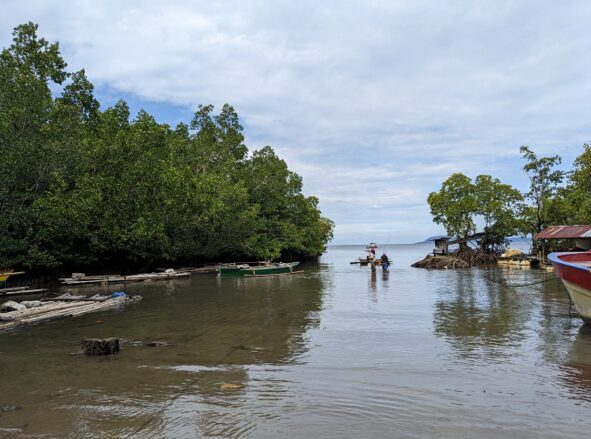
Marine heatwaves and other climate hazards endanger the livelihoods and food security of about 1 billion people globally who benefit from coral reef ecosystems. Small scale fishers along coastal areas are particularly vulnerable and are also frequently marginalized based on their race, indigeneity, social standing, and gender.
Current management approaches largely ignore biological and social adaptation that can reduce the risks that climate change poses to sustainable ocean livelihoods. Furthermore, given that different social groups – based on gender, geography, and other factors – experience climate impacts unevenly, it is critical to understand both how degraded reefs and climate change are impacting women and other marginalised groups.
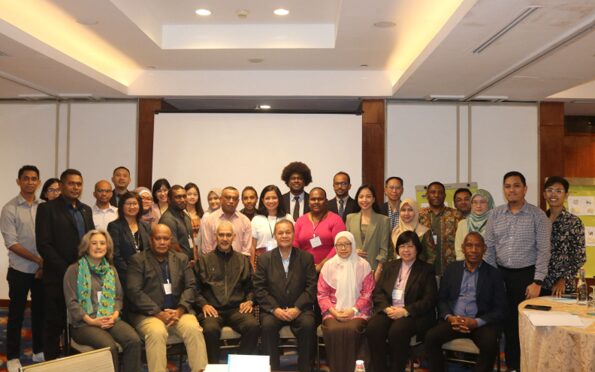
ClimateREEFS undertook literature reviews of gendered impacts and adaptation strategies for climate change hazards within small-scale fishing communities, identifying a suite of best practices as well as policy opportunities in Indonesia and the Philippines. In parallel, the Coral Reef Alliance recruited fellows to develop policy recommendations on gendered climate vulnerability and risk management for small scale fisheries. They also supported CTI-CFF’s technical working groups, sub-regional exchanges, and other capacity strengthening activities (including presentations, workshops, and trainings). The teams worked closely together, including presenting on ClimateREEFS during the CTI-CFF Climate Change Adaptation Regional Exchange (July 2025), ensuring that insights generated by ClimateREEFS reach a larger audience including national policy makers.
What did CLARE do to contribute?
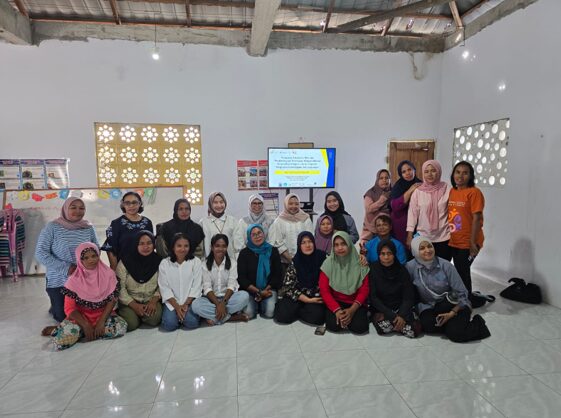
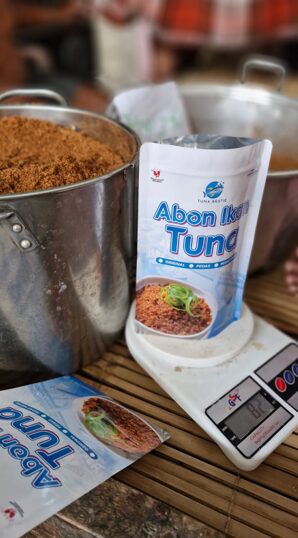
The ClimateREEFS team also conducted gendered climate change vulnerability assessments in communities in Indonesia and the Philippines to understand fisher household dynamics. Households with women involved in fish processing or multiple fishery-related jobs have higher adaptive capacity and food security, showing a clear pathway to reduce risk. The team is building on this work via an initiative supported through the Research for Impact (R4I) Opportunities Fund, which seeks to enhance fisherwomen’s climate resilience, food security, and leadership potential through co-created, context-specific income diversification solutions. The products and recommendations developed will be shared through CTI-CFF regional platforms, including Technical Working Groups and Regional Exchanges of government officials and technical experts from Indonesia, Malaysia, Philippines, Papua New Guinea, Solomon Islands, and Timor Leste to support dialogue and application.
Citation for ClimateREEFS report:
Charo B, A Ferrer, TB Razak, D Robinson, M Stiles, T Trialfhianty, HE Fox (2024) Gender-Specific Climate Change Vulnerabilities of Small-Scale Fishing Communities in Indonesia and the Philippines. Report for ClimateREEFS: Integrating Risks, Evolution, and socio-Economics for Fisheries Sustainability on coral reefs in a changing climate. CLARE (Climate Adaptation and Resilience) Initiative.
CTI-CFF Products that drew on the ClimateREEFS report:
- Parengkuan N. R. V., Z. S. Hilly, M. Stiles, H. E. Fox (2024) Policy Guidelines: Gendered Climate Vulnerability and Risk Management of Priority Seascapes in Fisheries Across the Coral Triangle Region. TetraTech for USAID Sustainable Fish Asia Technical Support. Bangkok, Thailand.
- Stiles, M.L., A.T. White, G. Orozco, H.E. Fox, J. Saad, K. Courtney, N.R.V. Parengkuan, Z. Hilly. (2024) Practical Climate Resilience in Fish-Dependent Communities of Southeast Asia & The Pacific; Regional Planning Guide. USAID Sustainable Fish Asia Technical Support. Bangkok, Thailand.
- Scientific Manuscripts based on the ClimateREEFS report:
- Robinson D, TI Trialfhianty, B Charo, HE Fox, AJ Ferrer, M Beger (in review) The gender gap in fisheries and climate policy: insights from Southeast Asia. Marine Policy
- Charo B, A Ferrer, TB Razak, D Robinson, M Stiles, T Trialfhianty, K McMahon, M Treviño Peña, M Beger, HE Fox. Climate change hazards, fishing roles, and adaptation approaches shape gendered climate vulnerabilities for small-scale fishing communities (review article in prep for submission to Ecology and Society)
About ClimateREEFs:
The Fisheries sustainability on coral reefs (ClimateREEFs) project aims to develop evidence-based adaptation strategies that are socially equitable in Indonesia and the Philippines, two countries with large coastal communities.
The project uses social research to identify climate vulnerability and inclusive adaptation pathways through a gender and social equity lens. This is linked with geospatial, ecological and genomic research to analyse the interplay of adaptiveness from coral reef genetics to the people that rely on them.
Categories
Countries
CLARE Projects
CLARE Pillars
CLARE Themes
CLARE Topics
CLARE Partners