
Strengthening Institutional Readiness for Climate Adaptation in Africa: The CLARE CO-CAT Approach
/
Over the past decade, African countries and institutions have invested significantly in generating climate knowledge. Data systems have improved, models have grown more sophisticated, and policy frameworks have expanded at national and regional levels. Yet a persistent challenge remains: the translation of this growing body of knowledge into sustained effective climate action. While this “knowledge – action gap” is not unique to Africa, it is particularly visible across many of our institutional contexts where research outputs do not consistently inform policy or practice.
There is increasing recognition that this gap cannot be closed by producing more research alone. It requires closer attention to how institutions themselves are structured, incentivised, and supported to respond to climate challenges. It is within this context that the project Understanding African Universities’ Capacity for Climate Adaptation Research – through the co-creation and implementation of a Climate-focused Organisational Capacity Assessment Tool (CO-CAT) – brought together twenty African universities and research institutions to reflect on their institutional realities and explore pathways for strengthening capacity.
Between October 2025 and March 2026, these institutions participated in a series of Virtual Living Lab workshops funded by the UK FCDO and IDRC. These engagements combined facilitated discussions, shared institutional reflections, and iterative feedback processes to identify common challenges and emerging priorities. While the findings are qualitative and exploratory in nature, they offer useful insight into recurring patterns that shape the effectiveness of climate adaptation research across participating institutions.
Understanding the Institutional Gaps in Climate Adaptation Research
A central insight from the Virtual Living Lab workshops is that many constraints to climate adaptation research are systemic rather than purely technical. Participating institutions often demonstrate strong disciplinary expertise; but their ability to translate research into policy and practice is shaped by organisational structures, incentives, and coordination mechanisms. Across the discussions, several recurring challenges emerged, including limited interdisciplinary collaboration, weak engagement with policy processes, insufficient integration of gender and inclusion considerations, and underdeveloped monitoring, evaluation, and learning systems. These challenges do not manifest uniformly across all institutions, but they are sufficiently common to suggest broader structural patterns.
One particularly persistent issue is the disconnect between research production and decision-making systems. While universities generate valuable evidence, that knowledge is not always aligned with policy priorities or communicated accessible formats. Participants noted instances where research outputs were available but not translated into policy-relevant language or were produced outside the timelines of policy cycles – limiting their uptake.
At the same time, institutional incentive structures often prioritise academic outputs (such as publications) over policy engagement or community impact. Research activities frequently remain project-based and development partner-driven, limiting continuity and long-term institutional ownership. Several institutions reflected that short-term project funding often shapes research priorities, leaving limited space for sustained, internally driven research agendas aligned with national adaptation needs.
These observations also point to limitations in how institutional capacity is typically assessed. Traditional approaches often focus on outputs or individual competencies, which can obscure the underlying organisational conditions required for sustained impact. Institutions may therefore appear capable in formal assessments while still facing significant barriers to coordination, learning, and long-term implementation.
CO-CAT: A Systemic Approach to Institutional Capacity
The CLARE Climate Adaptation Research – focused Organisational Capacity Assessment Tool (CO-CAT) was developed in response to these challenges. Co-created through the Living Lab process, the tool translates these qualitative insights into a practical framework for institutional reflection and assessment.
Rather than treating capacity as a static attribute, CO-CAT conceptualises it as dynamic – shaped by governance structures, leadership, partnerships, incentives, and learning processes. In practical terms, this means examining not only whether institutions have technical expertise, but whether they have the systems and processes in place to apply that expertise consistently and effectively.
At the core of CO-CAT is a maturity-based framework that enables institutions to assess not only their technical capabilities but also their ability to engage with policy processes, foster collaboration, integrate inclusion, and sustain impact over time. For instance, institutions at lower levels of maturity may rely on individual champions or externally driven projects, while more advanced institutions demonstrate embedded systems, coordinated processes, and the ability to influence broader adaptation agendas.
The framework spans ten interconnected domains, including climate science capability, systems thinking, interdisciplinary collaboration, gender and inclusion, policy engagement, communication, leadership, monitoring and learning systems, organisational knowledge management, and financial sustainability. Importantly, the assessment is evidence-based – institutions must demonstrate how capacity is embedded in their systems and practices, not merely state intentions.
CO-CAT remains in an early stage of development. It is being piloted across participating institutions to test its assumptions, refine its structure, and assess its practical applicability. This phase involves structured technical engagements through which institutions critically examine the framework, provide detailed feedback, and identify strengths and limitations. The outcomes will inform further refinement and determine the extent to which the tool can be adapted to diverse institutional contexts.
Positioning African Institutions for Impact and Opportunity
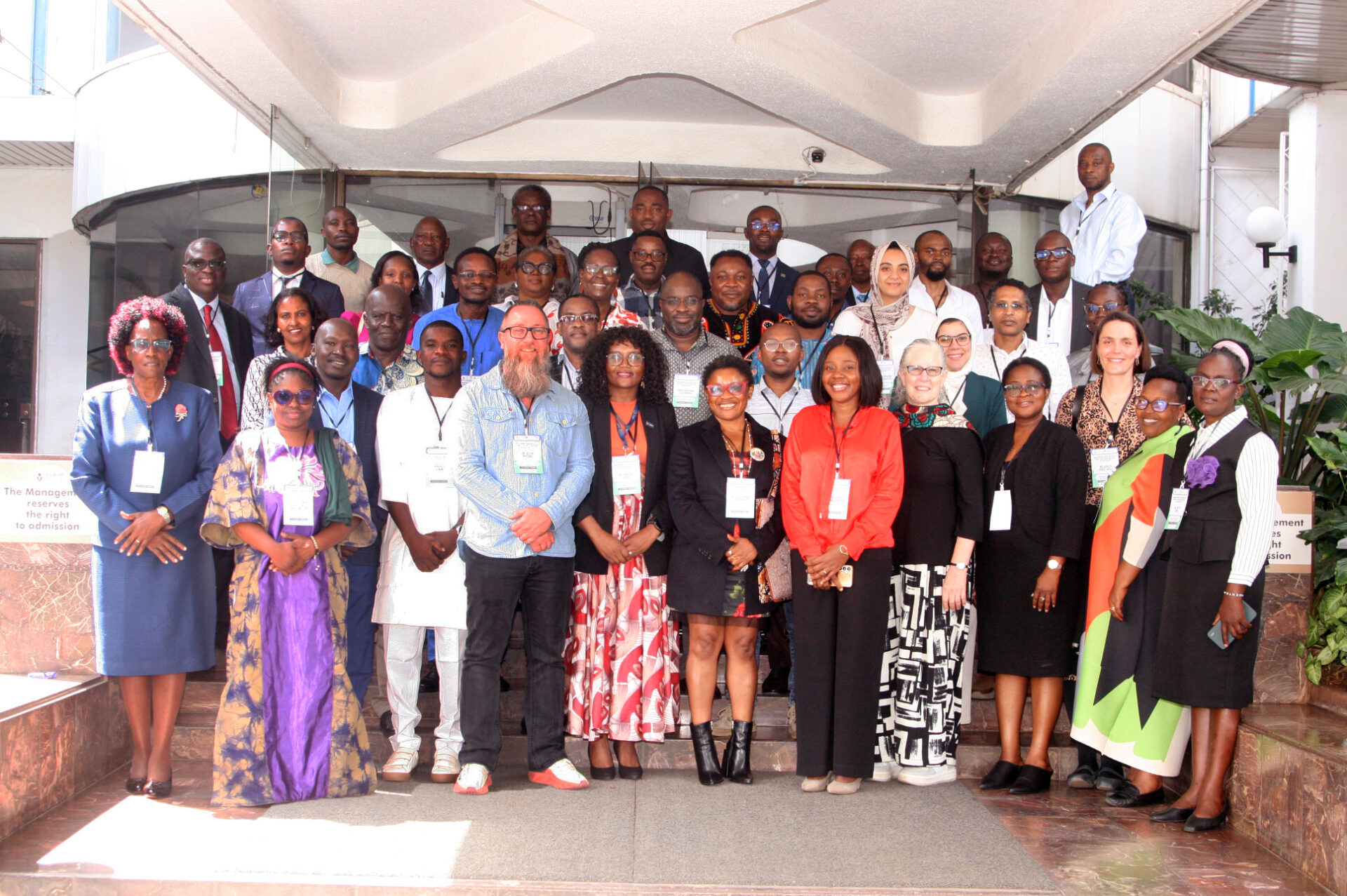
Climate change is increasingly recognised as a cross-cutting issue that intersects with broader development priorities, including equity, inclusion, and economic resilience. This was reinforced during the regional convening in Kenya (March 11 – 13, 2026) where discussions highlighted how climate adaptation research intersects with sectors such as agriculture, health, and urban development, requiring institutions to operate across traditional disciplinary and sectoral boundaries.
As noted by Ms. Hayley Price Kelly, Senior Program Officer of the CLARE programme, strengthening institutional capacity in climate adaptation creates opportunities for organisations to engage across a wide range of funding streams – not only those explicitly focused on climate, but also those linked to broader development priorities. This reflects a growing recognition among funders that institutional readiness is critical for accessing and effectively utilising diverse funding opportunities.
Dr. Kathryn Toure of IDRC emphasised that efforts to strengthen university systems for climate adaptation research will ultimately serve communities across the continent, reinforcing the link between institutional capacity and societal outcomes.
The discussions also underscored the need to integrate gender equality and inclusion into climate adaptation research. Within the CO-CAT framework, this is not an add-on, but a core domain assessing how institutions incorporate inclusive analysis into research design, stakeholder engagement, and decision-making processes. Climate change affects individuals and communities differently based on gender, age, ability, and socio-economic status. Institutions that fail to incorporate these perspectives risk reinforcing existing inequalities rather than addressing them.
Leadership from participating universities highlighted the potential long-term value of the initiative. However, its broader influence will depend on evidence emerging from its application across different contexts.
Looking Ahead: An Evolving Framework for Institutional Strengthening
The broader relevance of CO-CAT should be understood with appropriate caution. While the participating institutions provide valuable insights, they do not fully represent the diversity of higher education and research systems across Africa. As such, the findings emerging from this initiative are best viewed as indicative rather than definitive.
Further testing and comparative application will be necessary to establish the tool’s robustness and scalability. At the same time, the initiative highlights an important shift in how institutional capacity for climate adaptation is being understood. Strengthening institutional systems – rather than focusing narrowly on individual skills or project outputs – has the potential to improve how research connects to policy, practice, and community outcomes. This includes greater attention to inclusion, recognising that climate change impacts are differentiated across gender, age, and socio-economic contexts, and that institutional responses must be designed accordingly.
There is also growing interest among development partners in approaches that strengthen institutional systems as a pathway to long-term impact. This momentum presents an important opportunity to further refine and position tools such as CO-CAT within the evolving climate and development landscape. The effectiveness of CO-CAT will ultimately be strengthened through its ability to demonstrate measurable improvements in institutional coordination, policy engagement, and sustained research impact.
In this regard, CO-CAT is best understood as an evolving tool that contributes to ongoing efforts to bridge the gap between climate knowledge and action. Its value lies in supporting structured reflection, fostering organisational learning, and encouraging more integrated approaches to climate adaptation research. As the current pilot phase progresses, it will provide important insights that will shape the tool’s continued development and its potential application across diverse institutional contexts on the continent.
Categories
Countries
CLARE Pillars
CLARE Themes
CLARE Topics
Published
CLARE Partners