
What Happens After the Training? How Kanyama’s Satellite Disaster Management Committee is carrying climate learning forward
/
Author: Katharine Vincent (Kulima Integrated Development Solutions)
In Kanyama, climate change training requested by the Satellite Disaster Management Committee (SDMC) has already led to community-led follow-up activities, extending the reach of the original BASIN project work and demonstrating how a project output can become a community-owned outcome. One SDMC member, Malawo Siamalyata, has used the training content to facilitate his own session with youth at his church, showing how community-driven initiatives can multiply impact when individuals feel equipped and motivated.
From research collaboration to a request for climate training
The BASIN project (Behavioural Adaptation for Water Security and Inclusion) has been working with SDMC members in Kanyama to understand how people use weather and climate information in their everyday decisions, and what affects these decisions – recognising that this is important to enable adaptation. This builds on a previous collaboration under the Weather and Climate Information Services (WISER) Early Warnings for Southern Africa (EWSA) project, which succeeded in increasing the numbers of people in Kanyama who access weather information, and who take notice of and act on early warnings. Over time, this regular engagement and increased reliance on weather information prompted an interest in better understanding climate change itself.
SDMC members, who already volunteer to identify and support vulnerable community members as part of reducing risk from floods and other hazards, started asking broader questions: what is driving the extremes they experience, how is climate changing in Zambia and Lusaka, and what this will mean for them over time? Their request for climate change training emerged directly from this experience, rather than from an external training offer or predefined decision by BASIN to provide it. This is consistent with community-based adaptation approaches that prioritise communities’ own learning needs and priorities as the starting point for action.
A one-day training tailored to local realities
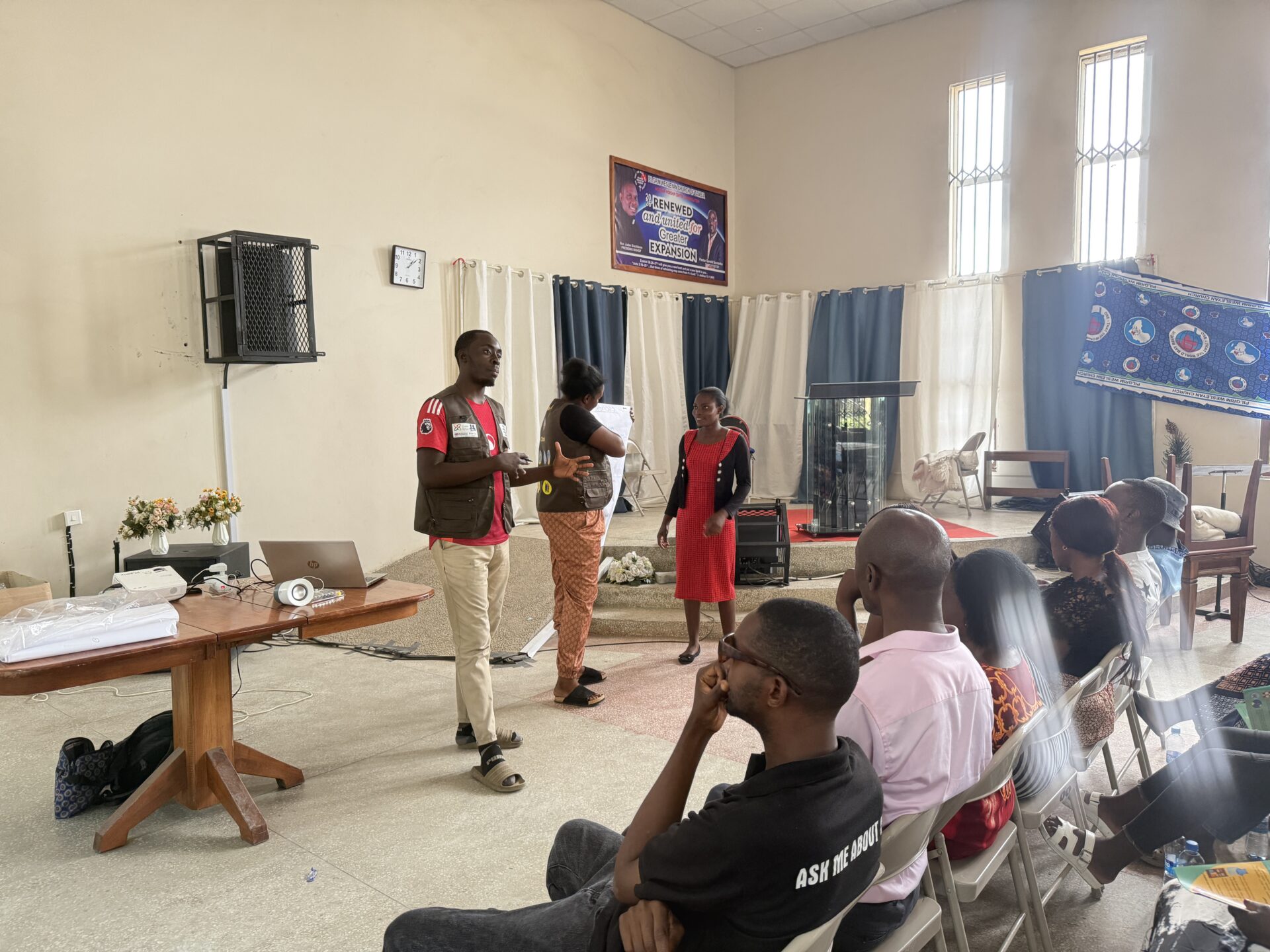
In response, the project team developed a one-day introductory climate change training and repeated it on three consecutive days in February 2026, to maximise the number of people who would be able to attend. Across the three days, 101 Kanyama residents took part, including representatives from schools, churches and ward-level governance structures, and community members of different ages, with deliberate efforts to include people with disabilities. SDMC members not only attended but actively participated by facilitating small group work.
The content and delivery were tailored to the Kanyama audience. The training covered what climate change is and what it will mean for Zambia, emphasising practical actions that individuals, households, farmers and small businesses can take. On the third day, a representative from the Zambia Meteorological Department (ZMD) presented the range of products and services available. Participants with access to smartphones were encouraged to sign up to ZMD’s WhatsApp groups to receive regular weather information and early warning alerts.
Inclusion was built into the design rather than treated as a separate element. Participants with disabilities were transported to and from the training venue, and sign language interpretation was provided on the day when people with hearing impairments attended. An illustrated handout was produced in both English and Nyanja, with clear explanations and a high reliance on locally relevant images. Extra copies were provided, at the request of participating teachers and ward committee representatives, to facilitate further sharing.
Community ownership: Malawo’s youth session
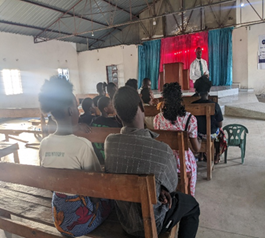
One of the SDMC members provided simultaneous interpretation of the training into Nyanja on all three days, meaning he became very familiar with the content. The material clearly resonated because, a few months later and on his own initiative, Malawo Siamalyata drew on his professional experience as a teacher to facilitate a three-hour session on weather and climate change adaptation with 16 youth members of the HOPE SDA Church in Kanyama Ward 13.
Malawo notes that the young participants were aware of the term “climate change” but were unclear about its timescales and its relationship to everyday weather and risk. He used the BASIN training content and the English and Nyanja handouts to structure the session. He also referred to a video clip used in the original training – showing what a weather forecast in Zambia might look like in the year 2050– to illustrate what climate change could mean for day-to-day weather conditions.
“I was motivated to run this session because the community today needs to have more knowledge on climate change” – Malawo Siamalyata
Why community-based initiatives have reach
The sequence from co-produced weather information, to climate change training requested by SDMC members, to a youth-focused follow-up session led by one of those members illustrates the importance of designing applied research that is responsive to locally defined needs and priorities. By having flexibility to respond to these needs, the capability to tailor training to suit the local context, and the availability of materials that could be reused in other circumstances, the effect of a single training is not limited to those in the room.
Instead, knowledge and practices can spread through church groups, schools, local committees and informal networks, carried by people who already hold roles and responsibilities in their communities. SDMC members’ pre-existing sense of responsibility for supporting others before, during and after flood events provides a strong behavioural foundation for this kind of multiplier effect. This is exactly the kind of pathway to impact that is envisaged in BASIN’s theory of change – whereby the project contributes to an output of trained people, which in turn leads to an outcome of expanded knowledge of climate change and climate risk management in the community, to enable adaptation.
Implications for supporting local adaptation
The BASIN project’s focus on behavioural drivers—such as motivations for volunteering, social norms around information sharing, and barriers to acting on forecasts—helps to explain why this kind of multiplier effect is possible.
There are several lessons that can be drawn for other efforts to support local adaptation:
- Work with existing community structures, such as SDMCs, churches and schools, to increase the reach and legitimacy of adaptation activities.
- Respond to locally-articulated needs with tailored, accessible content, which can generate higher levels of engagement than standardised or predetermined training offers.
- Design materials with onward sharing in mind to increase the chances that participants will use them in other settings without needing additional project support.
- Recognise and work with existing motivations and social norms that drive volunteering and information sharing.
Whilst designed with partners, the initial motivation for the BASIN project was external to Kanyama, driven by the universities, NGOs and the knowledge broker organisation that make up the team. However, Malawo’s initiative shows that a co-production approach, even when initiated externally, can seed locally led adaptation. Here, the SDMCs have been supported to address needs that they themselves identified – in this case, expanding climate literacy to support local adaptation practice – and have demonstrated how climate learning can move beyond the project room and into everyday community spaces.
Categories
Countries
CLARE Pillars
CLARE Themes
CLARE Topics
Published
CLARE Projects
CLARE Partners