
Story of Change: Strengthening Kenya’s Drought Response Manual for Inclusive Anticipatory Action
Published on
Authored by Rachel Mbaria (ICPALD), Ahmed Mahmoud (ICPALD) and Amos Nyakeyo (NDMA)
What changed?
Through the PASSAGE project, the Intergovernmental Authority on Development (IGAD) Center for Pastoral Areas and Livestock Development (CPALD) supported the National Drought Management Authority (NDMA) of Kenya to revise the country’s Drought Response Manual. The Manual provides guidelines for drought response in Kenya, strengthening the coordination, timeliness, and effectiveness of drought response interventions by promoting more evidence-based and contextually appropriate action. Based on the review, the Manual now considers anticipatory action, gender equality and inclusion (GEI) and child protection in emergencies. The revised Manual also incorporates global guidelines and standards in the 2023 Livestock Emergency Guidelines and Standards (LEGS) to guide interventions for livestock based on international best practice. A fundamental improvement in this regard is alignment between scientific early warning systems, locally validated triggers, and operational drought response planning.
The revisions represent a shift towards more socially inclusive climate adaptation. They demonstrate how evidence generated through PASSAGE has moved beyond technical-level learning to influence national systems and participatory guidance for drought response. The guidelines will be published in October 2026, offering potential to further advance translation of national drought management planning into practical action at sub-national level.
Why does it matter?
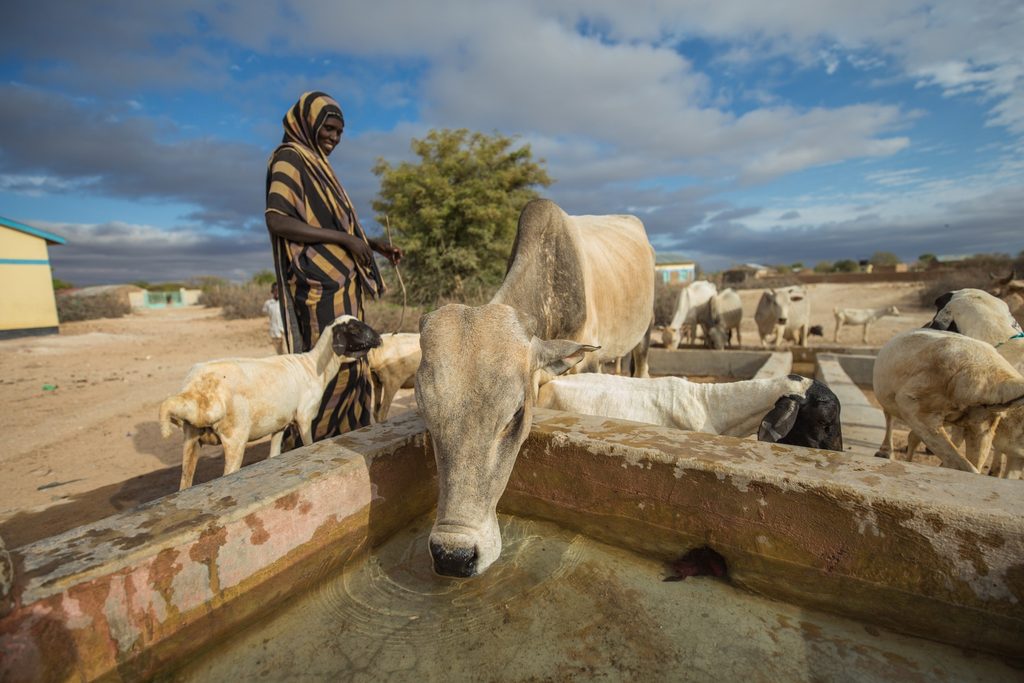
In Kenya and across the Greater Horn of Africa, recurrent drought, extreme heat, water scarcity, pasture loss, conflict, and food insecurity create cascading risks for pastoralist and agro-pastoralist communities. However, the uptake of early warning actions and early action advisories remain insufficiently utilized to protect lives and livelihoods. The integration of anticipatory action and GEI considerations into the National Drought Response Manual addresses these gaps by promoting early and more inclusive action.
Women, children, and other marginalized groups face particular barriers in accessing early warning information and participating in decisions that shape drought preparedness and response. The integration of GEI and anticipatory action into the Drought Response Manual and related operating procedures strongly advances socially inclusive climate adaptation. Early warning messages are often less likely to reach women, are often not tailored to the needs of children, and frequently exclude women and marginalized groups from decision-making processes related to land, water and other livelihood-critical resources. Embedding GEI considerations therefore contribute to addressing gaps in the inclusiveness of early warning and response systems, ensuring that they more effectively reach and serve diverse population groups.
What did CLARE do to contribute?
PASSAGE provided technical expertise and facilitated government and community dialogues in targeted cross-border areas in the review of Kenya’s Drought Response Guidelines to inform revision of the Guidelines. Drawing on project research including risk analyses, FOrecasts to Local Action (FOLA) processes, and community engagement activities, the project provided evidence and recommendations on anticipatory action, forecast-based financing, community-defined thresholds, and mainstreaming GEI and participatory action.
The support from PASSAGE to NDMA built on earlier and ongoing initiatives to update Kenya’s 2018 guidelines on drought response, involving national and county governments, UN agencies, regional bodies, and NGOs. When that review process risked stalling due to a funding shortage, PASSAGE was also able to provide last mile funding that enabled NDMA to finalize the draft guidelines, stakeholder engagements and capacity building.
The collaborative approach of PASSAGE brought together various institutions that included researchers, technical experts, government officials and community representatives, which significantly contributed to knowledge generation, policy review and stakeholder engagement in targeted clusters that included Mandera, Moyale and Karamoja. The collaborative project team is a capital technical asset especially to for sustaining or upscaling research supported by PASSAGE in the field of anticipatory action and inclusive climate adaptation. This will enable the engagement supported by CLARE to go beyond production of climate information on early warning to enable the use of information such as risk narratives and VCI to build resilient communities.
About PASSAGE
The Strengthening pastoralist livelihoods through effective anticipatory action (PASSAGE) project focuses on improving early warning systems and anticipatory action for pastoralist livelihoods in the Greater Horn of Africa. PASSAGE seeks to strengthen the use of predictive, multi-hazard and impact-based forecasts to support more timely, inclusive and coordinated anticipatory action.
Learn more:
- FOrecast to Local Action (FOLA): Where local knowledge and AI help communities adapt to drought using locally-led Anticipatory Action | CLARE – CLimate Adaptation & REsilience
- FOrecasts to Local Action (FOLA): A locally-led anticipatory action approach to strengthen the resilience of communities | CLARE – CLimate Adaptation & REsilience
- Training of trainers for learning hubs/community interactions: forecasts for local action (FOLA) | CLARE – CLimate Adaptation & REsilience
- CLARE projects strengthen drought resilience through locally led adaptation (LLA) | CLARE – CLimate Adaptation & REsilience
Categories
Countries
CLARE Projects
CLARE Pillars