
Story of change: Informing global climate finance negotiations to better meet adaptation needs
Published on
Authored by the ECONOGENESIS Team
CLARE Stories of Change are snapshots of how research and capacity strengthening initiatives that the programme supports are contributing to specific changes on the ground in support of resilience to climate change and natural hazards. They help illustrate how CLARE is enabling socially inclusive and sustainable climate resilience, as outlined in the CLARE Theory of Change.
What changed?
Since 2023, headline findings from the ECONOGENESIS project have been informing critical documents in international climate negotiations. In its assessment of progress on implementing the Paris Agreement, the first Global Stocktake (2023) under the United Nations Framework Convention on Climate Change (UNFCCC) referenced ECONOGENESIS’ contributions to the 2023 Adaptation Gap Report and its analysis of adaptation investment needs of developing countries. In 2024, the UNFCCC COP29 negotiation text on the New Collective Quantified Goal (NCQG) on Climate Finance also cited ECONOGENESIS’ analysis as background for the goal agreed of USD 300 billion per year by 2035 to support climate action by developing countries. Subsequent work in the ECONOGENESIS project in 2025 updated these values for developing country adaptation finance needs and added potential private sector finance needs: these results were cited in the UNFCCCC Baku to Belem Roadmap to 1.3 Tr, launched at COP30. These new estimates also provided important background for the aim agreed at COP30 to triple adaptation finance by 2035.
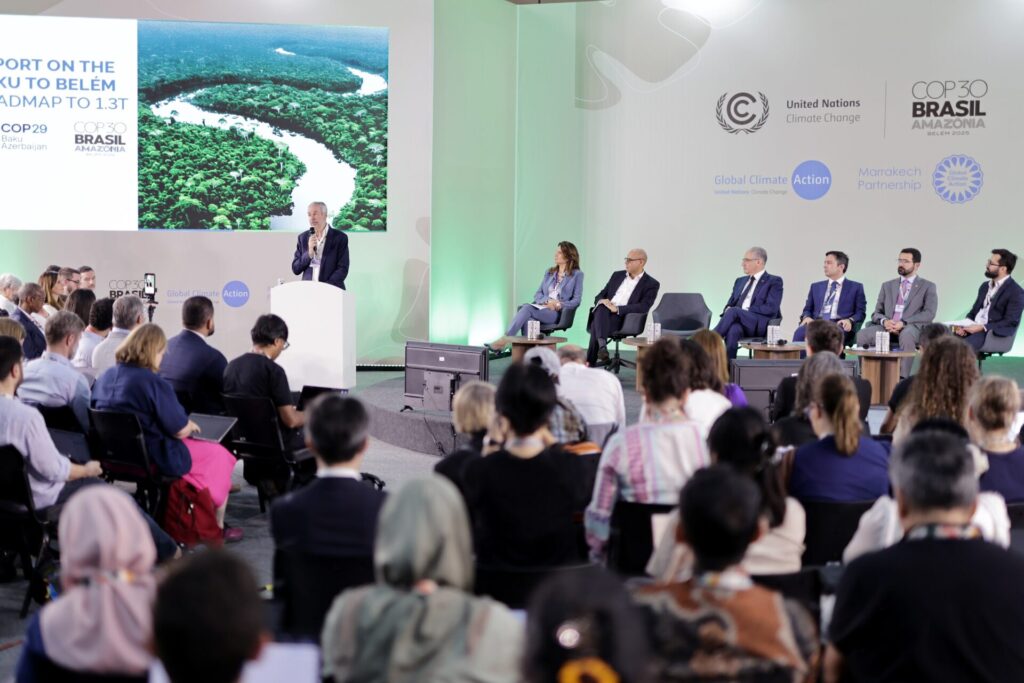
15.11.2025 – Belém – COP 30 President Andre Correa do Lago speaks at the panel “Report on The Baku to Belem Roadmap to 1.3T at the 30th Conference of the Parties (COP30). Photo by Rafa Pereira/COP30
Why does it matter?
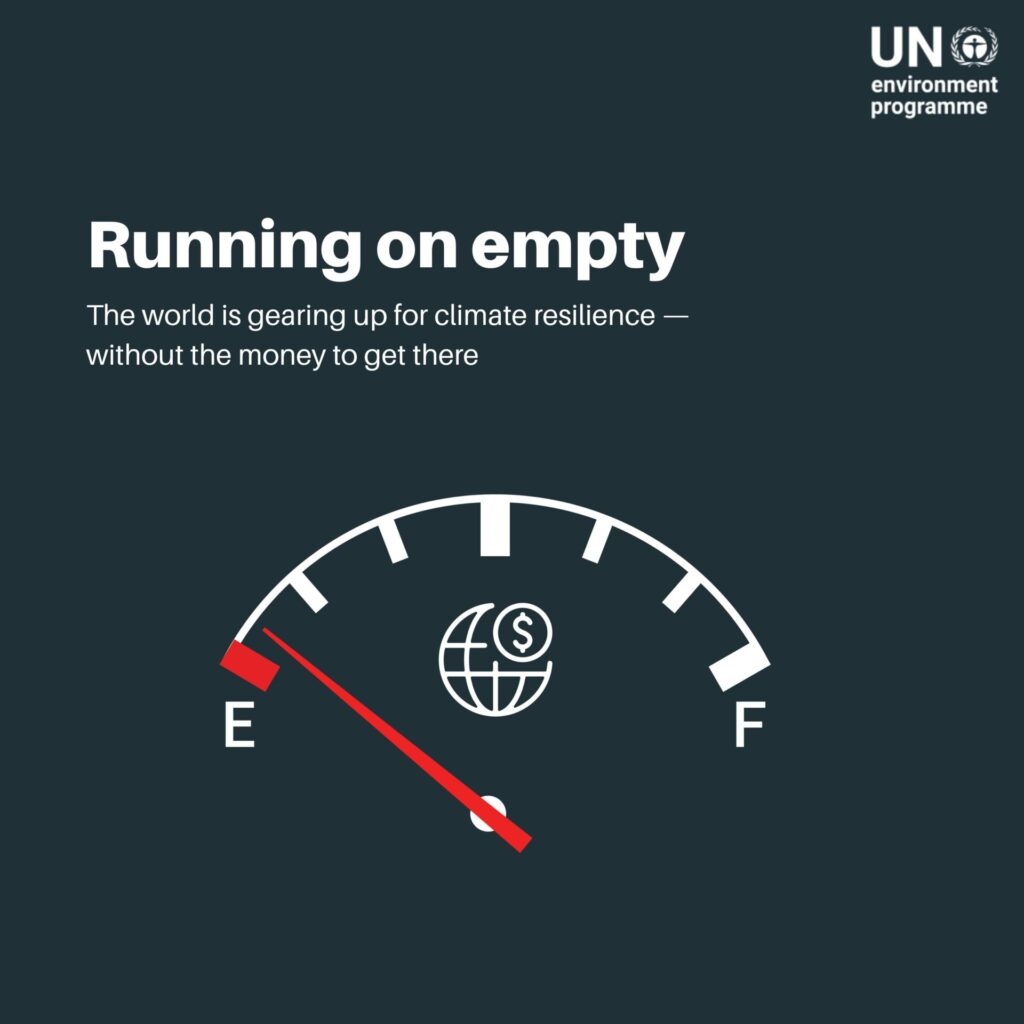
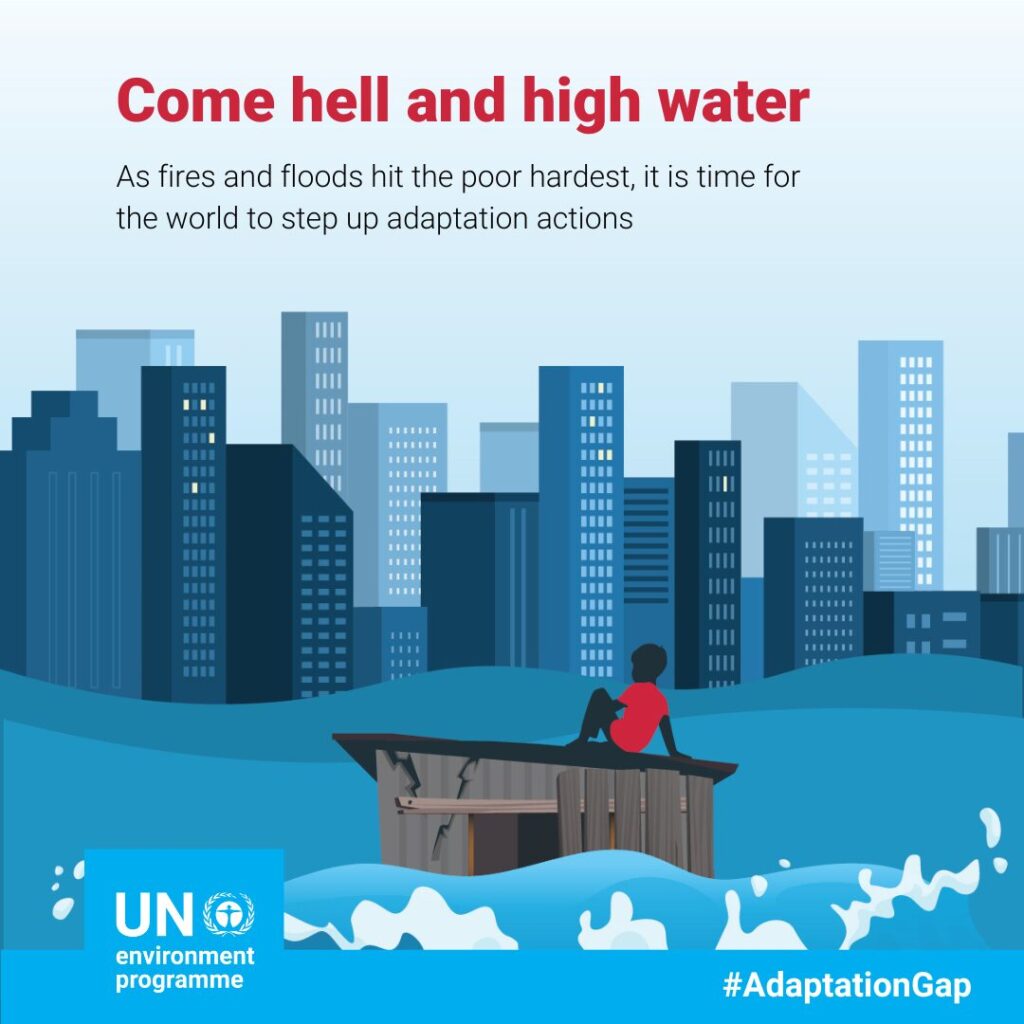
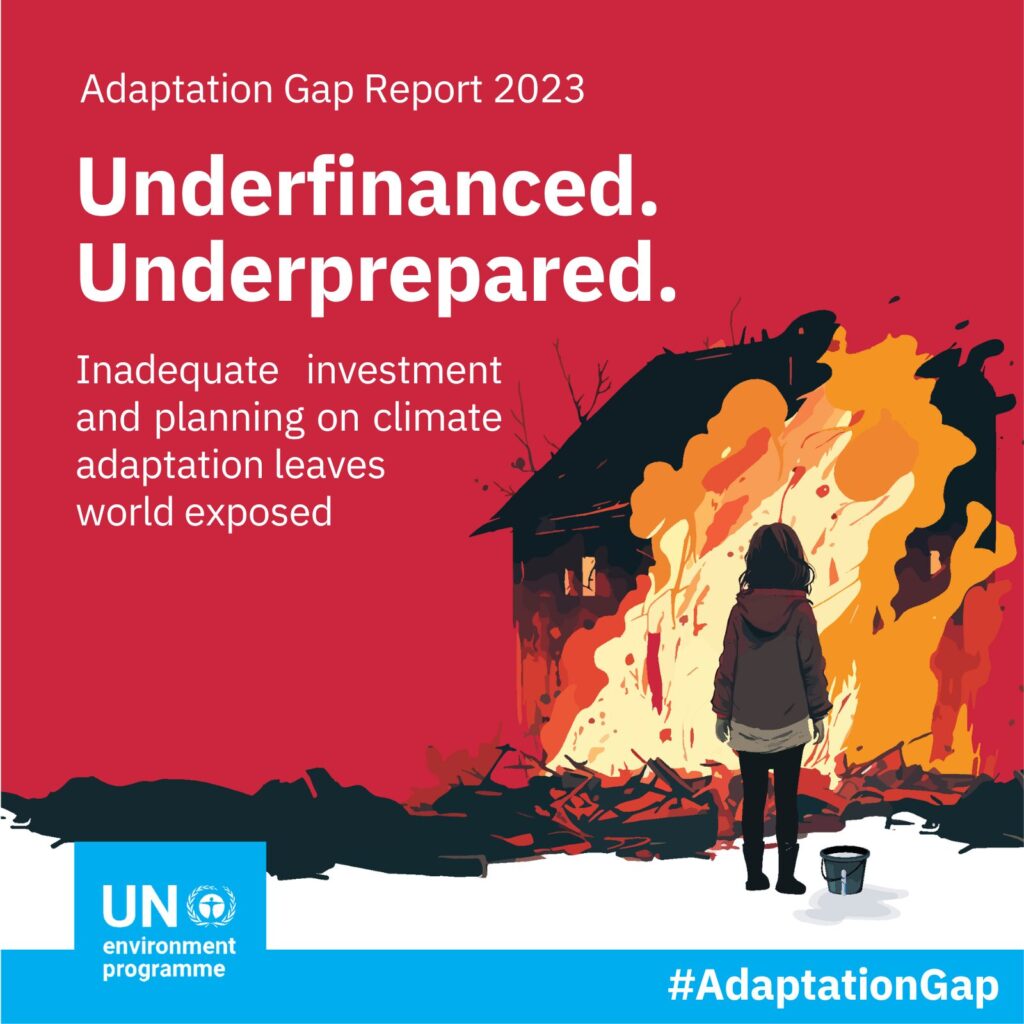
Both the Global Stocktake and the NCQG have played a crucial role in increasing the agreed levels of adaptation finance from developed to developing countries, helping the most vulnerable countries to scale-up adaptation implementation and reduce rising climate impacts. Although developing countries disproportionately experience the impacts of climate change, current levels of international adaptation finance to address these impacts are inadequate. This has been demonstrated by the ECONOGENESIS analysis in the 2023, 2024 and 2025 editions of the United Nations Environment Programme (UNEP) Adaptation Gap Report, with adaptation finance needs estimated to be approximately ten times larger than current international public adaptation finance flows. These reports also assess the extent to which gender equality and social inclusion (GESI) considerations are costed in national adaptation plans. The findings underscore that different social groups experience climate impacts in distinct ways, reinforcing the critical importance of designing adaptation policies that are truly inclusive and responsive to the needs of all.
What did CLARE do to contribute?
The ECONOGENESIS project has made a sustained effort to inform the global dialogue on climate finance for adaptation, with a view to ensuring that international funding better meets the needs of developing countries. From the outset, the project team has strategically positioned its findings through the Adaptation Gap Report. The influential annual report is focused on informing global climate adaptation policy, and it is the publication that has subsequently led to ECONOGENESIS work being cited in international climate negotiations processes. In the 2023 Adaptation Gap Report, which was subsequently cited in the Global Stocktake and the NCQG, the ECONOGENESIS team led work to assess the global costs of adaptation for developing countries and examine the gap in international climate finance.
The team has continued to contribute to the Adaptation Gap Report annually in 2024 and 2025. The 2025 ECONOGENESIS-led analysis set out new estimates of global adaptation finance needs for developing countries for the year 2035, estimating public adaptation needs to be between USD 310 and 365 billion per year for 2035.
Learn more
- The Adaptation Finance Gap, the New Collective Quantified Goal on Climate Finance, and the Private Sector | CLARE – CLimate Adaptation & REsilience
- The New Collective Quantified Goal on Climate Finance and Who Pays? | CLARE – CLimate Adaptation & REsilience
- Addressing the gap on gender equality and social inclusion in climate adaptation finance | CLARE – CLimate Adaptation & REsilience
About ECONOGENESIS
ECONOGENESIS conducts global level analysis, complemented with country-level studies in Nepal, Rwanda and Tanzania, to address the gap in knowledge around the economic costs of climate change and the costs of adaptation, particularly as they affect people who face gender and other social inequalities, especially in the Global South. Working closely with key actors from government, private sector and civil society, this inter-disciplinary project updates previous studies on the economic costs of climate change and the costs of adaptation, at both global and national scales, and extends this analysis to include gender, equality and social inclusion (GESI) dimensions. It also advances new approaches for scaling up adaptation finance. The project is strengthening capacity in adaptation planning and programming by generating new information, working directly with stakeholders using co-creation methods, and providing training opportunities, including for early career researchers.
Categories
Countries
CLARE Projects
CLARE Pillars