
Story of change: Community hydrologists support water monitoring for climate resilience in Tanzania
Published on
Authored by the Dodoma Transformation Lab team
CLARE Stories of Change are snapshots of how research and capacity strengthening initiatives that the programme supports are contributing to specific changes on the ground in support of resilience to climate change and natural hazards. They help illustrate how CLARE is enabling socially inclusive and sustainable climate resilience, as outlined in the CLARE Theory of Change.
What changed?
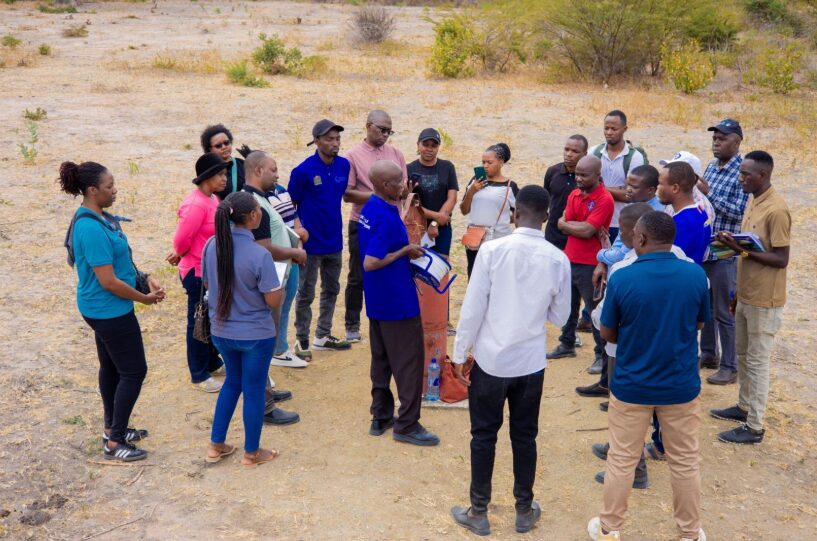
In Dodoma, the capital city of Tanzania, officials and community members trained by the CLARITY project are supporting the work of the Wami Ruvu Basin Water Board (WRBWB) and the Water Resources Centre of Excellence (WRCoE) of the Ministry of Water, helping communities manage water resources in the face of climate change. These para-hydrologists and community hydrologists have mapped and collected data on borehole locations and levels, which are now being used by the WRBWB to inform a sustainable regime for extracting water. The training has also developed stronger working relationships with WRBWB, an organization in charge of managing water resources and also supporting Community‑Based Water Supply Organisations (CBWSO). As the community hydrologists continue to assist their communities, their awareness of climate change has deepened. Additionally, local government employees and students who participated in the training offered by the CLARITY project are now using the techniques they learned in their work, further extending the reach of the initiative.
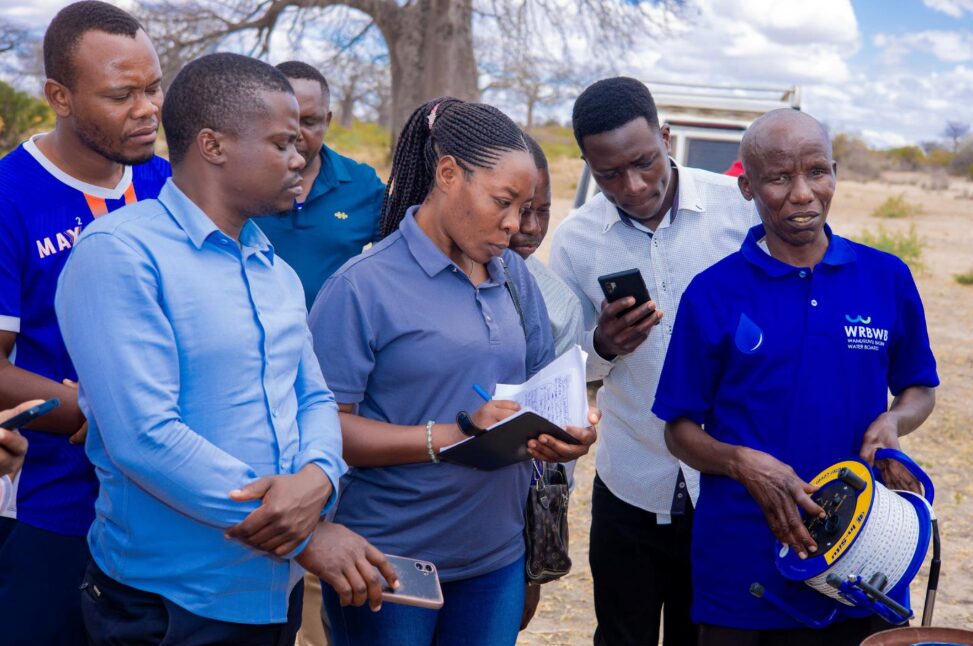
Photo credit: Dodoma T-Lab, Tanzania
Why does it matter?
Climate change threatens sustainable water management in Dodoma, Tanzania’s rapidly growing capital city. Access to freshwater is becoming a challenge: located in a semi-arid region with no permanent surface water bodies, Dodoma depends almost entirely on groundwater. Already, demand for freshwater exceeds the current supply, and this pressure is expected to intensify due to population growth, expansion of economic activities and the effects of climate change, which affect groundwater quality and quantity.
Training government officials and community members such as water supply organisation members in basic hydrology enables them to contribute to sustainable, climate-resilient groundwater and surface water use and management. Because these individuals are embedded in their communities and institutions, they are well-positioned to play active roles within community-based water management institutions. Their involvement reflects increased community agency and supports more resilient, locally driven water management.
What did CLARE do to contribute?
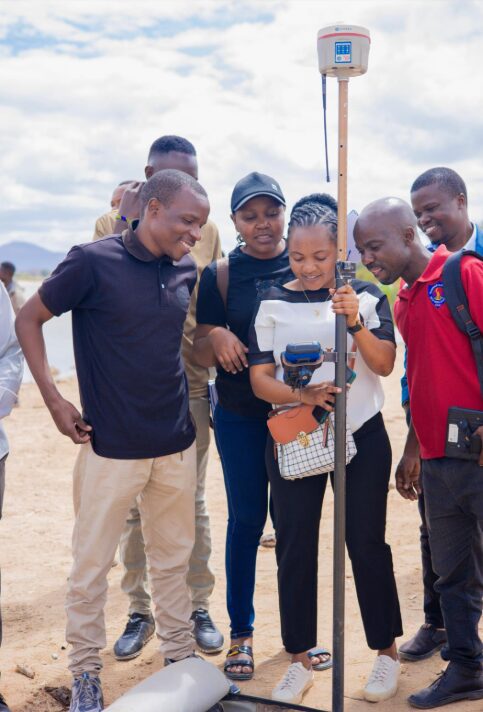
As a part of the CLARITY project, the Sokoine University of Agriculture (SUA) trained 24 people, including officials and community members, to serve as community hydrologists. The training equipped the group, 11 of them women, to support research through data collection and monitoring of boreholes and other water resources. Participants came from diverse backgrounds, enriching the training sessions with a wide range of perspectives on climate and water challenges. The organisers ensured the group was gender balanced and included government officials and community members who can use these skills.
This training is a part of CLARITY’s broader work in Tanzania, Niger-Nigeria, and India, which includes conducting trainings with community members and local stakeholders in basic hydrology, water level measurements and monitoring, conservation of water resources, video diaries, and photovoice. These trainings build the capacities of local community members to better understand the human-water system, gather relevant data and ultimately, provide water information services in their community and/or institutions for informed decision-making around water.
About CLARITY
The Climate adaptation and resilience in tropical drylands (CLARITY) project convenes transformational labs in the Sahel (Maradi region in Niger/Nigeria), in the drylands of central Tanzania (Dodoma) and in Peninsular India (Chintamani-Chikkaballapur and Raichur). The project team works with communities to assess water management practices, build models of plausible pathways, and embed research outcomes into wider policy and practice. They also pursue rigorous, action-oriented research, linking inclusive stakeholder engagement with cutting-edge modeling and measurement to synthesise existing knowledge and identify promising innovations to improve climate resilience in tropical drylands.
Categories
Countries
CLARE Projects
CLARE Pillars
CLARE Themes
CLARE Topics
CLARE Partners