

Building Climate-Resilient Homes in Freetown’s Informal Settlements
/
By Fasalie Kamara
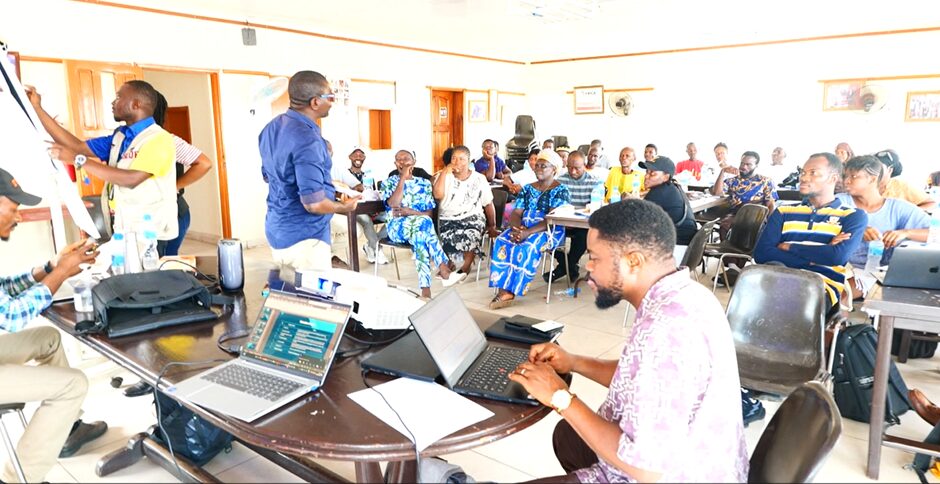
What does it take to design a home that can withstand floods, heat, and landslides in Freetown’s informal and vulnerable communities? This question brought together local builders, residents, community stakeholders, engineering and architecture students, and researchers in a participatory workshop on climate-resilient housing. Together, they co-created solutions that are both technically sound and grounded in residents’ everyday realities.
Housing Typologies: Strengths, Vulnerabilities, and Innovations
Discussions revealed how different housing types perform under climate stress. In coastal informal settlements such as Susan’s Bay and CKG, corrugated iron sheet (“pan body”) homes are exposed to severe risks from flooding, extreme heat, and fire due to unsafe electrical connections. Local builders shared adaptive tactics, such as elevating shelves to protect belongings during floods and installing earth wires to prevent electrocution. Engineers also recommended using conduit to further reduce the risk of electrocution.
Engineers and architects proposed innovative alternatives, such as container houses on raised beams, which could reduce heat absorption and allow floodwater to flow beneath. Local builders, however, raised practical concerns about transporting containers through the dense, narrow lanes of the settlements.
In the hillside community of Moyiba, mudbrick houses emerged as a naturally climate-responsive option. They offer excellent heat resistance and cooling when constructed with sufficiently dense soil and without a cement coating. However, they can be vulnerable to landslides and flooding if constructed on unstable foundations or without careful design. Local builders also emphasized the unsuitability of mudbricks in coastal zones with reclaimed land.
Cement houses are generally regarded as safe and durable, yet they present their own challenges. In addition to being expensive, erosion can undermine foundations in Moyiba, whereas in coastal CKG and Susan’s Bay, reclaimed soil and saltwater intrusion weaken structures over time. Cement houses also retain heat, making interiors unbearably hot during the dry season compared to mudbrick or “pan body” homes.
To reduce indoor heat, local builders, engineers, and architects recommended several solutions. Builders suggested adding ceilings made of plywood or cardboard, which are often omitted in informal housing, to improve thermal insulation. Engineers and architects proposed low-cost design features, such as roof overhangs, cross-ventilation, hollow blocks, and insulated ceilings, to significantly improve comfort and reduce heat stress.
We Innovate When Local Knowledge Meets Technical Expertise
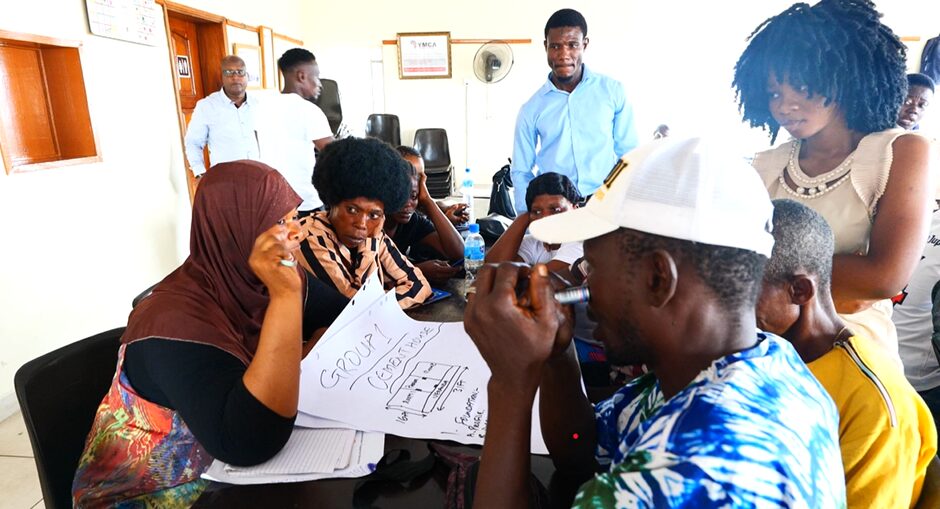
During discussions, local builders drew on decades of hands-on experience adapting to site-specific risks like unstable slopes and material shortages. Engineers and architects, meanwhile, applied technical principles and standardized models informed by theory.
Initially, tension arose between the experience-based knowledge of local builders and the theory-driven approaches of the students and professionals. Technical experts sometimes proposed solutions that overlooked practical constraints, while builders were skeptical of unfamiliar technical ideas.
As dialogue deepened, pathways to mutual dependence and collaborative design became clear. Guided by technical expertise, such as structural calculations and the use of new materials, local builders contributed practical insights into what works in practice. University experts, in turn, introduced technical refinements and new possibilities based on context- and culture-relevant information from communities and builders, ensuring that solutions were affordable and appropriate.
This interdependence reshaped power dynamics. Experts realized that without builders’ insights, their designs risked being impractical. Builders acknowledged that technical knowledge could help them avoid risks they had previously navigated through trial and error. This reciprocity fostered more collaborative and inclusive decision-making, resulting in effective climate-resilient housing that blends scientific understanding with lived, practical knowledge.
Key Takeaways for Future Interventions
Geography defines housing design. The workshops underscored that there is no one-size-fits-all solution for informal settlements. Housing vulnerabilities are deeply shaped by local conditions:
- In Moyiba, hillside terrain requires reinforced drainage, erosion control, and stable foundations.
- In coastal Susan’s Bay and CKG, elevated structures, moisture-resistant materials, and flood-adapted designs are critical.
Affordability and access to materials influence decision-making. For instance, while cement houses are preferred for their durability, they are often financially unaffordable for many informal residents. Mudbrick and “pan body” structures remain prevalent due to their lower cost.
The way forward lies in co-production, in which technical expertise is combined with local, adaptive practices. This prioritizes retrofitting and incremental upgrades over entirely new structures. Investing in capacity building for both builders and engineering & architecture students is also highly recommended. Local builders require training in climate-resilient techniques, safe construction, and basic engineering principles, while students require immersion in the realities of informal building and participatory design.
Ultimately, the most resilient housing solutions will be those that are locally grounded, technically informed, and collaboratively created. Resilient housing values both lived experience and technical innovation. With resilient housing, we can build homes in informal settlements that are not only safer but also sustainable, dignified, and resilient to a changing climate.
Categories
Countries
CLARE Pillars
CLARE Themes
CLARE Topics