
FOrecast to Local Action (FOLA): Where local knowledge and AI help communities adapt to drought using locally-led Anticipatory Action
/
With the shocks of climate change worsening yearly, there has been an increasing focus on climate adaptation through effective Anticipatory Action Systems. While adapting to climate extremes is not new to many communities around the world, the increasing intensity of these climate shocks are putting more pressure on communities and systems that are already vulnerable.
Work to improve anticipatory action and adaptation systems to proactively meet these climate extremes is fundamental, yet many systems are externally designed to local contexts and overlook local risk knowledge. This is despite local communities being the ones who have the lived experience of dealing with climate extremes long before ‘climate change’ was a household term.
Combining this wealth of local knowledge with that of leading organisations has been something that the University of Sussex has been working on over several years, more recently within the CLARE-funded project: Strengthening Pastoral Livelihoods in the African Greater Horn (PASSAGE). One output of the project’s outputs has been the Forecasts to Local Action (FOLA) approach, a neatly packaged systematic framework to put local, indigenous and traditional knowledge into the design of anticipatory action systems.
Fundamentally, it is a replicable framework for co-producing forecast information and anticipatory actions with communities that can be used by humanitarian agencies to take locally led anticipatory action to scale.
Developing FOLA – From satellite imagery to community conversations
The origins of the FOLA approach reach as far back as 2008 through a project with local fisherfolk in Lake Victoria, Uganda. Through programmes like the WISER-funded HIGHWAY project, Sussex researchersstrengthened the uptake and use of early warning to reduce excess deaths from dangerous weather conditions on the lake. The approach used combined the scientific weather information provided by the Met Office with local indigenous knowledge, building trust with local communities and refining their tools and approaches into the FOLA approach we see today. By heightening the significance of local knowledge of how weather systems impact the people in Lake Victoria, experience that communities have built up over centuries, they could effectively decolonise forecast information into a bottom-up approach.
Complementing the community co-production work is Sussex’s research on climate services. Sussex developed a new system that combines satellite earth observation data with machine learning techniques. The research explored improvements to monitoring and forecasting in the existing drought metrics used by the Kenyan National Drought Management Authority (NDMA) such as the Vegetation Condition Index (VCI).
The combination of AI-driven climate services and co-production work with local communities have been channeled to develop the Forecasts to Local Action or FOLA approach.
Co-production – The heart of the FOLA approach
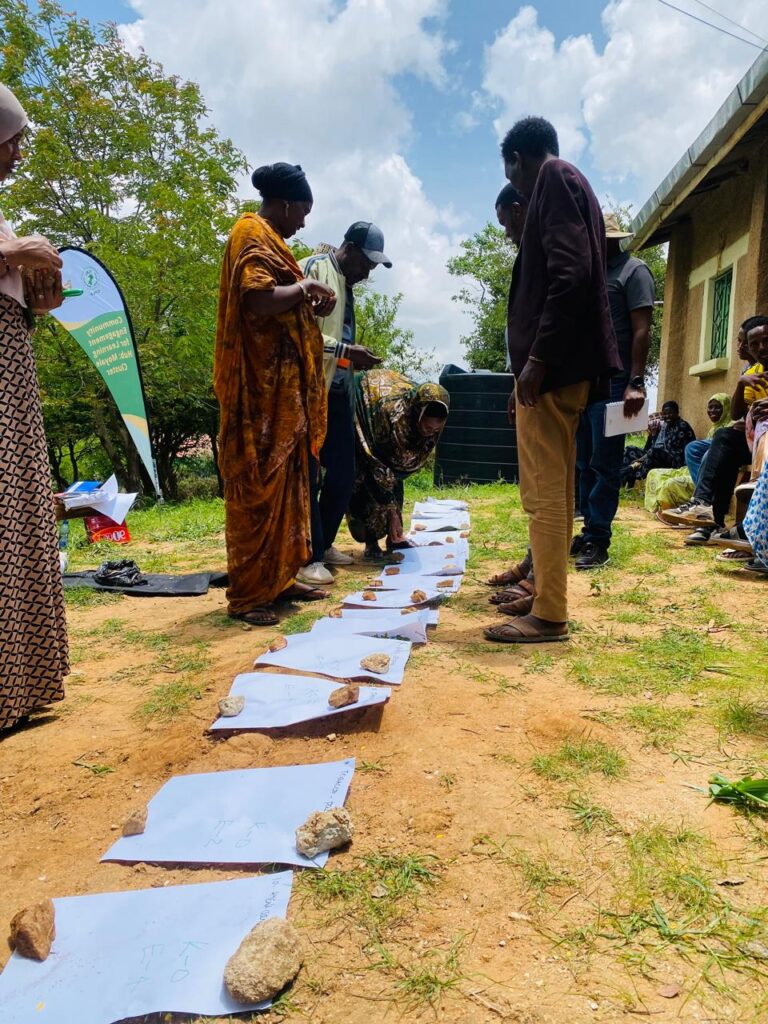
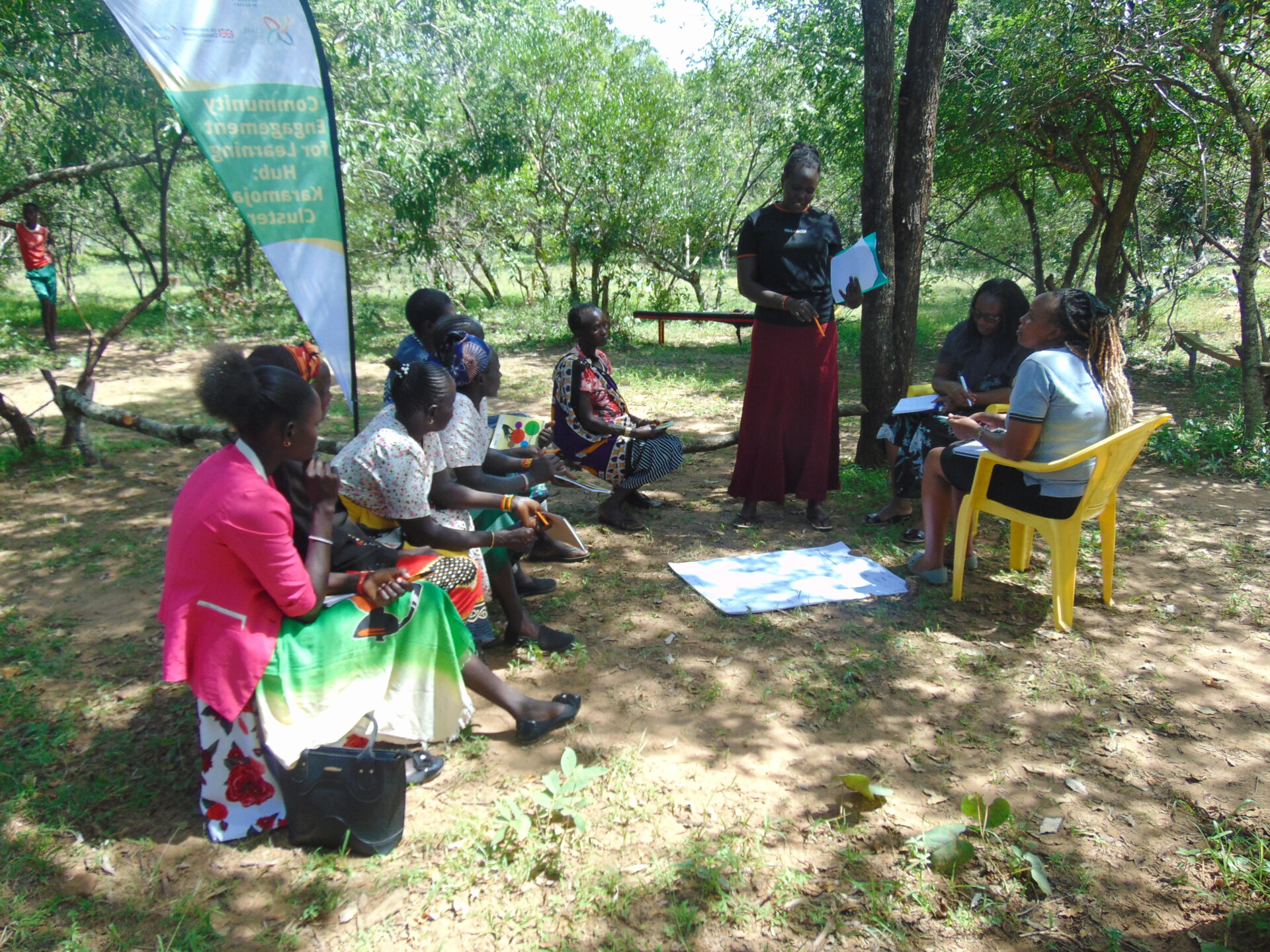
Integrating local and scientific knowledge is a key feature of FOLA. To achieve this, the approach begins a conversation with the community to establish common terminology around climate, vulnerability and actions to allow for a productive discussion and to get everyone on the same page. by providing a space to talk about the community’s experience with climate extremes, including local and indigenous knowledge (intestinal readings, wind direction changes and bee migration, amongst other techniques), it establishes a disaggregated disaster risk profile that is specific to the community in question. Looking into the past with the community builds a strong foundation of trust where people share stories and experiences.
From here, we combine these local forecasts with scientific forecasts into a matrix (see figure below) to establish a consensus forecast. Once the community has agreed to such a consensus forecast, we develop specific impact-based forecasts based on the vulnerable populations identified by the community. Next, we build detailed anticipatory action plans for each group depending on the likelihood of the hazard occurring. Having the community at the heart of the discussion and co-producing the action plans means we can understand exactly what is most useful to the community in advance of a drought. This uncovers pivotal information that a top-down approach could never achieve.
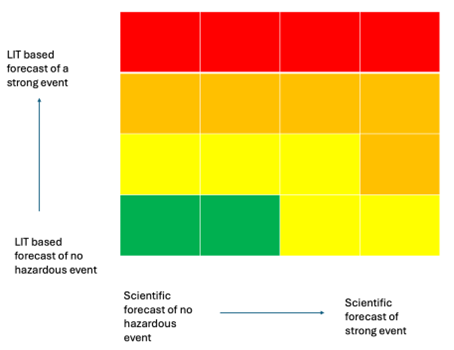
FOLA goes beyond just co-producing risk assessments, action plans and integrating local and scientific knowledge. It also acknowledges the importance of having dynamic thresholds of a hazard depending on the person or group it is impacting. FOLA also identifies different groups within a community and attributes different thresholds according to their vulnerability. Many vulnerability or risk-based systems are too quick to take a top-down approach, often blanket attributing a joint threshold or level of vulnerability to an entire community. Our approach aims to change this by establishing a systematic and scalable framework for locally-led anticipatory action.
For more details on FOLA, we have provided a short video as well as a handbook.
If you’d like to get in contact with us with regards to PASSAGE or FOLA more specifically, please do not hesitate to reach out:
Pedram Rowhani & Dominic Kniveton
Categories
Countries
CLARE Pillars
CLARE Themes
CLARE Topics