

From Early Warning to Anticipatory Action: Lessons from Horn of Africa’s Drylands
/
The promise of locally led approaches and impact-based forecasting in building resilience across Africa’s drylands
By Ahmed Mohamoud – PASSAGE Project Coordinator
By co-developing anticipatory action frameworks with pastoralist communities, PASSAGE project and its partners are linking science, local knowledge and finance to turn forecasts into early, practical action. Forecast to Local Action (FOLA) is redefining how early warning systems can work for communities across the Greater Horn of Africa.
Africa is warming faster than the global average, and drought frequency has increased by nearly 29% since 2000, yet only 40% of the African population has access to early warning systems the lowest rate of any region of the world (World Metrological Organisation, 2024). For many pastoralists, this has meant living on the frontline of a changing climate without the safety nets or early interventions needed to protect their livelihoods.
Although pastoralist communities are adapting with remarkable ingenuity through mobility, social networks, and indigenous forecasting, their resilience and adaptive capacity are increasingly undermined by climate change, more frequent and intense shocks, and structural marginalization. At the same time, systemic barriers, like limited access to markets and services, exclusion from formal decision-making have further deepen their vulnerability to shocks.
Despite the technological progress in climate science, the benefits of improved forecasting have often failed to reach those most at risk. A troubling paradox persists, with the gains in forecasting tools yet to reach the most vulnerable groups trapped in cycles of crisis. Decisions, just like forecasts, have traditionally been made through top-down, technocratic models that overlook local realities. As a result, even when warnings are issued, they rarely translate into the right actions in a timely manner.
From Early Warning to Anticipatory Action – The Troubling Path
Forecasts only matter when they are timely and enable people to act before crisis. Despite major advancements in early warning systems in the Horn of Africa, droughts still escalate into humanitarian crises. Forecasts often fail to trigger timely or context-appropriate responses, with action coming only after livelihood assets have already been lost. Traditional mechanisms such as emergency food relief and humanitarian aid as well as release of contingency funds by governments remain reactive rather than proactive, responding after disaster strikes instead of preventing its worst effects.
Current early warning systems are hampered by myriad challenges.
- Responses are frequently designed at national levels, detached from sub-national and community perspectives, and are poorly tailored to specific impacts.
- Weak dissemination of information, limited access to local data, and centralized decision-making have further constrained preparedness.
So, what does it take to move from warnings that don’t translate into action, to a system that anticipates impacts and acts early? The answer is in the shift to proactive, locally led approaches where Impact-Based Forecasting (IBF) and Anticipatory Action (AA) become the modus operandi.
Towards Impact-Based Forecasting and Locally Led Anticipatory Action
Impact-based forecasting moves beyond predicting hazards to anticipating their effects on people and livelihoods. It considers who will be affected, the severity, and the advance actions. By linking science, finance, and local action, it provides a structured pathway from early warning to early response.
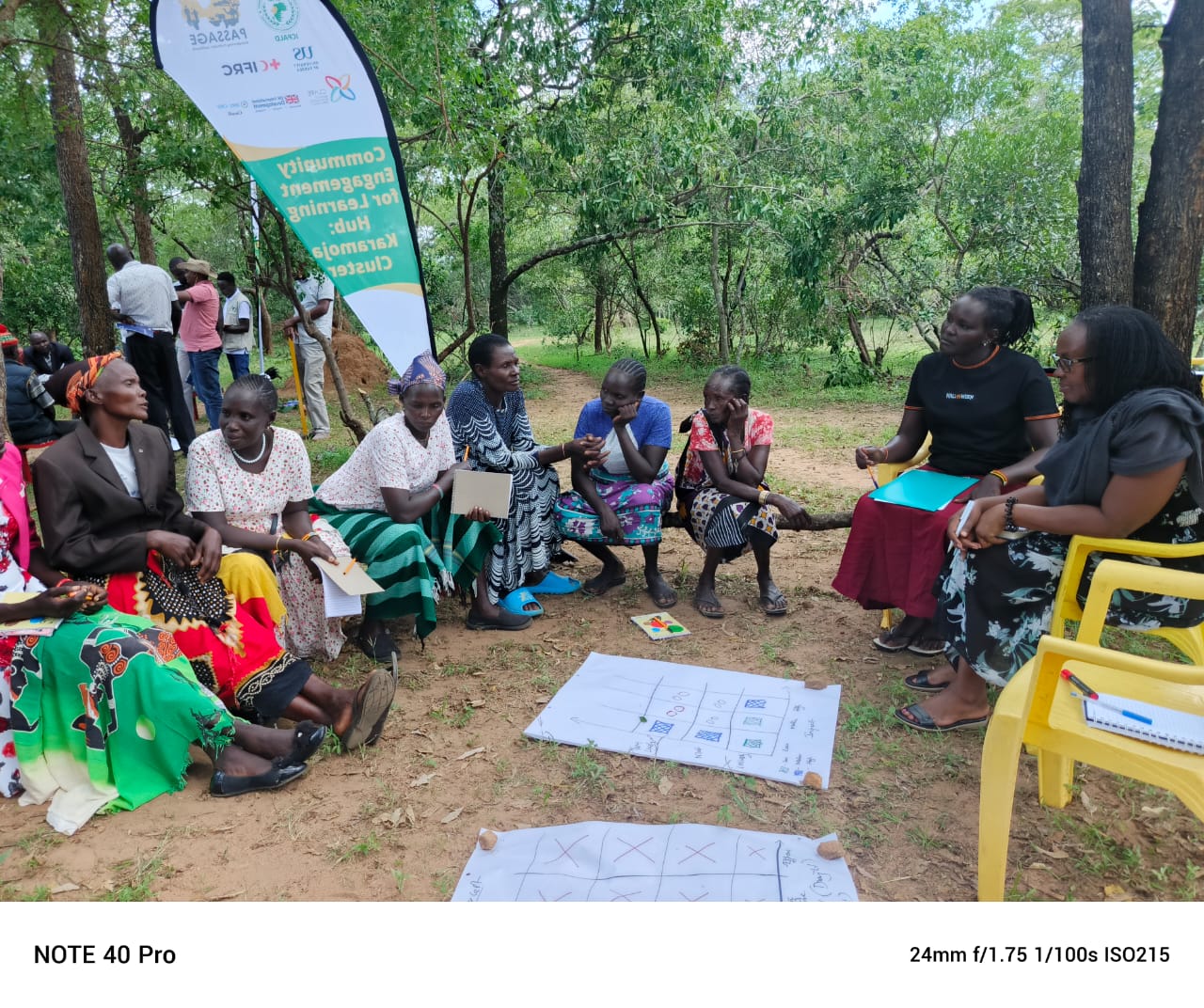
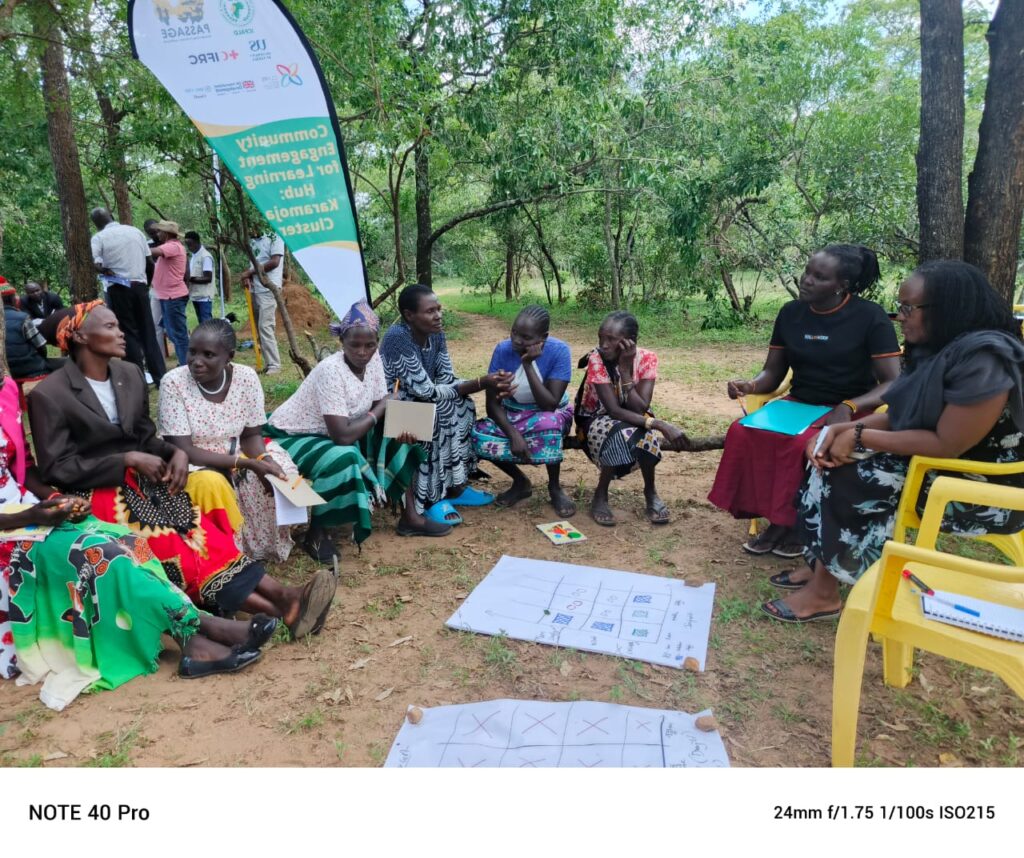
Under the PASSAGE project, this shift was operationalized through Forecasts to Local Action (FOLA), a structured, community-driven process designed to translate scientific forecasts into actionable local plans. FOLA followed a structured process that included, scoping and contextual analysis, co-production and participatory engagement, development of risk narratives which was tested through the Learning Hubs, a collaborative space where communities, scientists, and local organizations co-interpreted forecasts and co-produced anticipatory action plans. In practice, these hubs served as incubators for locally led anticipatory systems, blending indigenous indicators (such as wind direction, star alignment, animal behavior, and bird calls) with scientific outlooks to generate forecasts that are both credible and trusted.
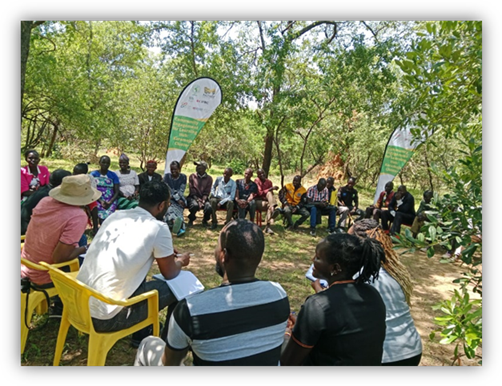
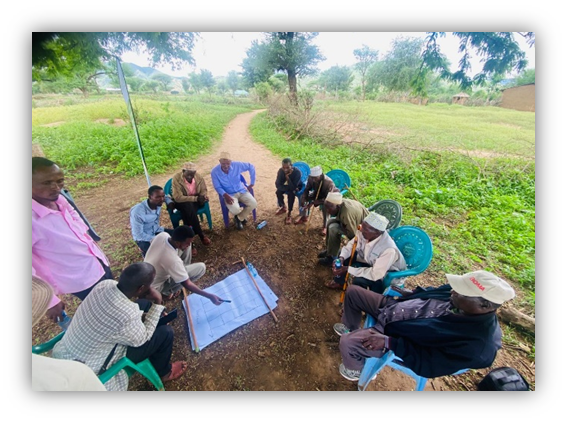
In Moyale, on the Kenya–Ethiopia border, for instance, local indicators such as heavy morning mist pointed to low risk, while scientific models predicted a 70% chance of depressed rains. Through iterative discussions, the community and scientists compared evidence and reasoning before agreeing on a shared, medium-hazard classification for the season.
Through participatory tools such as the Combined Forecast Matrices, Impact-Based Forecast Matrices, and Trigger-Action Plans, communities were able to visualize risks, identify vulnerable groups, and decide who acts when certain thresholds are reached. These locally developed risk matrices became a shared reference point, linking scientific forecasts with lived experience to determine who is most at risk and what actions to prioritize. In Moyale, this process revealed that lactating mothers and infants were consistently at highest risk even under moderate drought conditions, prompting agreed triggers for mobile nutrition teams, cash top-ups, and borehole repairs before the crisis escalated.
In Karamoja (West Pokot–Amudat), the analysis highlighted children under five and persons with disabilities as persistently vulnerable, leading to anticipatory actions such as pre-positioned nutrition supplies, accessible alerts via local radio, and inclusive referral systems.
By grounding forecasts in local knowledge and participation, the FOLA model ensures that forecasts are not only accurate but actionable. It bridges the persistent disconnect between early warning and early action by transforming forecasts into trusted community intelligence. While currently at a pilot stage, the process is being refined with the aim of institutionalizing it within national systems, particularly through collaboration with the National Drought Management Authority (NDMA) frameworks.
PASSAGE’s role has been to facilitate co-design, testing, and learning, enabling national and local institutions to gradually take ownership. This approach lays the foundation for a sustainable model of impact-based forecasting and anticipatory planning that can be scaled and embedded within formal governance structures over time.
Ultimately, these experiences affirm that locally led Anticipatory Action, anchored in impact-based forecasting and collaborative design, offers a practical pathway toward strengthening resilience in Africa’s drylands. Africa’s future resilience will depend on how quickly we can shift from reactive to proactive systems, where forecasts not only warn but empower.
Anticipatory Action must become the new normal bridging the gap between science and society. When communities shape how risks are understood and when actions are taken, early warning evolves from distant alerts into a system that genuinely protects lives and livelihoods.
Categories
Countries
CLARE Pillars
CLARE Themes
CLARE Topics
Published
CLARE Projects
CLARE Partners