


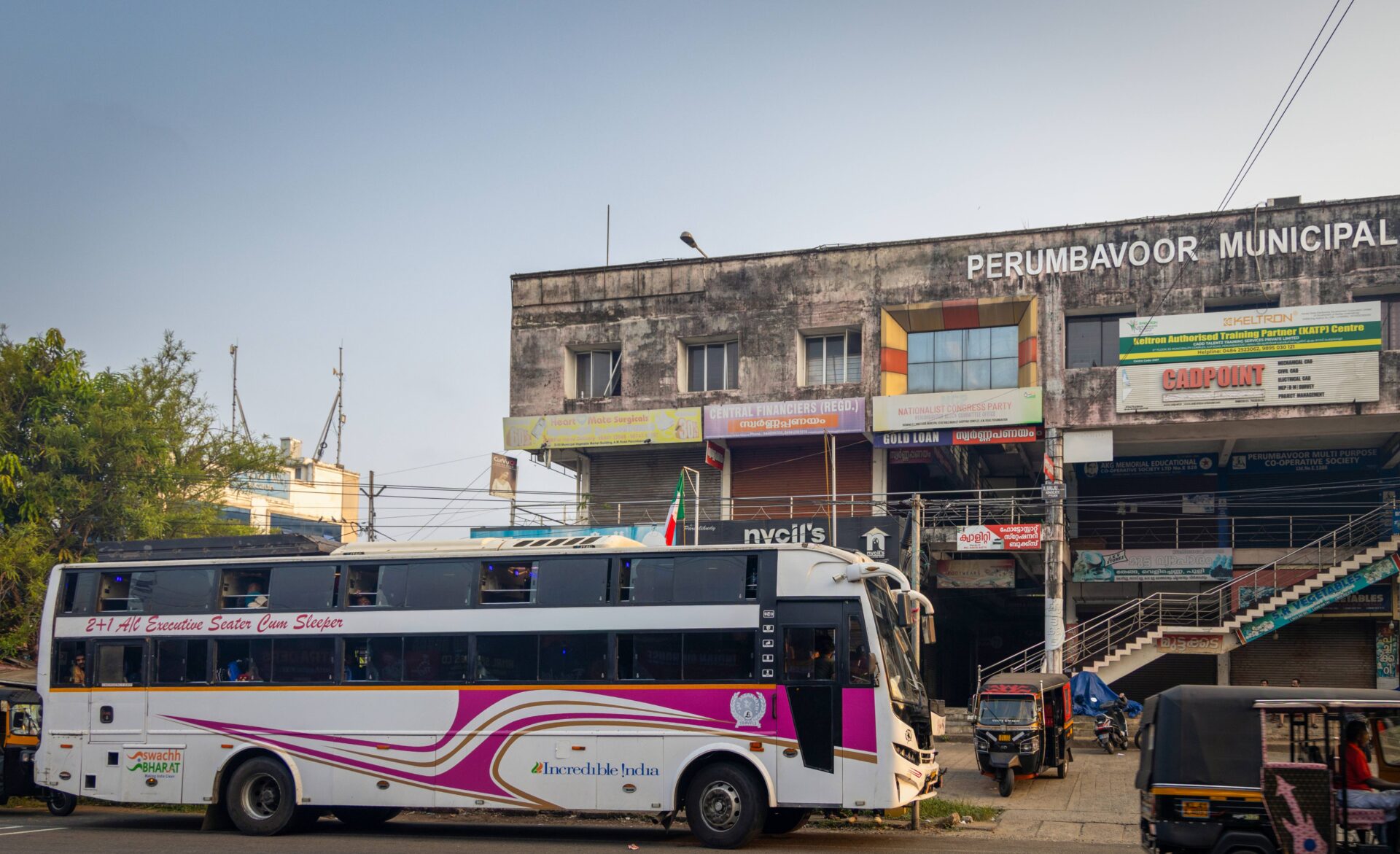
Inside a 48-hour Bus Ride with Migrant Workers from Odisha’s Climate-hit Coast to Kerala’s Factories
/
Every Friday, buses leave a climate relocation colony in coastal Odisha carrying workers more than 2,000 kilometres to jobs in Kerala. We travelled with them to see what the journey reveals about migration, work and the lives built between two places
Nihal Ranjit, Yashodara Udupa, Satwiki Adla, Hemant Kumar SJ
This article was originally published by The Migration Story on November 16
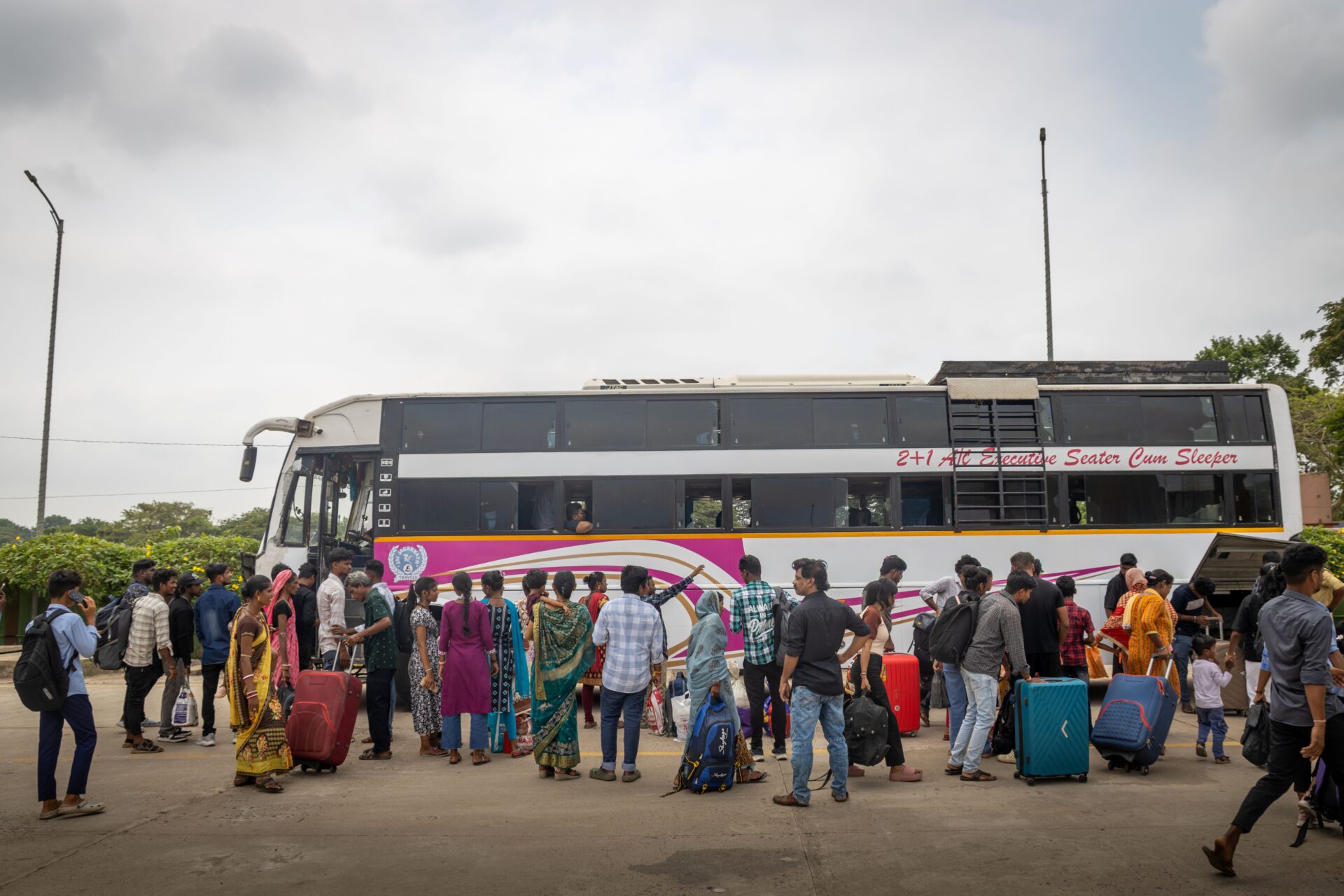
BAGAPATIA, Odisha: On a Friday, just days after Pana Sankranti (Odia New Year) in April, the Panchu Barahi temple at the edge of Bagapatia village in Kendrapada, Odisha, was already bustling at 8:30 am. Young men and women stood with suitcases at their feet and bags slung over their shoulders. A young woman wept. Another held her mother tightly, unable to speak.
They were waiting to board a bus that would ferry them from Odisha’s eastern coast to Perumbavoor in Kerala’s Ernakulam district, on the western coast. A journey that would last over two days and more than 2,000 km away.
Every Friday, this scene repeats itself. At least half a dozen buses leave Rajnagar block in Bagapatia for Perumbavoor. Many of the men are headed to plywood factories in and around Perumbavoor; the women make their way to a prominent garment company in Ernakulam.
Since July 2024, we have been returning to Bagapatia to understand the experience of planned relocation, described by the Odisha government as India’s first rehabilitation settlement for communities impacted by climate change. Ask anyone here about relocation, and the answer comes quickly, “Our lives were saved, but we have no livelihoods, there was no land given for agriculture.”
Leaving Satabhaya, then leaving again
Most of the young passengers had been children or teenagers in 2017, when their families began moving from Satabhaya, a cluster of seven villages along the Bay of Bengal, around 12 km from Bagapatia.
Satabhaya has been facing threats of coastal erosion since the 1960s and has always been prone to cyclones. These impacts became particularly acute in 2015, when large swathes of land were submerged by the rising sea. The settlement, once estimated to be around 350 sq. km in 1930 reduced to 140 sq. km in 2015.
The unabated erosion and the loss of assets and livelihoods prompted the state government to relocate people to Bagapatia, where each household received 10 cents of homestead land and 1,50,000 Indian rupees to build a house. Moving to Bagapatia meant losing access to agricultural lands and produce such as freshwater fish and honey from the mangrove forests. What was earlier grown must be bought now.
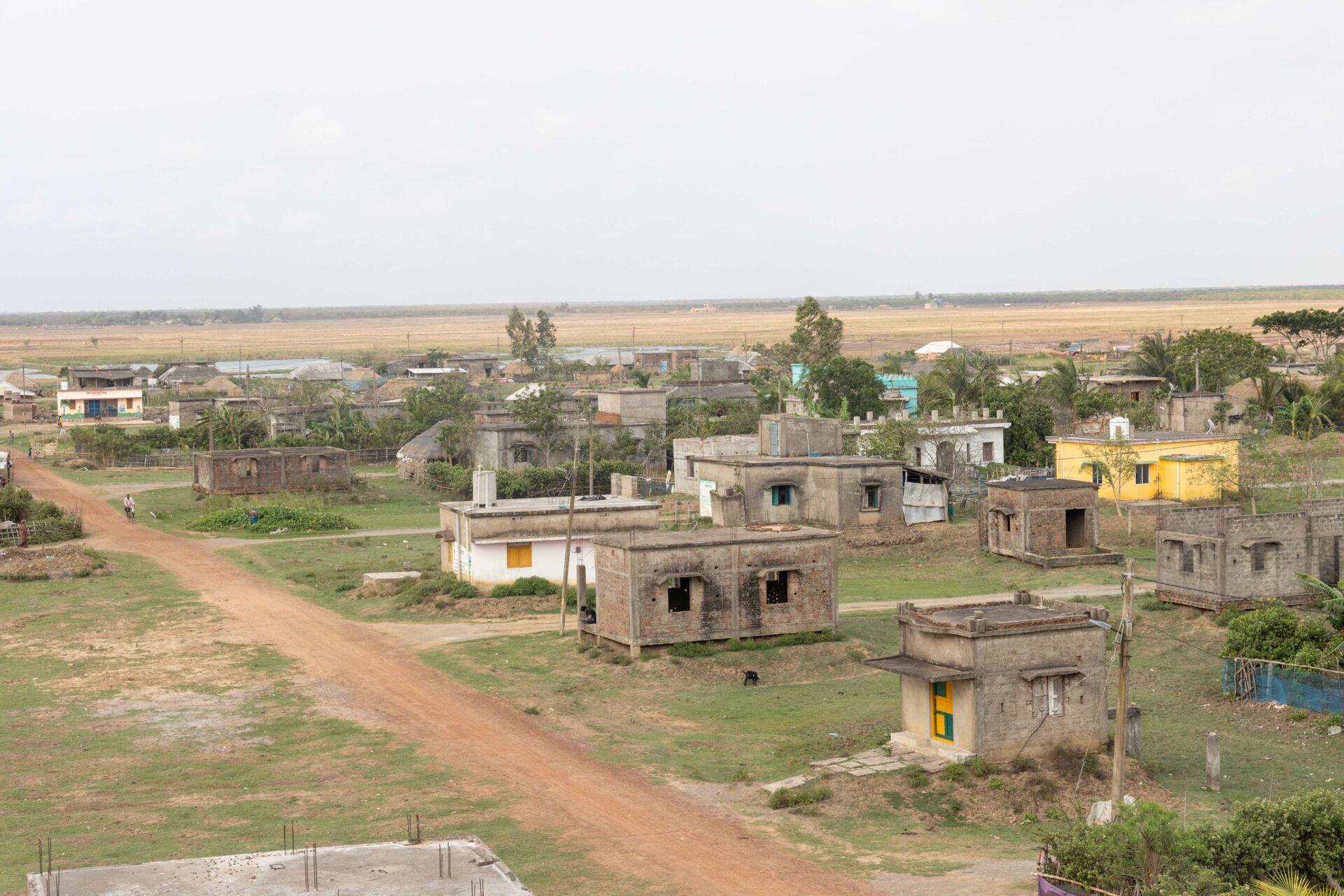
For many families, however, relocation to Bagapatia did not bring an end to the movement. The loss of livelihoods and scarcity of local work soon prompted a second move, as young people began migrating to Kerala in search of employment. Migration to Kerala predated the relocation, residents said, but it expanded afterwards.
“People did migrate to Kerala even when we were in Satabhaya, but hardly 10-15 people used to go. Now every household will have at least 1-2 members working in plywood factories in Perumbavoor. In every household that has young men or women, they migrate,” said Saroj*, a resident of Bagapatia, who works in Perumbavoor, Kerala.
Manoj, whose children also work in Perumbavoor added that girls were now working in garment factories in Kerala.
“Women migrating for work was unheard of in our village. After moving here, because we cannot practice agriculture anymore, even girls have started to migrate,” he said.
The bus route migrants built
The bus service grew out of another disruption. The COVID-19 pandemic, which perhaps for the first time, brought into national focus the scale of internal migration in the country. When the lockdown left workers stranded and jobless overnight, Odia workers in Perumbavoor’s plywood industry and people in Kerala, began organising buses to take workers back home. What began as a crisis response has become a reliable, weekly operation connecting two ends of a growing migration corridor.
Binu*, one of the two Malayali drivers on our bus, described it as a business that depends on relationships across states. “This business cannot be run only by people in Kerala or Odisha. You need people in both places, that is the only way this will work.”
Around the route, an entire economy has formed to keep this movement going. Migrant-run bus operators, local agents and contractors coordinate bookings and pick-up points; drivers plan fuel stops to take advantage of price difference between states, and roadside eateries serve busloads of travellers through token systems and fixed menus.
Day one: stretching goodbyes
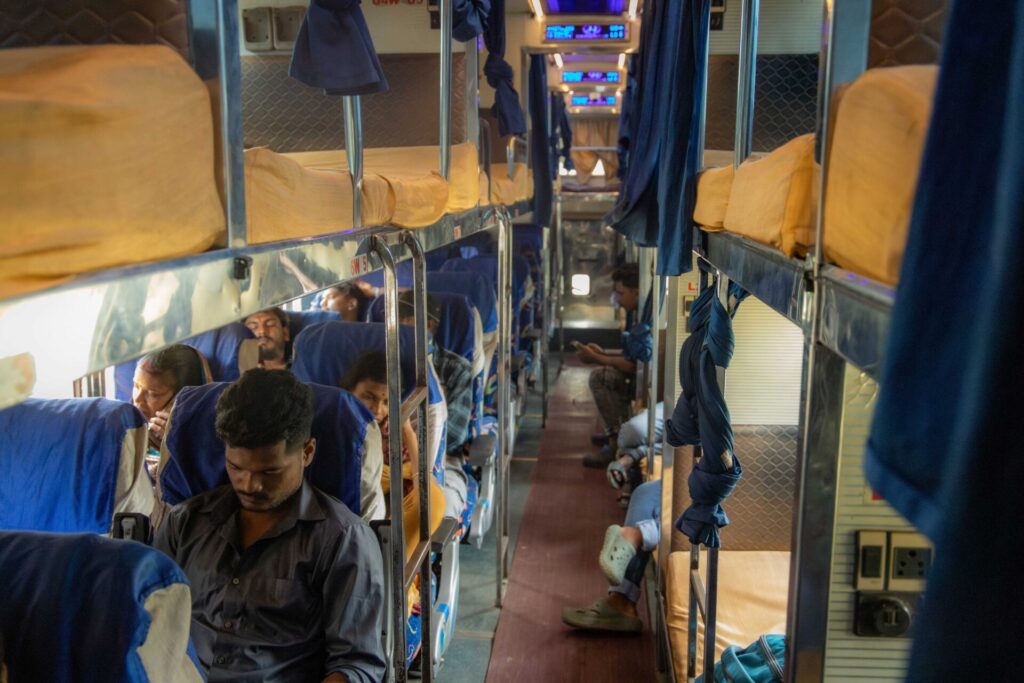
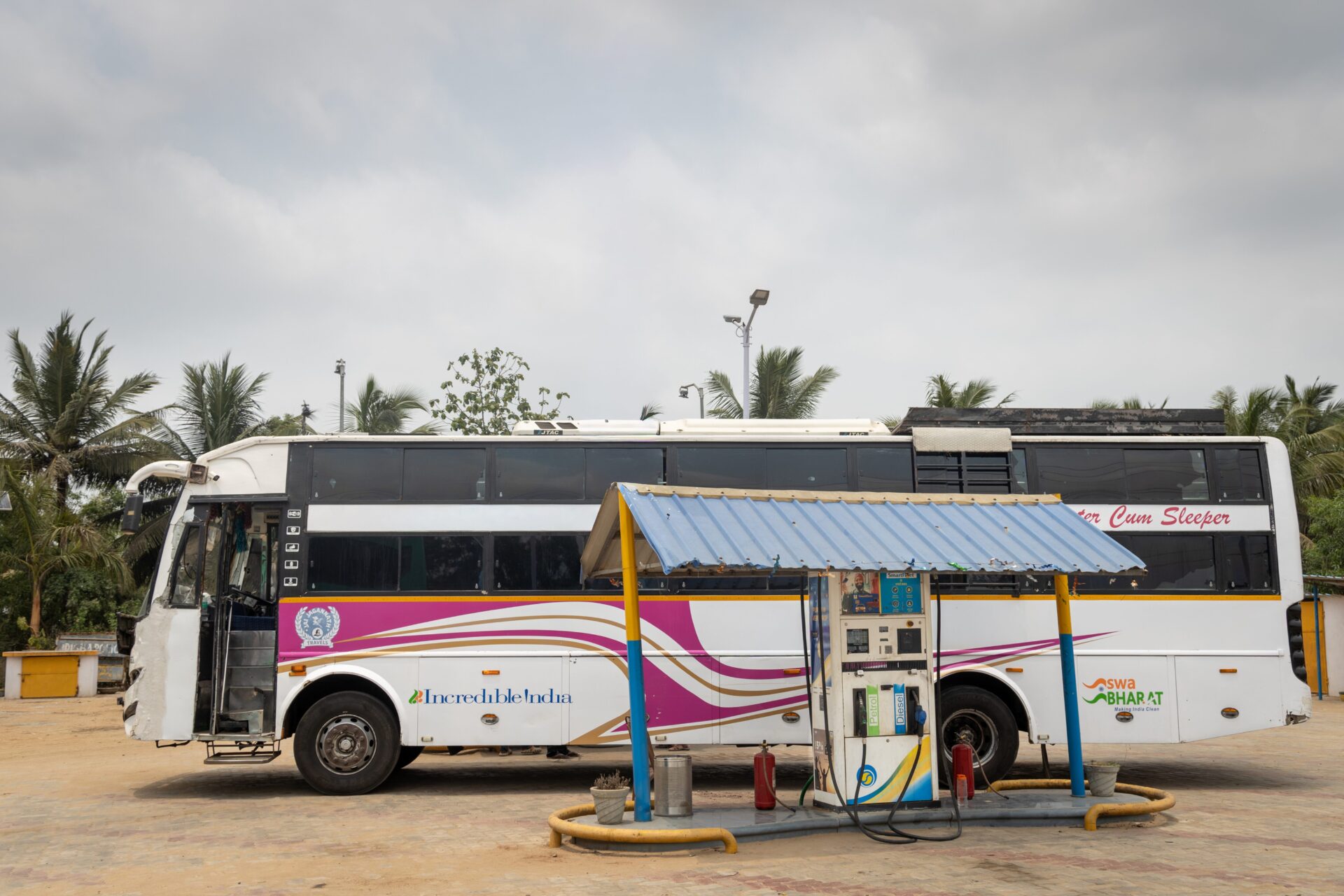
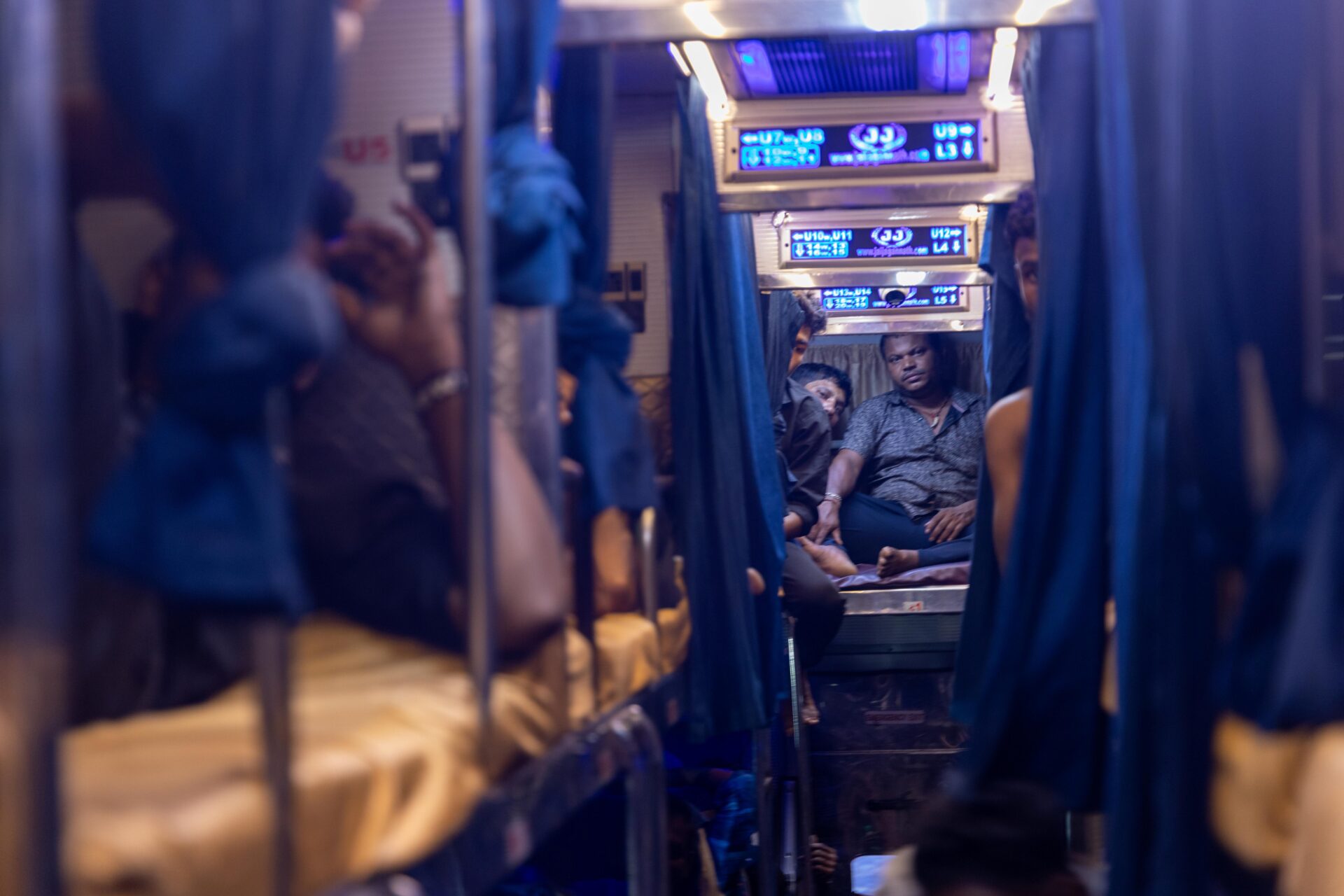
At around 9 am, we boarded the bus and were shown to our seats by Jose*, the other driver. The bus appeared fairly run down, a massive dent on the front and a slightly cracked windscreen. The upholstery was worn and dusty, the charging sockets broken, early signs of how taxing the two-day journey would be. Reclining seats cost INR 2,500; sleeper berths above them cost INR 3,000.
Jose warned us that the sockets near our seats were broken. Phones could be charged near the driver’s cabin, he said. It seemed a minor inconvenience at first. Over two days, with phones serving as entertainment, maps and the main connection to home, it became one of the bus’s most contested amenities.
Fifteen minutes later, the bus departed with only a handful of seats occupied. Five minutes later, the bus stopped again and more people climbed in. Binu helped with luggage and checked names off his list. Then some of the people who had boarded got off.
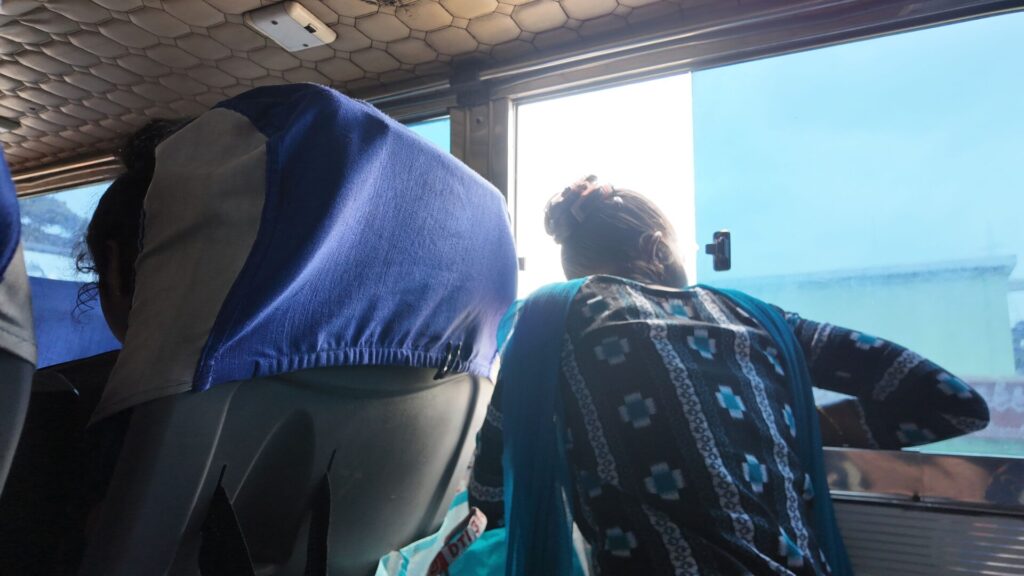
At the next stop, the people who had gotten off earlier, boarded again. They were family members of those migrating for work and had been following the bus on motorbikes. At each stop they climbed aboard to spend a few more minutes together, then got off, watching the bus leave once more. Some did this all the way to the depot in Rajnagar, around 45 minutes from Bagapatia. This extraordinary act of grief laid bare the pain so often hidden behind departure.
By 10:30 am, when the bus finally left Rajnagar, most seats were occupied. Five more women had boarded, taking the front rows. Many were visibly upset and, on their phones, scrolling through reels, putting up Instagram stories, or video calling those they had just said goodbyes to. The first couple of hours of the journey carried near silence, punctuated only by the sounds from their phones. Saina* who was travelling to Kerala for the first time, spent this time wiping her tears, while speaking to her mother-in-law on video call.
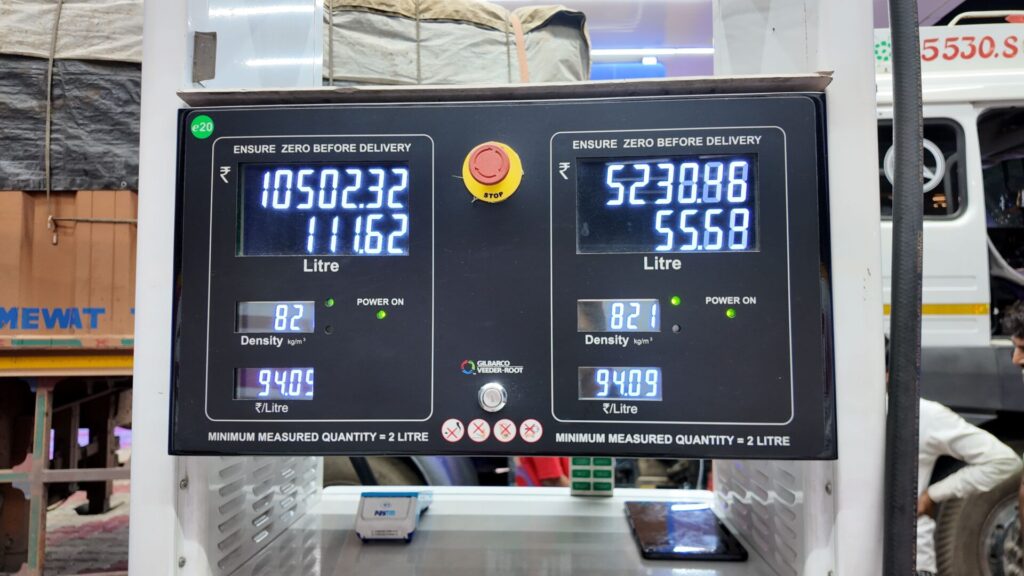
Around noon, we stopped for fuel and Binu talked us through the route. The bus would refuel again near the Odisha border and take a short detour into Karnataka the next evening. He said they tried not to buy diesel in Andhra Pradesh or Kerala because it cost more there.
It was almost 2 pm when we pulled into Cuttack. What would have been a three-hour ride from Bagapatia, had taken nearly twice as long. “We got two buses from Kerala last week because of high demand. The drivers of the other bus do not know the route well, so the two vehicles are coordinating pick-ups,” Jose said.
At Cuttack, nine men boarded after half an hour of discussion between drivers and operators. Binu stopped them near the driver’s seat and photographed them with their bags. One mocked, “Yes, yes, we are carrying ganja.” We had noticed this in Rajnagar too; but neither we nor the women passengers were photographed.
Later, Binu explained, “Once the police found contraband in a bag during a routine check, but none of the passengers claimed it. The bus was taken into custody, and we paid a lot of money to get it released.”
The practice was a reminder of how suspicion and risk are managed on the route, and of how differently passengers can be treated within the same journey.
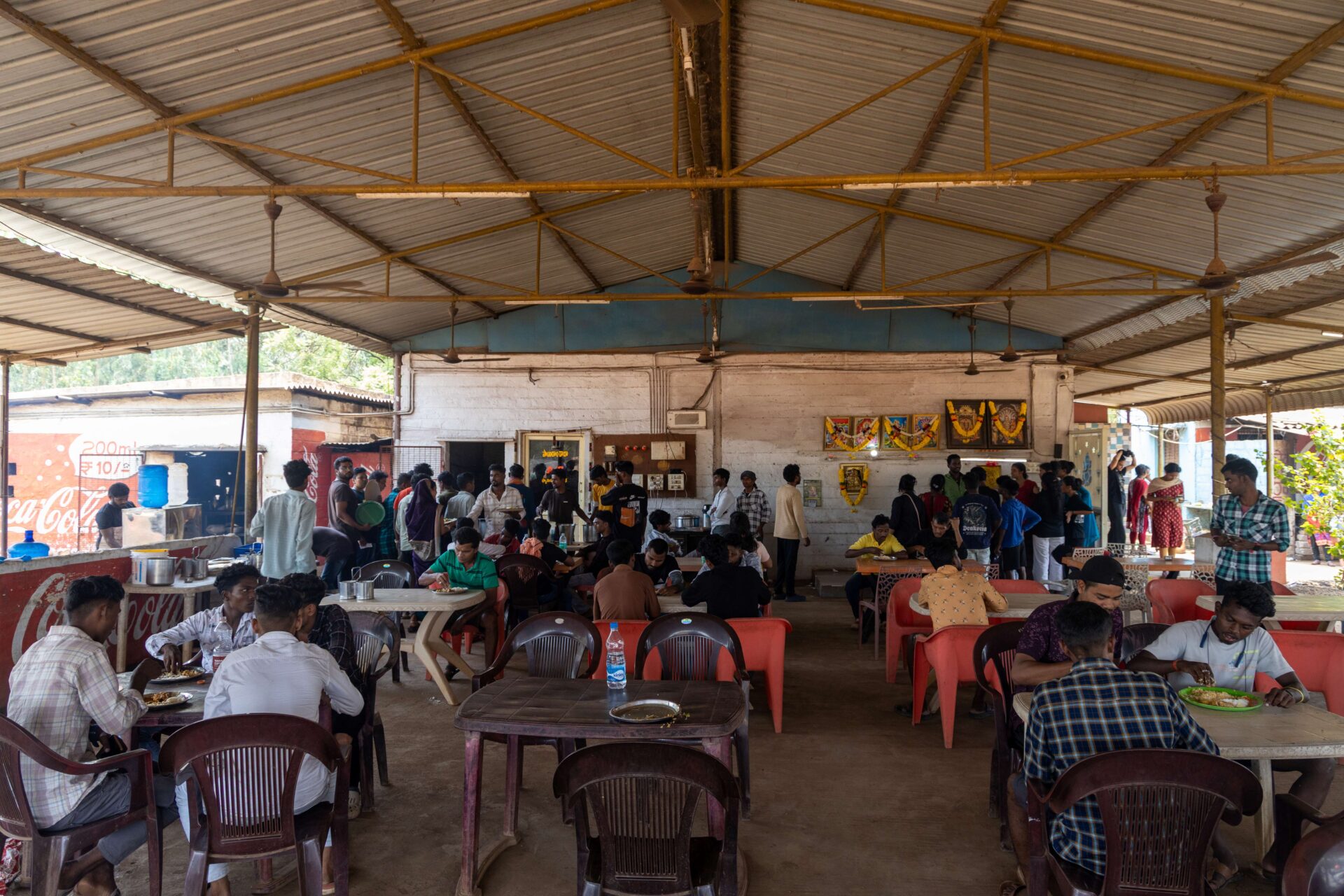
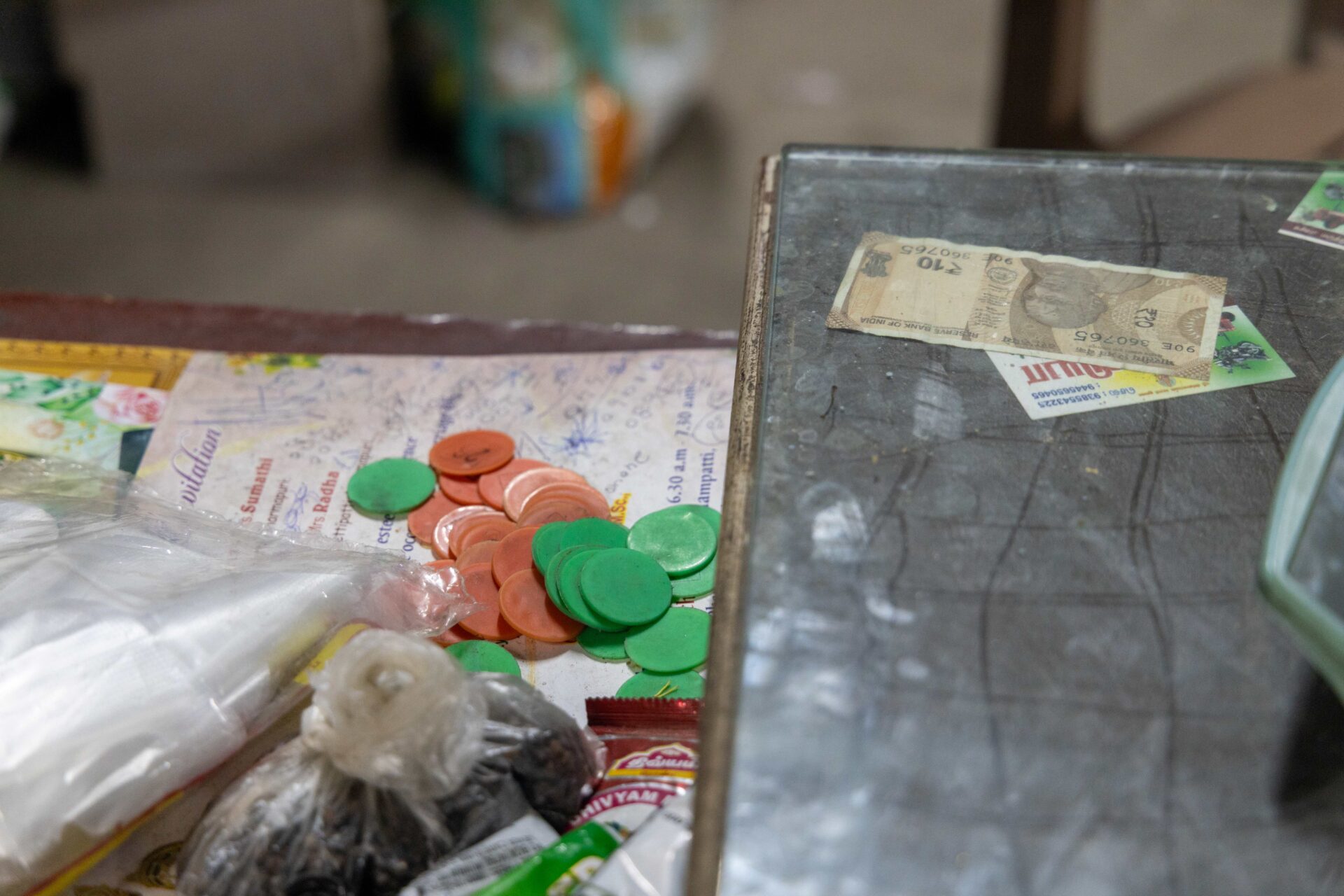
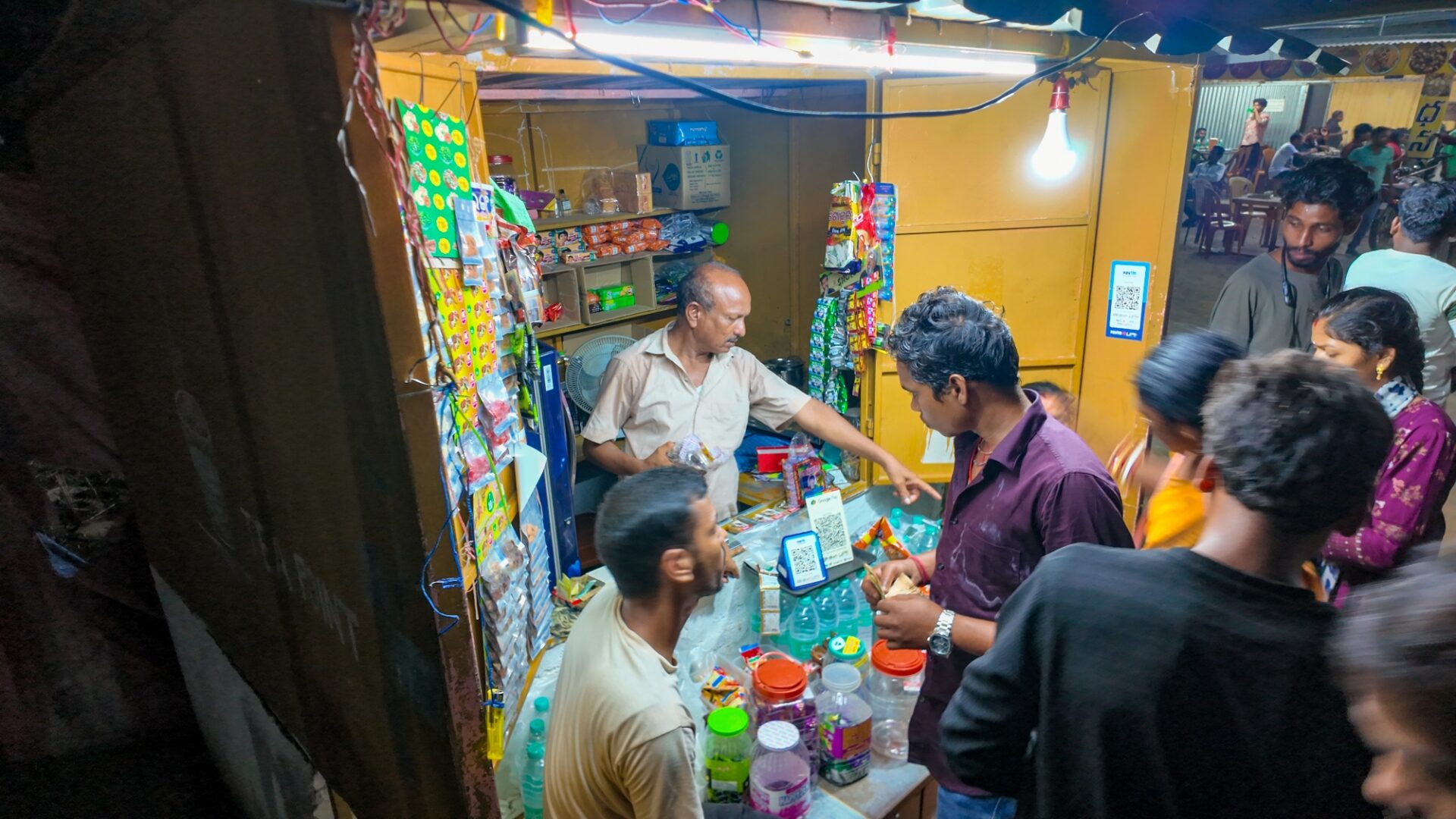
At around 3:45 pm, we pulled into a dhaba outside Bhubaneshwar. Several buses we had seen at Rajnagar were already parked there. Like every food stop along the way, it ran on a token system. Although the eatery has a large menu, passengers are usually offered only a thali or another meal that can be served quickly. Drivers ate separately, often in an air-conditioned room.
In about 45 minutes, we were on the highway again, Binu took the wheel. For the rest of the journey, he and Jose would switch every five to six hours. Phones kept up a steady chatter of sounds from reels, songs, and videos. Small groups formed and younger men climbed into sleeper berths to watch a cricket match together.
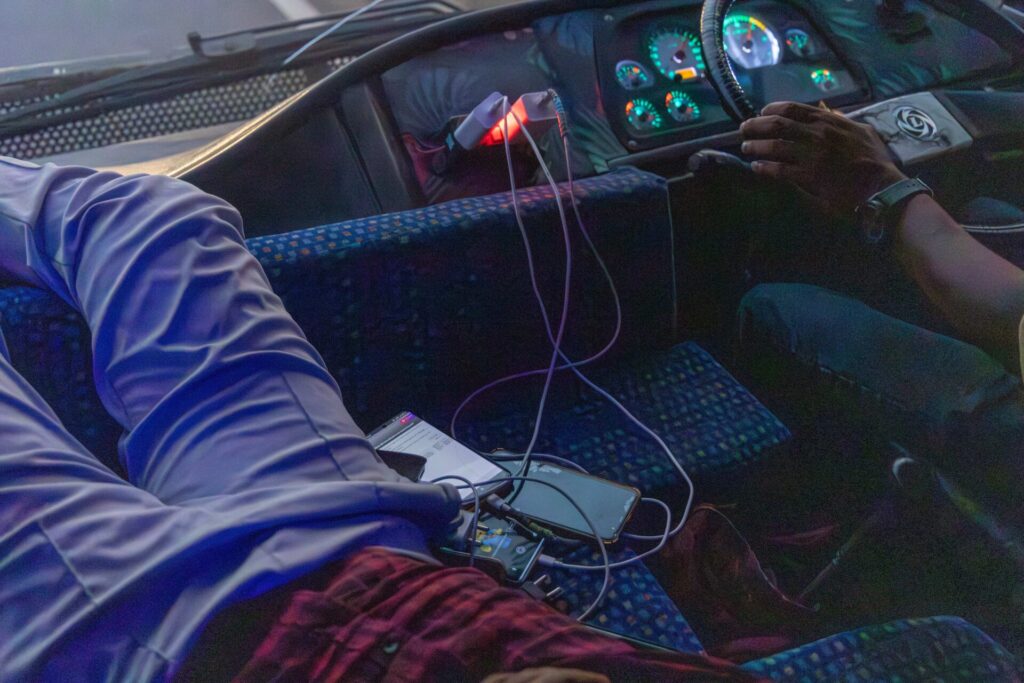
Slowly complaints started to pour in. Passengers came up to complain about the dead charging sockets, and drivers took their phones to charge near the dashboard, a few at a time. Then, someone complained about the air conditioning being off. “We paid INR 3,000 for an AC bus, but AC is not on and the charging points are not working,” one man aired his frustration.
Around 7:30 pm, we crossed the border into Andhra Pradesh and drove barely half a kilometre. Then instead of continuing south, the bus made a U-turn, crossed back into Odisha and pulled into a fuel station. Once the tank was filled, we crossed the border again and continued south.
At 9 pm, we stopped for dinner. Other Kerala-bound buses crowded the dhaba. The women complained about the restroom and headed into the open, further from the dhaba to relieve themselves.
Later, we struck up a conversation with Saina. She had left her two-year old daughter with her in-laws and was headed to a garment factory she had heard about from a neighbour travelling on the same bus. “My husband works as a plumber in Bangalore. He used to work in Kerala earlier. I was not sure I will find a job in Bangalore, so I am going to Kerala,” she said. Her neighbour, seated beside her, had worked there for several years. This made the journey less daunting for Saina. Although she was leaving home for work for the first time, she was travelling with women who knew the factory, the hostel and what to expect.
We were on the road again, Jose at the wheel while Binu rested. We were about 200 km away from Visakhapatnam. In about 12 hours, we had covered only a little over 350 km. Many had dozed off; a few phones continued to play songs and reels. No one seemed to mind the overlapping noise.
Inside the bus, it was hard to understand how far we were travelling. The road signs, food and weather changed along the way, but for most passengers, the destination was the same: factories, hostels and rented rooms in Ernakulam.
Day two: the heat sets in
A little after 6 am on Saturday, Binu pulled into a large parking lot adjoining a dhaba, almost 300 km past Visakhapatnam, over 500 km covered through the night. The place was already bustling with passengers from other buses, walking around with water bottles and toothbrushes, queuing outside restrooms, far too few for the crowd. Men filled their bottles and headed to the nearby fields. It was our longest halt yet. For over an hour, people freshened up, had breakfast, and stretched stiff legs, preparing for another day on the road.
An hour later, after we crossed the Krishna River, Binu got a call from the driver on the other bus that police were stopping vehicles at a check post ahead. Our bus was carrying more passengers than its capacity, while the other had empty seats. People were shifted between buses, and we carried on.
As the day heated up, so did the arguments over the air conditioning. With the AC off, passengers were sweating. Five men came to the front demanding it to be turned on, citing the INR 3000 they had paid. “People have kept the windows open, that is why we are turning off the AC,” the drivers reasoned. Hearing this, one of them moved the length of the bus asking everyone to shut their windows, then stationed himself near the front to ensure they stayed shut. The AC came on and the bus quietened.
For the drivers, the heat was harder to escape. Jose said driving through Andhra Pradesh was especially exhausting in summer. “The hot air from the engine coupled with the hot breeze makes my eyes water. It also tires me out quickly,” he said, pointing to an energy drink beside the dashboard. “This is what keeps me going in the heat.”
Inside the cabin, people ate fruits bought during the previous stop, and many squeezed lemons or mixed jaljeera powder into their water bottles, attempting to stay hydrated.
By dusk, we passed Chittoor. The bus left the national highway and travelled along a two-lane road for nearly an hour before pulling into a petrol station in Karnataka, the final refuelling stop of the journey. The AC was off again; but it was cooler now, windows were opened, and no one protested.
It was past 10 pm, and the exhaustion of the two-day journey was apparent. Many sat quietly glued to their phones, while others dozed in their seats. Biswajit*, one of the passengers, came to the front. “Why haven’t we stopped for dinner yet? People are hungry and it is past 10 pm,” he told Binu. The drivers had been notably patient, exchanging jokes with passengers, responding to requests, or making unscheduled restroom stops. Their only visible irritation came during the air conditioning ‘protests’.
At 10:40 pm, the bus finally stopped at a small eatery near Dharmapuri in Tamil Nadu, the last halt for a meal. Unlike the previous halts, there were no parking lots, no other buses, and the eatery was barely enough for half the passengers. Yet it operated exactly like those in Odisha and Andhra Pradesh. Meals served through a token system and a pre-set menu.
In an hour, we began the final stretch. Many had retired for the night; the open windows brought a cool breeze. Binu, at the wheel again, said he had slept about two hours during the day. “I will drive for three hours now, and Jose will take over. We should reach before 6 am tomorrow,” he added. At 1:30 am, the bus stopped; and Jose took over, the exhaustion of driving over two days with little rest catching up with him.
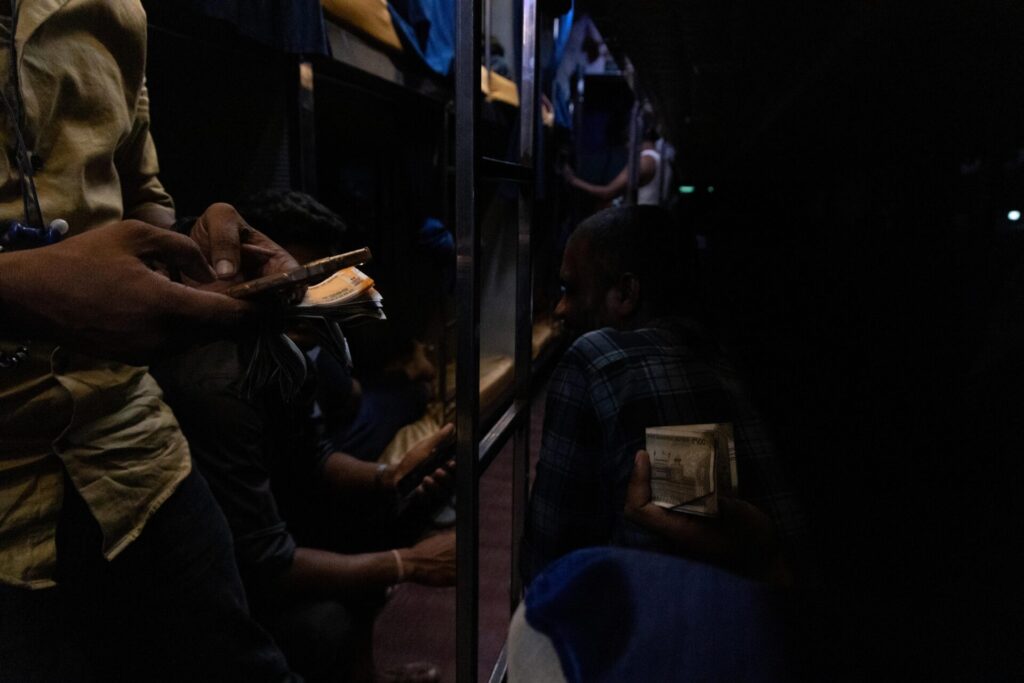
Arrival and a new life
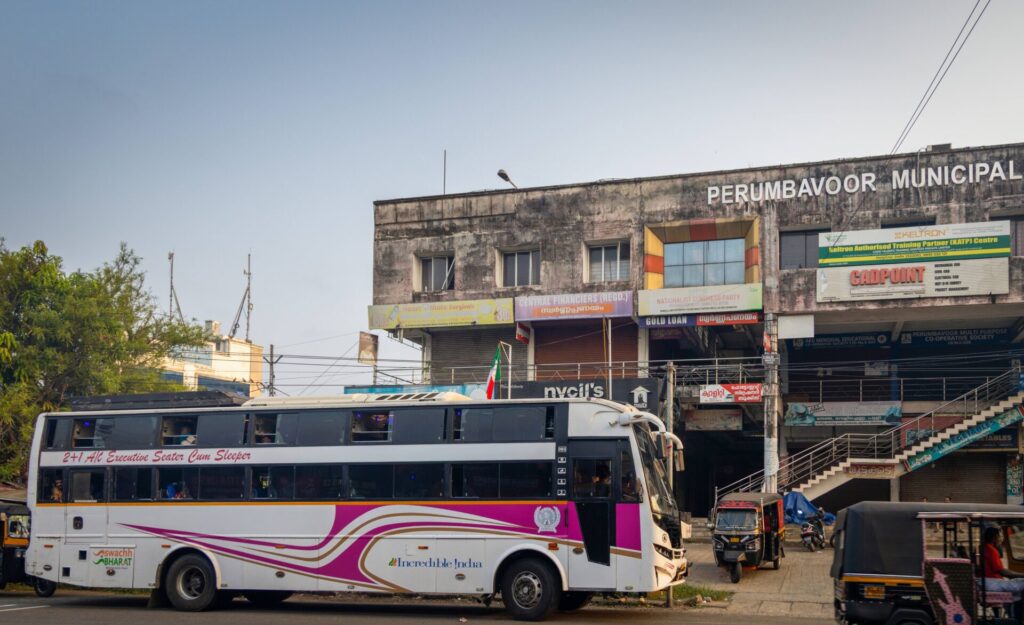
Early on Sunday, the bus entered Ernakulam, with Perumbavoor about 20 minutes away. Large highways had given way to narrower two-lane roads, and the vast green landscape of the past two days gave way to compound walls painted with the names, photos and party symbols of political leaders. The town was slowly waking up, shutters down on most stores, a few auto rickshaws about, and the low hum of the Sunday mass in the distance.
The bus pulled up in front of the Perumbavoor Municipality Vegetable Market-cum- shopping complex. If leaving had been emotional, arriving was defined by routine. Passengers queued up to settle payments, collect bags, and coordinate the final leg to their worksites or accommodation. There were no elaborate goodbyes or warm welcomes waiting for them. After a few workers got off, the bus made its way to the hostels of the garment factory.
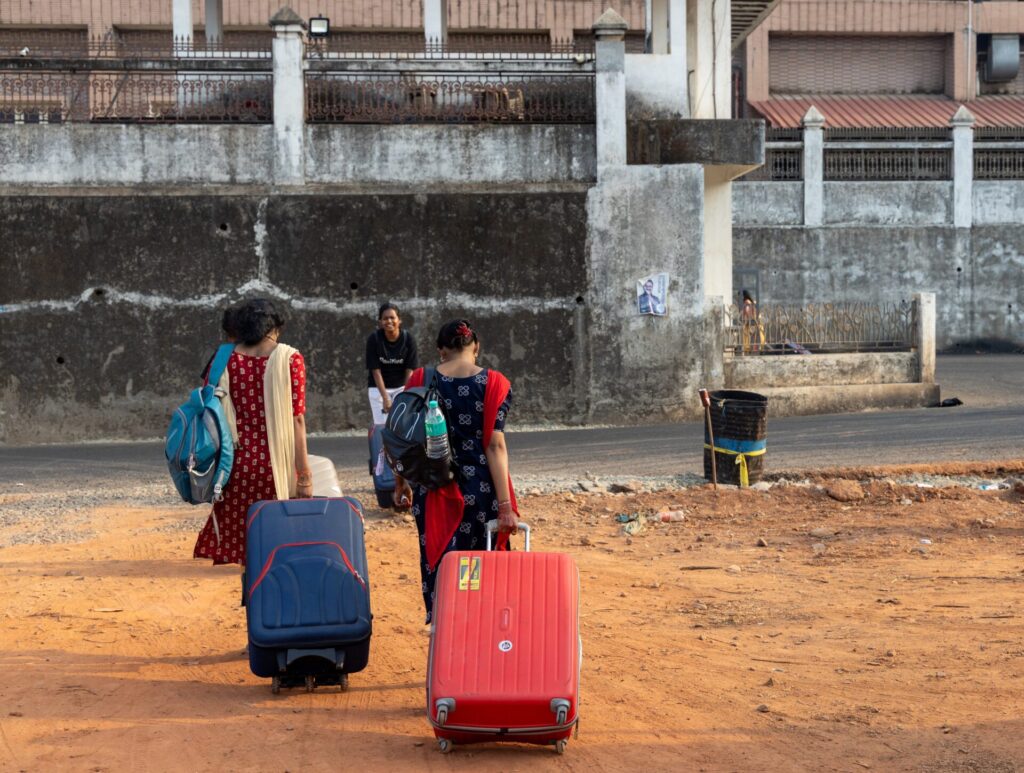
The hostels were located inside a massive complex that resembled a school. As the bus pulled in outside the gates, scores of women lined up near the windows on different floors, watching the young women who had just arrived. The women pulled their luggage from the trunk with Binu helping as most had large suitcases or multiple bags.
The previous day, the young women now walking towards the gate had told us about their lives in the garment factory. Some have worked here for the past five years, others between six months and a year. “When we join, we are given training for a month”, said Sushma*. “Our work starts at 7 am and goes on till 5 pm. Our salaries range between 9,000 and 15,000 rupees. We are given four meals a day and accommodation free of cost. This allows us to save a lot of what we earn” added Rose*, who has worked with the company for nearly three years.
Most women start migrating young, sometimes at 16 or 17. Did they miss Odisha? “We like everything back in Odisha. At home our mothers care for us, they ask if we have eaten and feed us. We miss them terribly. I video call them every day. On Sundays, the company arranges a bus for us to go to the town to temples, churches and for shopping,” said Rupa.
“We like WonderLa” (an amusement park in Ernakulam), said Sushma laughing.” “On Sundays we dress up, wear sarees and take pictures,” she added. Their earnings pay off family debts, (re)build houses, and also save for their weddings. Many said buying gold for their wedding is an important goal. “If we work for five to six years here, we get around INR 1.5 to 2 lakhs while leaving,” noted Rose, a lump sum seen as a safety net to leave factory work or start a small business.
“If I was staying in my village I would have been married off by now,” Rose noted light-heartedly. “Men in our village are not getting brides, most of us are working here now. The age at which women in our village get married has definitely gone up,” Rupa added.
In Bagapatia, families spoke of how remittances from Kerala helped them build better lives. But these gains come at a cost. For those who travel this route year after year, the toll went beyond physical exhaustion. Their journey carries stigma and stereotyping, seen in the safety checks and passenger comfort.
And yet, the buses run full week after week. Migrants endure the long hours and indignities of the journey because it carries the hope of a better future. The money they send home helps build stronger houses, put children through school, settle debts, and allows a family member to open a kirana store or buy an autorickshaw. Nearly every passenger we spoke to was working towards some version of this future.
The journey ended at the bus operator’s office in Odakali, outside Perumbavoor. After the last passenger got off and the accounts were tallied, the empty bus was sent for a wash. The drivers had only a short time at home before beginning the 2,000-km journey back to Bagapatia on Monday morning.
For passengers, the return home would take much longer. Some would return after a year, others after two. Until then, the weekly bus would remain their link to home, taking them to the distant jobs that helped keep life in Bagapatia going.
*Names of all passengers and drivers have been changed to protect their identities. Photographs of the bus have been edited to remove identifiable information.
Edited by Sofia Juliet Rajan
Satwiki Adla is a researcher whose interests lie at the intersection of climate change, gender and migration. Nihal Ranjit is part of the School of Environment and Sustainability. His research interests include disaster governance and climate change adaptation. Yashodara Udupa is a filmmaker with the Media Lab at IIHS. Hemant Kumar S J is part of the Media Lab, where his interests lie at the intersection of media and research.
The authors are part of the Climate Change Local Adaptation Pathways (CLAPs) project at the Indian Institute for Human Settlements (IIHS), Bengaluru. This work was researched under the Climate Change Local Adaptation Pathways (CLAPs) project.
Categories
Countries
CLARE Pillars
CLARE Themes
CLARE Topics
Published
CLARE Projects
CLARE Partners