
International Women’s Day 2026: Advancing gender-equitable adaptation through behavioural research
/
Author: Katharine Vincent (Kulima Integrated Development Solutions)
The theme of International Women’s Day 2026 is “Rights. Justice. Action. For every woman and girl”. This is very relevant in relation to water insecurity, a major challenge in Africa. Water insecurity affects women and girls differently from men and boys. The challenge is worsening with climate change and impacts are felt differently by each sector, age, economy and gender.
The Behavioural Adaptation for Water Security and Inclusion (BASIN) project seeks to address these challenges by examining how behavioural and psychological insights can improve decision-making for climate adaptation while explicitly recognising gender and social inclusion as central to water security outcomes.
Why gender matters for water security
Gender plays a critical role in shaping experiences of water insecurity. In many African contexts, women and girls are on the frontlines of collecting water and managing household water supplies and use. When water becomes scarce, these responsibilities often translate into longer journeys, increased physical labour and burden of household needs, and less time for education or income-generating activities.
At the same time, women are often under-represented in formal decision-making about water resources, from local water committees to national governance structures or within their own households. Yet women are taking action as climate and water champions as we’ve seen across the BASIN project – they are often the first to see changing water supplies each season or each day. Unfortunately, being most directly affected by water insecurity does not equate to having a voice in shaping how water systems are managed.
Climate change intensifies these dynamics. Increasing rainfall variability and more frequent droughts and floods make water resources less predictable. Understanding how women and men perceive these risks, access information, experience water insecurity, and make decisions about adaptation is therefore essential for designing responses that are both effective and equitable.
Applying behavioural insights to adaptation
BASIN approaches these questions through a behavioural lens. Behavioural and psychological research highlights that decisions about adaptation are shaped by factors such as risk perception, social norms, perceived effectiveness of available actions and the costs associated with adopting them.
This research examines adaptation behaviours across multiple levels — from individuals and households to organisations and governance systems — recognising that barriers and opportunities for action can emerge at each of these scales.
Crucially, gender considerations are embedded throughout the research design – both in terms of what is researched, and how it is researched. BASIN research explores questions such as whether women and men receive and use weather and climate information differently, if sustained engagement of women and men as climate champions differs, whether they prioritise different adaptation strategies, and how household decision-making structures influence which responses are implemented. It does this through a proactive approach to inclusion on the basis of gender and other inequalities, ensuring that women’s voices are heard and their actions are central to water security planning.
BASIN case study: How women community volunteers community climate information volunteers in Kanyama, Zambia
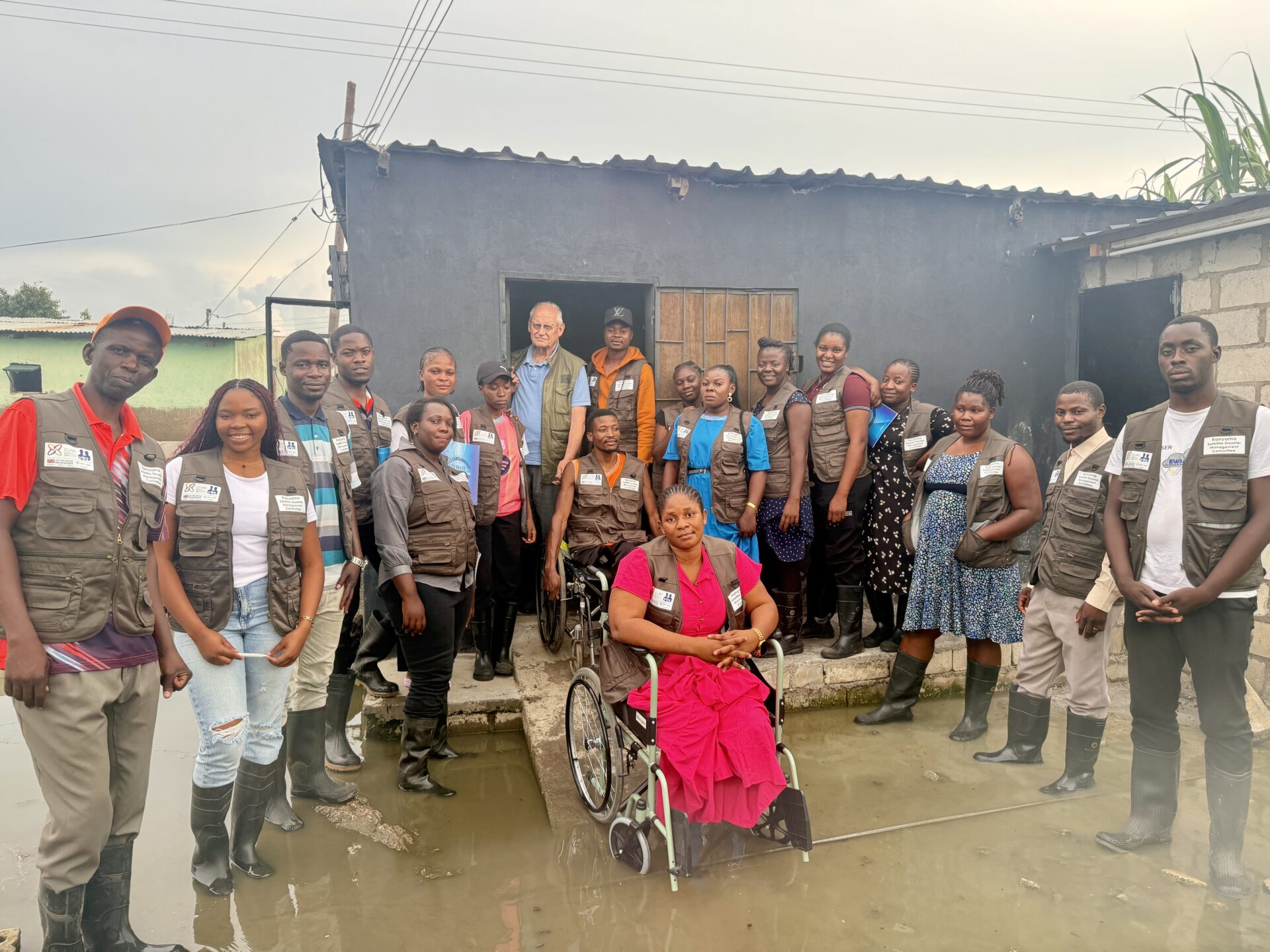
Experiences from Kanyama, a densely populated settlement in Lusaka, illustrate how behavioural factors shape the ways in which climate information translates into adaptation action. Several women in Kanyama serve as Satellite Disaster Management Committee members (SDMCs), and have been acting as trusted intermediaries between Zambia Meteorological Department (ZMD) and their communities to strengthen the availability and use of weather forecasts and early warnings.
Their experience highlights three behavioural dynamics that are central to BASIN’s research.
First, access to information matters. For many of the SDMCs, engagement with weather forecasts began through training linked to a previous project. As one woman explains, learning how to interpret forecasts changed her relationship with climate information:
“From the time I started going to ZMD and learning about weather information, I’m able to understand it and have more interest in it. We’re able to warn the community about the weather that is coming.”
Access to information, combined with the confidence to interpret it, enabled these volunteers to engage more actively with recognizing and managing climate risk.
Second, trust in messengers strengthens legitimacy of information and determines how that information is used. Convinced that access to the information has improved their own lives, the SDMCs now share forecasts in churches, schools and community meetings, and through social media and messaging platforms. Particular attention is paid to ensuring access to the information by women and people with disabilities – who might otherwise face barriers, for example through not having access to smartphones. Because the information comes from familiar and trusted community members, people are often more willing to listen and act on it. In this way, the volunteers championing climate and water security action serve as critical bridges between the ZMD and the everyday realities of community life.
Third, adaptation occurs through everyday decisions and behaviours. Community members report using forecasts to make small but important choices: what to wear, when to travel and how to reduce the risk of the flash floods that often accompany heavy rains. Some use the information to guide livelihood decisions. For example, market traders may decide not to travel to sell goods when heavy rain is forecast, or to move their stalls to safer locations. And farmers use the information to inform their decisions on what and when to plant, and how to tend to their crops throughout the growing season. By ensuring that women and people with disabilities have access to the information, it improves the likelihoods of gender-equitable and inclusive outcomes.
These experiences demonstrate how behavioural pathways connect climate information to practical action. When trusted community members have access to relevant forecasts and the skills, knowledge, and tools to share them, information becomes embedded in everyday decision-making. For BASIN researchers and focus communities, such examples help illuminate how gendered roles, social networks and local knowledge systems influence the uptake of climate information and the effectiveness of adaptation strategies.
From research to equitable action
Ultimately, the goal of BASIN is not only to understand behaviour but to ensure that those insights inform policy and practice to promote equitable adaptation and inclusive water security.
By identifying the behavioural, social and institutional factors that shape adaptation decisions, the project aims to support interventions that are more responsive to the realities faced by different groups. This includes improving how climate information is communicated, identifying barriers that prevent people from adopting effective adaptation measures, and strengthening inclusive governance of water resources.
Gender-sensitive research is central to this effort. Without a clear understanding of how gender influences vulnerability, decision-making and access to resources, adaptation interventions risk reinforcing existing inequalities. Across cultures, countries and traditions, women hold an essential role on the frontlines of stewarding water resources. It is long overdue for their role and perspective to be central to decision making at all levels for inclusive water security and climate justice.
On this International Women’s Day, BASIN highlights the importance of embedding gender dimensions at the heart of climate adaptation research. Generating evidence on how gender shapes behavioural responses to water insecurity is an essential step toward ensuring that adaptation supports the rights of women and girls — and contributes to more just and inclusive pathways to water security in a changing climate.
The majority of the Kanyama Satellite Disaster Management Committee members participating in BASIN are women
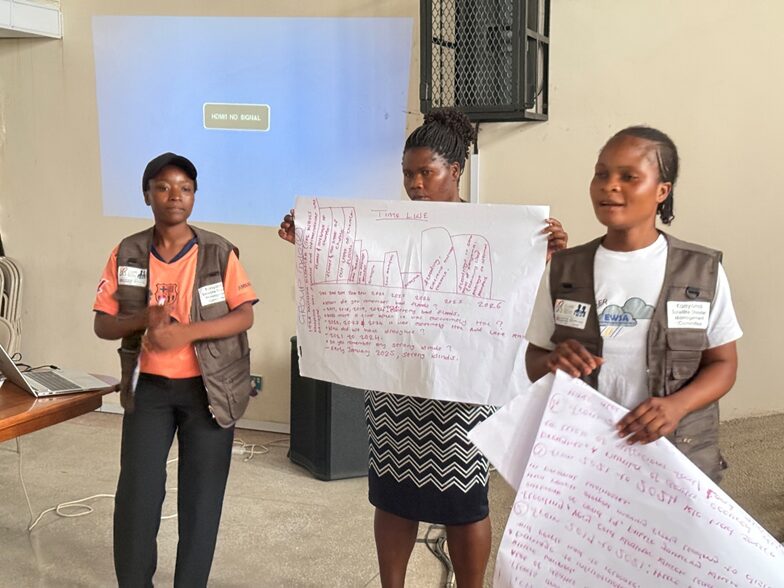
Female Satellite Disaster Management Committee members play a key role in sharing weather information with their communities
Categories
Countries
CLARE Pillars
CLARE Themes
CLARE Topics
Published
CLARE Projects
CLARE Partners