
Lessons from India: Adapting Community-Led, Climate-Resilient Housing for Sierra Leone and Kenya
/
By: Ibrahim Juldeh Sesay & Fasalie Sulaiman Kamara (SLURC)
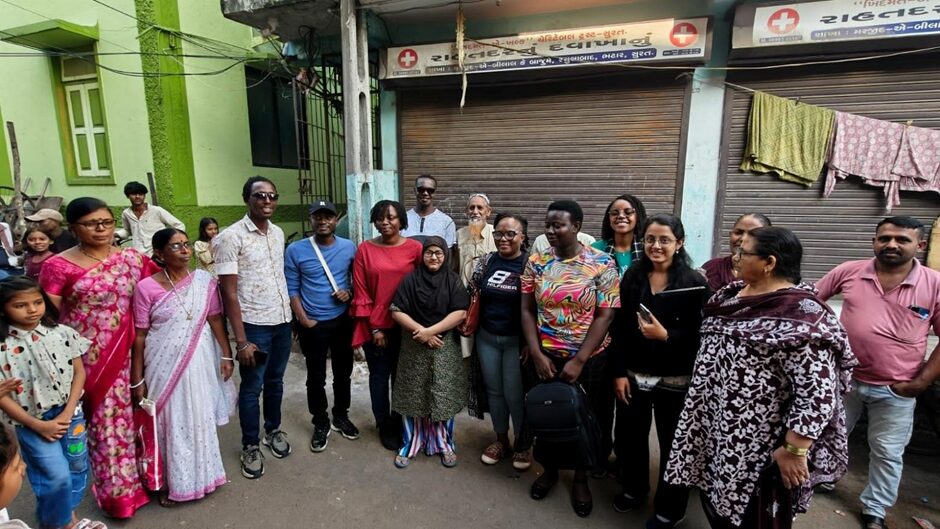
From 5 to 13 December 2025, a team of researchers from Kenya and Sierra Leone, as part of the Urban TRACS project, visited India as part of an exchange programme to learn about SPARC’s Roof Over Our Heads (ROOH) campaign. The Society for the Promotion of Area Resource Centres, commonly known as SPARC, leads the ROOH initiative, which aims to deliver resilient, low-carbon, and affordable homes while improving public infrastructure in urban informal settlements.
The team visited informal settlements across five Indian cities: Ahmedabad, Surat, Bhubaneswar/Cuttack, Mumbai, and Delhi. The exchange provided critical insights into how participatory approaches, academic partnerships, and technical expertise converge to deliver scalable, climate-resilient intervention lessons directly relevant to Sierra Leone and Kenya.
Insights from India Learning Exchange: Integration of Academia and Community
In Ahmedabad, Surat, and Bhubaneswar/Cuttack, the team observed that ROOH’s effectiveness relied heavily on strong, long-term academic partnerships. Universities contributed technical expertise and rigorous design approaches, lending legitimacy and evidence-based insights that strengthened community buy-in. This integration fostered innovative problem-solving, enabling students and faculty to co-create designs that address both the structural and social dimensions of housing in informal settlements. In the long term, the campaign has influenced academic curricula and encouraged future housing experts to think sustainably and consider the challenges faced by informal settlement communities.
Movement-Building and Policy Integration
In Mumbai and Delhi, it became clear that ROOH’s success extended beyond construction. Housing interventions were embedded within broader social movements and linked to policy actors and municipal stakeholders to amplify impact and create advocacy avenues. In contrast, Sierra Leone and Kenya face limited municipal involvement, suggesting that successful adaptation will require strategic partnerships, advocacy, or alternative mechanisms to fill this gap.
The Compounding Challenges of Informal Settlements in Sierra Leone and Kenya
Informal settlements in these countries face overcrowding, poor infrastructure, climate vulnerability, and limited municipal support. Traditional housing interventions often focus narrowly on individual households, overlooking settlement-level vulnerabilities and long-term governance. The ROOH campaign in India presented a compelling case for embedding incremental household upgrades within broader social, academic, and institutional frameworks. The Sierra Leone and Kenya teams are now contextualising these lessons to fit their specific situations.
Household-Level vs. Settlement-Level Approaches
The learning was timely for both teams. “We are currently co-developing and refining housing and settlement-level interventions under the Urban TRACS project. The knowledge acquired is informing our programme choices and the balance between household-level upgrading and settlement-wide resilience action,” said Ibrahim Juldeh Sesay, Research Officer for the Urban TRACS Project at the Sierra Leone Urban Research Centre (SLURC). He noted that they are working with communities, academia, and local government to institutionalise the housing intervention. “We are working to address municipal capacity constraints,” he added.
While ROOH’s methodology focused primarily on household-level upgrades, it was implemented with sensitivity to settlement-wide vulnerabilities, including drainage, communal spaces, and infrastructure connectivity. This dual focus is a key takeaway: incremental household improvements must be coupled with systemic settlement interventions to ensure sustainability and resilience.
Community Participation and Co-Design Opportunities in Sierra Leone and Kenya
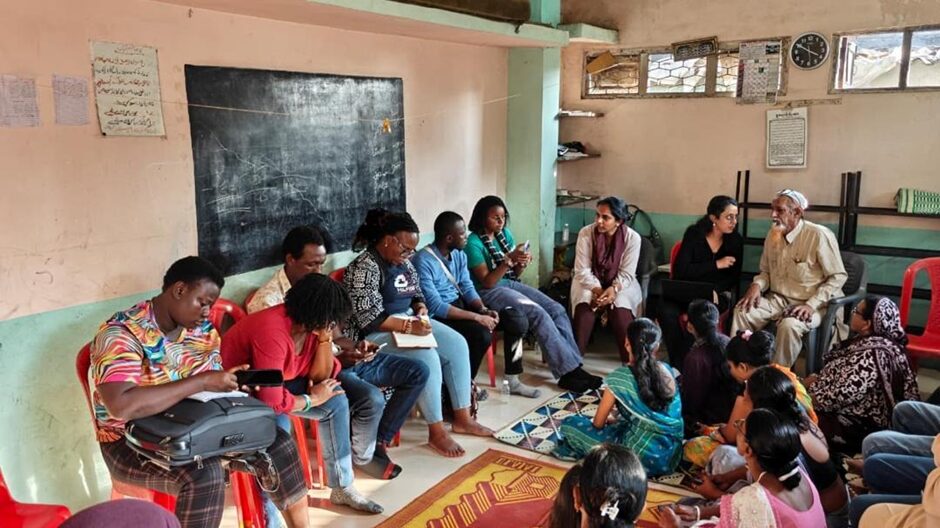
In India, a participatory approach was non-negotiable. Residents were actively involved in decision-making, prioritisation, and design refinement. This built trust and ownership, reinforcing that externally imposed interventions rarely achieve long-term impact. In Sierra Leone, previous projects like ARISE have already established strong community relationships, providing fertile ground for adopting this principle. ROOH-aligned efforts in Kenya also follow this approach through co-design workshops, in which community members and artisans contribute to developing interventions.
Critical Reflections:
Several analytical observations emerged:
- Scalability depends on institutional frameworks: ROOH’s success relied on universities, NGOs, and technical experts working within a coordinated system. In Sierra Leone, aligning stakeholders and clarifying institutional roles will be critical.
- Financial and governance mechanisms are crucial: ROOH demonstrates that patient financing, flexible design iterations, and sustained oversight are as important as technical solutions.
- Local adaptation is necessary: While India’s municipal support facilitated infrastructure upgrades, Sierra Leone may require advocacy, external funding, or hybrid solutions to compensate for limited formal government support.
- Knowledge transfer is not straightforward: direct replication is unlikely; instead, lessons should be adapted as principles—emphasising participatory design, incremental interventions, and the embedding of housing upgrades within broader community and institutional systems.
Next Steps for Sierra Leone:
Urban TRACS is now considering how to translate these insights into context-specific, evidence-based interventions:
- Finalising a design brief that incorporates household- and settlement-level vulnerabilities.
- Engaging local universities to integrate the housing initiative into coursework, leveraging academic cycles for timely design input.
- Pairing students with local builders and community champions to ensure co-creation and contextual grounding.
- Developing strategies to compensate for limited municipal support, including advocacy and institutional partnerships.
The India exchange has reinforced the value of analytical, participatory, and adaptive approaches, providing a critical foundation for implementing housing interventions that are resilient, scalable, and socially embedded in Sierra Leone’s informal settlements.
Photo Credits: Nihar Johari (SPARC)
Categories
Countries
CLARE Pillars
CLARE Themes
CLARE Topics
Published
CLARE Projects
CLARE Partners