


Migration in a Changing Climate is Not Always Climate Migration: The Case for Systems Approaches
/
Guest blog written by Kerilyn Schewel for the CLAPs project website
The dominant story about climate change and human movement is, by now, well-worn and familiar: a warming planet will drive growing numbers of people from their homes, producing waves of “climate migrants” or “climate refugees.” It is an intuitive narrative and a discursively powerful one. It is also, in many important respects, misleading.
As research on climate change and migration has ballooned over the last decade, this narrative has matured past its earliest framings. Scholars have largely set aside the image of climate refugees in favour of a more careful formulation and study of “migration in a changing climate.” This shift acknowledges the complexity of different kinds of migration that occur from climate-stressed contexts. This advance is welcome, but it carries its own risk. To a general observer (and to much of the policy and media conversation) it can unintentionally collapse into the assumption that all migration in a changing climate is climate migration. The harder and I would argue more useful task is to come out the other side of this complexity and ask a sharper question: which forms of migration, and which forms of immobility, are more or less directly shaped by climate change?
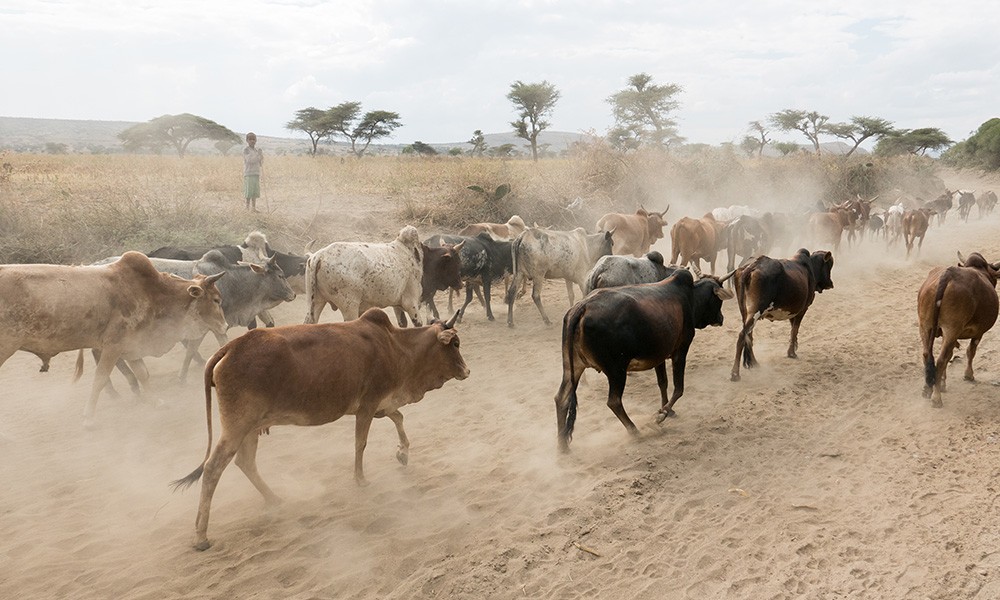
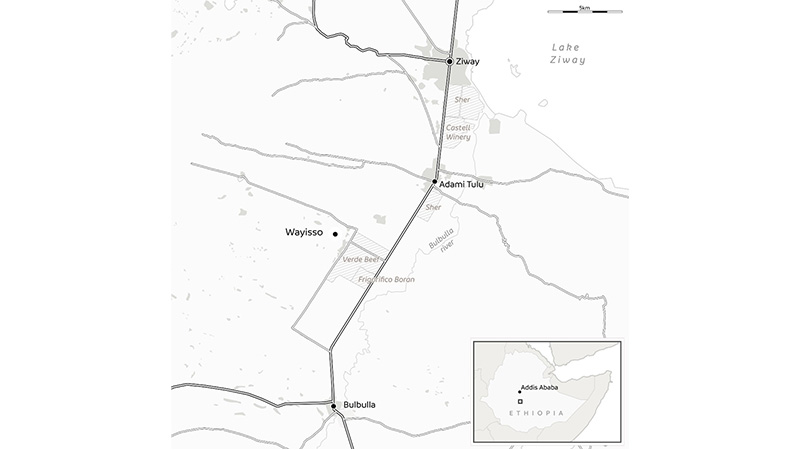
My research in Wayisso, a farming community in Ethiopia’s Rift Valley, suggests that adopting a systems-oriented approach to the study of migration and environmental change may be one way to answer that question. My fieldwork coincided with the aftermath of a severe drought triggered by failed rains in 2015 and 2016, which allowed me to study how migration responds to an acute environmental stress. What I found was surprising: those who migrated during the drought were, on the whole, the least affected by it. Those who were the most directly affected and the most vulnerable did not move at all.
Credit: Kerilyn Schewel
The clearest way to explain why is to follow three young people through the same failed rains. The first, a young man attending secondary school in the nearby town of Adami Tulu, returned home: his family, working 1.5 hectares of rainfed land, could no longer cover his rent, food, and school fees after the harvest failed. He dropped out and waited for a better year to continue his schooling in town. A second, a young woman disillusioned with school, left for Lebanon—even though her family could not afford the up-front costs of migration. A cousin already working in Beirut arranged a contract and advanced the travel and visa costs from her own salary. Within a few months of first seriously considering it, she was on a plane to become a domestic worker abroad. The third, a young man who had felt stuck in the village for years, had planned to marry that year and hoped to eventually move with his wife to the city of Batu. The drought forced him to postpone the wedding; he could not afford the bride price, including cattle, blankets, and other gifts. He kept tending two small plots his father had lent him, hoping the next harvest might finally let him marry and, someday, leave.
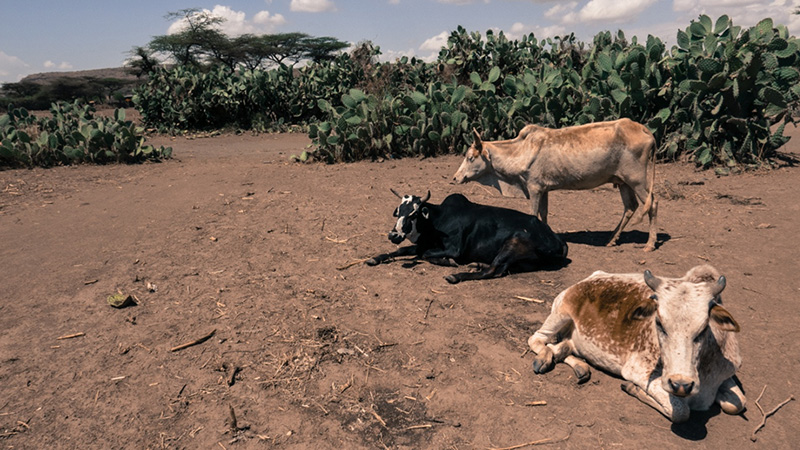
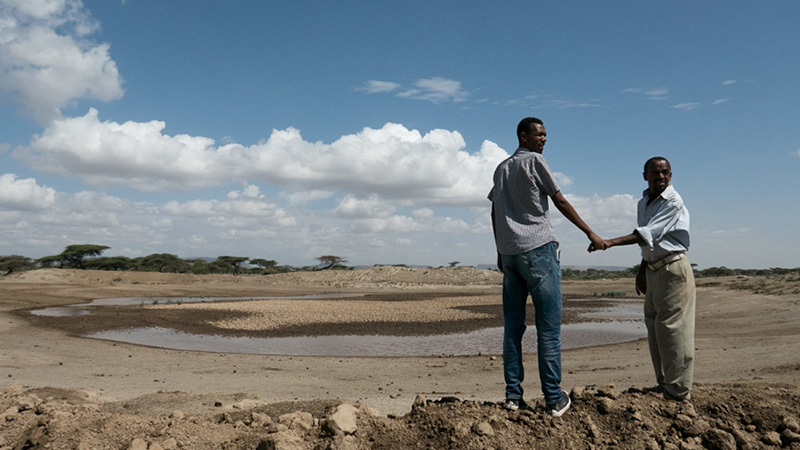
These are three very different (im)mobility outcomes from the same drought in the same village. What I would like to emphasise here is that the environmental shock alone explains none of them very well. To understand why the same failed rains coincided with one person’s return home, a second’s international labour migration, and a third’s deepening ‘involuntary immobility,’ you have to look past the weather to the social and economic structures the drought acted upon and within. This is the ambition of more systems-oriented approaches to the study of migration processes. Two analytical traditions in migration studies may be helpful for scholars of migration and environmental change to engage: mobility transition and migration systems theories.
Mobility transition theory maps the patterned relationship between different dimensions of social transformation (or ‘development’) and migration. It reveals the big picture reasons why we might expect migration to already be on the rise in low- and lower-middle income countries experiencing deep social changes associated with ‘development.’ Cross-country comparative research confirms that population movements shift in patterned ways as countries experience economic growth, as formal education expands in a given population, and human development indicators increase. These deep societal shifts tend to correlate with rising rural-urban migration and international migration—even if the nature, scale, destination and selectivity of particular migration flows show a high degree of variation across cases.
Migration systems theory can help us explain this variation. Migration systems theory shifts the perspective beyond push-pull frameworks towards the political, economic, and cultural linkages between origin and destination places (both internal and international), and to feedback mechanisms and networks effects that lead the consolidation of particular migration systems. It helps explain how, once someone wishes to move, opportunity structures channel that aspiration toward a particular destination (or how structural constraints foreclose movement altogether). One country can have multiple migration systems operating within it. Both mobility transition and migration systems theories have largely neglected environmental questions to date. This offers an opportunity to enrich the conceptual underpinnings of research on environmental change and migration while also revitalising and refining these migration theories by integrating a focus on environmental change.
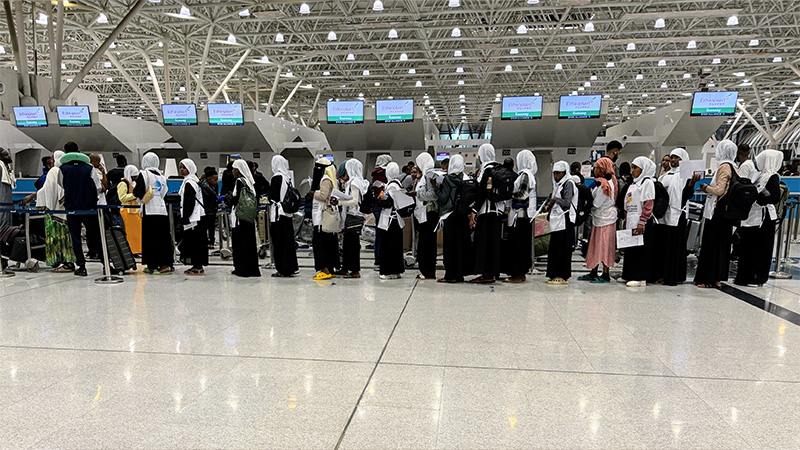
How do these theories help make sense of the three outcomes from Wayisso? Mobility transition theory helps explain why young people in Wayisso wanted to leave in the first place, and it has little to do with the weather. A growing, increasingly young and educated rural population, raised to expect more than a life of farming and drawn toward the opportunities concentrating in towns and cities, had been turning away from agriculture well before the rains failed. The drought did not create these aspirations to migrate; rather, it further undermined their realisation. Migration systems theory, in turn, helps explain the one departure: the young woman reached Beirut because a gendered international labour market and an established migrant network were in place to finance and facilitate a move her own household could not. The young men did not have access to this same gendered migration system. These examples suggest a note of caution when thinking about migration in a changing climate: The person who actually migrated was the least affected by the environmental shock, while those most directly shaped by it either returned home or stayed put.
In summary, researchers are now well aware that climate change does not act on inert populations. It acts on communities already shaped by long-standing and newly emerging migration systems. Mapping the migration systems and developmental dynamics already at work in a place may allow scholars to better disentangle which of its mobilities and immobilities are most, and least, directly exposed to environmental stress and through what mechanisms. That in turn can support policy makers working on climate adaptation planning to support the most vulnerable. This is the harder question waiting on the other side of “migration in a changing climate.” Systems approaches are one way to take it up, and to come out the other side of complexity with something more precise to say.
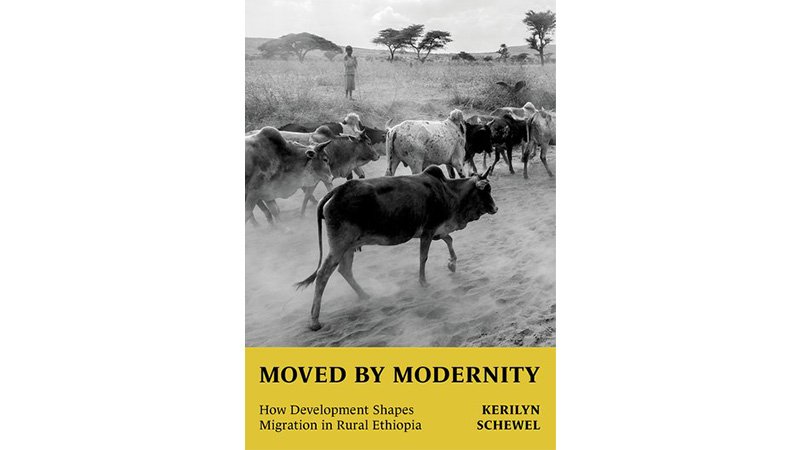
Note: This post draws on my new book, Moved by Modernity: How Development Reshapes Migration in Rural Ethiopia (Oxford University Press, 2025), whose chapter on land and climate examines how the 2015–16 drought shaped migration and immobility in Wayisso.
Kerilyn Schewel is a sociologist of migration whose research examines the relationship between development, migration, and immobility, with a regional focus on East Africa. She is the author of Moved by Modernity (Oxford University Press, 2025) and has published widely on migration aspirations, immobility, and the drivers of human movement. She is an assistant professor of sociology at the University of North Carolina at Chapel Hill (kerilyn.schewel@unc.edu)
Further Reading:
- Schewel, K. (2025). Lessons from Wayisso. In Oxford University Press eBooks (pp. 223–240). https://doi.org/10.1093/9780197680759.003.0011
- Carling, J. (2002). Migration in the age of involuntary immobility: Theoretical reflections and Cape Verdean experiences. Journal of Ethnic and Migration Studies, 28(1), 5–42. https://doi.org/10.1080/13691830120103912
- Skeldon, R. (2011). Migration Transitions Revisited: Their continued relevance for the development of migration theory. Population Space and Place, 18(2), 154–166. https://doi.org/10.1002/psp.667
- Clemens, M. A. (2020). The Emigration Life Cycle: How Development Shapes Emigration from Poor Countries. IZA Discussion Paper, 13614. https://docs.iza.org/dp13614.pdf
- Dao, T. H., Docquier, F., Parsons, C., & Peri, G. (2017). Migration and development: Dissecting the anatomy of the mobility transition. Journal of Development Economics, 132, 88–101. https://doi.org/10.1016/j.jdeveco.2017.12.003
- de Haas, H. (2010). Migration transitions (Publisher’s version). International Migration Institute. https://ora.ox.ac.uk/objects/uuid:63b0a544-2b39-45a5-b9fe-cffdb5f4c654
- Tagliacozzo, S., Pisacane, L., & Kilkey, M. (2024). A system-thinking approach for migration studies: an introduction. Journal of Ethnic and Migration Studies, 50(5), 1099–1117. https://doi.org/10.1080/1369183X.2023.2279708
Categories
Countries
CLARE Pillars
CLARE Themes
CLARE Topics
Published
CLARE Projects
CLARE Partners