
Our Lives, Our Homes: Community Voices Press for Climate-Resilient Action in Bandani and Nyalenda A
/
By David Odiwuor; Lizian Onyango
Following the inception of the Urban TRACS project on 1 July 2023 in Kisumu County, the initiative has focused on enhancing urban resilience in the informal settlements of Bandani and Nyalenda A, two of the five informal settlements within the slum belt of Kisumu City. Residents of the two settlements came together to deliberate on and prioritise catalytic projects that could be implemented under the project, with support from SDI Kenya and Muungano Wa Wanavijiji.
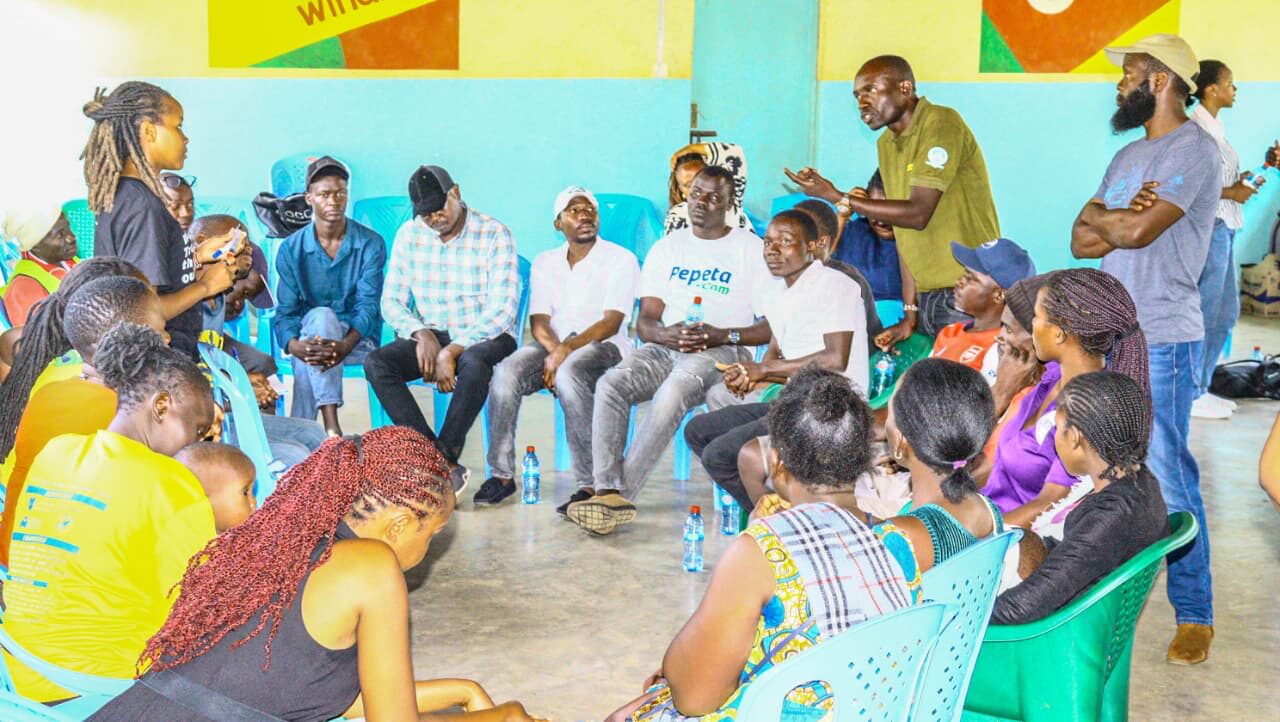
To better understand what the community prioritises, why these priorities matter, and the underlying dynamics in the settlements, Urban TRACS partners, led by the Liverpool School of Tropical Medicine (LSTM) and SPARC India, and accompanied by the SDI Kenya team, visited Kisumu, specifically Bandani and Nyalenda A. The purpose was to engage with the community, conduct settlement walks, and understand the neighbourhoods by seeing and listening to residents’ lived realities, climate-related risks, and existing coping mechanisms. The team spent two days in Kisumu with back-to-back activities alongside local residents.
On 8 September 2025, their first day of engagement, the team was based in Bandani for a community dialogue and a subsequent settlement walk. This helped them clearly understand the vulnerabilities and overall conditions of the community, particularly in relation to housing and sanitation. Residents explained how frequently they are exposed to flooding whenever it rains, and how intersecting risks, such as poor drainage, insecure housing, and inadequate waste management, exacerbate their exposure and vulnerability to climate change impacts. The units visited included Bandani Muslim and Bandani Centre, which are among the project’s key target areas.
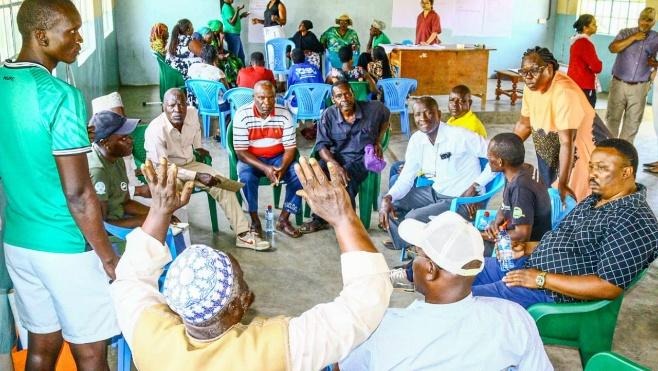
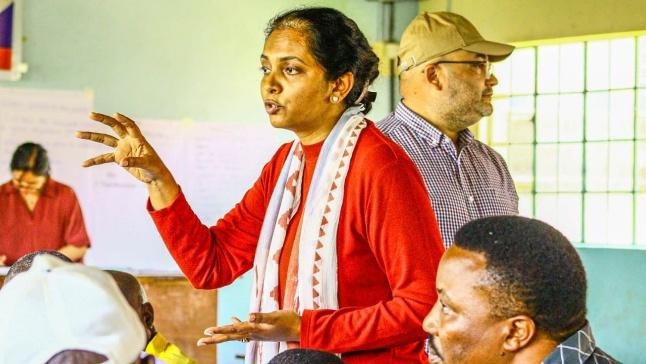
Community dialogue in Bandani attended by the LSTM & SPARC India team
Photo: KYCTV Kisumu
During the community dialogue, LSTM and the visiting team listened carefully to youths, elders, and women as they shared how climate risks affect them in different ways. Through participatory mapping, Bandani residents painted a clear picture of their vulnerabilities and also proposed solutions, ranging from local adaptation practices already in place to new, community-driven ideas for the future.
Often, when people think of Bandani, they only see the challenges of climate adaptation. However, these dialogues revealed that there are many resources within the community. These include indigenous knowledge from elders, strong social networks, and local coping mechanisms such as chamas (savings groups), which serve as important financial safety nets and enablers of community-led adaptation measures.

Bandani Federation members, LSTM and Sparc India team, SDI Kenya team, during a settlement walk in Bandani
Photo: KyCTV Kisumu
Residents also proposed several key priorities which they felt, if implemented, would significantly improve their living conditions and strengthen their adaptive capacity to climate change. These included:
- A rescue centre, proposed either at Pundo Market or Bright Light Hall, to provide safe shelter during floods and other climate-related disasters.
- Capacity building and awareness creation on best practices in climate adaptation and disaster preparedness.
- A waste recycling initiative at Pundo Market to improve environmental health, reduce flooding caused by blocked drains, and create green livelihoods.
- Upscaling urban/smart farming to strengthen food security and diversify income sources, especially as climate variability affects traditional farming.
- A resurvey of the entire settlement with the support of the National Land Commission, to address tenure insecurity and enable more climate-resilient planning.
- Housing improvement, identified as the most urgent and highest priority, to ensure safer, climate-proofed homes that can better withstand floods and extreme weather.
On 9 September 2025, the second day of the visit, the team shifted focus to Nyalenda A, another settlement targeted by the project. They met community members at Kanyakwar Hall, creating a space where residents could share first-hand accounts of their living conditions and provide critical context to their experiences of climate risk and resilience.


LSTM team is leading the residents of Nyalenda A in resilience games
Photo: KYCTV Kisumu.
In engaging with the community members of Nyalenda A, the LSTM team facilitated an interactive session using resilience games designed to assess disaster preparedness, encourage collaboration, and strengthen community-driven resource mobilisation. After the games, residents identified and prioritised projects that could be implemented under the Urban TRACS project. Priorities were developed separately by youths, elders, and women, with each group suggesting ideas that best reflected their needs and perspectives. The priorities that cut across the groups included:
- A Material Recovery Facility (MRF) for effective waste management, reducing pollution and drainage blockage while creating employment for young people in green jobs.
- Climate-resilient infrastructure, including smart climate-proof housing, last-mile water connections, covered drainages and culverts, and water pans to support irrigation in Kapuothe farmlands, measures that directly support climate adaptation and reduce disaster risk.
- Improved sanitation facilities at St. Mark’s School to promote health, dignity, and resilience, particularly for children who are highly vulnerable to climate-related disease outbreaks.
- A community centre, a multi-purpose facility that would serve as a value addition centre, an evacuation site for disaster-affected residents, a safe space for youth and women, and a hub for indigenous knowledge and cultural heritage. This hub would also act as a coordination centre for community-led climate adaptation and response.
The engagements in Bandani and Nyalenda A highlighted the communities’ resilience, creativity, and strong desire for better living conditions in the face of climate change. Residents clearly articulated their priorities, reflecting both immediate needs, such as safer housing, improved sanitation, and flood protection and long-term aspirations for more sustainable, climate-resilient neighbourhoods.
These participatory processes demonstrated a shared commitment to collective action, local solutions, and capacity building. They laid a strong foundation for the successful implementation of the Urban TRACS project and for scaling community-led climate adaptation in Kisumu’s informal settlements. This was not just a visit; it was a dialogue about the future, about how working together, building on local strengths, and investing in resilience can transform living conditions and reduce climate vulnerability for generations to come
Categories
Countries
CLARE Pillars
CLARE Themes
CLARE Topics
Published
CLARE Projects
CLARE Partners