
Reflections from the CLARE Policy Workshop and Implications for Seychelles and the Maldives in RECOVER
/
Authored by Sylvanna Antha (Sustainability 4 Seychelles) & Rana Waheed (The Maldives National University)
RECOVER (Resilience to Climate Vulnerability and Environmental Risk) is a CLARE-funded project, with focus on island nations. The Maldives and Seychelles are two of the four countries addressed in RECOVER. Seychelles has identified plastic pollution and its connection to climate induced flooding as their main area of intervention, while water security is the focus on the Maldives.
In the Seychelles, there is a high degree of dependence on imports even for basic needs, that brings with it high volumes of packaged materials including plastics. At the same time, waste management capacity is limited. As such, the volume of plastic packaging entering the country continues to grow despite the Single-Use Plastics (SUP) legislation introduced in 2017. With little space to landfill or recycle this waste, plastic often ends up unmanaged as litter scattered across the fragile island ecosystem, blocking drainage systems and exacerbating coastal flooding.
In the Maldives, RECOVER focuses on water security and climate resilience for the most vulnerable communities in Greater Malé. Home to 40% of the nation’s population, the capital has no freshwater sources, so it relies almost entirely on desalinated seawater; yet access to safe, affordable water remains uneven. The project investigated how the most vulnerable groups experienced climate pressures and water access and brought stakeholders and policymakers together to co-create solutions to the underlying water governance problems.
Across both countries, RECOVER examines how water governance, plastic waste, flooding and health risks intersect, and works with vulnerable groups to shape more inclusive, context-specific water and climate adaptation policies.
The Bangkok Workshop’s focus on Policy Influence
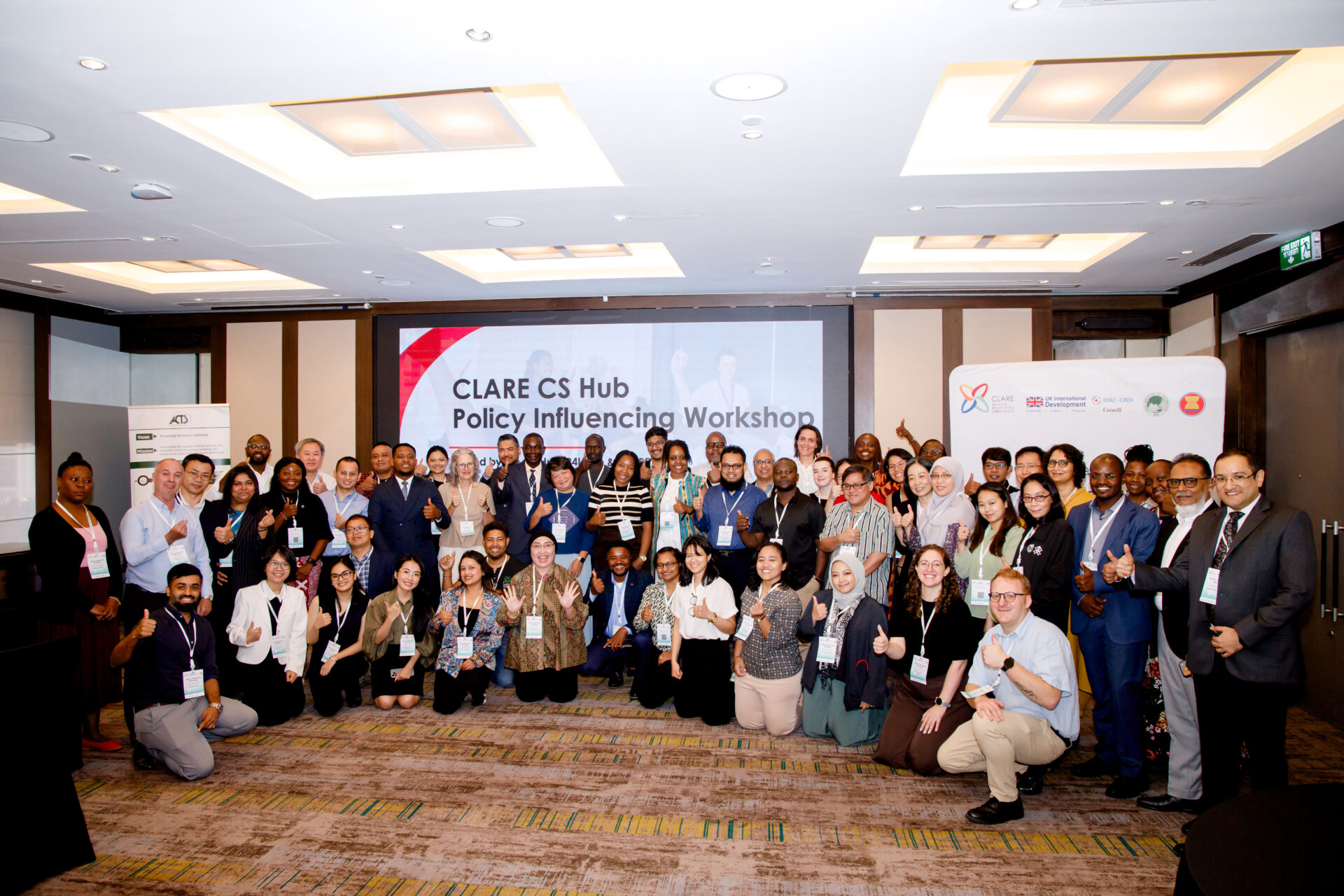
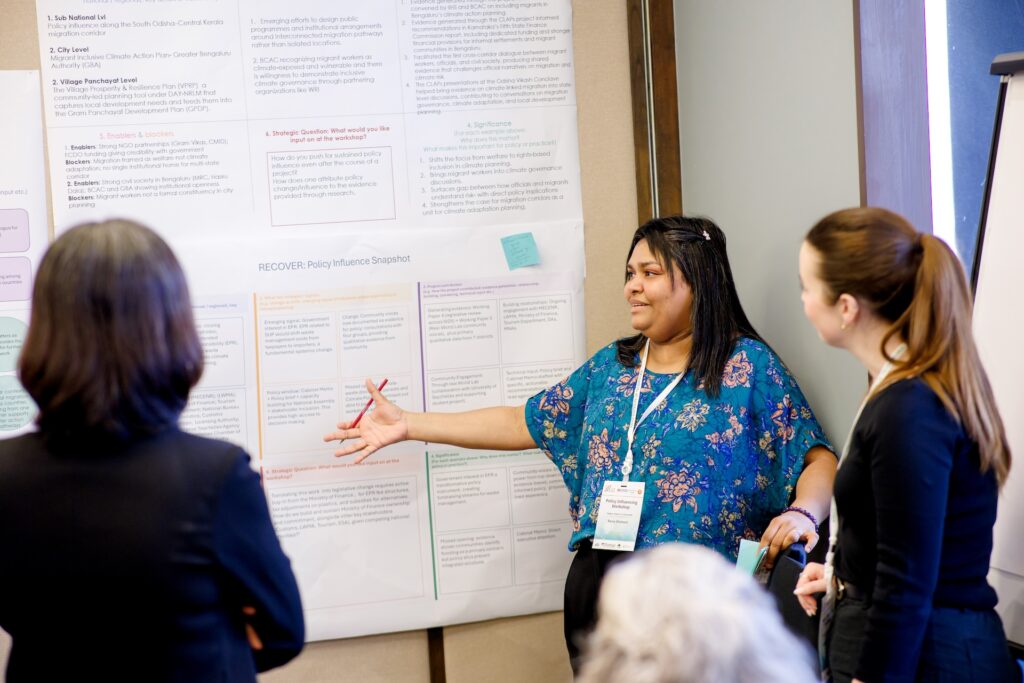
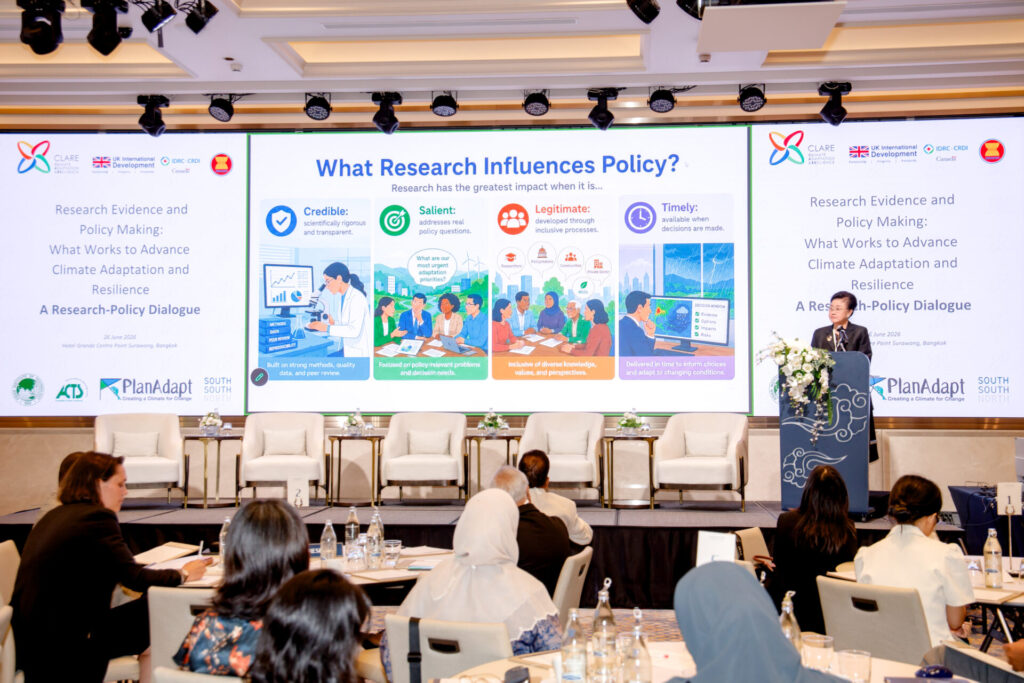
In June 2026, we participated in the CLARE Policy Influencing Workshop, a five-day event hosted by the Asian Institute of Technology (AIT) and organized by the CLARE Capacity Strengthening (CS) Hub in partnership with CLARE-ASEAN and the Research for Impact (R4I) Hub. The workshop brought together 50 participants from over 30 CLARE projects across the globe, all actively involved in shaping or implementing policy engagement. It provided a unique opportunity to exchange experiences across different contexts and reflect on how different teams navigate the complexities of influencing policies.
The core objectives were twofold: to foster reflective learning across the CLARE portfolio on experiences of policy engagement, and to strengthen capacity through peer learning, refining policy influence strategies for the remaining period of the programme. Over five days, the workshop guided our learning through key questions: What is happening across projects? How do we recognize and track policy influence? What shapes these dynamics? And how can we strategize more effectively?
The workshop dedicated a full day to understanding the enabling and constraining factors that shape policy influence, including relationships, timing, institutions, incentives, power dynamics, political context, capacity, and resources. This deep dive into context-specific factors was particularly useful as we considered how policy engagement must be tailored to the distinct realities of Seychelles and the Maldives.
Key Insights on Policy Influence
The workshop provided invaluable insights that are directly applicable to our policy engagement work.
- Policy influence is rarely linear. It is not simply a matter of producing research and handing it over to policymakers. Influence tends to emerge through shaping how problems are framed, setting agendas, and building relationships over time. For RECOVER, this means our engagement with government partners must go beyond delivering reports. We need to participate in ongoing dialogues and position our research within broader policy conversations.
- Understanding the policy context is essential. Factors such as political will, institutional dynamics, bureaucratic incentives, and timing all shape whether and how evidence is taken up. The workshop reinforced the importance of understanding why gaps exist and how our research can support stronger enforcement and legislative reform.
- Effective strategies require adaptability. Many projects began with well-defined Research for Impact plans, but these have often adapted over time as teams navigate complex political and institutional realities. For RECOVER, this means remaining flexible in our approach, whether through targeted stakeholder dialogues, market research, or advocacy for legislative strengthening, and being responsive to emerging opportunities and challenges.
- Peer learning across the CLARE network is invaluable. Exchanging experiences with other projects provided fresh perspectives on what works, what doesn’t, and why. We learned from successes and setbacks in diverse contexts, forging connections that will support ongoing reflection and collaboration beyond the workshop.
Insights for the Maldives and the Seychelles
The workshop directly informed how we could approach and amplify policy engagement in the respective countries. We became more intentional about:
- Mapping the policy landscape. Identify key decision-makers, understanding their priorities and constraints, and strategically positioning our research to address their needs.
- Mapping the most vulnerable, not only the powerful. Establish who is actually underserved and open deliberate channels for their voices, so climate adaptation and resilience policies are shaped with them rather than about them.
- Treating stakeholders as collaborators. Work with government partners, communities, and others as co-producers of research, rather than delivering findings to passive recipients.
- Reaching the grassroots through civil society. Partner with civil society organisations that have repeatedly proved across CLARE projects able to reach underrepresented people that formal processes overlook and build these partnerships into the projects and subsequent governance work.
- Growing champions from within communities. Support local advocates and invest in leadership and public-speaking training, so people can carry their own priorities into policy spaces with confidence.
- Fostering parity between communities. Build trust and a sense of equality across different islands and communities, so no single group’s needs are consistently pushed to the back.
- Embedding participation in formal agreements. Because the workshop’s table-top exercises showed that goodwill alone fades, use Memoranda of Understanding with communities and civil society to make involvement a standing commitment rather than a one-off consultation.
- Communicating evidence effectively. Match the message to each audience, use accessible formats, and time findings to reach the right people while decisions are still being made.
- Tracking influence as it emerges. Document incremental signals, shifts in policy language, new stakeholder commitments, changed institutional practices, alongside formal policy outcomes.
- Convening safe, neutral spaces. Bring communities, civil society and public servants together in spaces built for honest exchange, so participation is genuine rather than tokenistic and judged on its quality, not just attendance.
The CLARE Policy Influencing Workshop was a catalyst for action. We returned to our projects with renewed energy and a clearer roadmap for strengthening policy engagement. The RECOVER project is now better equipped to contribute to meaningful change, from community-led water governance to improving waste management practices to strengthening legislation on single-use plastics.
The journey from research to policy influence is complex, requiring patience, adaptability, and strategic relationship-building. But by reflecting, learning, and collaborating across the CLARE network, we are confident that we can make a tangible difference in building climate resilience in the Seychelles, Maldives and other SIDS.
Categories
Countries
CLARE Pillars
CLARE Themes
CLARE Topics