
Successful completion of the CLARE-ASEAN Regional Workshop and Dialogue, 12-13 May 2026
/
CLARE-ASEAN organized a Regional Workshop and Dialogue on Strengthening Urban CLimate Adaptation and REsilience in ASEAN: Bridging Knowledge-Policy-Action Gaps, 12–13 May 2026, at Crowne Plaza Bangkok Lumpini Park.
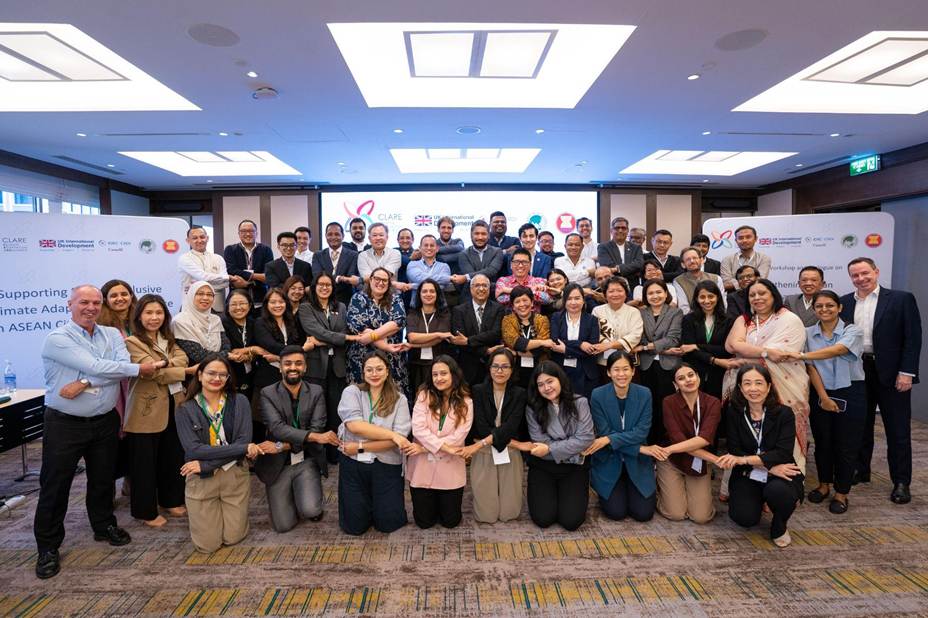
The workshop, aimed at bridging knowledge–policy–action gaps, brought together around 70 participants from science, policy, and practice communities across ASEAN to discuss urban climate resilience. Discussions covered thematic sessions on Urban Heat Management, Nature-Based Solutions (NbS), Climate Finance, and Planning & Governance, as well as a cross-cutting Expert Dialogue on Gender Equality and Inclusion (GEI).
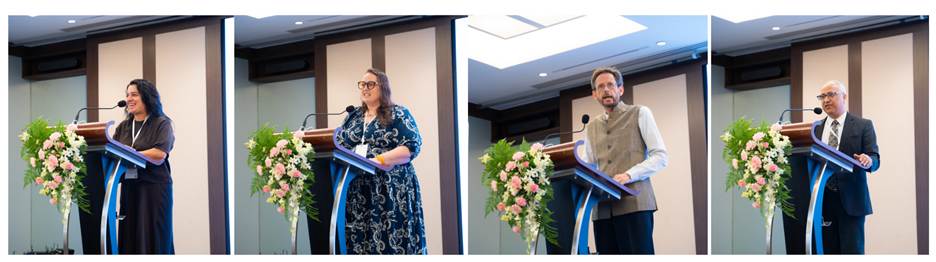
The workshop commenced with welcome and opening remarks by Ms. Nabila Suria, Climate Counsellor and Permanent Representative to UNESCAP, followed by remarks from Ms. Cathy Hardman, Political and Economic Counsellor and Permanent Observer to UNESCAP, and Dr. Arjan de Haan, Senior Program Specialist at the International Development Research Centre (IDRC). The opening session was followed by Prof. Shobhakar Dhakal, Principal Investigator (PI) of the CLARE-ASEAN Initiative, who shared the objectives of the workshop with the participants.
Each thematic session began with a keynote presentation and panel discussion, followed by roundtable discussions, making the workshop highly engaging and creating opportunities for knowledge exchange, collaboration, and learning from the shared experiences of project partners and participants.
A keynote presenter, Prof. Winston Chow, began the session on Urban Heat Management, setting the scene for a panel discussion, moderated by Mr. Mozaharul Alam. The panel brought together perspectives from international organizations, NGOs, and the UN through contributions from Mr. Alejandro Macias, Dr. Jeeranuch Sakkhamduang, and Mr. Victorino Aquitania. The session emphasized urban heat not only as a climate issue, but also as a public health, labor productivity, infrastructure, housing, energy, mobility, and equity issue. Discussions highlighted the need to view cities as systems rather than isolated sectors.
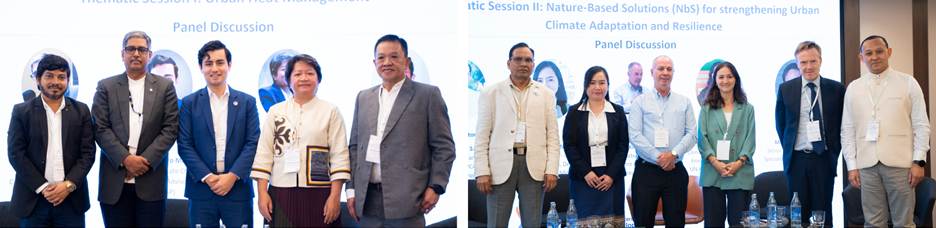
The session on Nature-Based Solutions (NbS) started with a scene-setting presentation by Dr. Rishiraj Dutta, followed by a panel discussion moderated by Prof. Mukand S. Babel. The panel featured diverse perspectives from government, academia, the UN, and multilateral development institutions through Ms. Vathsouda Nilathsay, Dr. Kim Irvine, Ms. Chloe Pottinger-Glass, and Mr. Alexander Nash. The session stressed the importance of evidence generation and monitoring approaches for scaling NbS, while highlighting the role of strong community ownership and engagement in ensuring sustainability. It was further emphasized that NbS should be assessed based on their “sustainable value” rather than only project success.
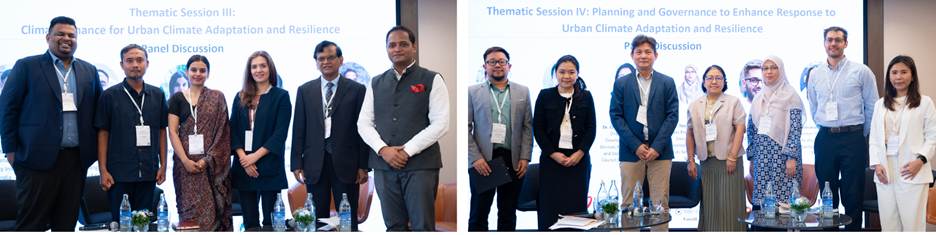
The session on Climate Finance for Urban Climate Adaptation and Resilience started with a scene-setting presentation by Ms. Marie-Lena Hutfils and was followed by a panel discussion moderated by Mr. Sarath Babu M. G., with interventions from Dr. Sugiatmo, Ms. Uma Pal, Dr. Srinivasan Ancha, and Dr. Anil Kumar, representing experiences across policy and practice. The session raised concerns regarding governance structures in ASEAN that provide limited autonomy to cities for the decentralization of climate finance. It also highlighted the “4Cs”—commitment, capacity, collaboration, and capital mobilization—for the success of urban adaptation approaches.
Likewise, the session on Planning and Governance for Enhanced Urban Climate Adaptation and Resilience began with a keynote by Dr Wijitbusaba Marome, followed by a panel discussion moderated by Prof. Vilas Nitivattananon. The panel brought together perspectives from policy, academia, and international organizations through inputs from Mr. Jeffrey Dela Rosa Santos, Dr. Chanakod Chasidpon, Dr. Nor Zalina Harun, Mr. Simon Hammer, and Dr. Manasanant Thitapunyapat. The session highlighted the need for urban resilience plans to be localized and people-centric, supported by legal, institutional, and practical mechanisms.
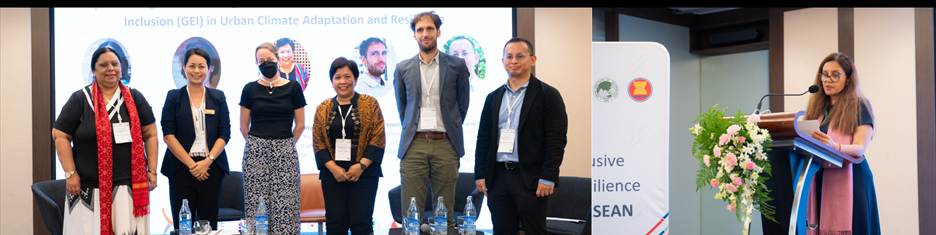
The workshop also held an Expert Dialogue on Challenges and Good Practices of Gender Equality and Inclusion (GEI) in Urban Climate Adaptation and Resilience. The panel, moderated by Prof. Paula Banerjee, featured discussions from Dr. Diane Archer, Dr. Dian Tri Irawaty, Mr. Stefano Bresaola, and Dr. Kristian Karlo Saguin, bringing perspectives from research, practice, and development communities. The dialogue emphasized the importance of integrating GEI across planning, governance, and finance, while providing a platform for sharing challenges and good practices related to GEI in urban climate adaptation and resilience.
The team extends special appreciation to the ASEAN Working Group on Climate Change (AWGCC), Focal Points in ASEAN Member States (AMS), and the ASEAN Secretariat for facilitating the participation of representatives from AMS in the workshop. Representatives, including Dr. Sugiatmo (Ministry of Environment, Indonesia), Mr. Zainul Farhan bin Haji Awang Jamil (Brunei Climate Change Office), Ms. Vathsouda Nilathsay (Climate Adaptation Division, MONRE, Lao PDR), Mr. Jeffrey D. Santos (Department of Environment and Natural Resources, Philippines), Ms. Nalin Segjaisue (Department of Climate Change and Environment, Thailand), Dr. Chanakod Chasidpon (Urban Development Strategy Division, Thailand), Ms. Khwanruthai Renuhom (Department of Climate Change and Environment, Thailand) and Dr. Manasanant Thitapunyapat (Public Works Department, Nakhon Ratchasima, Thailand), shared country experiences and policy perspectives during the workshop.
Categories
Countries
CLARE Pillars
CLARE Themes
CLARE Topics
Published
CLARE Projects
CLARE Partners