
When Research Meets Reality: Lessons from the CLARE Policy Influencing Workshop
/
Authors: Salome Okoth, Maureen Kabasa, Bessy Kathambi
Relationships matter more than Evidence and Reports
Researchers love qualitative and quantitative data and their robustness. Policymakers need answers. But the bridge between the two is rarely built on evidence and reports alone; rather, it’s built on trust, timing, and human connection. That was one of the clearest lessons to emerge from the workshop. Again and again, participants returned to the importance of the relationships surrounding research. Scientific evidence matters, but it becomes influential when the people producing it understand the realities facing those expected to use it, and when those relationships are built long before a policy window opens. As Dr. Bessy Kathambi from the Tuwe Pamoja project put it during one of the discussions: “Sometimes your research isn’t waiting for better evidence; it is waiting for the right conversation.”
The comment stayed with me because it captures something that is easy to overlook when we talk about research impact. We often focus on the quality of the evidence, the strength of the methodology, or the effectiveness of the communication product. These things matter. But policy influence is also about knowing who needs to be part of the conversation, understanding what matters to them, and building enough trust for evidence to be considered when decisions are being made.
In Bangkok, these ideas felt less like abstract concepts and more like practical realities. The question was not simply, is the research good enough? It was also: Who trusts it? Who has been part of producing it? Who needs to hear it? And when is the right moment to bring it into the conversation? The answer, as the workshop made clear, is that policy influence is relational, iterative, and deeply contextual. Sometimes the next step is not another report. It is another conversation.
Policy Influence is a journey, not a straight line
For a long time, research uptake has often been imagined as a neat sequence: conduct the research, publish the findings, write a policy brief, hold a workshop and then, somehow, policy change follows. However, policymaking rarely works that way. Several CLARE projects shared experiences of generating evidence over years with little visible uptake. Then something changed. Political priorities shifted. A new leader came into office. An extreme climate event changed the public conversation. A new opportunity emerged. Suddenly, research that had seemed peripheral became highly relevant.
This means that policy influence is not necessarily about producing one perfect report and waiting for the right person to read it. It is often about staying engaged, maintaining relationships, learning from changing contexts, and being ready when an opportunity emerges. That was one of the most honest reflections from Bangkok; sometimes years of groundwork appear to lead nowhere. Then, almost unexpectedly, the context shifts and the evidence is suddenly needed. The research may not have changed, but the opportunity to use it has.
The Power of Co-Production
One idea kept resurfacing throughout the week, regardless of the session or exercise, research is more likely to influence policy when the people expected to use it are involved in shaping it. Instead of researchers developing findings and solutions in isolation before handing them over to policymakers, practitioners, or communities, demand driven research where research questions themselves are co-created are key to influence policies. The aim is not simply to secure buy-in at the end of a project. Rather, it is to ensure that the questions being asked, the knowledge being generated, and the solutions being explored reflect the realities of the people and institutions they are intended to serve (Norström et al., 2020).
Participants shared examples of how involving local officials and community representatives early in the process had led to research and policy recommendations that reflected real needs rather than theoretical solutions. The value of co-production, goes beyond making research more collaborative. It can make the knowledge itself more relevant, more grounded, and more likely to be used.
Learning by Doing: The Bangkok Workshop in Action
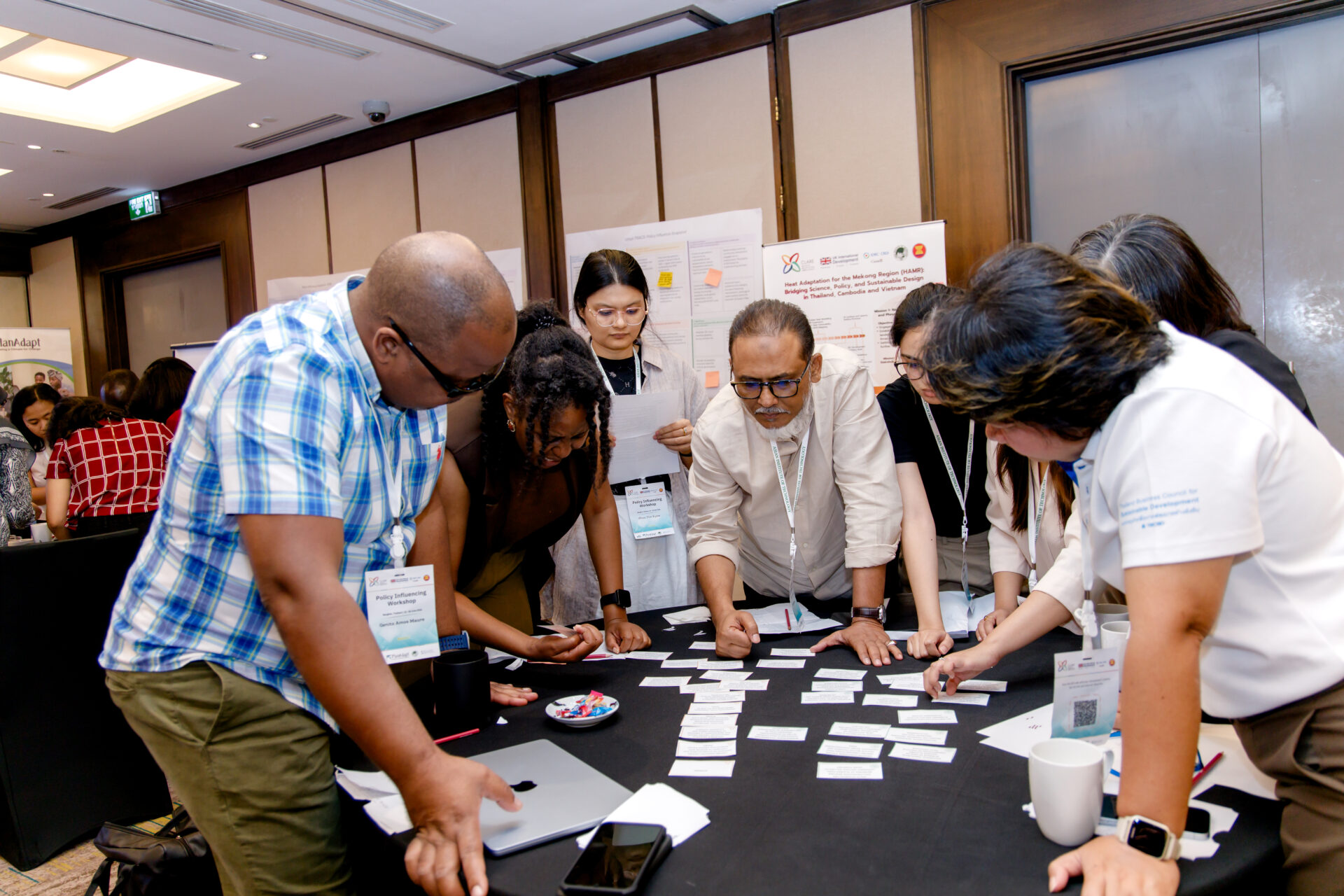
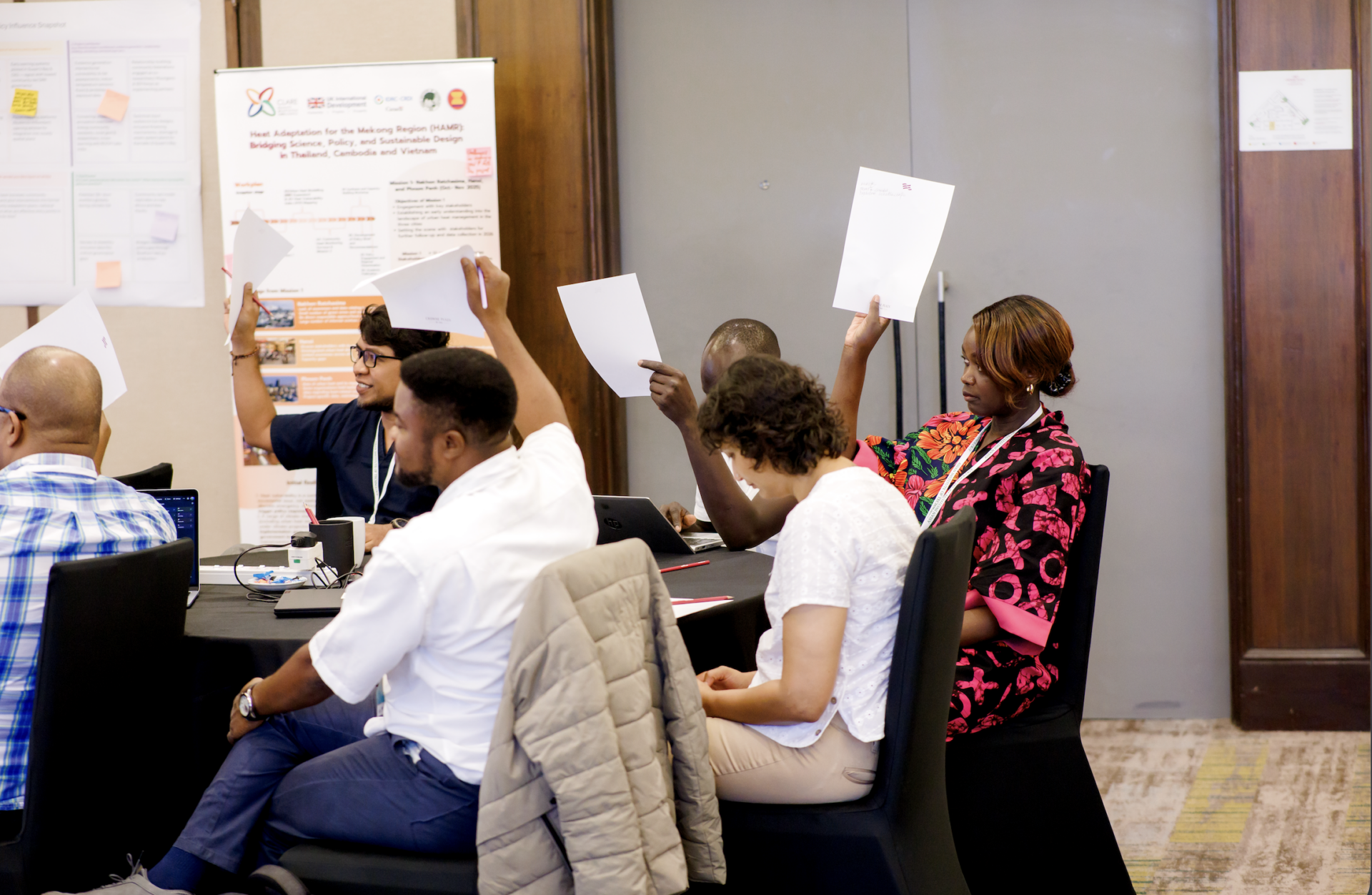
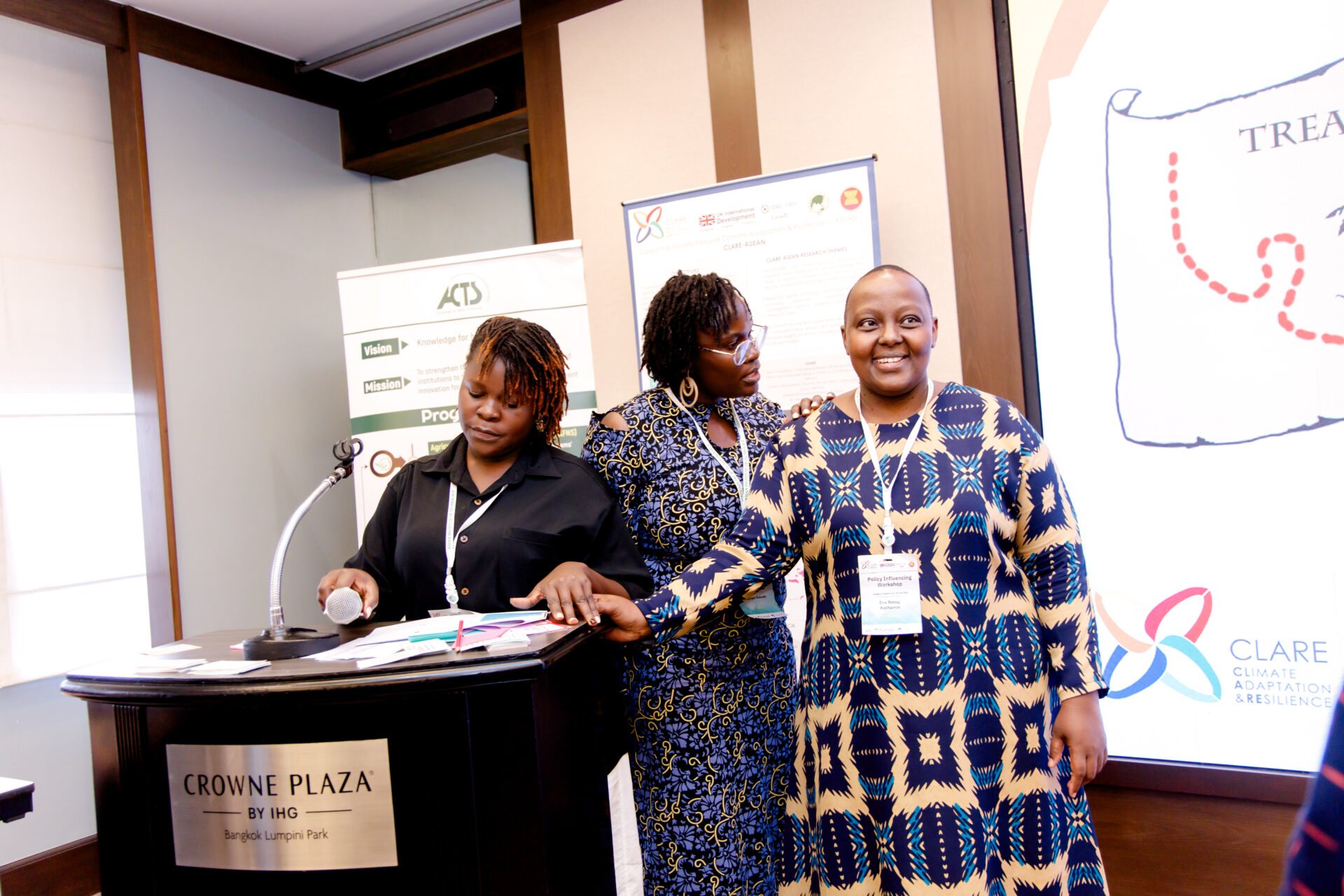
The workshop was designed around participation. During the gallery walk for example, posters filled with stories of stalled policies, unexpected breakthroughs, and partnerships that had taken years to build. Walking from one display to another, participants began noticing the same patterns emerging across countries and projects. Different contexts, different institutions, and different research questions but often remarkably similar challenges.
The workshop then took participants a step further from reflection to action. In the Train Station exercise for instance, participants mapped their projects across different stages of the policy process, from agenda setting and policy formulation to implementation and evaluation. The exercise encouraged them to think carefully about where their research was positioned, where influence had already occurred, and where opportunities for further engagement might exist.
These activities among many others applied during the workshop were deliberately practical. Participants were not simply being told how to engage differently. They were given the space to test ideas, compare experiences, challenge assumptions, and learn from one another. And perhaps that is the heart of influencing policy, there is no single formula. There is only the willingness to listen, experiment, reflect, and keep adapting.
Tracking the Ripples: What Counts as Policy Influence?
Policy influence is often measured through visible outcomes such as a new policy, a change in legislation, a government commitment, or a decision that can be directly linked to a particular piece of research. These outcomes matter. But do they really tell the whole story? Sometimes influence begins with a change in how a problem is understood. Sometimes it is a new relationship that opens a door months or years later. It may be a research tool adopted by an unexpected organization, a conversation that changes the direction of a project, or evidence that becomes useful when the political context changes.
These are the ripples of policy influence; they are not always immediate; they are not always easy to measure; and they cannot always be attributed to a single project or organization. In complex systems, change is rarely the result of one intervention acting alone. More often, it emerges from the cumulative effect of multiple actors, relationships, decisions, and moments of opportunity (Folke et al., 2017).
Carrying the lessons forward
The Bangkok workshop was not just a one-off event. Its value will ultimately depend on what happens next: whether the conversations continue, the lessons inform new projects, and the relationships built in the room create new opportunities for collaboration and influence. Lasting change rarely comes from isolated events, it grows when experience is carried forward, reflected upon, shared, and translated into collective action (IPCC, 2022).
Bangkok did not provide a formula for influencing policy. If anything, it reminded us that there is no single formula. What it offered instead was a different way of thinking about the work: one that places relationships alongside evidence, recognizes that timing can matter as much as technical quality, and accepts that meaningful policy change is rarely immediate or linear.
The evidence remains essential. But evidence does not move through institutions by itself. People carry it. Relationships create the pathways through which it travels. Co-creation gives it meaning. And when the right conditions come together, it can help shift decisions, practices, and priorities. That may be the most important lesson of all; influencing climate policy is not a one-off achievement. It is a living practice, built conversation by conversation, partnership by partnership, and opportunity by opportunity. As the CLARE community moves forward, the challenge is not simply to produce more knowledge. It is to continue creating the conditions in which knowledge can be trusted, shared, understood, and used. And perhaps that is where meaningful impact begins:not with a perfectformula, but with people willing to keep learning, keep connecting, and keep working together to turn evidence into action.
Categories
Countries
CLARE Pillars
CLARE Themes
CLARE Topics