
Transformative Innovation and Collaboration: Reflections from the Maldives National University’s Theveli International Conference
/
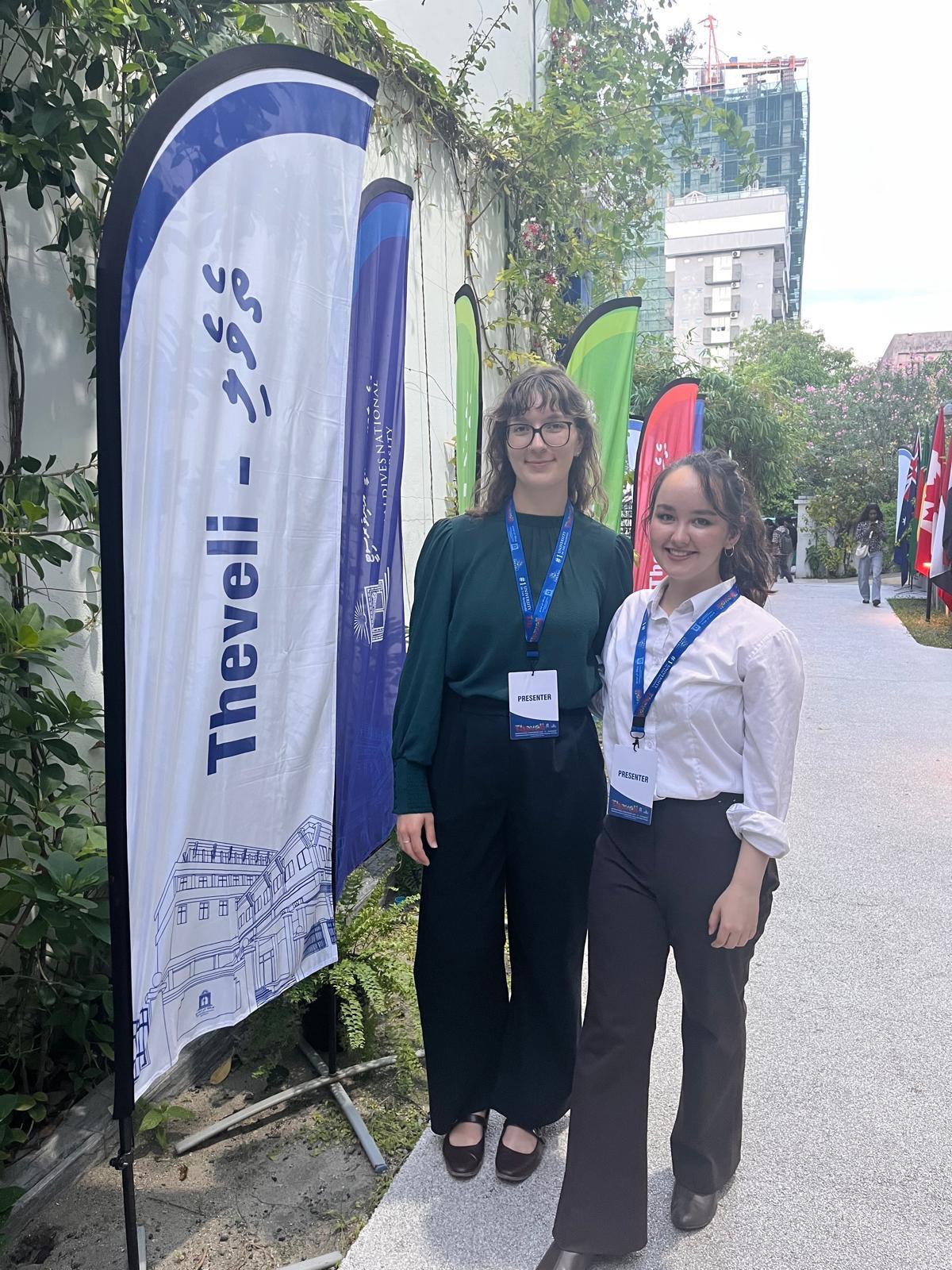
Authored by Jasmine McHugh (University of Waterloo) & Emily Voigt (University of Waterloo)
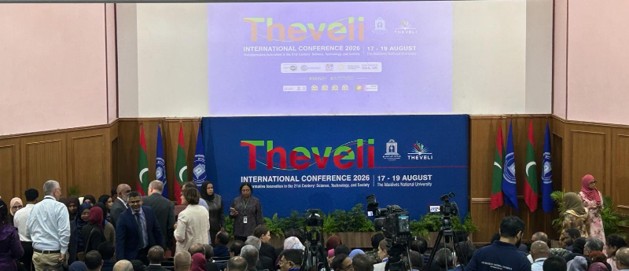
From August 17–20, 2026, we gathered at the Maldives National University (MNU) in Malé for the ninth annual Theveli International Conference. The conference opened with MNU’s Undergraduate Student Research Symposium on August 17, followed by two days of international conference presentations and post-conference sessions on August 20. In Dhivehi, Theveli refers to the spreading rays of the sun or moon across the sea. Fittingly, the annual conference provides a platform for Maldivian and international researchers, students, and practitioners to exchange research and perspectives across disciplines.
This year’s conference was held under the theme “Transformative Innovation in the 21st Century: Science, Technology, and Society,” bringing together research on some of the most pressing social, environmental, and technological challenges facing the Maldives and the wider global community. More than 400 participants and presenters attended, with research contributions representing 23 countries and territories.
The conference was officially opened on August 18 in the presence of the First Lady of the Maldives, Sajidha Mohamed, alongside researchers, government representatives, students, and national and international delegates. Across 11 multidisciplinary themes, presentations explored topics ranging from sustainable futures and climate action to health and well-being, education, artificial intelligence, digital transformation, and global collaboration.
This range of perspectives created opportunities to consider how research and innovation can respond to complex challenges across different sectors and scales. For the RECOVER project, these conversations connected closely with ongoing work on water, food, and energy security, as well as questions on climate adaptation, resource use, and resilience in Small Island Developing States (SIDS). RECOVER researchers Dr. Nadhiya Abdulla, Dr. Shazla Mohamed and Dr. Shuaib Rasheed from the Maldives National University also played a critical role in organizing the conference as members of the organizing, operations and programming committees.
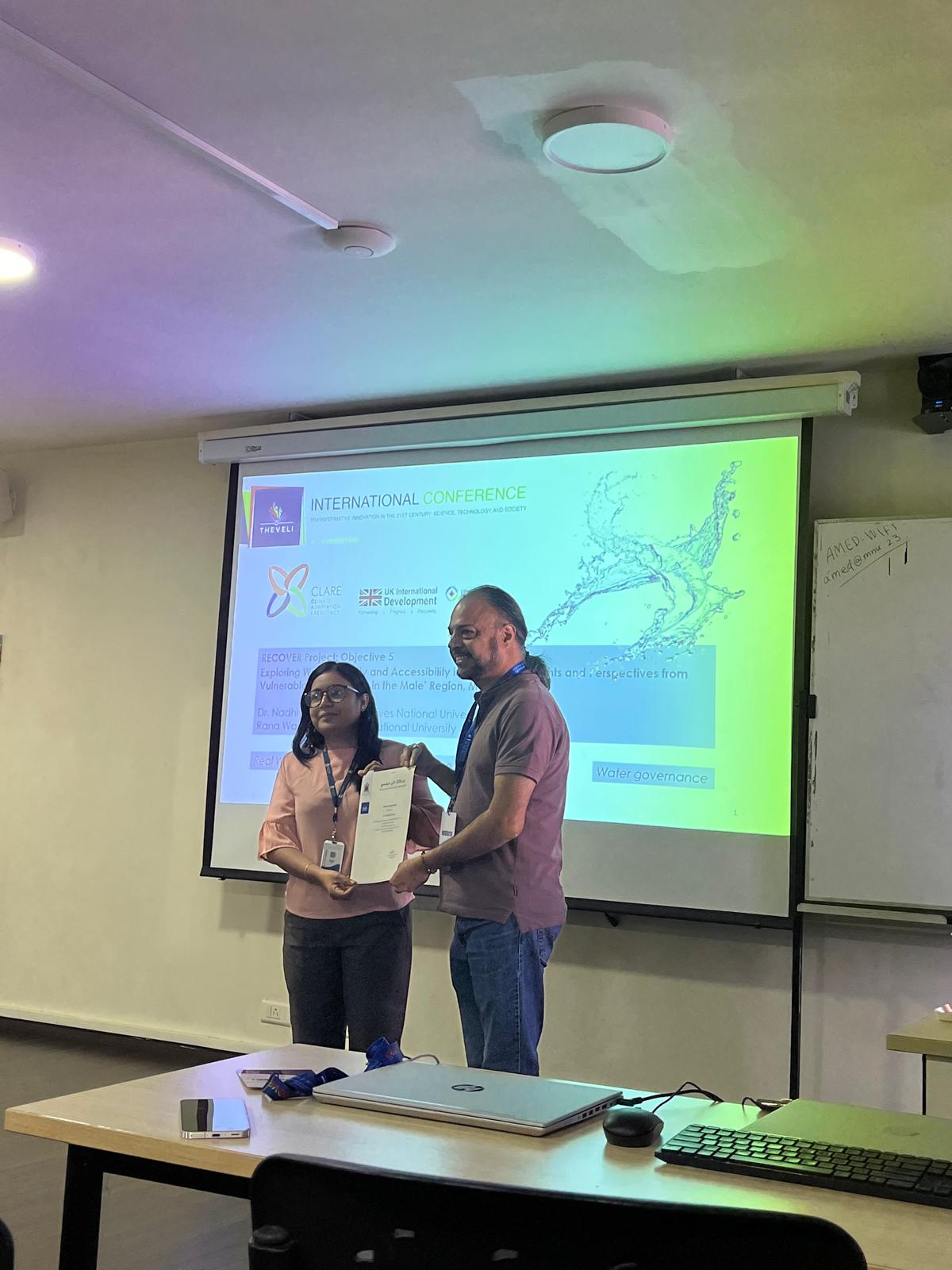
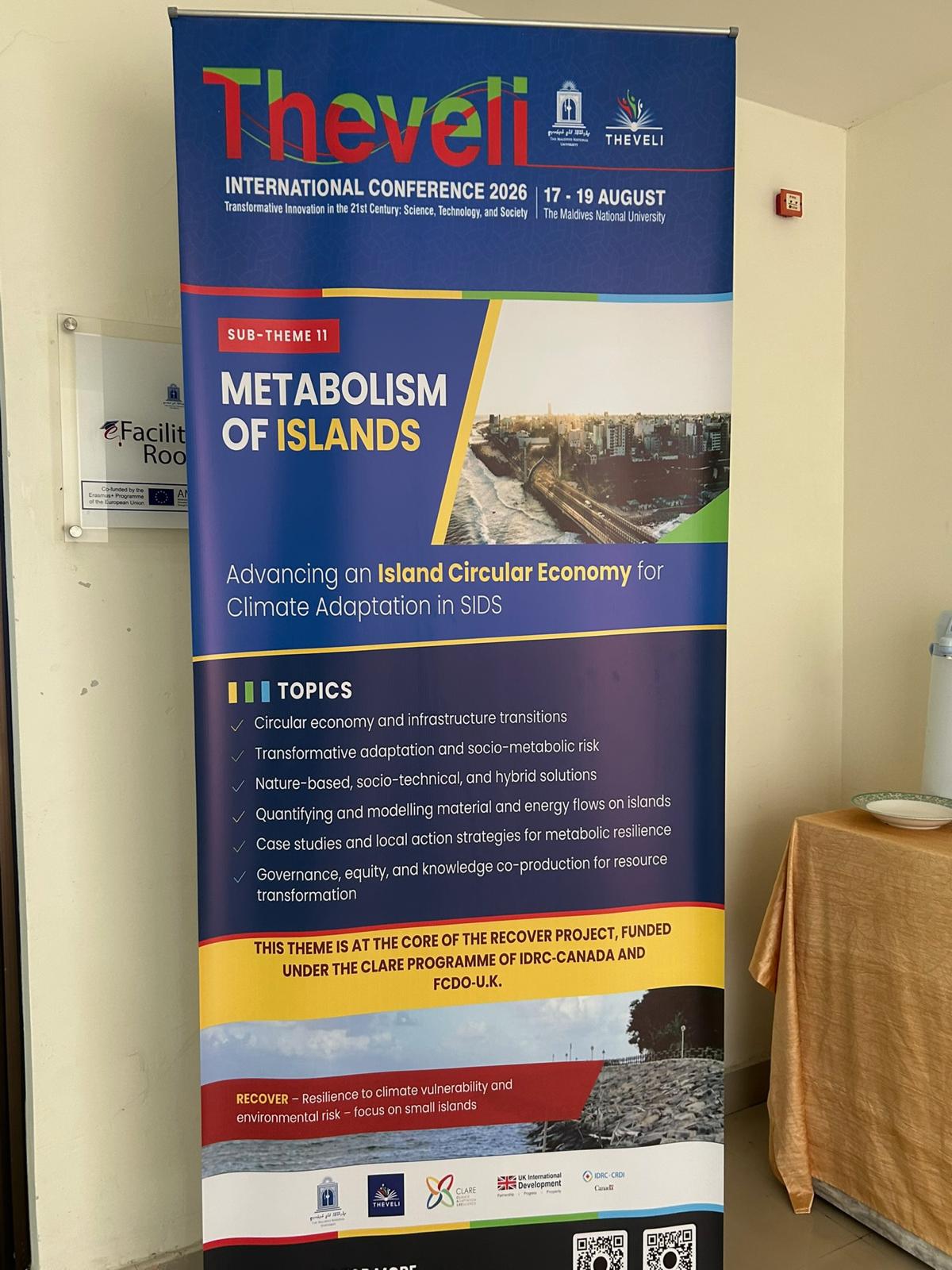
The second day of the conference featured a special conference theme, “Metabolism of Islands – Advancing an Island Circular Economy for Climate Adaptation in SIDS”, which included presentations from Professors and graduate students working on the RECOVER project. This theme was organized in partnership with the Islands Section of the International Society for Industrial Ecology.
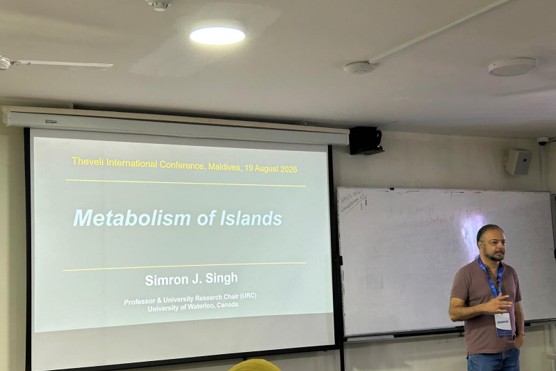
The day began with a presentation from RECOVER’s PI, Dr. Simron Singh, on the importance of systems-based approaches to climate adaptation in SIDS. Dr. Singh identified a critical need to rethink how we ask research questions around climate risk and resilience challenges, shifting from linear to systems thinking. For example, instead of asking how do we best handle waste management, research should address why waste exists in the first place. Approaching climate challenges from a systems perspective can reveal the hidden dependencies and dynamics that shape island vulnerability as well as the assumptions that influence how we respond to it.
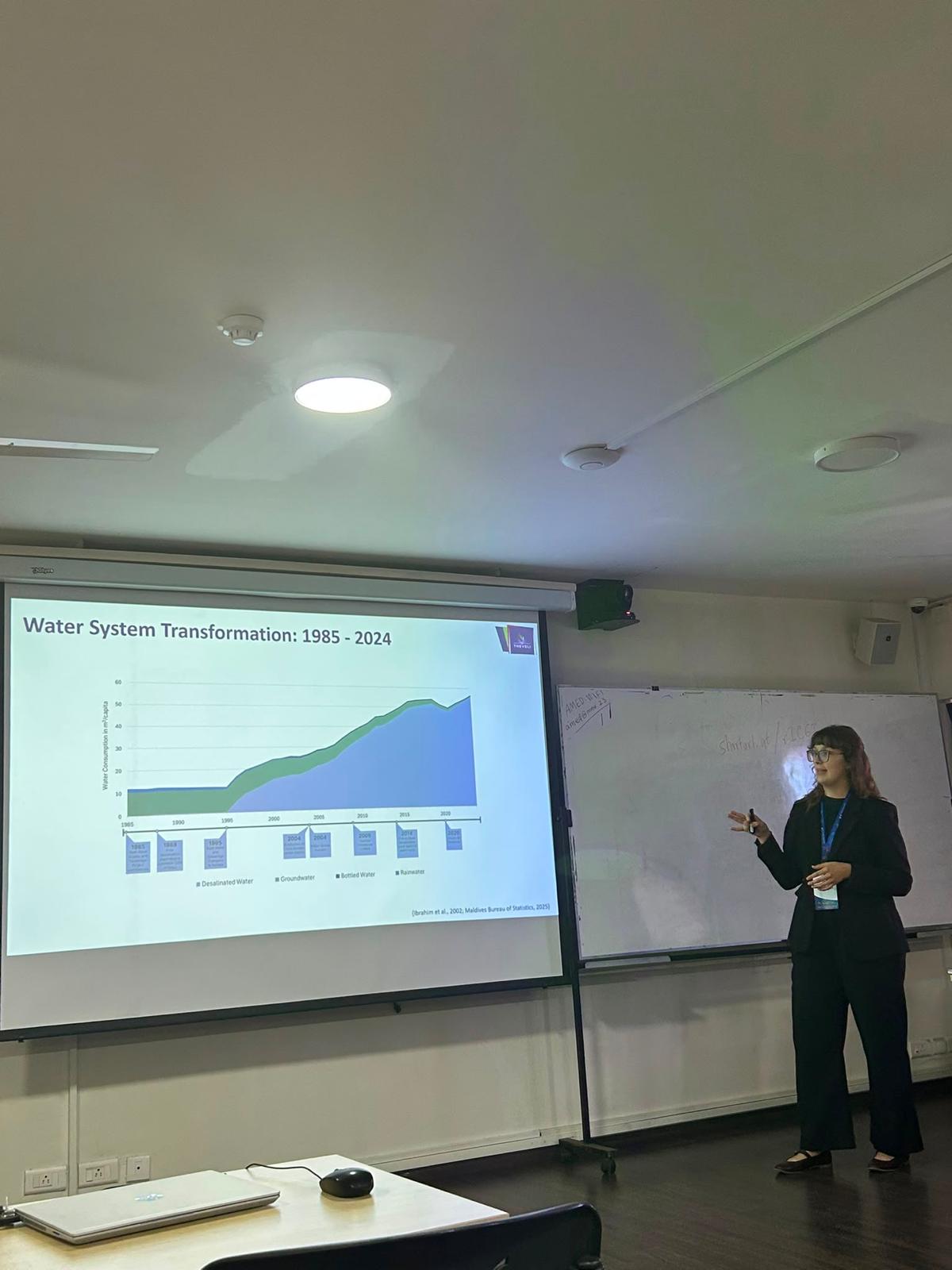
Throughout the day we heard from researchers applying these systems-based approaches to investigate island metabolism, or the way material and energy stocks and flows are organized to support critical functions across island societies. Presentations focused on material, water, energy, and food flow analyses in Maldives, Hawai’i and Reunion Island, resilience assessments of infrastructure and transport systems in Mauritius and Fiji, and water availability, quality and access in Maldives. Discussions extended beyond tracking these flows and towards transforming them for future resilience.
The presentations showcased the diversity of approaches used to investigate island metabolism. Methods ranged from quantitative material stock and flow analysis, scenario analysis and water quality indices to qualitative investigations led by vulnerable communities through Real-World Labs.
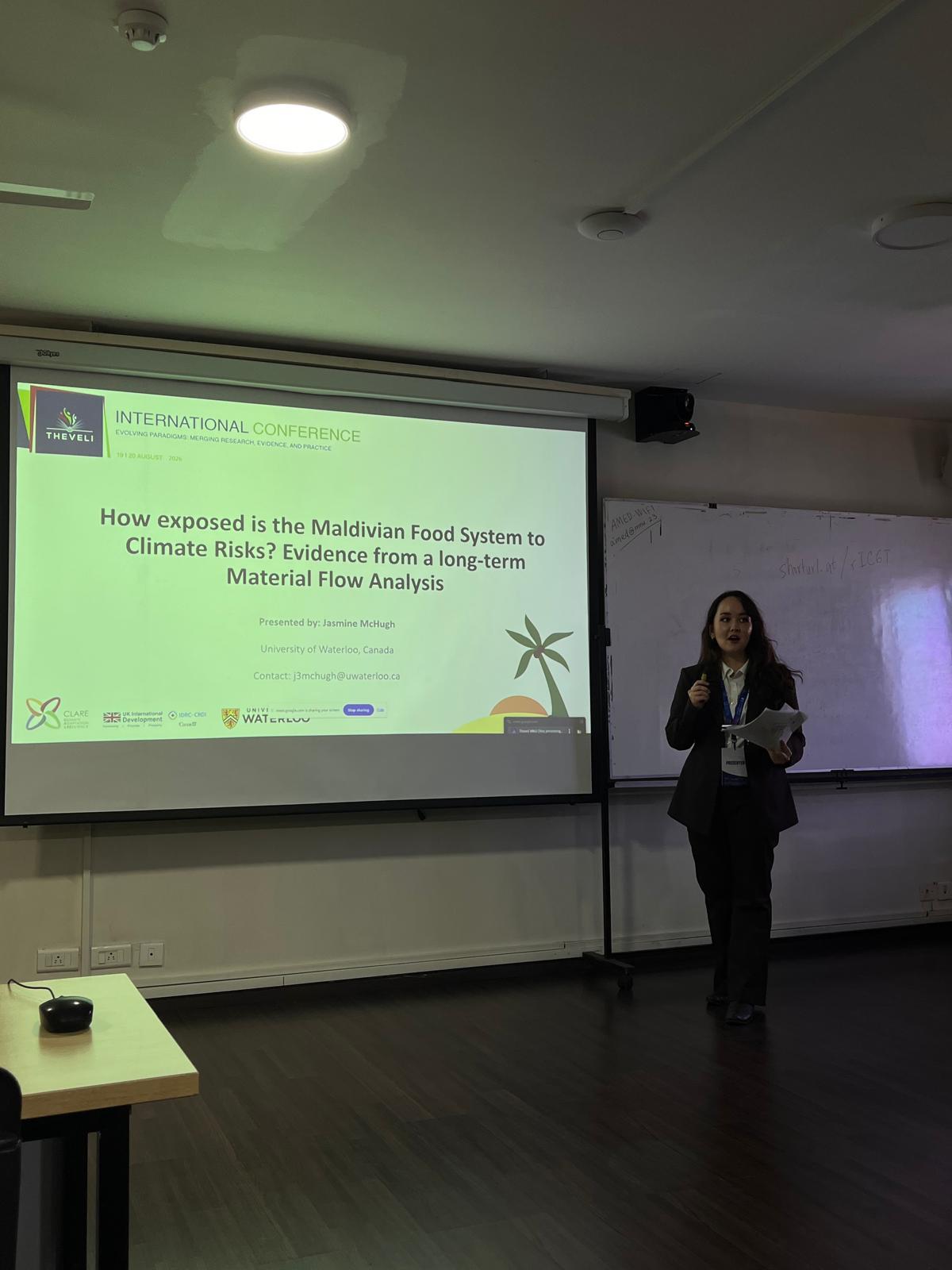
The sessions were enhanced by the presence of community leaders and government representatives, who initiated discussions on research impacts beyond academic contributions. Members of the Maldives Customs Service discussed how the analysis of long-term resource use patterns common in social metabolism studies are a useful tool to investigate policy impacts and identify priority areas for climate adaptation efforts. Also highlighted by local social enterprise Water Care Maldives, were the complexities of climate challenges and the importance of centering local perspectives and context in island research. These conversations inspired us to continue strengthening our collaboration with local practitioners and communities to drive the value and impact of our research projects.
Overall, the conference fostered meaningful connections and showcased innovative research projects that address critical challenges in science, technology and society. We are grateful to all presenters and attendees for sharing their knowledge and to the conference organizers from the Maldives National University for facilitating a wonderful event.
Categories
Countries
CLARE Pillars
CLARE Themes
CLARE Topics
Published
CLARE Projects
CLARE Partners