

Successful Completion of the CLARE–ASEAN Regional Workshop and Dialogue, 14–15 September 2026
/
By Ms. Sumnima Ghimire and Prof. Shobhakar Dhakal
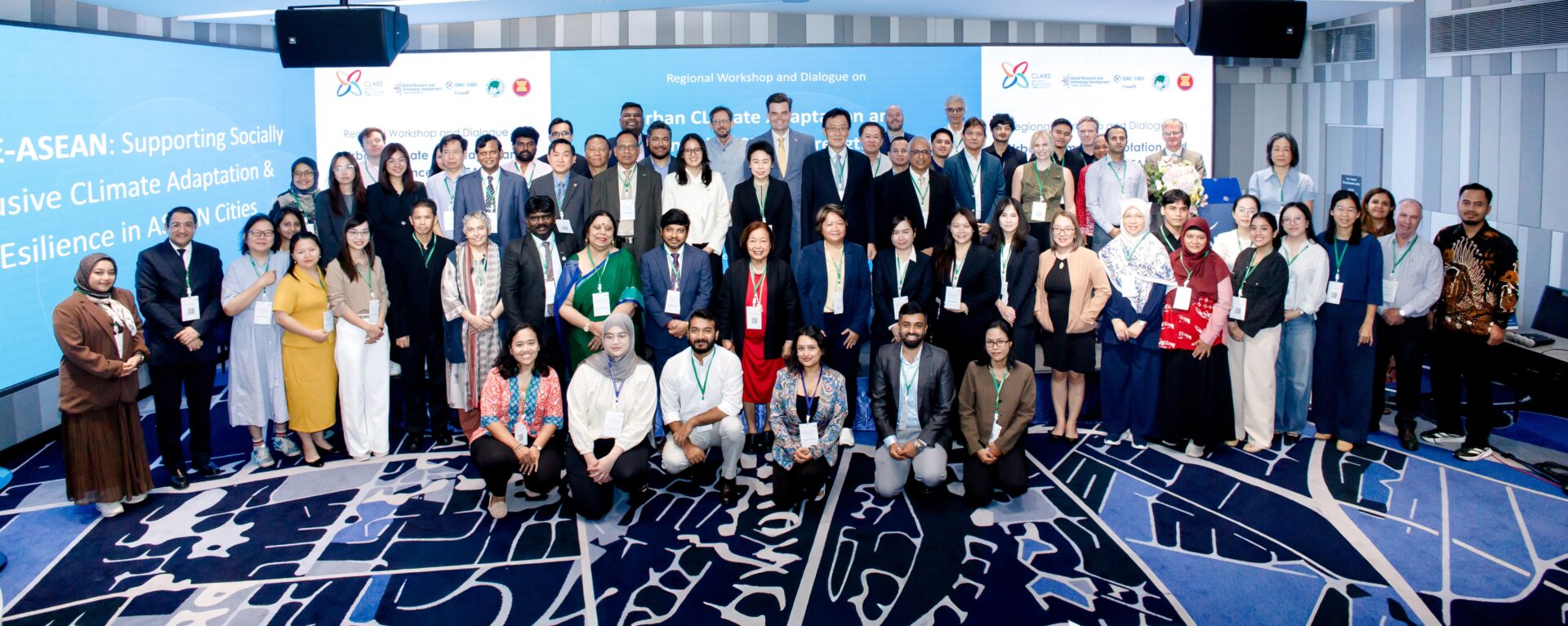
The CLARE–ASEAN Initiative at the Asian Institute of Technology (AIT) organized its Regional Workshop and Dialogue on Urban CLimate Adaptation and REsilience in ASEAN: Strengthening Evidence for Policy and Practice, on 14–15 September 2026 at Novotel Bangkok on Siam Square.
With the aim of generating evidence through place-based action research and region-wide synthesis of published resources, CLARE–ASEAN’s work is organized around four thematic areas: Urban Heat Management, Nature-based Solutions (NbS), Community-based Approaches, and Climate Finance, with Planning and Governance and Gender Equality and Inclusion (GEI) serving as cross-cutting dimensions. Building on action research across seven ASEAN Member States and 14 cities, CLARE–ASEAN organized its first Regional Workshop in May 2026 to help bridge knowledge–policy–action gaps, followed by a Research–Policy Dialogue in June 2026. The initiative is now preparing Regional Evidence Syntheses and preliminary messages across its thematic areas for translation into final regional knowledge products.
This workshop focused on evidence tailoring, bringing together emerging evidence from across the CLARE–ASEAN themes to identify key regional findings, implementation lessons, and policy messages while retaining the specificity of different national and urban contexts.
The workshop, emceed by Dr. Priya Singh, Research Specialist at AIT, commenced with an opening session facilitated by Prof. Shobhakar Dhakal, Project Lead of the CLARE–ASEAN Initiative at AIT.
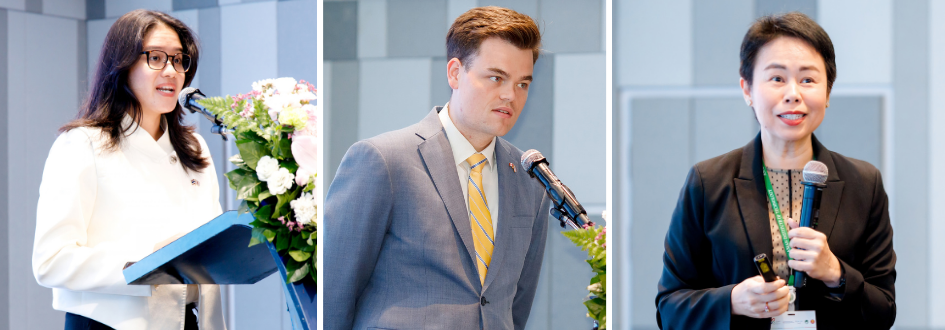
Welcome and opening remarks were delivered by Ms. Sukontip Pinso, Climate, Energy and Nature Officer at the Embassy of the United Kingdom to Thailand; Mr. Liam Kirkpatrick, Second Secretary (Political) at the Embassy of Canada to Thailand; Dr. Tavida Kamolvej, Deputy Governor of the Bangkok Metropolitan Administration (BMA); Prof. Pai-Chi Li, President of the Asian Institute of Technology (AIT); and Dr. Arjan de Haan, Senior Program Specialist at the International Development Research Centre (IDRC).
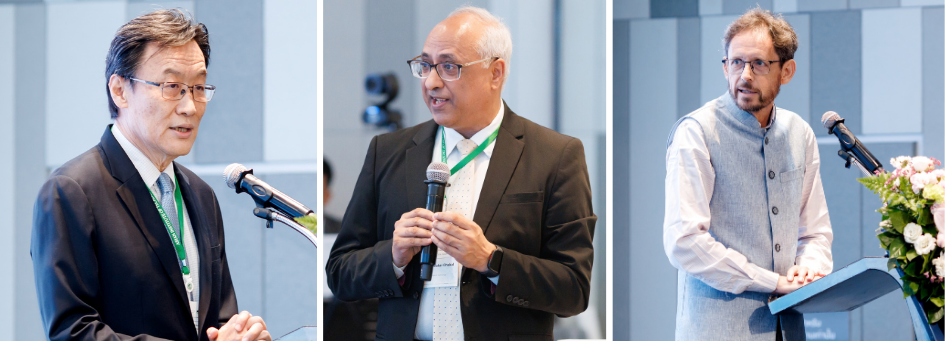
Deputy Governor of BMA, Dr. Tavida Kamolvej, then delivered a keynote presentation highlighting interconnected urban risks, approaches for moving from risk identification to action, and lessons learned from Bangkok’s experience.
Session I, which focused on Urban Heat Management in ASEAN Cities, began with a presentation by Prof. Shobhakar Dhakal on emerging findings from the regional synthesis on urban heat and adaptation strategies.
This was followed by Dr. Dian Tri Irawaty, Program Director at the Rujak Center for Urban Studies (RCUS), who presented key findings from the CLARE–ASEAN action-research project Beyond Housing Types: Comparative Study of Urban Poor Settlements for Urban Heat Adaptation and Inclusive Urban Future in South-East Asia Countries (Be-Housing), which she leads. Dr. Jeeranuch Sakkhamduang, Expert at the Thailand Environment Institute and Project Lead of Heat Adaptation in the Mekong Region: Bridging Science, Policy, and Sustainable Design in Thailand, Cambodia and Vietnam (HAMR), then presented findings from the project.
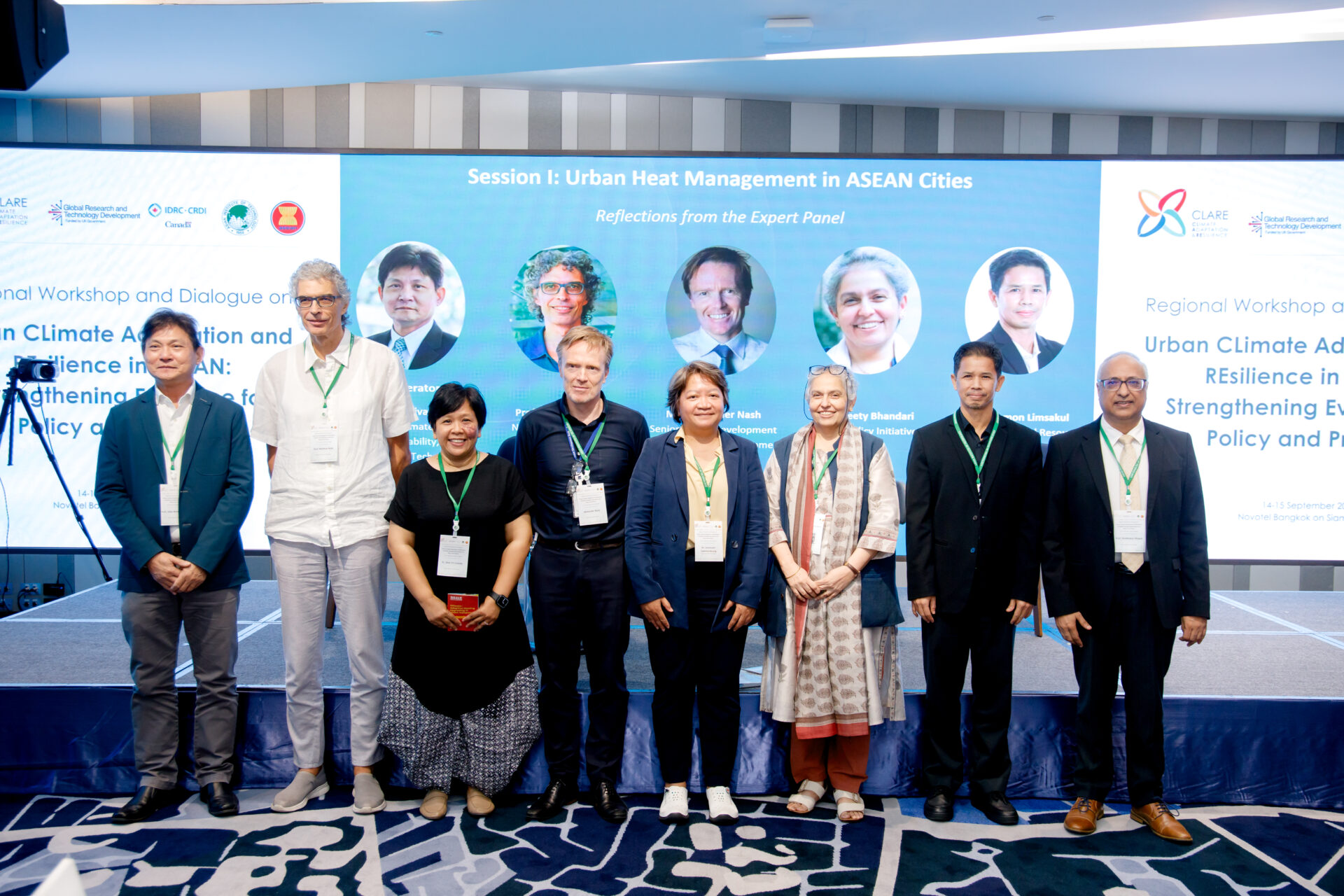
The session continued with reflections from an expert panel moderated by Prof. Vilas Nitivattananon of the Faculty of Climate Change and Sustainability at AIT. The panel featured Prof. Matthias Roth of the National University of Singapore; Mr. Alexander Nash, Senior Urban Development Specialist at the Asian Development Bank; Ms. Preety Bhandari of Climate Policy Initiative, India; and Dr. Atsamon Limsakul, Director of the Climate Change Adaptation Research Section at Thailand’s Department of Climate Change and Environment, Ministry of Natural Resources and Environment.
Session II: Climate Finance for Urban Climate Adaptation and Resilience began with a presentation by Mr. Sarath Babu of Climate Policy Initiative (CPI) on emerging findings from the regional synthesis, Financing a Climate-Resilient Future for ASEAN Cities: Pathways & Lessons.
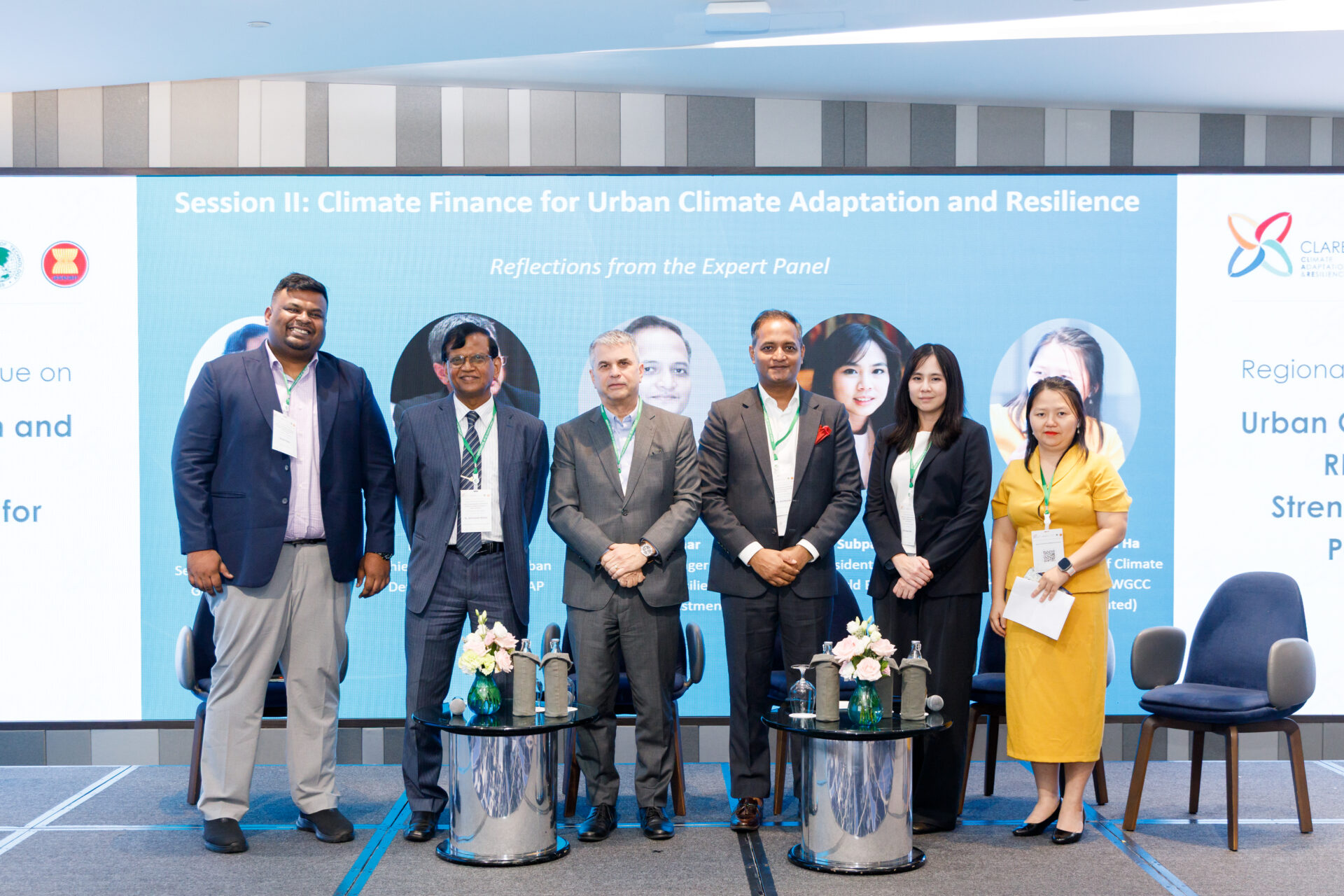
The presentation was followed by reflections from an expert panel moderated by Dr. Srinivasan Ancha, Senior Fellow at the Institute for Global Environmental Strategies (IGES). The panel included Mr. Curt Garrigan, Chief of Sustainable Urban Development at the United Nations Economic and Social Commission for Asia and the Pacific (ESCAP); Dr. Anil Kumar, Program Manager for Infrastructure Resilience and Climate Investment at the Asian Disaster Preparedness Center (ADPC); Ms. Pat Subpa-Asa of the World Bank’s Bangkok Resident Mission; and Ms. Nguyen Thi Thu Ha, Officer at the Center for Climate Change Adaptation and Carbon Neutrality, Department of Climate Change, Viet Nam.
Session III: Urban and Spatial Planning for Enhanced Urban Climate Adaptation and Resilience began with a presentation by Dr. Malay Pramanik, Associate Professor in the Faculty of Climate Change and Sustainability at AIT and one of the Co-Principal Investigators of CLARE–ASEAN. He presented emerging findings from the regional synthesis on the efficacy of urban spatial planning within the CLARE–ASEAN Initiative.
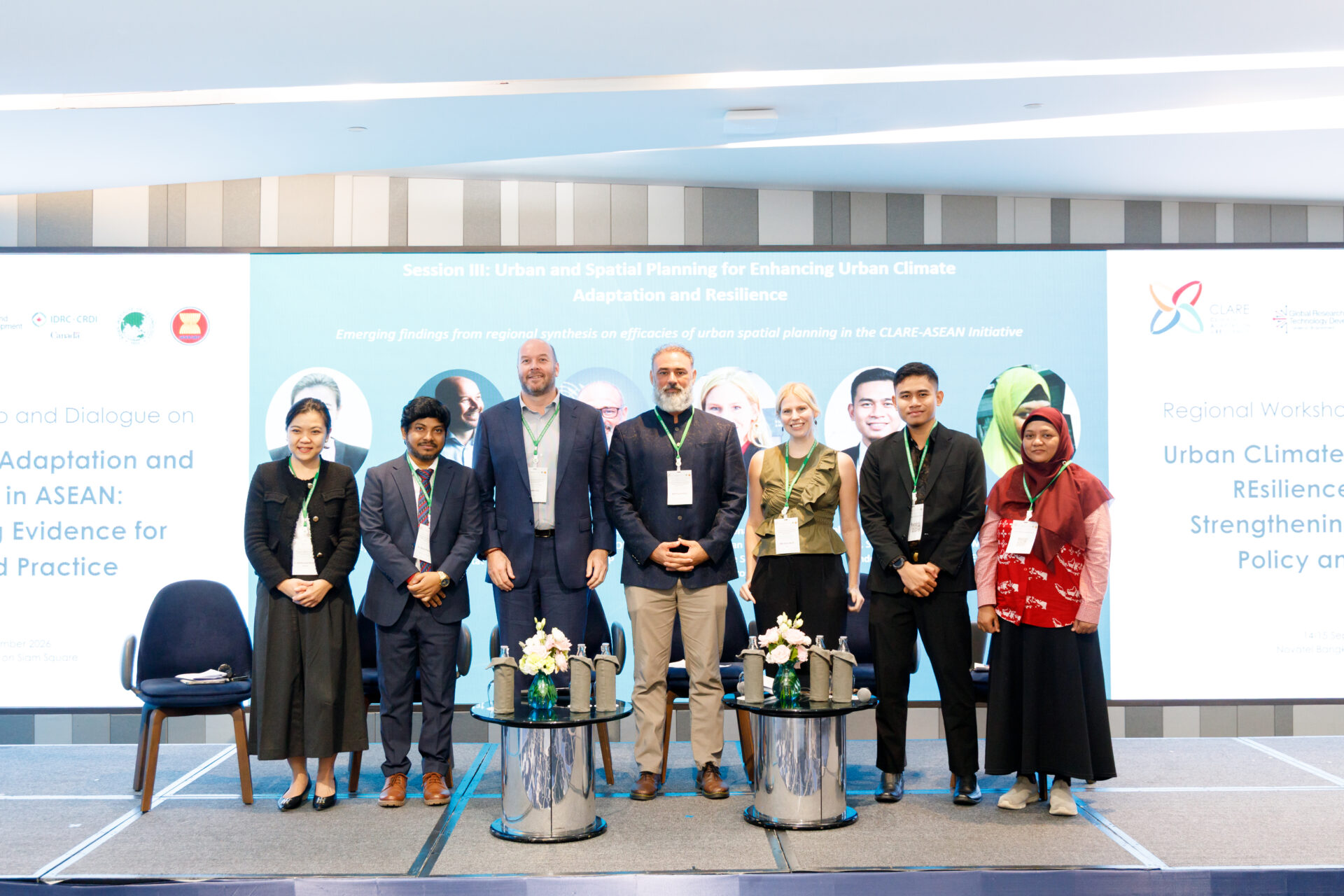
The presentation was followed by reflections from an expert panel moderated by Dr. Wijitbusaba Marome (Ann), Associate Professor in Urban Development and Planning and Director of the Urban Futures and Policy Research Unit at Thammasat University, Thailand. The panel included Mr. Tjakko Dijk, Project Manager of ACTIVATE at the United Nations Human Settlements Programme (UN-Habitat), Bangkok; Mr. Matthew Perkins, Economic Affairs Officer at UNESCAP; Ms. Marlena Kiefl, Advisor for Urban Resilience and Climate Services under the URBAN ACT Project at Deutsche Gesellschaft für Internationale Zusammenarbeit (GIZ); Mr. Rahensyah Azhar Pratama of the Office of Public Housing, Settlement Areas, and Land Affairs (DPRKPP), Surabaya City, Indonesia; and Ms. Heny Puspita Rokhwani, Environmental Extension Senior Officer at the Directorate of Climate Change Adaptation, Ministry of Environment–Environmental Protection Agency, Indonesia.
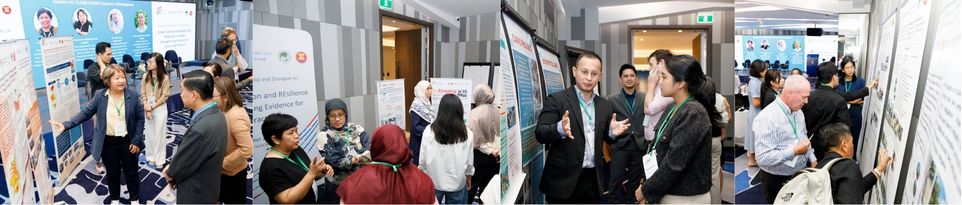
Session IV featured the CLARE–ASEAN Research Marketplace, which provided an interactive space to discuss key findings from four action-research projects: Be-Housing, HAMR, NbCLARE, and CAPE, being implemented across several cities in ASEAN Member States. Participants gathered around project banners to engage directly with the respective project leaders to exchange experiences and reflect on the application of research findings. (Further information about the projects and their research teams is available on the CLARE–ASEAN website: https://clareprogramme.org/project/clare-asean/ )
The second day began with key reflections from Day 1, provided by Dr. Arjan de Haan and Prof. Shobhakar Dhakal.
Session V, Nature-based Solutions for Urban Climate Adaptation and Resilience, opened with a presentation by Prof. Mukand S. Babel of the Centre for Water and Climate Adaptation (CWCA) at AIT and one of the Co-Principal Investigators of CLARE–ASEAN. He presented emerging findings from the regional synthesis on the efficacy of nature-based solutions for urban climate adaptation and resilience. This was followed by a presentation on key findings and evidence relating to nature-based solutions from CLARE–ASEAN action research, delivered by Dr. Kim Irvine, Project Lead of NbCLARE.
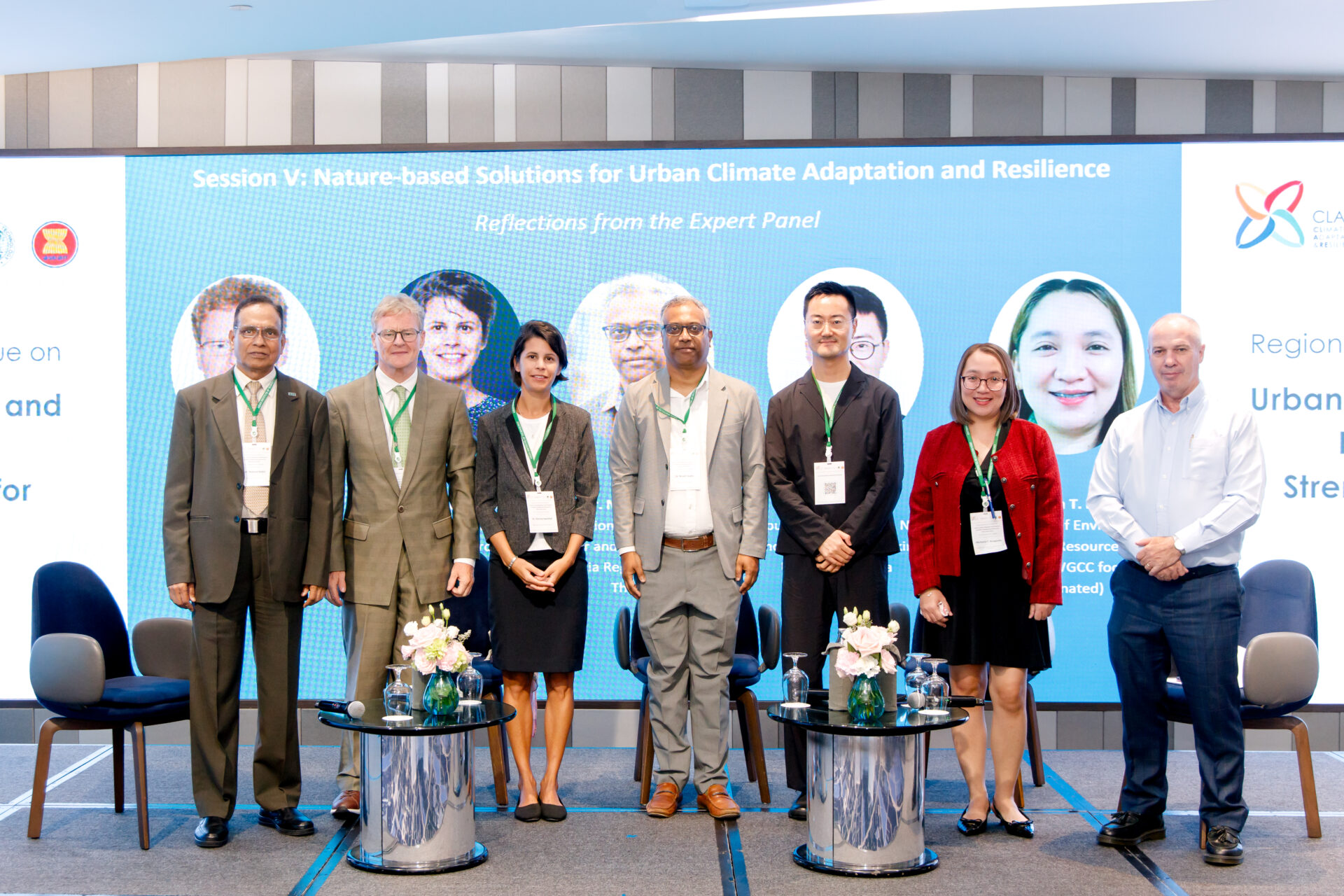
The session then moved to reflections from an expert panel moderated by Mr. Stefan Rau, Principal Urban Development Specialist at the Asian Development Bank. The panel included Dr. Perrine Hamel, Associate Professor at the Asian School of the Environment, Nanyang Technological University (NTU), Singapore; Dr. Niladri Gupta, Regional Coordinator for Water and Wetlands at the IUCN Asia Regional Office, Thailand; Prof. Dong Wang, Deputy Director of the Nature-based Solutions Innovation Center at Peking University, China; and Ms. Michaela T. Rongavilla, Development Management Officer III at the Department of Environment and Natural Resources, the Philippines.
Session VI focused on key messages from CLARE–ASEAN projects on communities’ participatory climate experiments and Gender Equality and Inclusion (GEI).
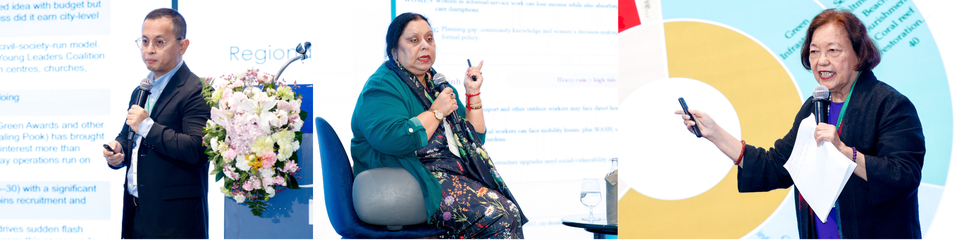
Prof. Kristian Karlo Saguin, Professor in the Department of Geography at the University of the Philippines Diliman and Project Lead of CAPE, presented emerging findings and evidence from participatory climate experiments conducted with communities in the Philippines and Viet Nam.
This was followed by a presentation from Prof. Paula Banerjee, IDRC Endowed Research Chair on Gender and Forced Displacement at AIT, as well as one of the Co-Principal Investigators of CLARE–ASEAN, who presented emerging findings on integrating GEI dimensions across the CLARE–ASEAN Initiative.
Prof. Emma E. Porio of the Department of Sociology and Anthropology at Ateneo de Manila University, and Project Leader of Coastal Cities at Risk in the Philippines, then shared reflections drawn from experiences in the Philippines and across ASEAN.
Each session during the workshop provided opportunities for audience reflections and participant interaction.
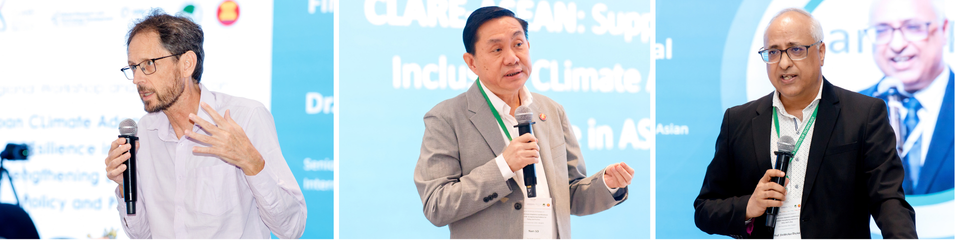
The two-day workshop concluded with a final reflection and closing session. Dr. Arjan de Haan presented the workshop’s key takeaways, while Dr. Nam So, Senior Environment Officer at the ASEAN Secretariat, offered reflections, feedback, and suggestions on the evidence-tailoring process. Prof. Shobhakar Dhakal then delivered the vote of thanks, formally concluding the workshop.
Categories
CLARE Pillars
CLARE Themes
CLARE Topics
Published
CLARE Projects
CLARE Partners