
Scaling research for impact: Translating BASIN’s behavioural approaches for water security and adaptation to Ethiopia
/
Authors: Kate Gannon, Julie Truelove, Alebachew Adem, Abubeker Kedir, Gashaw Kebede, Rohit Ramchandani, Grace Oluwasanya and Will Ingram
As the BASIN project approaches its conclusion, a workshop in Ethiopia has highlighted growing potential for scaling behavioural research to support climate adaptation and water security across Africa.
On 8-9 October 2026, partners from the Behavioural Adaptation for Water Security and Inclusion (BASIN) project met in Bishoftu, Ethiopia, for a two-day impact workshop hosted by WaterAid Ethiopia. The event brought together 45 participants, including representatives from government, academia and civil society, alongside BASIN researchers and practitioners (see list of participating organisations below). Together, we explored the project’s findings, their relevance to Ethiopia’s water security challenges, and opportunities to translate research into policy and practice. As host of COP32 in 2027, Ethiopia is poised for a critical year ahead for climate action and important discussions on water security and the One WASH National Plan.
Funded through the CLimate Adaptation and REsilience (CLARE) programme, BASIN has spent the past three years pioneering the application of behavioural research to climate adaptation and water security in Tanzania, Burkina Faso and Malawi and exploring how it can help address persistent gaps between climate adaptation ambitions and implementation. The project has developed and applied innovative approaches to understanding why individuals, communities and institutions do – or do not – act on climate risks, and how practical interventions, co-designed using behavioural research techniques, can support change in the water sector.
Bringing this work to Ethiopia provided an important opportunity to reflect on what has been learned and how those lessons might be applied and scaled in new contexts.
Exploring opportunities for wider application of BASIN findings and approaches
Over two days, BASIN partners shared research findings and practical tools developed through the project, including approaches to strengthening community engagement, improving the uptake of climate information, and understanding the behavioural barriers that constrain effective adaptation. Through interactive sessions, participants then explored how behavioural research methods and frameworks could be applied to Ethiopian water security challenges.
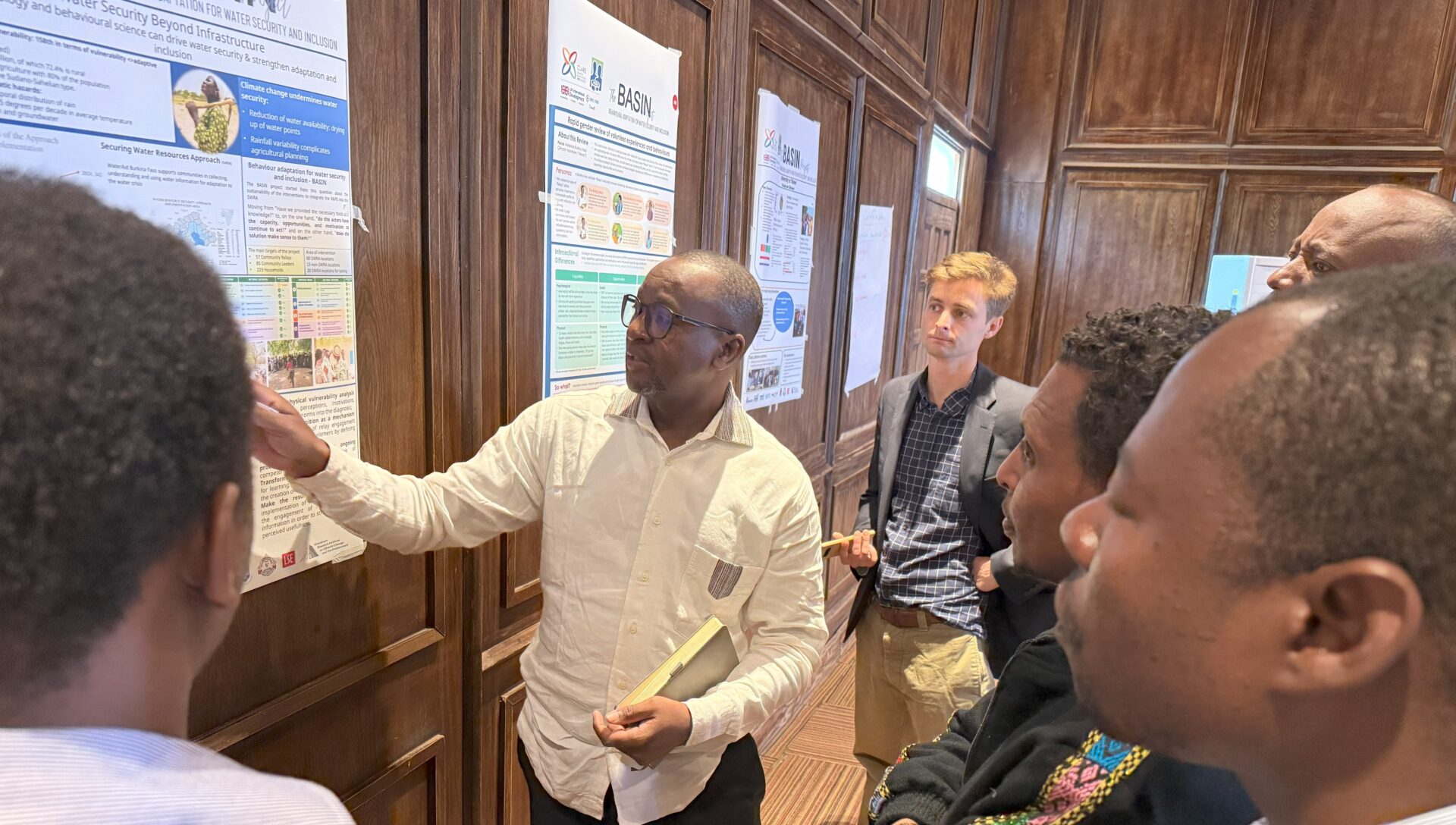
Participants identified concrete opportunities for using BASIN methodologies and tools across different sectors and levels of decision-making in Ethiopia. For example, government stakeholders highlighted the potential for BASIN’s novel Multi-Actor Behaviour Journey methodology to help diagnose implementation gaps as Ethiopia rolls out its National Adaptation Plan. Members of Ethiopia’s Ministry of Finance also indicated interest in applying BASIN’s work from Tanzania on why national adaptation commitments fail to translate into adequate budgets for flood and drought preparedness to analyse Ethiopia’s own budgeting processes, particularly for greater adaptation investment in the priority water sector.
Further opportunities emerged for applying BASIN’s approaches in research, teaching and community programmes. University representatives expressed interest in integrating behavioural research methods into undergraduate curricula that are currently under revision. Participants also identified opportunities to adapt methods used, for example, to address community waste management challenges around Lake Bassotu in Tanzania to similar challenges in Ethiopia. Another example was the recognition from Ethiopian stakeholders, including NGOs, of the direct transferability of BASIN evidence on champion-based delivery of adaptation programming. This indicates the universal need for community champions, who are otherwise highly motivated, to receive external support and capacity strengthening over time to lower the opportunity barriers faced in their work.
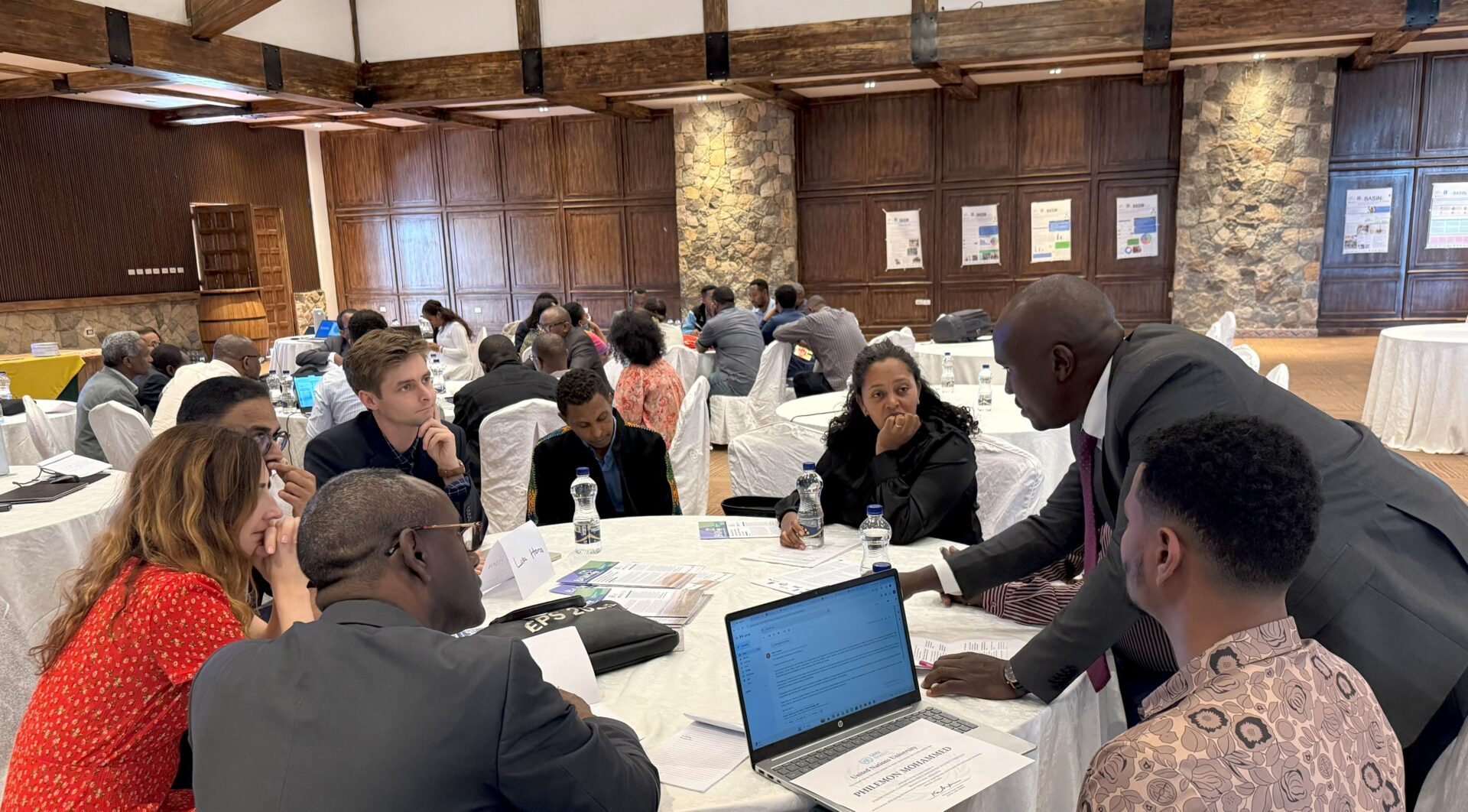
Beyond these specific applications, participants highlighted the value of BASIN’s transdisciplinary and community-centred approach to co-designing behavioural solutions with communities, including alongside Ethiopia’s One WASH National Plan. This reflects an important dimension of BASIN’s innovation in combining behavioural science with systems thinking, participatory design and critical social sciences to address complex societal challenges in more holistic and equitable ways. As Dr Dawit Mekonnen, Associate Professor in Psychology at Addis Ababa University reflected, “I didn’t realise behaviour could be used to solve community problems, so this was inspiring”.
Together, these discussions offered encouraging evidence of the wider relevance of BASIN’s behavioural approach, and the potential for uptake across government, academia and civil society. They also demonstrated the value of bringing research into dialogue with new stakeholders to identify locally relevant pathways for application and scaling. As Ethiopia prepares to host COP32 in 2027, there is growing momentum around climate adaptation and water security. The impact workshop provided a timely opportunity to explore how BASIN’s evidence and tools could contribute to national priorities and policy conversations in the lead-up to COP.
Building capacity beyond the project
A further workshop highlight was the recognition of participants’ learning through certificates awarded by the United Nations University Institute for Water, Environment and Health (UNU-INWEH).
This provided a fitting introduction to another practical BASIN legacy: the forthcoming Water and Behavioural Science Programme developed by UNU-INWEH. The free, open-access online programme will soon offer certified training in behavioural design for water security through the United Nations University, helping researchers and practitioners worldwide build the knowledge and skills to apply behavioural approaches to water security challenges. Courses will be available on the UNU-INWEH platform in English, French and Kiswahili.
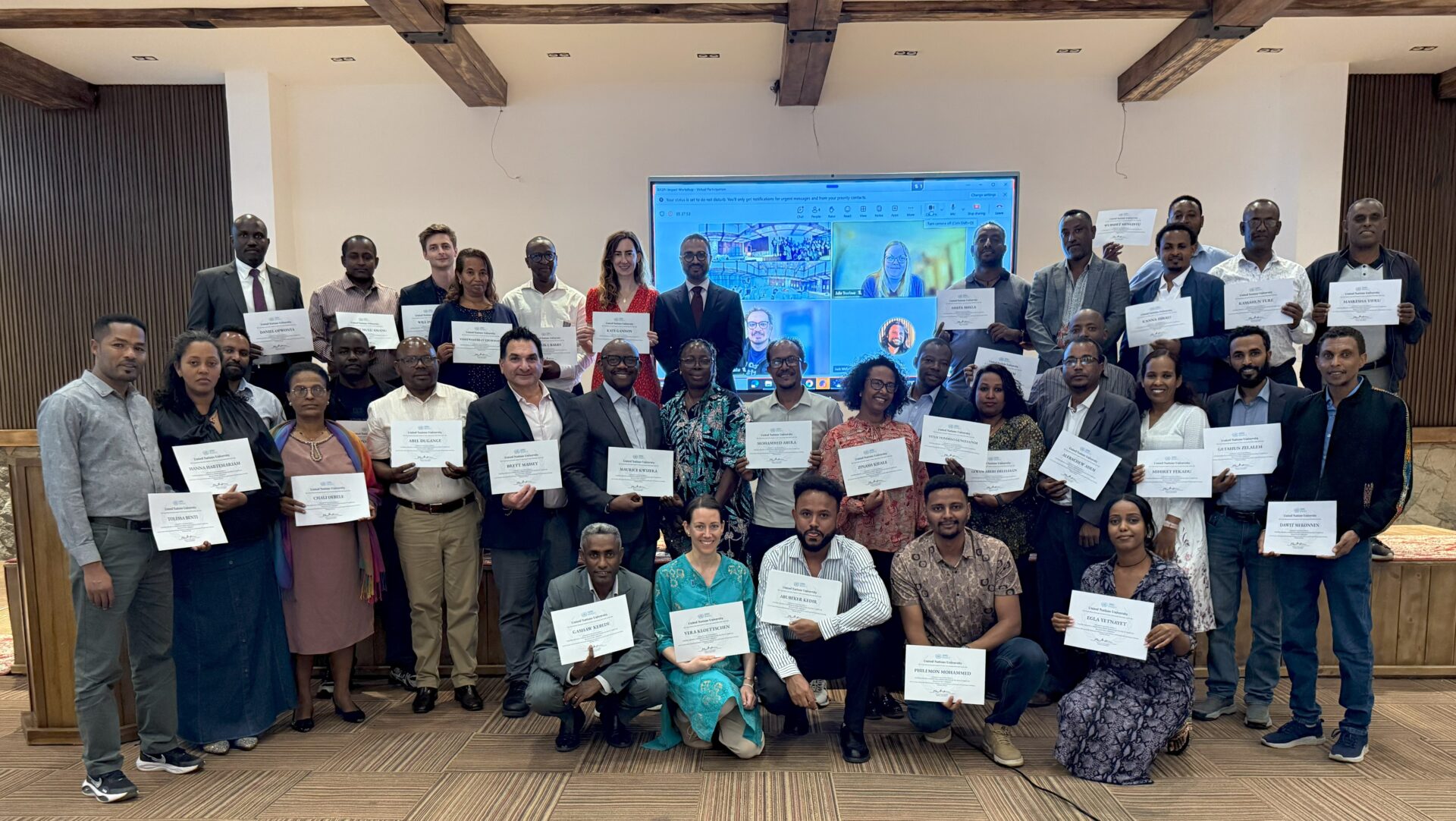
As BASIN draws to a close, our Ethiopia impact workshop demonstrated how investment in exploratory, collaborative and applied research can generate value beyond its original case studies. It built relationships, networks and lessons learned that will carry forward to the forthcoming impact workshop in Burkina Faso for the Sahel Region while also encouraging a peer learning exchange to Tanzania by workshop leaders in Ethiopia. Through innovative, transferable methods, stronger partnerships between researchers and practitioners, practical resources and accessible training, BASIN is helping lay the foundations for wider uptake of behavioural science in climate adaptation and water security.
BASIN is funded through the Climate Adaptation and Resilience (CLARE) programme, supported by UK aid through the Foreign, Commonwealth & Development Office (FCDO) and Canada’s International Development Research Centre (IDRC). Additional support for the Ethiopia workshop was provided by the Lalji Lakhoo Family Foundation through WaterAid Canada.
Participating Stakeholder List*:
- Ministry of Health
- Ministry of Water and Energy (MoWE)
- Ethiopian Meteorological Institute (EMI)
- Climate Change Forum – Ethiopia (CCF-E)
- Horn of Africa Regional Environment Centre and Network (HoA-REC&N)
- Ministry of Agriculture
- One WASH National Programme (OWNP)
- Ethiopian Water Technology Institute (EWTI)
- Ethiopian Meteorological Institute (EMI)
- Environmental Protection Authority (EPA)
- DRM and Food Security Center, Addis Ababa University (AAU)
- Psychology Department, Addis Ababa University (AAU)
- Ministry of Education
- Sheger Radio
- The Reporter
- Ministry of Planning and Development
- Ministry of Finance
- Least Development Countries Universities Consortium for Climate Change (LUCCC) Secretariat
- Oromia Water and Energy Bureau
- Amhara Water and Energy Bureau
* Mercy Ojoyi, Senior Programme Specialist at the International Development Research Centre (IDRC) which co-funds BASIN through the CLARE Programme, also joined remotely to give opening remarks.
Categories
Countries
CLARE Pillars
CLARE Themes
CLARE Topics
Published
CLARE Partners