
CLARE-ASEAN in Hanoi: What the Project CAPE Team learned from the HAMR workshops
/
By: Karl Satinitigan, Alexzandra Faye Castillo, and Gabriel Villaruel
Project CAPE Team | October 5-6, 2026
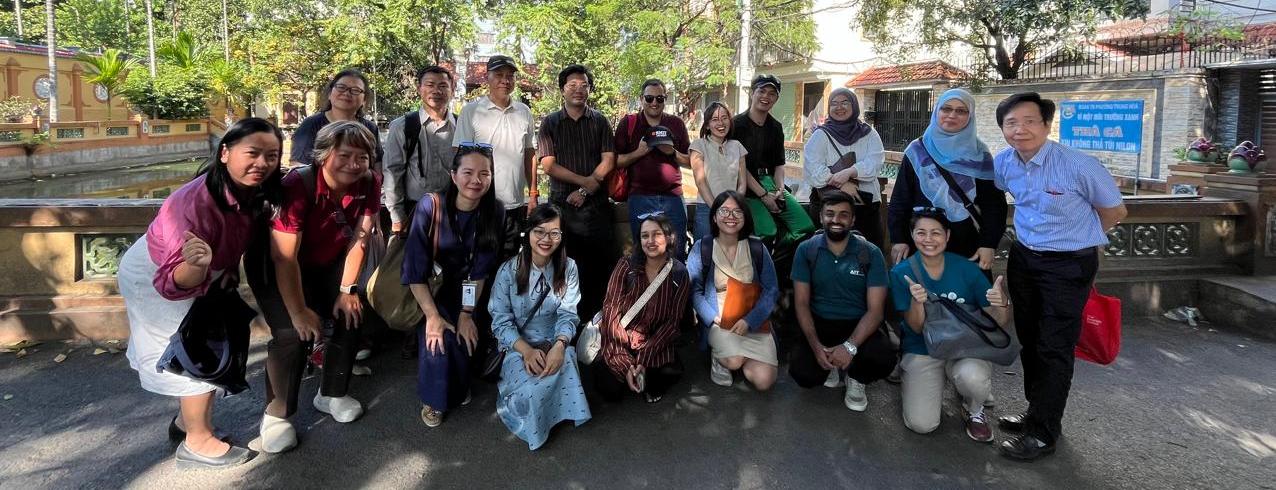
On 5-6 October, delegates from CLARE-ASEAN projects gathered in Hanoi, Vietnam, for workshops hosted by the HAMR project. Project CAPE, NbCLARE, HAMR, and Be-Housing shared findings and field experience on urban heat, nature-based solutions, and community-led adaptation. Two members of the CAPE Team, Faye Castillo and Gabriel Villaruel, joined the sessions and reflect below on what they brought home.
A central message ran through both days: urban heat and climate adaptation become real when communities, scientists, and governments build a shared understanding of the problem and act on it together.
Day 1: Sharing learnings across projects
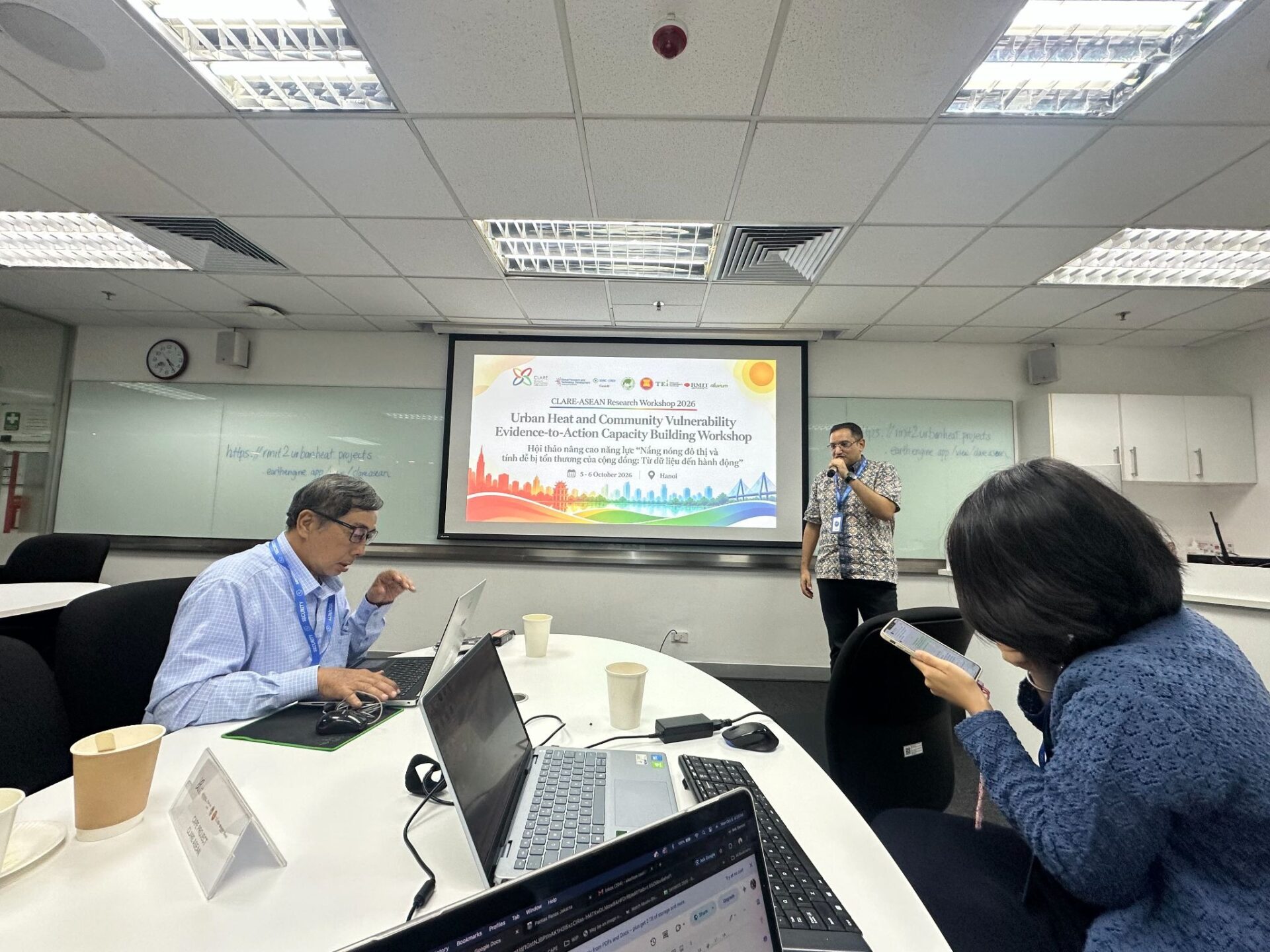
The first day was devoted to presentations and exchange among the four projects. The CAPE Team was asked which practices had helped bring community members into the research. They named three: rapport building, transparency about the purpose and relevance of the project to residents, and having a champion in both the government and the community.
Delegates also traded tools. NbCLARE uses Visual-Q, which Project CAPE could adopt. Participants also saw two urban heat apps from other projects: an RMIT map of urban heat across CLARE-ASEAN sites and Pantau Panas Jakarta, which measures heat in Indonesia’s capital. For Faye, the shared experiences were the most striking part. Climate adaptation, resilience, climate finance, and nature-based solutions (NbS) are live concerns in the Philippines, too.
Day 2: Hearing from Hanoi’s communities
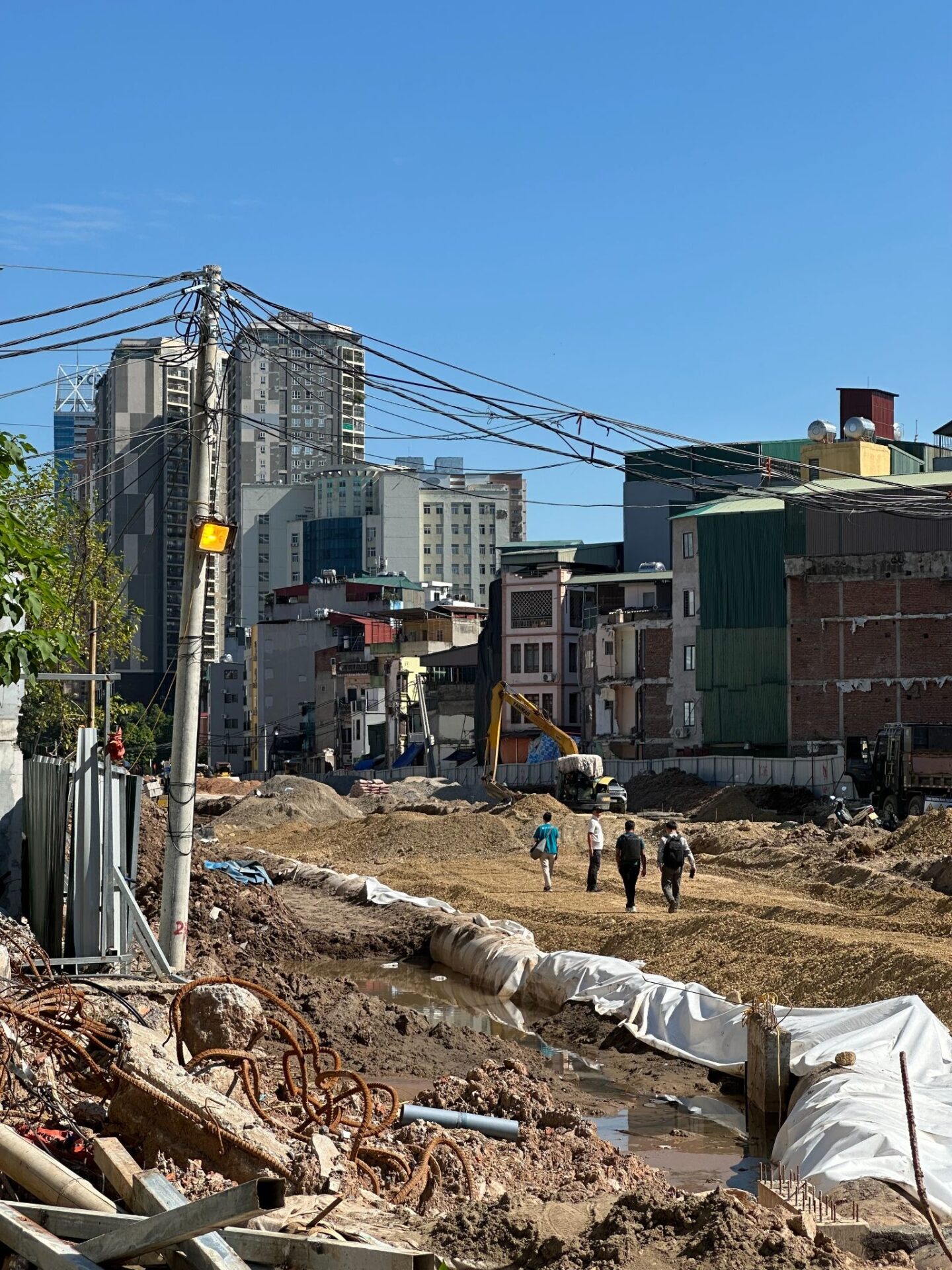
The second day opened with a focus group discussion with community members from Hanoi on urban heat. In the afternoon, delegates visited an old district where a large area is set to be converted into a road, with residents to be relocated because of urbanization. The visit showed how development decisions shape who experiences heat, displacement, and risk.
Four insights worth carrying home
1. Do we mean the same thing by “urban heat”? The academe, policy, and community each understand urban heat differently, and the same holds for the question of who is vulnerable. Without a shared definition, research and policy will keep talking past each other.
2. Heat is still normalized. In Hanoi, as in Manila, heat is part of everyday life, so it is seldom treated as something to adapt to. Be-Housing noted that urban heat is not yet recognized as a disaster and that its impacts are less visible. Early warning systems exist for typhoons and the habagat (Southwest Monsoon), but not yet for heat, where heat waves remain the least prioritized hazard. Gabriel noted that other countries at the workshop emphasized the need to declare urban heat a crisis, a framing that treats it as an urgent threat to people’s health, safety, and daily lives. Be-Housing is now planning to scale up by retrofitting public spaces for the elderly.
3. A national plan is only the start. Participants asked how communities can implement a National Adaptation Plan (NAP). The Philippines faces the same question: does our NAP reflect community needs, do communities know it exists, and why is localization so slow? Cities can share data and good practices without waiting for national action, but the government remains the main decision-maker and duty-bearer, and research such as HAMR’s can supply the evidence it needs. Faye observed that Philippine climate initiatives are often fragmented, which makes it feel as though we are doing too much while achieving too little. Climate budgets also tend to favor roads over nature-based solutions, a reminder that evidence has to compete with infrastructure priorities. One question from the NbS session stayed with the team: how do we translate academic and scientific findings into language that government and politics can act on?
4. Greener means smarter, and culturally grounded. Participants stressed that greener cities should consider green area per capita and not simply plant trees anywhere. Gabriel was drawn to the idea of retention lakes as part of urban heat solutions, since these spaces can hold spiritual, cultural, and social meaning for communities. Climate solutions must meet physical and environmental needs and respect the meanings people attach to the spaces they inhabit.
Science and lived experience, side by side
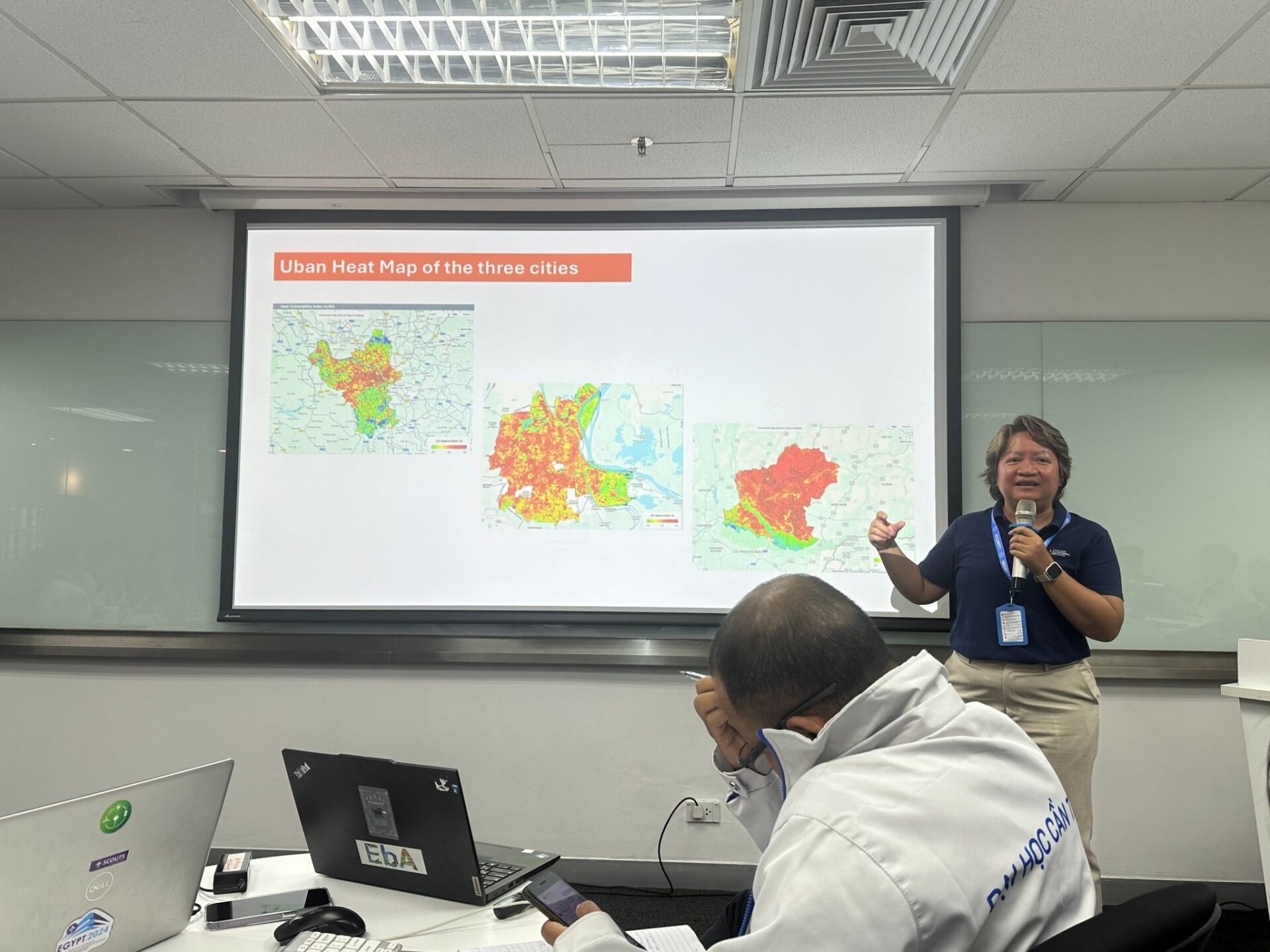
Gabriel, who works at the intersection of arts, community development, and participatory processes, saw consistent community-centered thinking across both days. On Day 1, the communities of each CLARE-ASEAN project were presented as part of the results and the process. On Day 2, Hanoi residents’ perspectives stayed at the center of the conversation. Scientific research helps us understand climate risks, and communities supply the lived experience and local knowledge that show how those risks unfold in everyday life. Each needs the other. Faye, meanwhile, left the workshops with a deeper appreciation for the projects and their outputs, and hopes they can be replicated, scaled, and turned into tools that help both communities and government.
Gabriel also recalled meeting a Vietnamese researcher, who was one of the participants on the first day of the workshop. She worked at UP Diliman for a time at the Department of Anthropology. She shared that she had visited the Philippines and said the country became a benchmark for disaster response and resilience after Typhoon Yolanda, with Southeast Asian neighbors learning from our experience. That raises a fair question: how much have we progressed since then, and where do gaps remain in protecting our most vulnerable communities?
Key takeaways
- A shared definition of urban heat and of vulnerability is the starting point for joint action.
- Heat needs to be recognized as a disaster, with early warning systems to match.
- Research becomes useful to government when it is translated into the language of policy and politics.
- NAPs only matter if communities know about them and can implement them.
- Community voices and scientific evidence should be treated as equal partners.
- Cities, projects, and countries gain from sharing tools, data, and practices across the region.
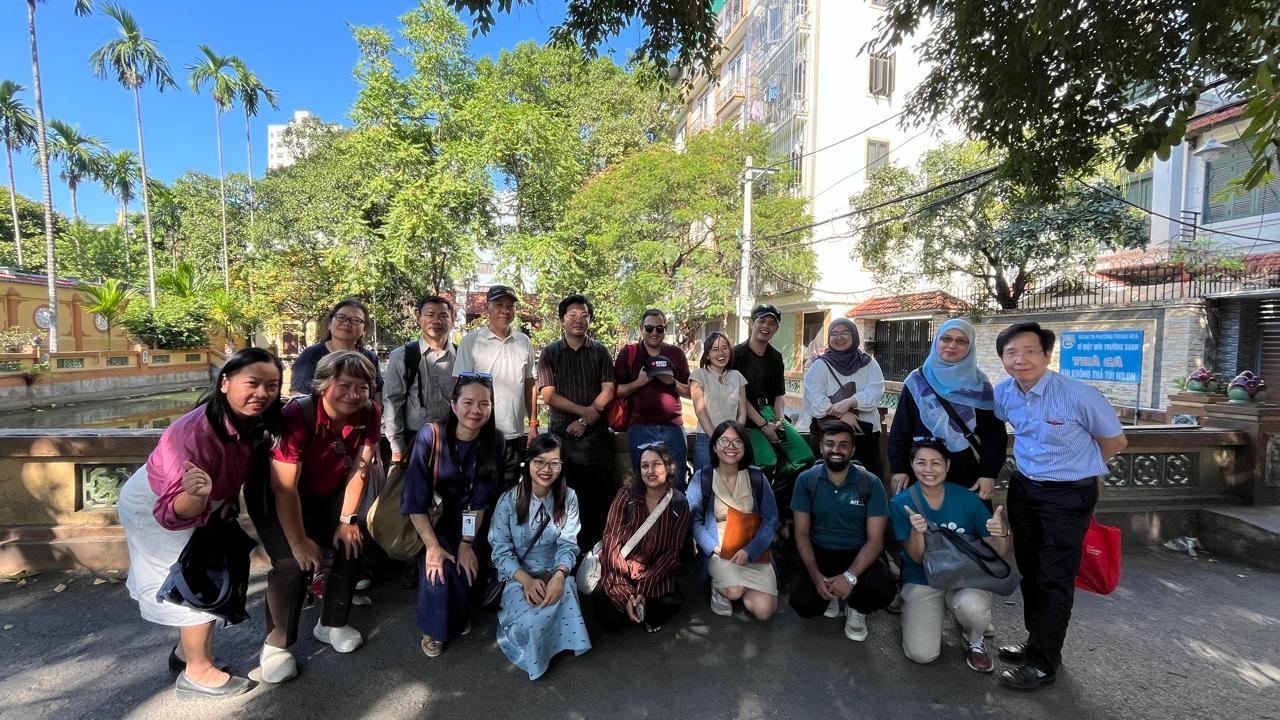
This reflection is based on the Urban Heat and Community Vulnerability: Evidence-to-Action Capacity Building Workshop, a cross-project collaborative capacity-building workshop among the different CLARE-ASEAN Projects, HAMR, Project CAPE, NbCLARE, and Be-Housing. Representatives from each project participated in the two-day workshop by co-sharing project updates, learnings, and best practices that each team conducted in their respective projects.
CAPE (Climate Action and Participatory Experiments for Urban Resilience) is a CLARE–ASEAN project focused on participatory climate adaptation and urban resilience, led by Prof. Kristian Karlo Saguin from University of Philippines Diliman.
Categories
CLARE Pillars
CLARE Themes
CLARE Topics
Published
CLARE Projects
CLARE Partners