
Updating the Adaptation Finance Gap: ECONOGENESIS Contributes to UNEP’s 2026 Adaptation Gap Report
/
The ECONOGENESIS project has contributed to the United Nations Environment Programme (UNEP) Adaptation Gap Report (AGR), supporting the development of the Finance Chapter in the 2026 edition of the flagship global assessment.
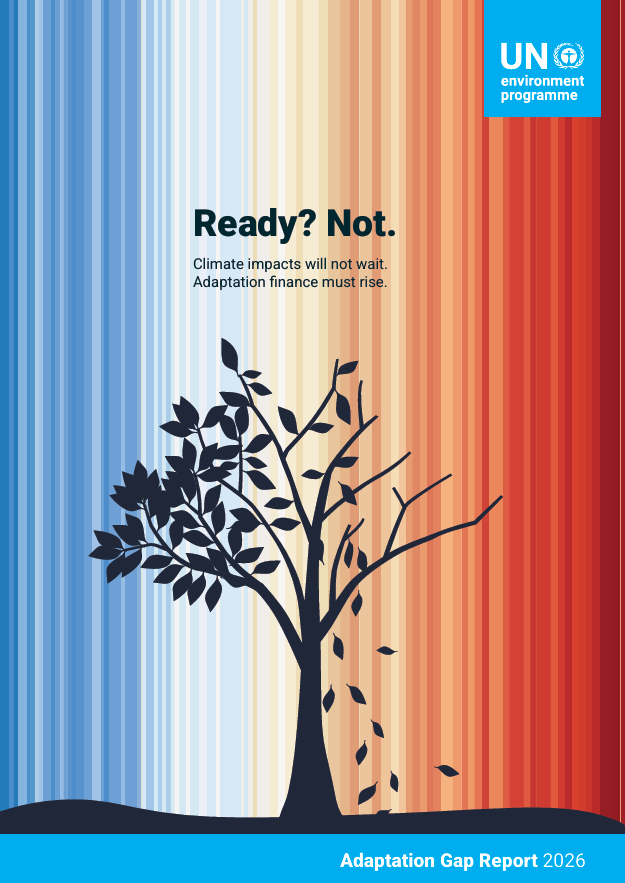
UNEP’s 2026 Adaptation Gap Report: Ready? Not, launched on 4 November 2026, provides the latest analysis of progress in closing the adaptation finance gap and offers an updated assessment of the resources needed to help vulnerable countries adapt to the impacts of climate change.
As part of its contribution, ECONOGENESIS supported the participation of two Global South contributing authors, Blanche Butera and Nella Canales, helping to strengthen diverse regional perspectives within this important global assessment.
Adaptation finance flows remain far below estimated needs
The Finance Chapter of the 2026 AGR reports that international public adaptation finance flows from developed to developing countries reached between US$28.2 billion and US$31.7 billion in 2024, representing an increase of approximately US$1 billion compared to the previous year. This increase is well below the rate needed to double adaptation finance flows by 2025 (relative to 2019).
While adaptation finance directed to least developed countries (LDCs) and small island developing states (SIDS) increased in real terms between 2019 and 2024, the report notes that flows have declined from their 2022 peak. This trend is concerning as these countries are among the most vulnerable to climate change impacts.
These flows can be compared to the adaptation finance needs of developing countries, which the report estimates at US$305 billion annually by 2035.
Even if the aspiration agreed at COP30 to triple international public adaptation finance flows to developing countries by 2035 is achieved, the report estimates this would meet only 20-29% of total adaptation finance needs. For LDCs and SIDS, however, tripling current levels of finance could cover 49-84% of estimated adaptation costs.
Progress on gender equality and social inclusion
The finance chapter of the AGR also presents updated analysis on gender equality and social inclusion (GESI) in adaptation finance. Encouragingly, more countries are integrating GESI considerations into the costing of their Nationally Determined Contributions (NDCs) and National Adaptation Plans (NAPs) compared with previous assessments.
However, progress remains uneven, and the report identifies ongoing gaps in the systematic incorporation of gender-responsive and socially inclusive approaches across countries.
Informing global climate negotiations
The Adaptation Gap Report is UNEP’s annual stocktake of progress on adaptation planning, implementation and finance. Its findings help inform international climate discussions and provide evidence for policymakers, practitioners and development partners seeking to accelerate climate resilience efforts.
A high-level presentation of the report’s findings will take place on the 18th of November at the 2026 UN Climate Change Conference (COP31), taking place from November 9 to 20, where adaptation finance is anticipated to remain a central topic of discussion.
Categories
Countries
CLARE Pillars
CLARE Themes
CLARE Topics