
CLARE–ASEAN Webinar Series | Webinar 6: Co-creating Urban Climate Resilience: Community-Based Approaches in ASEAN Cities
/
By: Ms. Sumnima Ghimire and Prof. Shobhakar Dhakal
Following five successful and well-participated webinars on key climate adaptation themes—nature-based solutions, urban heat management, climate finance, urban planning and governance, and a special session on El Niño, the CLARE–ASEAN Initiative at the Asian Institute of Technology (AIT) held its final webinar in this series on participatory approaches and research co-production in urban climate adaptation and resilience.
Held on 18 November 2026, “Co-creating Urban Climate Resilience: Community-Based Approaches in ASEAN Cities” was hosted by the CLARE–ASEAN Initiative at AIT and co-led by CAPE (Climate Action and Participatory Experiments for Urban Resilience), one of the initiative’s four action-based projects that focuses on participatory climate adaptation and urban resilience in Indonesia and the Philippines.
Drawing on experiences from CLARE projects in Indonesia, the Philippines, and Viet Nam, the discussions in the webinar explored how community participation is understood and applied in different settings, its contributions to urban climate adaptation, and the challenges that remain. The webinar reflected CLARE’s commitment to generating actionable, policy-relevant adaptation knowledge through collaboration among researchers, communities, governments, and practitioners.
Registered by a total of 575 people, the webinar was attended by 255. Participants joined from 40 different countries. The largest shares were from the Philippines (37.3%), Thailand (11.6%), India (6.7%), the United States (5.6%), Bangladesh (4.9%), Viet Nam (4.1%), Myanmar (3.7%), Indonesia (3.7%), and Nepal (2.6%), among others.
The webinar was structured into five major segments:
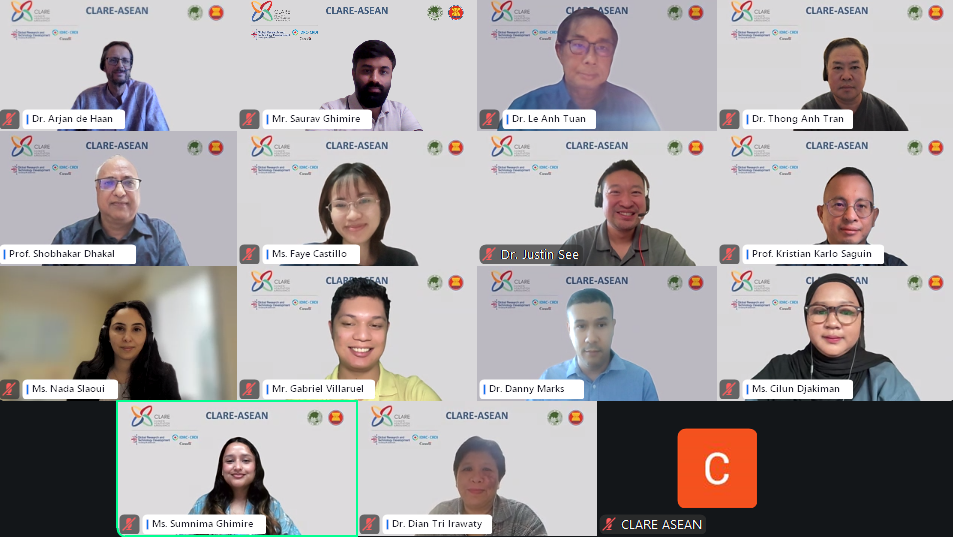
- Opening and introduction: The webinar opened with welcome remarks by Ms. Nada Slaoui, First Secretary (Cooperation) at Global Affairs Canada. Prof. Shobhakar Dhakal, Principal Investigator of the CLARE–ASEAN Initiative at AIT, then introduced the initiative and highlighted the importance of the webinar.
- Scene-setting presentation: Dr. Danny Marks of Dublin City University set the scene by discussing the importance of participatory approaches and co-production in climate adaptation in Southeast Asia.
- Panel presentations: Moderated by Dr. Arjan de Haan of the International Development Research Centre (IDRC), the panel featured three sub-panels with project partners from the Philippines, Viet Nam, and Indonesia.
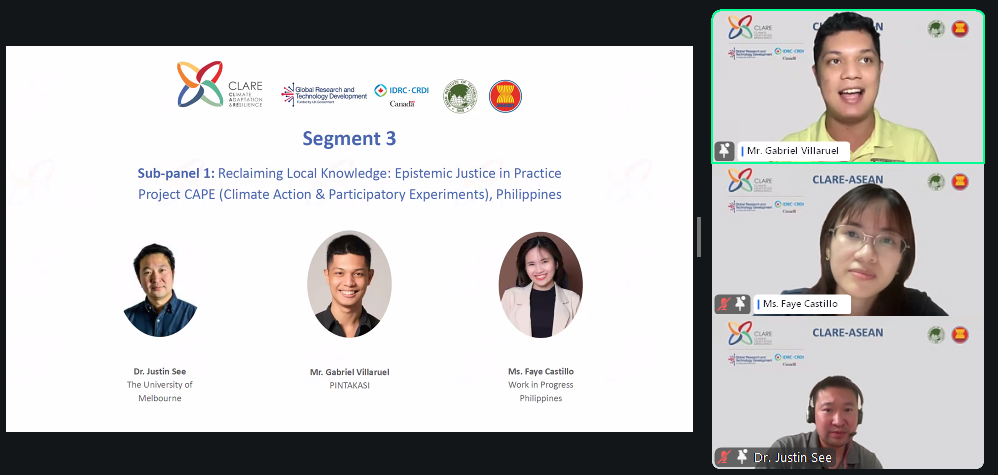
- Sub-panel 1: Reclaiming Local Knowledge: Epistemic Justice in Practice featured Dr. Justin See (The University of Melbourne), Mr. Gabriel Villaruel (PINTAKASI), and Ms. Faye Castillo (Work in Progress).
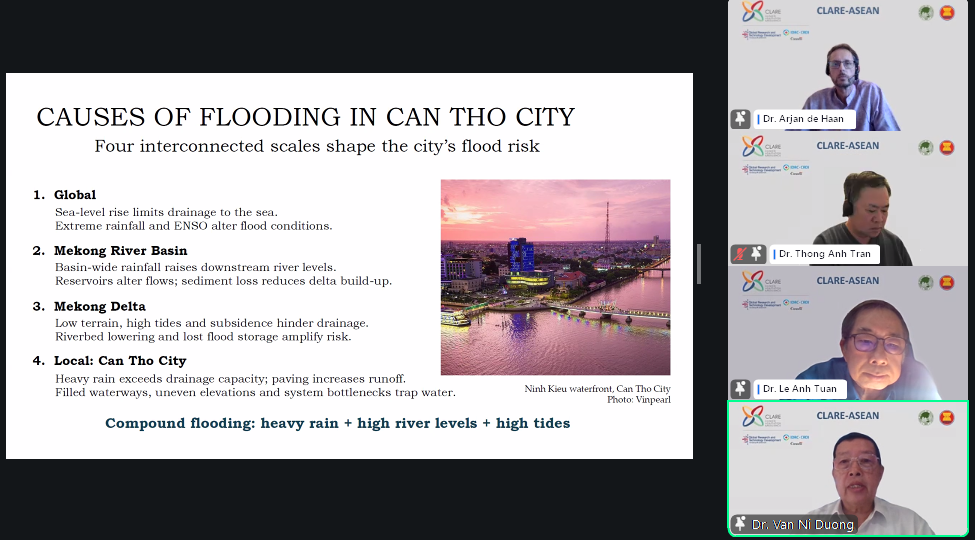
- Sub-panel 2: Community-led Adaptation to Floods: Reflections from Three Communities in Can Tho City, Viet Nam featured Dr. Thong Anh Tran (The Australian National University), Dr. Le Anh Tuan (Can Tho University), and Dr. Van Ni Duong (Can Tho University).
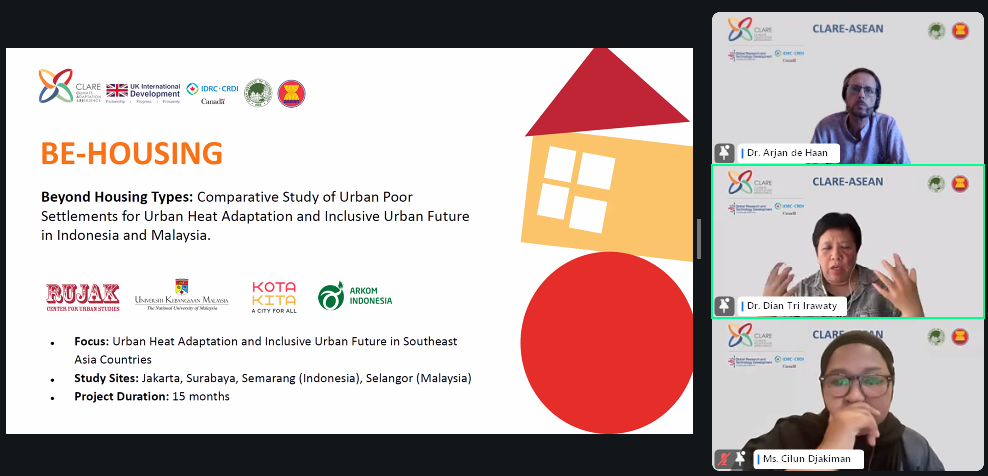
- Sub-panel 3: Cross-Project Perspectives on Community-Based Climate Resilience: Insights from Indonesia featured Ms. Cilun Djakiman (Pattimura University) and Dr. Dian Tri Irawaty (Rujak Center for Urban Studies).
- Moderated discussion: Prof. Kristian Karlo Saguin of the University of the Philippines Diliman moderated the discussion. Questions from participants were directed to the relevant speakers.
- Closing and way forward: The webinar concluded with closing remarks by Prof. Shobhakar Dhakal, Principal Investigator of the CLARE–ASEAN Initiative at AIT.
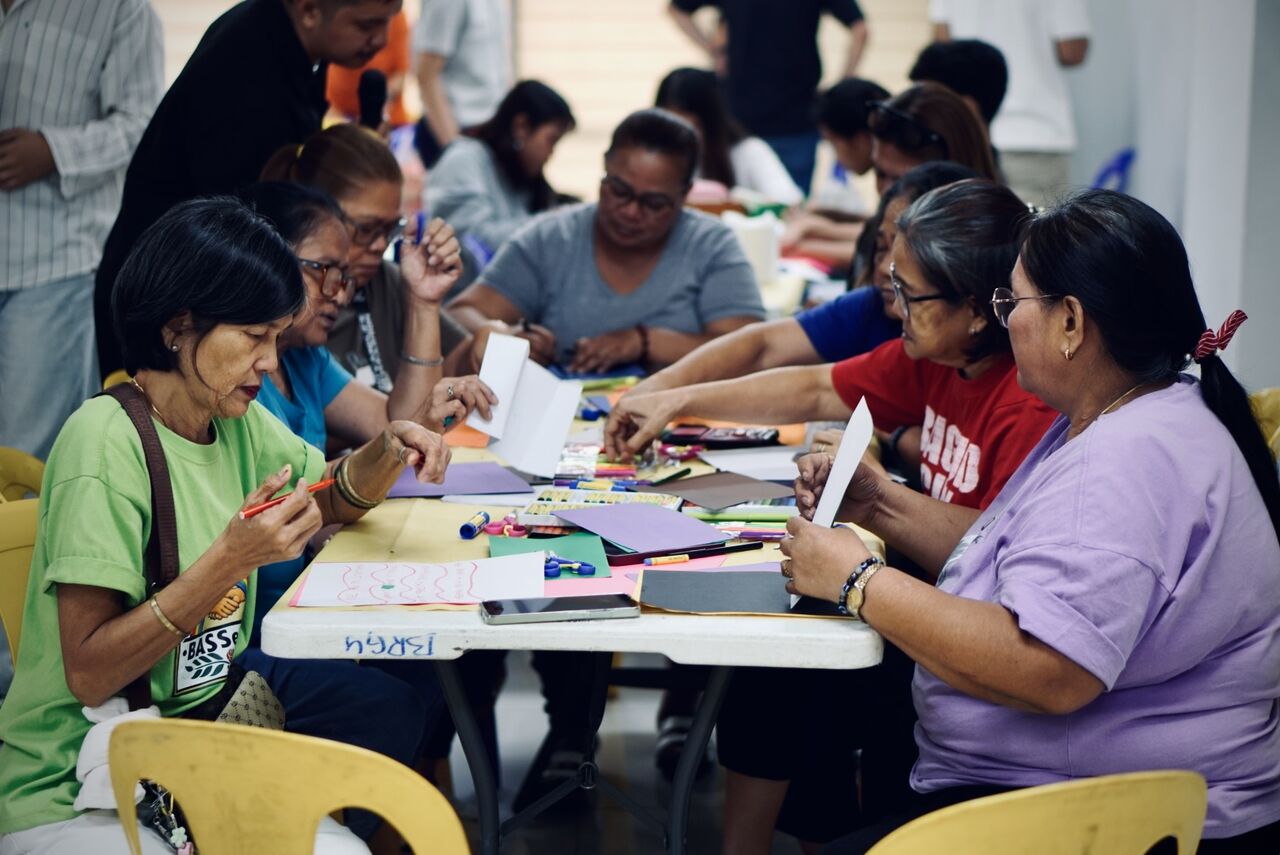
Community-based climate adaptation in practice in selected CLARE projects
- CAPE (CLARE-ASEAN), Philippines: The project applied an epistemic justice lens, asking whose knowledge is recognized, how people can express their experiences, and how their knowledge connects with institutions. Storytelling activities and Community Living Co-Labs helped participants share aspirations, identify priorities, design experiments, and build partnerships. The cases also highlighted that changing institutions and whose knowledge counts is a longer-term challenge.
- CAPE (CLARE-ASEAN), Viet Nam: In Can Tho City, the project examined flood adaptation among young migrant delivery workers, women street vendors, and Khmer peri-urban farmers. Focusing on these groups’ experiences showed how flooding affects health, income, crops, and infrastructure differently. The case also highlighted communities’ existing adaptation efforts and the need for sustained support, stronger links with local planning, and action beyond the community level.
- ClimateREEFS (CLARE), Indonesia: In Tulehu, participation included shaping training around women’s stated livelihood needs, such as product development, packaging, marketing, and digital skills. This supported alternative livelihoods and peer connections. The case also showed how gendered divisions of labour can make women’s contributions less visible, and how linking local initiatives with policy remains a challenge.
- Be-Housing (CLARE-ASEAN), Indonesia: The project combined surveys and temperature measurements with participatory games, heat diaries, body mapping, transect walks, and co-design. These methods helped residents identify hot and cool areas, daily heat exposure, and household decision-making. When discussions surfaced concerns about housing security and eviction, the project adapted its engagement and shifted towards advocacy, showing how participation can shape a project’s direction.
Key Takeaways
- Participation has two connected but distinct arenas. In research, communities can help shape questions, interpret findings, and determine how their experiences are represented. In adaptation, they can influence risk assessments, plans, resources, and action. Both are needed for locally led adaptation, but one cannot replace the other.
- Communities are knowledge holders and active adapters. Local and Indigenous knowledge can complement technical evidence, while differences within communities—including age, gender, livelihood, and social position—must be recognized.
- Participation must have real influence. It risks becoming tokenistic when communities are recognized or consulted but cannot influence decisions. Moving beyond tokenism means giving communities a meaningful voice, a role in shared decision-making, and some control over resources.
- Communities are not homogeneous. Local gatekeepers and internal hierarchies can exclude or silence some people, so participation processes need to account for differences in voice and power.
- Co-production should extend from research to action. Communities should help define research questions, interpret findings, design adaptation responses, and bring their knowledge into formal plans and decisions.
- Locally led adaptation needs sustained support at multiple levels. This includes adequate authority and funding, stronger coordination, and continued refinement of tools that support participation and co-production.
Missed the session? Watch the full recording.
Categories
CLARE Pillars
CLARE Themes
CLARE Topics
Published
CLARE Projects
CLARE Partners