
CLARE at Bangkok Climate Action Week 2026: key discussions and takeaways
/
As part of the Bangkok Climate Action Week 2026, the CLARE programme organized a session “Bridging Research and Practice for Climate Adaptation in Asia” on 5 October. The session featured six presentations from CLARE researchers followed by a roundtable with practitioners representing UNDP, UN Women, IUCN, the Adaptation Research Alliance (ARA), and the Asian Disaster Preparedness Center (ADPC).
Organised in collaboration with PlanAdapt and the Asian Institute of Technology (AIT), the CLARE session was moderated by Arjan de Haan of the International Development Research Centre (IDRC) and was joined by around 50 participants.
A central message emerged throughout the conversation: Bridging research and practice is not a final step after research is completed. It is a continuous process of engagement, learning and collaboration that begins with how research is designed and continues through how its findings are used.
Water security and nature-based solutions
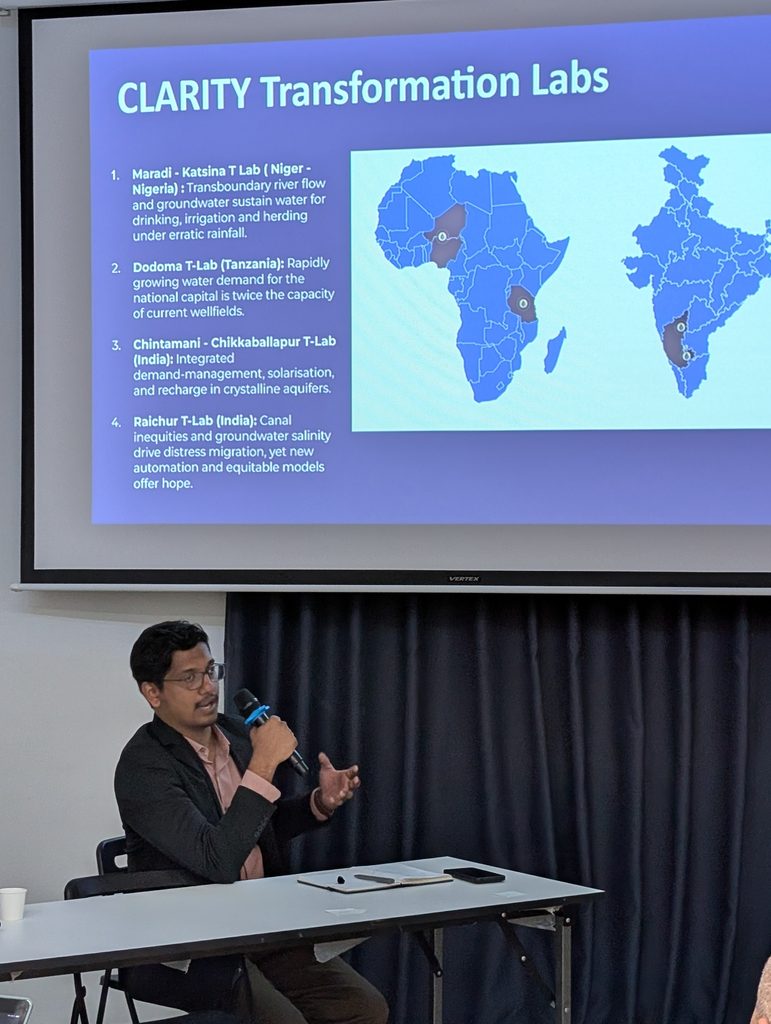
Syamkrishnan Aryan (Senior Program Manager, WELL Labs) presented the CLARITY project’s work in tropical drylands of India. By bringing together farmers, officials and researchers, the “Transformation Lab” approach in Raichur helped identify practical pathways towards climate-resilient livelihoods and informed policy discussions on water governance and agricultural transitions. CLARITY’s experience shows that the gap between research and policy is an approach gap, not a communication gap.
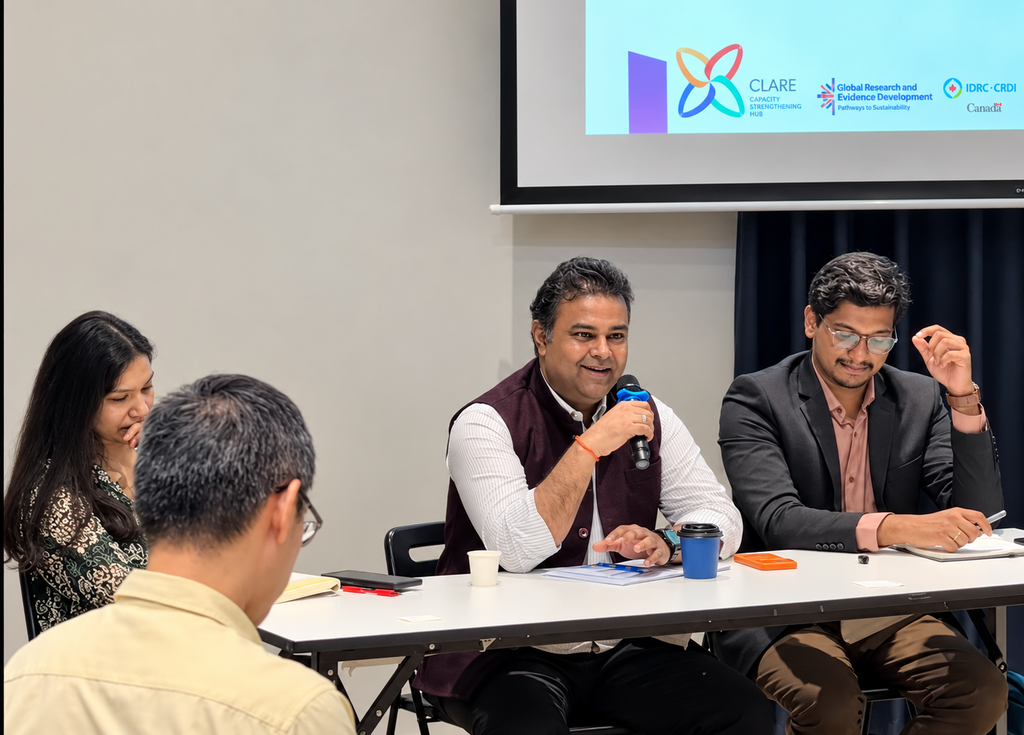
In urban environments, the NbCLARE project presented by Fa Likitswat (Assistant Professor, Thammasat University) demonstrated the value of combining scientific evidence with community experience in assessing nature-based solutions. Using Bangkok’s Benjakitti Park and other Southeast Asian sites, the research combines environmental monitoring with an understanding of how communities experience flooding and interact with urban green spaces.
Vishwaranjan Sinha (Senior Program Officer, IUCN) emphasized applying nature based solutions at watershed, basin, or district scales rather than viewing as planting trees or creating green spaces in isolation. Shivani Gupta (Program Manager, ADPC) shared experiences from Timor-Leste where communities are helping identify risks and design nature-based interventions that can inform local development planning and budgeting.
Financing adaptation and resilience
Uma Pal (Manager, Climate Policy Initiative) presented emerging findings from the CLARE ASEAN Initiative on financing adaptation and resilience in ASEAN cities and highlighted that insufficient funding is only part of the problem. Cities also face challenges related to institutional readiness, fiscal autonomy, access to finance, and the development of investment-ready projects. These challenges are particularly important for secondary cities, which may have growing adaptation needs but limited capacities to access and manage climate finance.
Drawing on UNDP’s regional experience, Cristina Gregorio (Regional Climate Finance Specialist, UNDP) emphasised the importance of multilevel governance, partnerships and developing investment pipelines that reflect local needs and future climate risks. Connecting locally identified adaptation priorities to national planning processes and suitable financing mechanisms is essential for turning evidence into investments.
Gender-responsive climate action
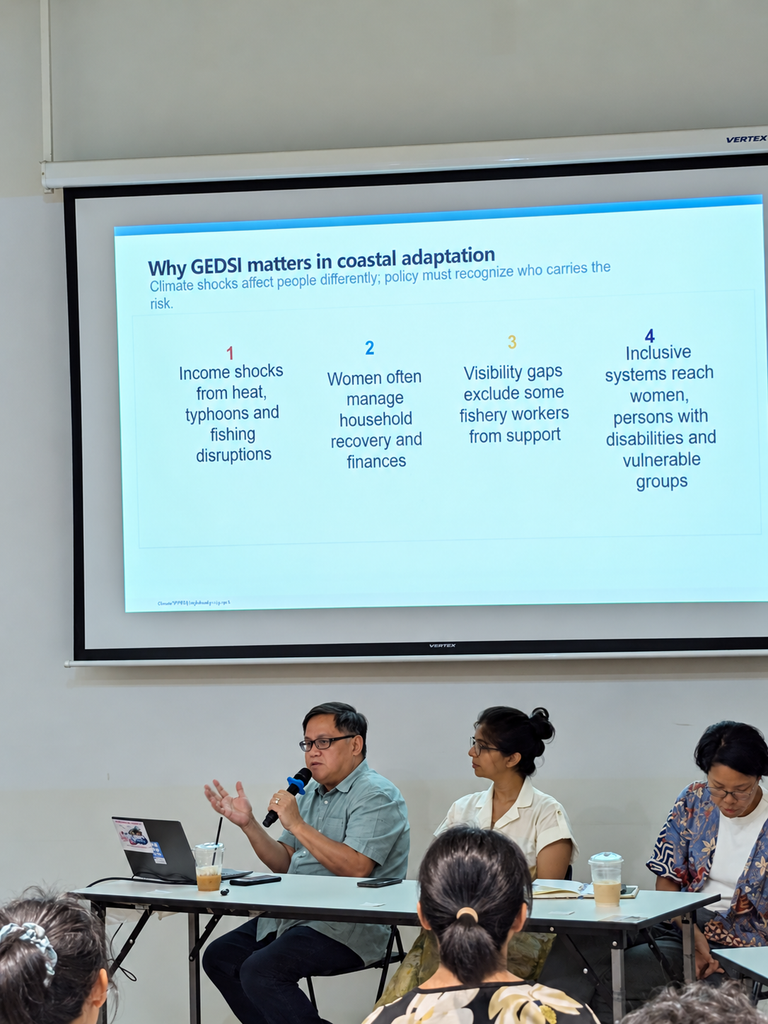
Dennis Calvan (Policy Director, Rare Philippines) shared policy influencing experience of the ClimateREEFS project on making fisheries registration more gender inclusive. ClimateREEFS’ research shows that women in fisheries are hit much harder by climate change due to structural barriers, yet remain largely invisible in formal fisheries management. By working with fishing communities and local governments, the project has since secured a Philippine government commitment to inclusive fisheries registration.
Referring to UN Women’s work in the region, Avipsha Rayamajhi (Research and Capacity Building Consultant, UN Women) highlighted the progress made in incorporating gender considerations into climate policies across the region, while drawing attention to the gap between policy commitments and implementation. Community-grounded evidence, such as those from ClimateREEFS, helps close that gap.
Making climate research more inclusive
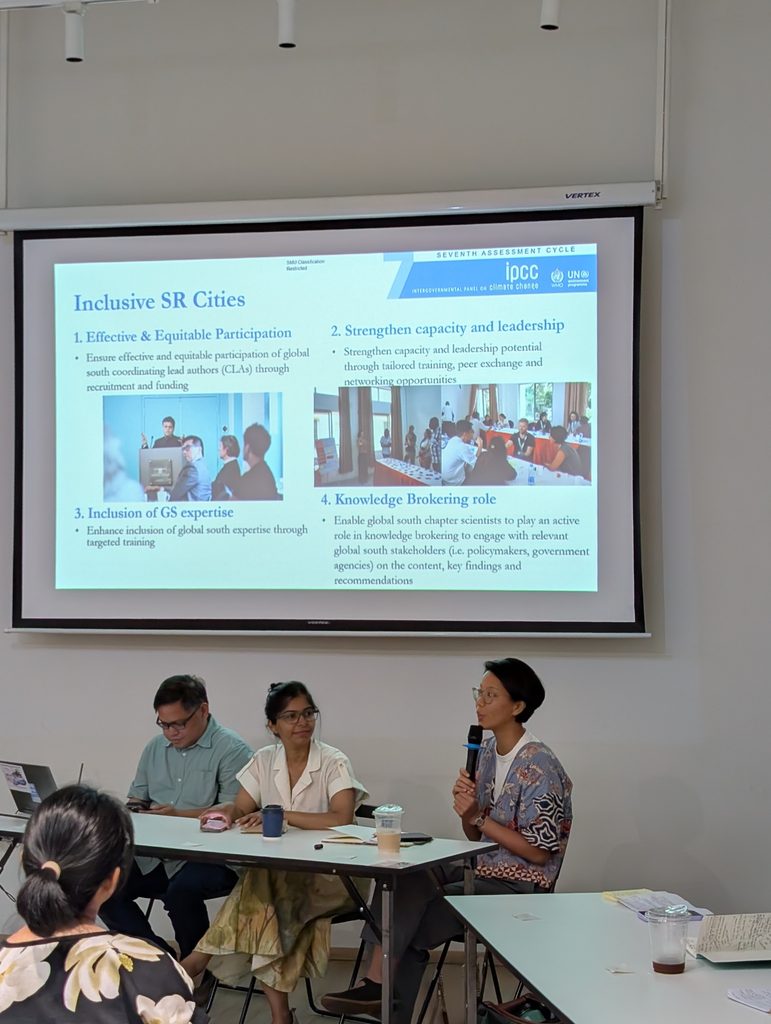
Graces Ching (Project Coordinator, Singapore Management University), presenting the Inclusive SR Cities project, highlighted efforts to strengthen representation from the Global South in international climate assessments, particularly through participation in the Intergovernmental Panel on Climate Change (IPCC) process. Greater participation can help ensure that international assessments reflect the diversity of adaptation challenges, experiences and solutions.
Prerna Singh (Secretariat member, Adaptation Research Alliance) similarly emphasised the importance of research that responds to the needs of those who will use it. This requires researchers to work across disciplinary boundaries, build trust with practitioners and decision-makers, and consider the pathways through which their findings can contribute to action.
Migration as an adaptation strategy
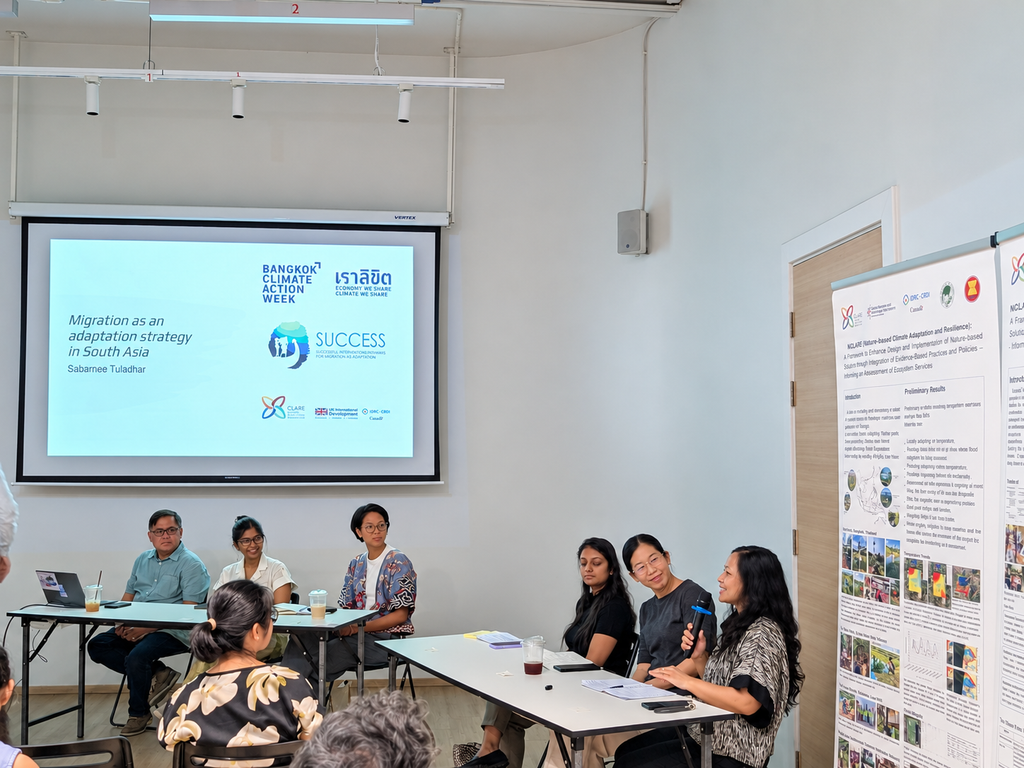
Through the SUCCESS project, Sabarnee Tuladhar (Statistical Analyst, ICIMOD) explored migration as an adaptation strategy across Bangladesh, Bhutan, India and Nepal. Rather than viewing migration solely as a failure of rural livelihoods, the project examines how mobility can contribute to adaptation when supported by appropriate policies and protections. The research involves communities and stakeholders in defining problems, generating evidence, and identifying solutions. Beyond producing research outputs, the project is also engaging policymakers, media professionals, and educational institutions to support a longer-term shift in how climate-related migration is understood.
Key takeaways
- Adaptation evidence works best when it is co-produced with the people and institutions who must act on it
- The gap between research and policy is an approach gap, not a communication gap.
- Fit with implementing institutions matters as much as evidence. That means mandates, budgets, a champion in government, and NAP and NDC processes.
- Finance is about institutional readiness and investment pipelines, not just volume.
- Ownership and trust are what turn evidence into policy.
Categories
CLARE Countries
CLARE Pillars
CLARE Themes
CLARE Topics
Published
CLARE Projects
CLARE Partners