
Engaging Hearts and Minds through Arts-Based Approaches and Play for Adaptation: Insights from a CLARE session at Adaptation Futures 2025
/
Authored by Carys Richards (CLARE Capacity Strengthening Hub)
Session designed and delivered by James Rupiasa, Cilun Djakiman, Fiona Chong, Gino Limmon (ClimateREEFS), Lutfor Rahman (Innovative Facilitation), Hayley Leck (INACCT), and Alannah Hofemeier (CS Hub)
Across Africa and Asia, CLARE projects are using arts-based and experiential methods to co-create climate adaptation research with communities. These approaches democratize participation, amplify marginalized voices, and integrate scientific, Indigenous, and lived knowledge. Traditional research methods often overlook emotions, symbolism, and tacit knowledge – elements that are essential to understanding how people experience and respond to climate change.
At Adaptation Futures 2025, the CLARE session ‘Engaging Hearts and Minds through Arts-Based Approaches and Play for Adaptation’ invited participants to explore how creative and playful methods can deepen understanding and inclusivity in climate adaptation.
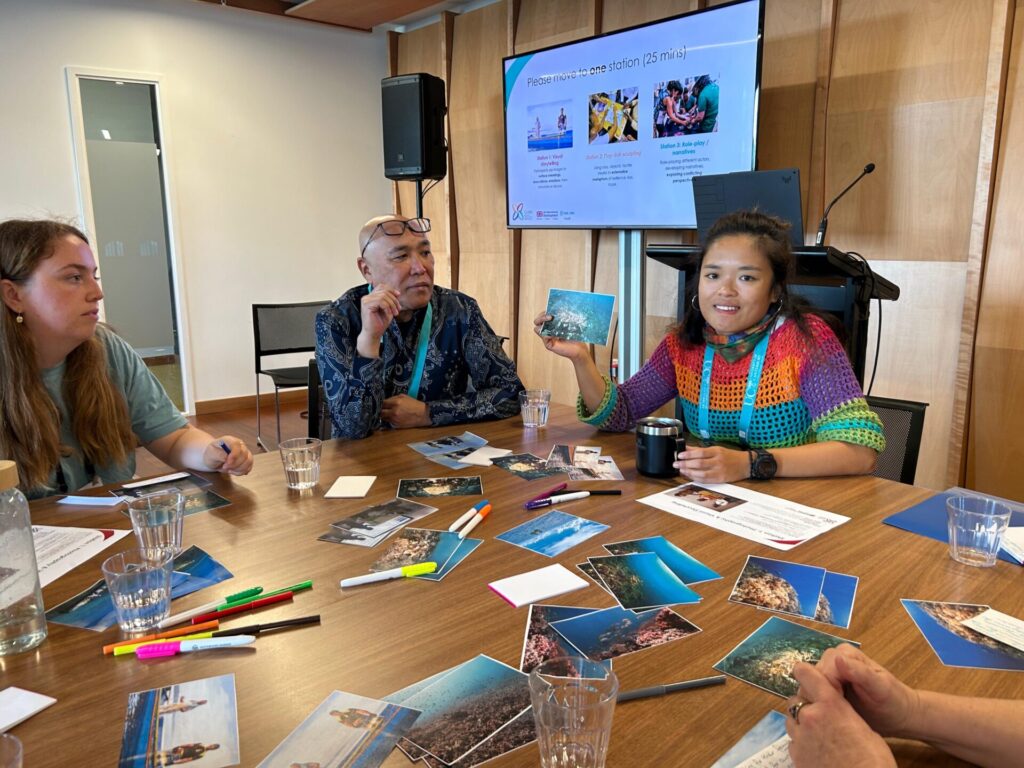
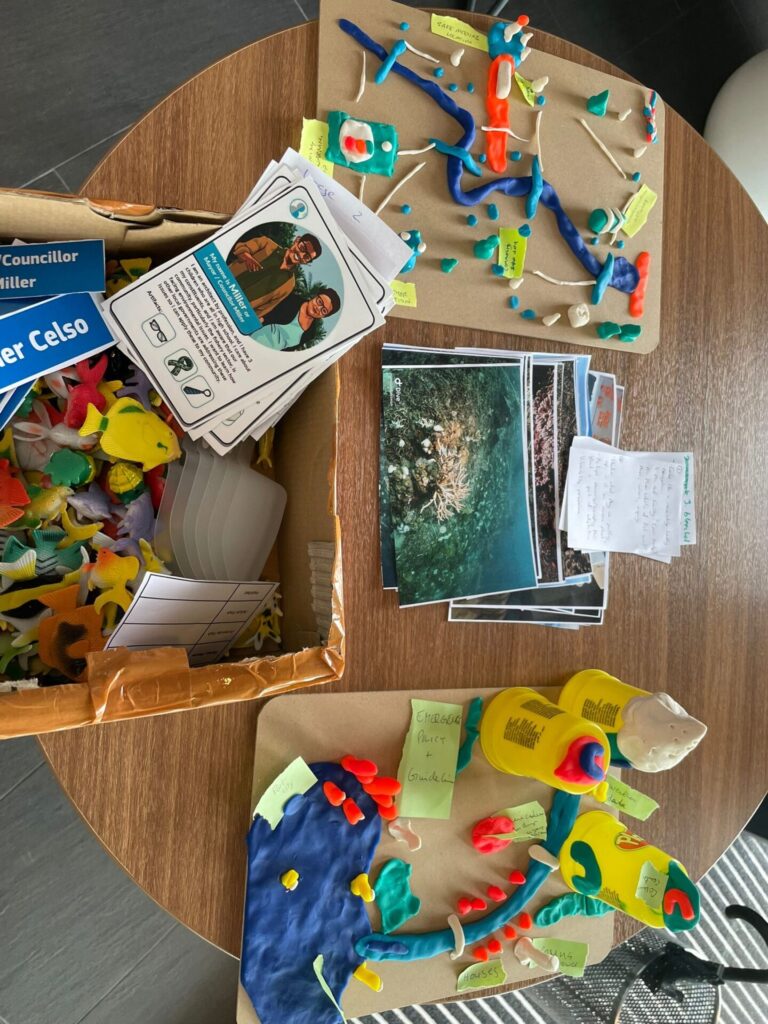
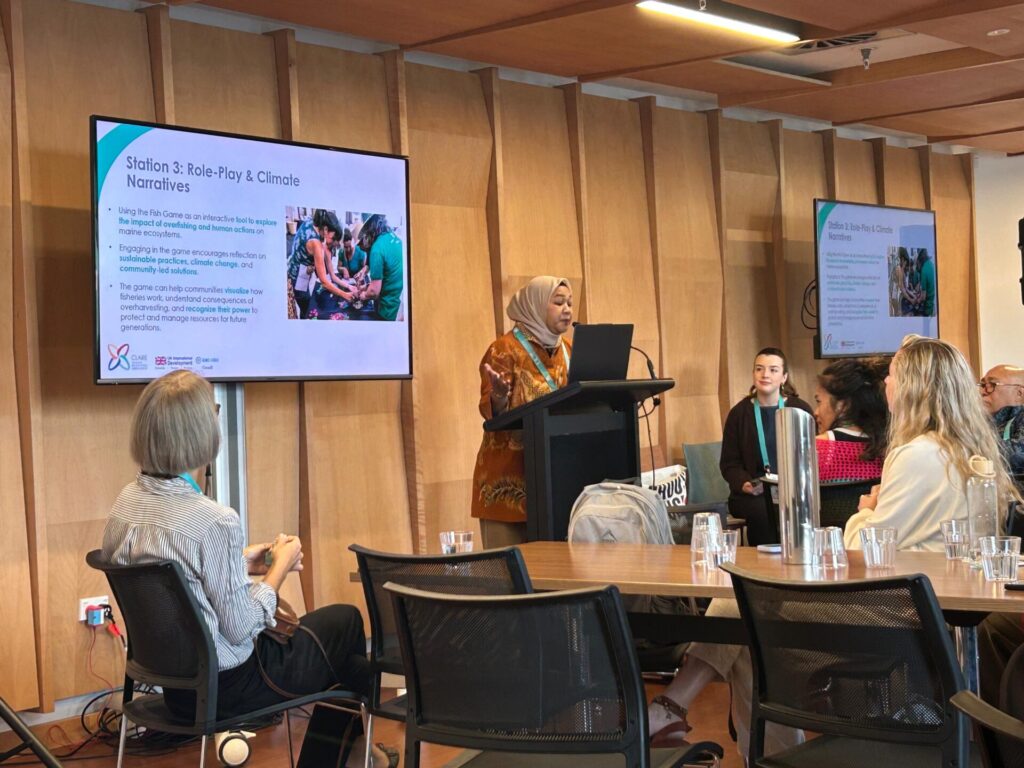
Through a lively mix of poetry, photography, sculpting, and role-play, participants experienced how emotions, stories, and diverse knowledge systems intertwine in climate adaptation work. Three interactive ‘stations’ showcased methods used by CLARE research projects:
- photography and visual storytelling (ClimateREEFS)
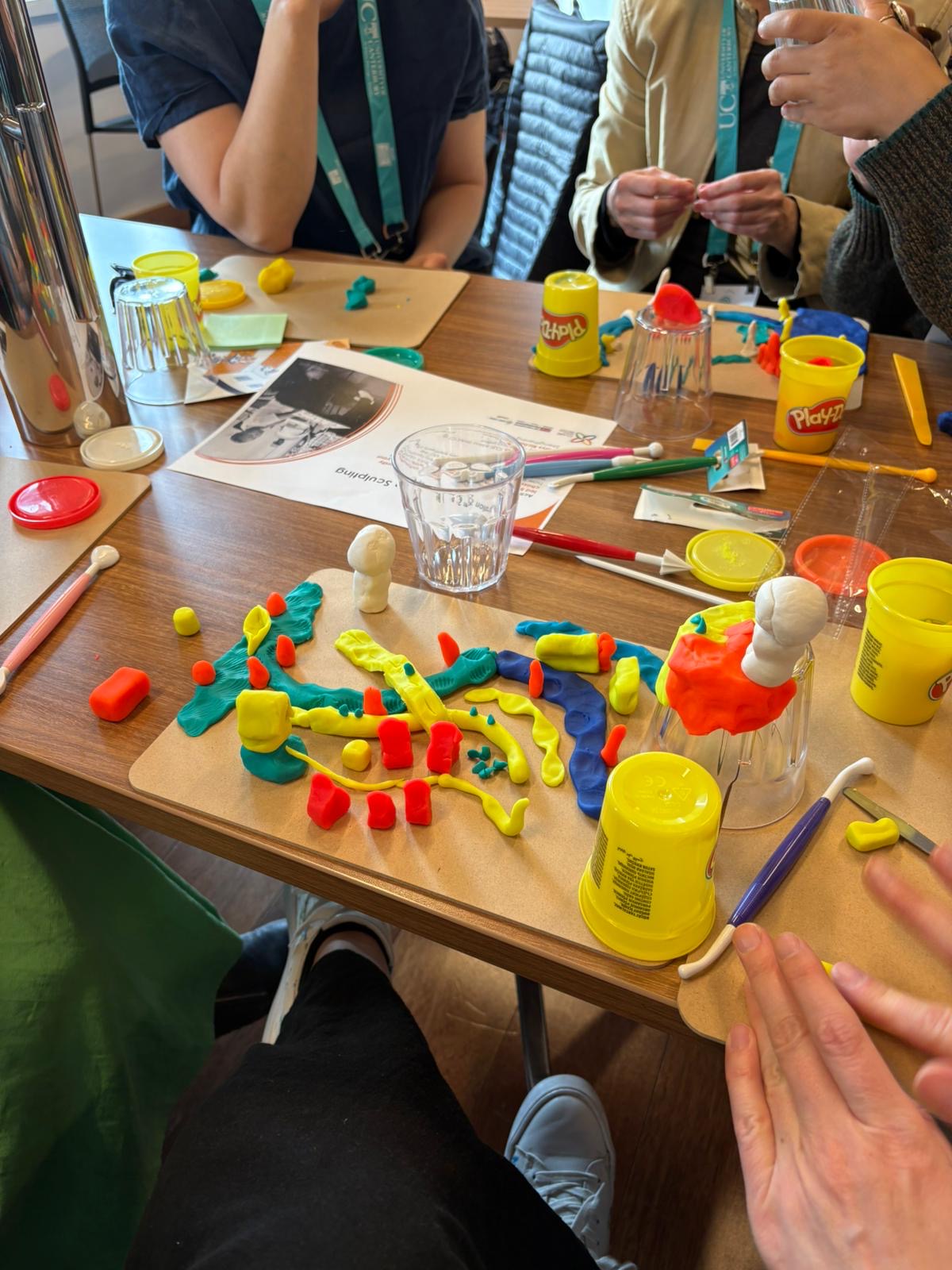
- Play-Doh sculpting (INACCT Resilience)
- and role-play using the Fish Game (ClimateREEFS)
The session opened with a recitation of the poem “Beta Pung Alam, Beta Pung Tanggung Jawab” (“My Land, My Responsbility” by Opa Eli from Haruku Island, Indonesia. The poem celebrated local language and ecological wisdom, setting the tone for reflection and creativity.
“I opened this session with Opa Eli’s poem, “Beta Pung Alam, Beta Pung Tanggung Jawab” (“My Land, My Responsibility”), which conveyed the interdependence between people and their environment. This must have been the first time that the Malay-Ambon language has been publicly spoken in an international event, in Aotearoa NZ. I felt proud to represent the culture and attitudes of my people, and hope that the audience was as moved as I was by the words ‘Oh saudara…dengar baik-baik… Bumi ni bukan milik sekarang. Ini warisan yang suci….dan besar, Untuk anak cucu… yang akan datang’. (Oh my brothers and sisters…listen well. This earth is not ours alone. It is a sacred legacy, For the children yet unborn.)”
— James Rupiasa, Research fellow at Universitas Pattimura, ClimateREEFS Project
Key takeaways from the CLARE session at Adaptation Futures 2025
Art and play are not distractions from the serious work of adaptation – they are vital entry points for empathy, creativity, and co-production. By engaging hearts and minds, we can make climate adaptation more inclusive, grounded, and human.
Participants at this CLARE session at Adaptation Futures 2025 were exposed to how powerful arts and play are as tools for co-production in climate adaptation.
- Photography and storytelling helped surface meanings and emotions tied to local adaptation practices.
- Play-Doh sculpting allowed participants to externalize ideas about resilience and design inclusive community-based early warning systems.
- Role-play through the Fish Game revealed power dynamics and decision-making challenges in fisheries management.
Collectively, these experiences underscored that emotions are not obstacles to scientific reasoning – they are vital pathways to inclusive knowledge sharing and creative problem-solving. The session also showed that integrating arts-based methods in research can lead to more equitable and impactful adaptation outcomes.
“I often get asked “why do you eat fish if you are a marine biologist?” by others in the international community, even though fish consumption is integral to my cultural identity as a woman from a coastal community in Maluku, Indonesia. Arts-based approaches such as those here allow us to more effortlessly communicate potentially sensitive topics and ideas, paving way for a more empathetic connection with broad-based stakeholders in any climate change adaptation agendas.”
— Cilun Djakiman, Research Fellow at Universitas Pattimura & University of Leeds, ClimateREEFS Project
Ultimately, this CLARE session demonstrated how arts-based facilitation can build bridges across knowledge systems and activate empathy.
Published
CLARE Projects
CLARE Partners