
From Mandate Analysis to “Karaoke Diplomacy”: Navigating the Realities of Policy Change
/
Generating significant data that develops and changes policy is a core aspiration of climate researchers. Yet, anyone who has been involved in governance understands that translating evidence into action is not a linear path. Policymaking is notoriously complex, presenting the “wicked problem” in which multiple causes and conflicting perspectives cannot be solved by any cookie-cutter approach.
For Project RURBANISE, tackling this wicked problem requires zooming in on Work Package 2 (WP2), where the consortium analyzes existing disaster risk reduction and adaptation policies to see if they truly meet the needs of those on the ground.
The Illusion of Hard Infrastructure
When local and national government agencies address climate threats like systemic flooding, their institutional defaults almost always favor hard infrastructure. Concrete sea walls, massive dredging initiatives, and road-raising projects are standard bureaucratic responses. They are tidy, easily contracted, and provide immediate visual proof of action.
However, as communities routinely experience, these top-down interventions can trigger severe “maladaptation“. As warned by the Intergovernmental Panel on Climate Change (IPCC), short-term fixes frequently produce a false sense of security while actively worsening long-term risks and reducing — rather than improving — community resilience.
“Many of these initiatives, particularly the road rising projects, they just cause even bigger problems for the surrounding communities. So it’s a kind of a maladaptation… Dredging and road rising, they don’t really work that effectively and in fact they tend to even worsen the situation of the communities on the ground.” — Dr. Kristopher Berse, UP Resilience Institute (UPRI)
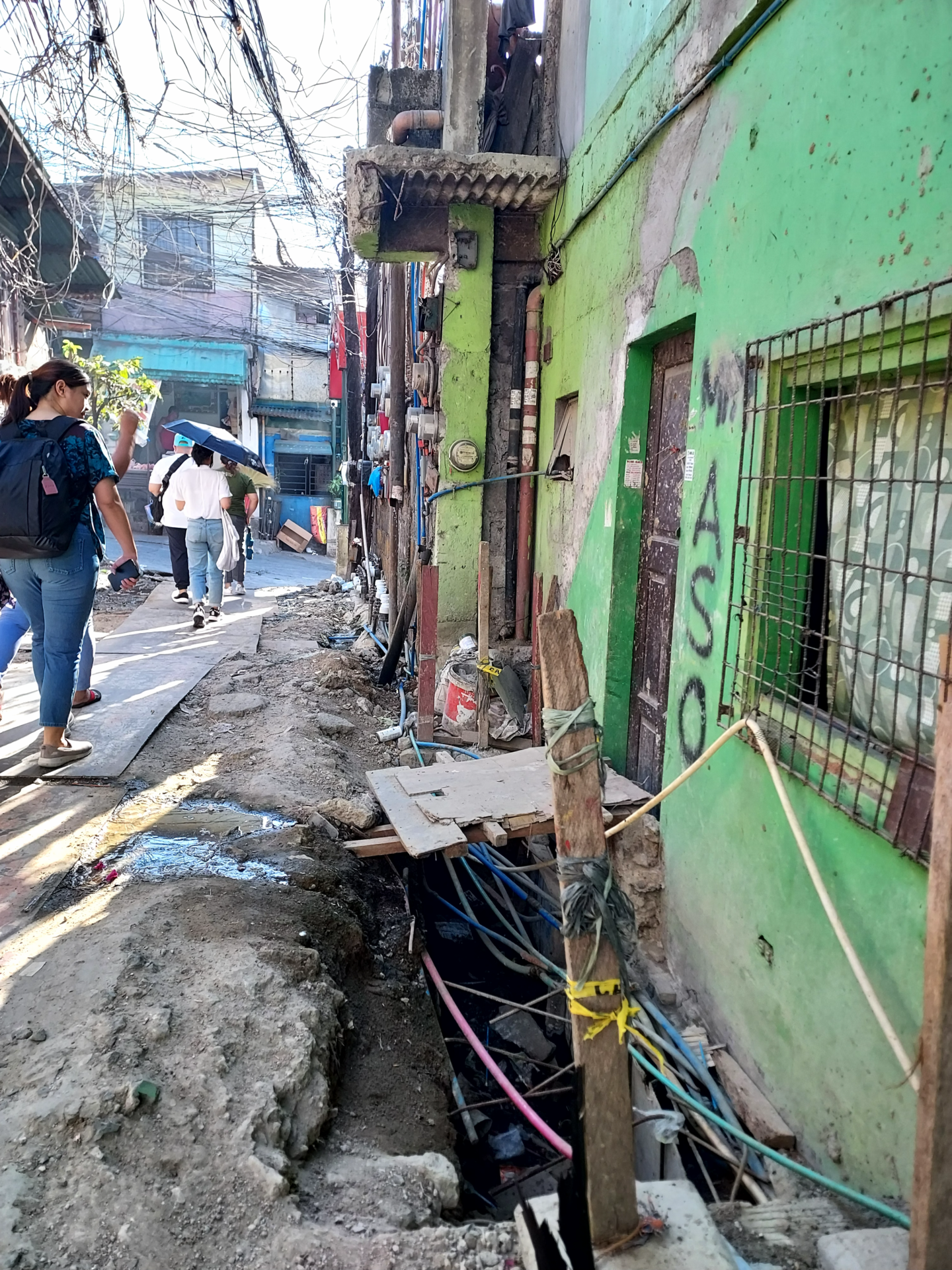
When a road is raised without accounting for the surrounding landscape, it effectively acts as a dike, turning adjacent informal settlements into water basins. These ingrained institutional habits pose a massive barrier to effective planning, especially when research directly contradicts them without offering a single, simplistic alternative.
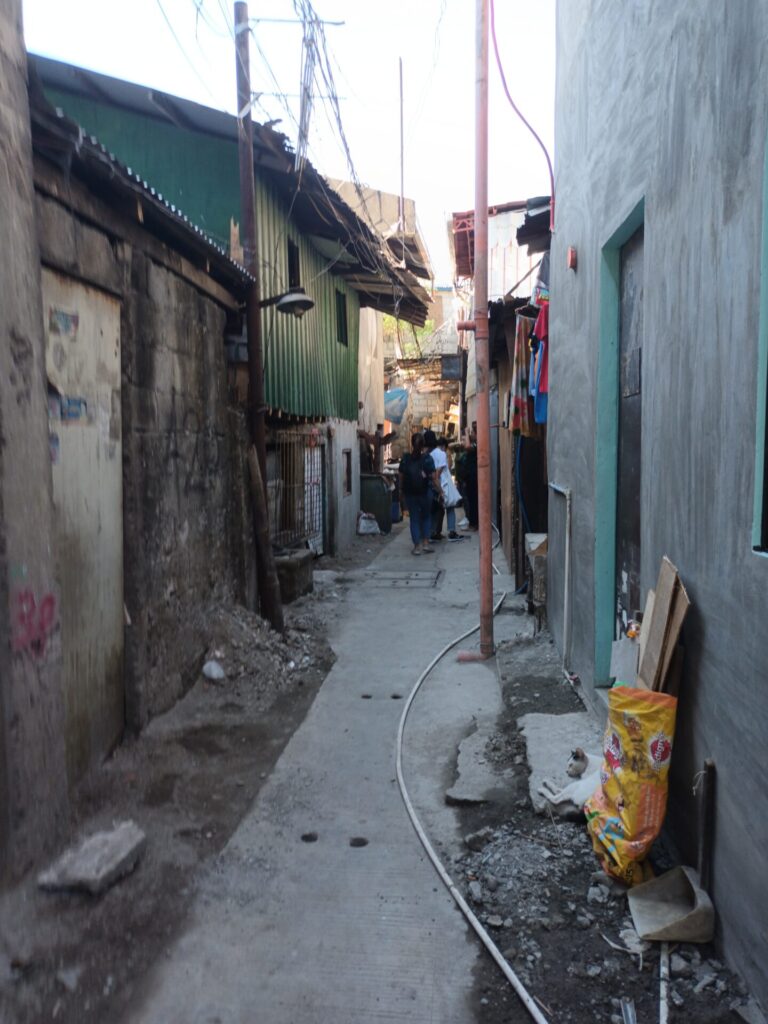
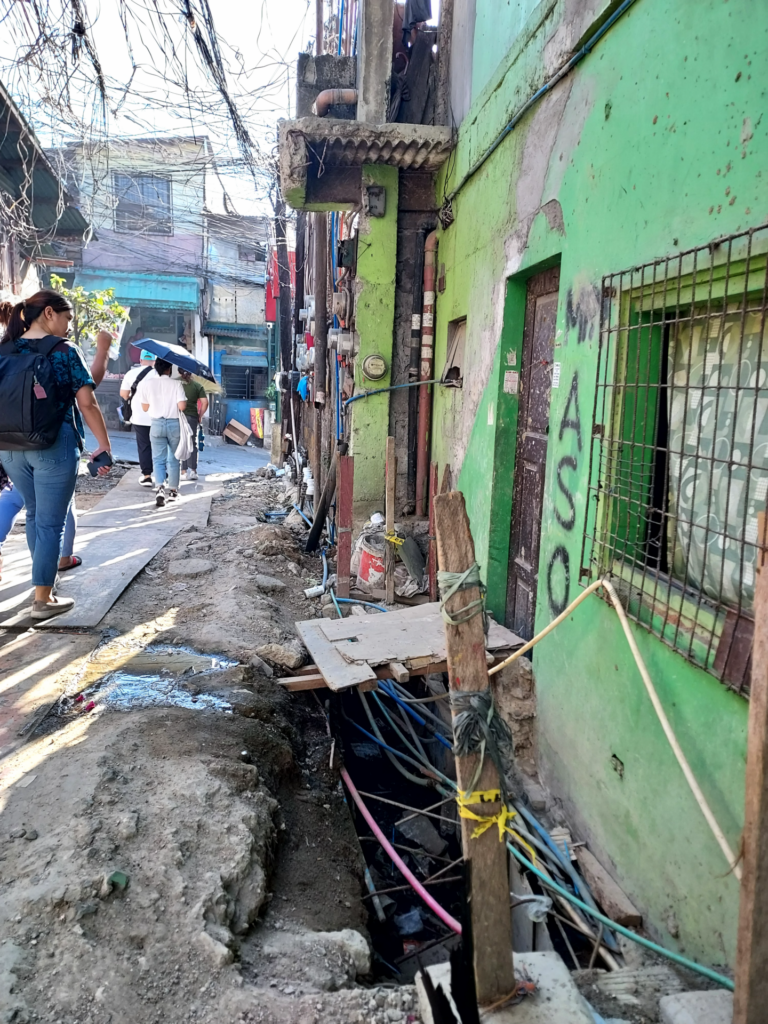
Raised roads in ULHOA, which risk diverting floodwaters directly toward adjacent homes and establishments
Confronting Epistemic Injustices
At the core of Project RURBANISE is the ethical commitment to defy what scholars call “epistemic injustices.” In the context of urban planning, residents of informal settlements suffer a strict deficit of credibility. Despite being on the frontlines of flood risks and climate change impacts, their insights are often dismissed by officials as unscientific or merely anecdotal.
The common response is to package this local knowledge through developing visual representations such as maps and numbers giving the notion of precision and certainty to policy makers. To supplement hard data, RURBANISE incorporates local knowledge and integrates it directly with cutting-edge assessment methodologies. The goal is to translate lived experiences into holistic frameworks that are more likely to gain traction with policy makers. These frameworks need to be flexible and dynamic, tailored to specific needs of communities.
Breaking the Silos
Policy engagement is heavily shaped by diverse external factors like economic shifts, cultural dynamics, and changing political landscapes. The institutional context itself often presents the steepest barriers to building urban resilience.
When trying to implement cross-cutting climate solutions, researchers and communities run headfirst into three structural walls:
Conflicting Institutional Mandates
Government agencies frequently operate in strict isolation, constrained by limited time and resources dedicated to narrow goals. While separate departments for agriculture, agrarian reform, or the environment know their efforts must intersect on the ground, they revert back to their isolated operational silos the moment they return to their offices.
Fierce Territorial Jurisdictions
Risk reduction policies carry intense territorial components. If a research project or proposed solution accidentally crosses an agency’s perceived jurisdictional line, it can negatively affect the relationship, as some institutions are fiercely assertive of their official mandates.
Bureaucratic Overload and Political Cycle
Local governments are often already buried under hundreds of pre-existing actions and statutory plans. Hence, introducing new strategic priorities, like facilitating research engagement, is frequently perceived as an operational nuisance. Moreover, in reality, political alliances determine whether projects for certain communities are to be pursued or set aside.
Also, navigating volatile political cycles requires tactical timing. To have any real chance at influencing policy, research activities must be carefully timed around election schedules.
The Dual Strategy
To navigate this complex network of political timelines and territorial mandates, RURBANISE utilizes two distinct modes of influence to connect local communities with official decision makers: Advocacy and Engagement
Advocacy
This focus amplifies the direct perspectives of the residents, actively making their grassroots strategies visible and effectively communicated to stakeholders.
Engagement
This approach works from the perspective of policymakers, establishing collaborative spaces to pass on ideas, data, and co-produced frameworks that show how to realistically deliver wellbeing and resilience within informal settlements.
True policy impact requires activating both simultaneously, targeting lawmakers, utility bureaus, and local government units (LGUs) across multiple jurisdictions
The Power of Community Voices
To cut through the noise of distracted, resource-strapped policymakers, the most powerful tool available is the authentic voice of the community. The RURBANISE team utilizes diverse strategies to facilitate engagement across varying situations:
Social Marketing
Influencing policy requires a strategic approach known as “social marketing,” where research is translated into clear, targeted messages tailored to the specific needs and jurisdictions of different decision-makers. Instead of just sharing data, researchers must be completely explicit about the exact actions they want a policymaker to take—whether that means broadening a perspective, changing a regulation, or allocating a budget. Effective engagement should move past casual conversation and lead to formal, concrete commitments that translate evidence into real-world resilience.
While different research findings require different presentation styles, the most successful strategy is always connecting decision-makers directly with the lived realities of the community. Bringing local residents into national forums to share their firsthand experiences humanizes the data and visually illustrates the urgent need for policy revisions. When policymakers can talk with local people and see their actual conditions, abstract climate risks turn into undeniable arguments for real policy change.
Mandate Analysis
While external political and social factors are often beyond a researcher’s control, doing the preliminary groundwork to understand institutional mandates helps avoid major pitfalls and packages messages effectively. Conducting a “mandate analysis” clarifies overlapping jurisdictions, allowing teams to anticipate and prevent conflicts between researchers, policymakers, and competing agencies.
Mapping out these institutional relationships and boundaries makes it possible to build strong partnerships and create “safe spaces” for constructive dialogue. For stakeholders with deeply conflicting views, introducing a neutral third party, such as an academic or an independent mediator, helps ease political tensions and facilitates smoother negotiations without forcing immediate commitments.
Karaoke Diplomacy
Successful policy messaging requires carefully designing how researchers and policymakers interact. The process begins formally by establishing clear roles and leveraging each partner’s unique strengths. Securing official buy-in—such as getting a formal “nod” from a local chief executive and drafting a memorandum of agreement—lays a legitimate foundation and clarifies the unique value of the academic contribution.
However, formal contracts are only half the equation; long-term project implementation relies heavily on informal relationship-building. In the Philippines, this takes the form of “karaoke diplomacy,” where sharing songs or drinks helps break the ice and rapidly transforms stiff professional interactions into genuine personal connections. By blending structured agreements with culturally rooted, informal trust-building, research teams can cultivate the deep friendships necessary to sustain complex urban planning projects.
A Negotiated Approach to Community Resilience
Urban resilience cannot be effectively delivered from a distant government office, nor can it be built in an institutional silo where departments ignore overlapping territorial mandates. The goal of Project RURBANISE is to establish a negotiated approach to urban governance; one in which frontline communities play a leading, institutionalized role in defining how their environment is managed.
By blending formal legitimacy (such as memoranda of agreement) with essential informal trust building mechanisms, real channels of communication begin to open. True climate resilience is not a matter of pouring more concrete; it is a continuous, collaborative partnership built on mutual respect, shared risk data, and epistemic justice.
This blog was initially published on the TAMPEI website: https://www.tampei.org/post/from-mandate-analysis-to-karaoke-diplomacy-navigating-the-realities-of-policy-change
Categories
Countries
CLARE Pillars
CLARE Themes
CLARE Topics
Published
CLARE Partners