
Inclusion helped, but did not close the inequality gap: evidence from an intersectional co-production process that aimed to increase use of weather information in southern African cities
/
Author: Katharine Vincent (Kulima Integrated Development Solutions)
A new open-access paper in Climate and Development examines what happened when weather information services in Kanyama, Zambia, and Boane, Mozambique, were co-produced with a deliberate focus on women and persons with disabilities. The main finding is that the process led to improved trust in, access to, and action on weather information, even with disaggregating by gender and disability status. It did not, however, close every inequality gap. In Kanyama, women still lag in acting on forecasts relative to men, and persons with disabilities still lack in accessing them relative to persons without disabilities.
Co-producing weather information with those often left out
In an earlier project, small groups of “community observers” were recruited to ground-truth weather conditions to help forecasters validate thunderstorm nowcasts and inform the content and design of early warnings. In Kanyama, the observers became convinced of the utility of weather information and became members of the Satellite Disaster Risk Management Committees (SDRMCs). The BASIN project has continued collaboration with SDRMCs, including responding to their request for training on climate change, and supporting participation in the International Day for Disaster Risk Reduction march.
Inclusion was built into the design of the co-production process, which aimed to raise awareness of thunderstorm nowcasts and gain inputs on content and design from a wider segment of society. In Kanyama, local community-based organisations focusing on disability were used as entry points; venues were accessible and transport was provided; sign language interpretation was arranged where needed; and written materials were verbalised, which is also good practice for including older women, who typically have less access to education.
Early findings from a baseline survey found that access to weather information was fairly low, and so awareness raising efforts were needed on weather in general, before being able to look specifically at thunderstorm nowcasts. Bilingual posters (English and Nyanja), an educational story book for primary and secondary learners, church visits, door-to-door outreach and social media were used to share information.
Use of weather information rose substantially
Differences in use of weather information were assessed at the end of the co-production process with an endline survey. Self-reported use of weather information rose in both countries. In Boane, at least 85% of women, men, persons with disabilities and persons without disabilities reported accessing forecasts “very often” and noticing and acting on them “practically always”, by endline. Gains in Kanyama were substantial but more modest. The share of women who “practically always” notice forecasts rose from 5% to 50% (men: 12% to 39%), and the share who “practically always” act on them rose from 6% to 22% for women and from 19% to 39% for men.
Barriers to acting on weather information differ, and persist for women
By endline, women in Kanyama were accessing and noticing forecasts more than men. However, they were still acting on them less than men (22% compared with 39%), and the gap had not narrowed since baseline (13 percentage points at baseline, 17 percentage points at endline). This does not appear to be a problem with the information. Across both countries, women rated forecasts as more trustworthy than men did (85% compared with 77%) and as more actionable (86% compared with 80%). In the survey data, women recounted barriers for not acting: the cost of acting, for example in lost earnings; a lack of resources such as transport, materials or shelter; mobility, particularly for older women and women with disabilities; and warnings arriving too late. This likely reflects persistent structural differences that result from gender differences in access to the knowledge and resources needed to act.
For persons with disabilities in Kanyama the picture is different. They accessed forecasts less often (16% “very often”, compared with 21% for persons without disabilities), but higher proportions noticed (50% compared with 40%) and acted on them (38% compared with 24%). Thus the barriers likely differ based on gender and disability. For persons with disabilities, the barrier lies in access to the information. Focus groups pointed to making forecasts available in local languages and voice notes as well as written format, and sign language interpretation on television as ways to improve it.
Benefits of inclusion in process
As well as the outcome of improved access to and use of weather information, the co-production process had inclusion benefits. The SDRMCs reported gains in confidence and in how they are seen by others. One woman said, “I feel good, I feel respected. I feel like I know much.” A man with a disability described how people now call him “Mr. Weather” and said that people “accept more that people with disability can still perform any job”. Interviews with SDRMCs also suggested that trust in forecasts, initially low, grew as forecasts became more reliable and as awareness-raising built people’s confidence in interpreting them, including seeing for themselves that a forecast came true.
Implications for equitable adaptation
An inclusive co-production process helped but did not fully equalise weather information outcomes on the basis of gender and disability. Improving access to weather information can equip people with knowledge they need to reduce their risk and adapt to climate change. However, information alone cannot overcome structural inequality that still shapes capacity to act on it. Given efforts to increase access to weather information, for example through the UN’s Early Warnings for All commitment, it will be important to ensure that weather and climate services are designed and evaluated through an intersectional lens to ensure that they do not inadvertently reinforce inequalities.
Vincent, K., Colenbrander, W., Monjane, G., Monjane Saraiva, M., Murambadoro, M., Venable, L., Conway, D., Dookie, D. S., Gannon, K. E., Ingram, W. & Mikołajczak, K. (2026). Inclusive climate adaptation through intersectional co-production: gender- and disability-disaggregated evidence from southern Africa. Climate and Development. https://doi.org/10.1080/17565529.2026.2754757
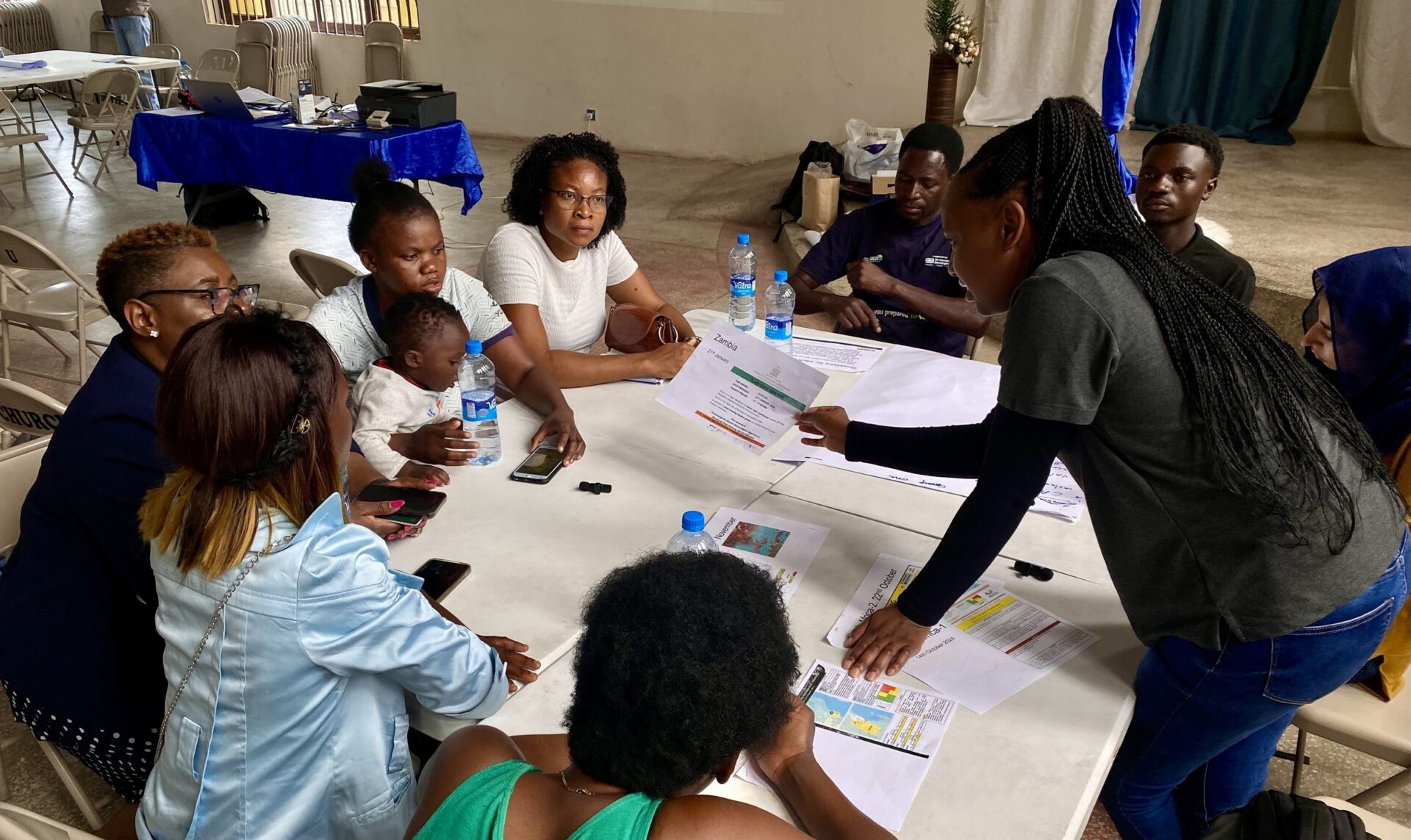
Kanyama residents discuss feedback on different weather information products
Categories
Countries
CLARE Pillars
CLARE Themes
CLARE Topics
Published
CLARE Partners