
Five Days, One Community: Reflections on the CLARE Capacity Strengthening (CS) Hub Seasonal School 2026
/
Authors: Tamara Nyirenda, Xoliswa Ndeleni, Ruth Wainana
More Than a Training Programme
Climate adaptation research faces a well-documented challenge: the gap between knowledge production and knowledge use. Studies are published, briefings are written, and workshops are held – yet decisions are still made without evidence available to inform them and made without any reference to the very evidence greatly disseminated. This is not primarily a communication failure. It is a structural and relational one, rooted in mismatched incentives, power asymmetries, disregard of key players, and the absence of sustained processes for translating research into action.
The Seasonal School was designed as a direct response to this challenge. Its five stated goals were:
- to build a shared understanding of research impact and effective adaptation;
- to strengthen skills for developing credible, actionable impact pathways;
- to explore co-production and equitable researcher-stakeholder engagement;
- to connect researchers across CLARE projects for peer learning;
- to equip participants with concrete tools and plans to apply in their own work.
These goals were cumulative. Each day was designed to build on the last, moving participants from conceptual grounding through practical application to peer-led synthesis. The school also co-produced, participatory, iterative, and structured around the lived realities of the people in the room.
Connecting the Dots: Day by Day
Understanding what the Seasonal School achieved requires looking at how each day functioned within the broader arc, not as a standalone training event.
Research for Impact Foundations
Day 1 addressed a structural challenge by building a shared conceptual foundation across a cohort of 34 participants with very different project contexts, disciplinary backgrounds, and levels of prior exposure to Research for Impact (R4I) frameworks. The approach personalised adaptation for the participants, surfacing a plurality of framings before introducing any framework at all. This sequencing mattered in grounding the participants’ understanding, as learning is both systematic and progressive. The sessions that followed, including the six R4I principles introduced later in the day, landed differently because participants had already spent time interrogating their own assumptions.
Impact pathways
Day 2 extended the conceptual grounding into structured analytical practice. The Spheres Framework – sphere of control, sphere of influence, sphere of interest – gave participants a spatial and relational vocabulary for thinking about where their research currently sits within systems of decision-making, and where it needs to reach. A session on packaging research for different audiences addressed a gap that is widely acknowledged but not effectively addressed: the distinction between producing credible research and communicating it meaningfully. How research reaches an audience determines whose knowledge counts and whose remains marginalised, and how research can understand the role different actors play in influencing outcomes.
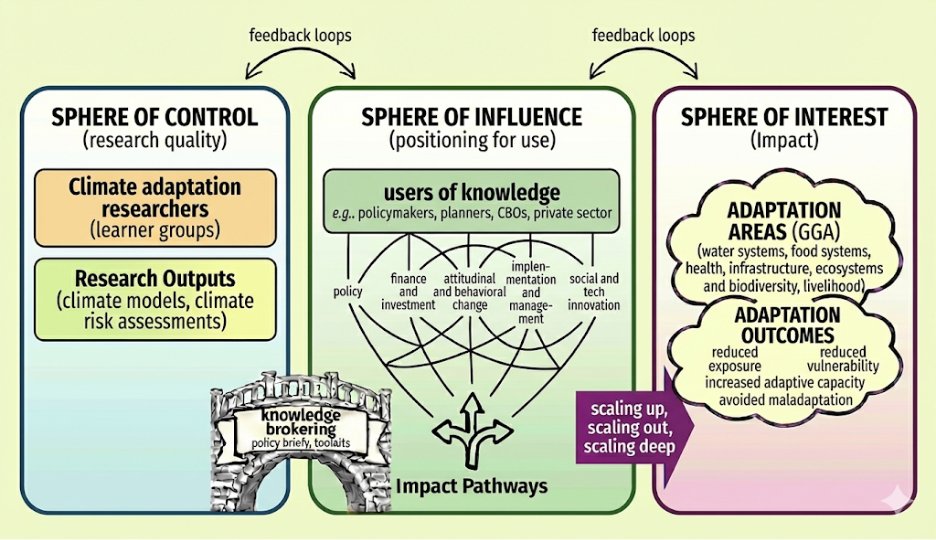
Source: the Capacity Strengthening Hub.
The significance of feedback loops emerged as the analytically important elements of Day 2. Participants recognised that evidence of what works (or does not) returns to researchers and funders to shape future research priorities and funding decisions. By foregrounding feedback loops, impact was positioned not as a linear outcome but as a cycle, consistent with how climate adaptation systems actually function, but often absent from how projects are designed and evaluated.
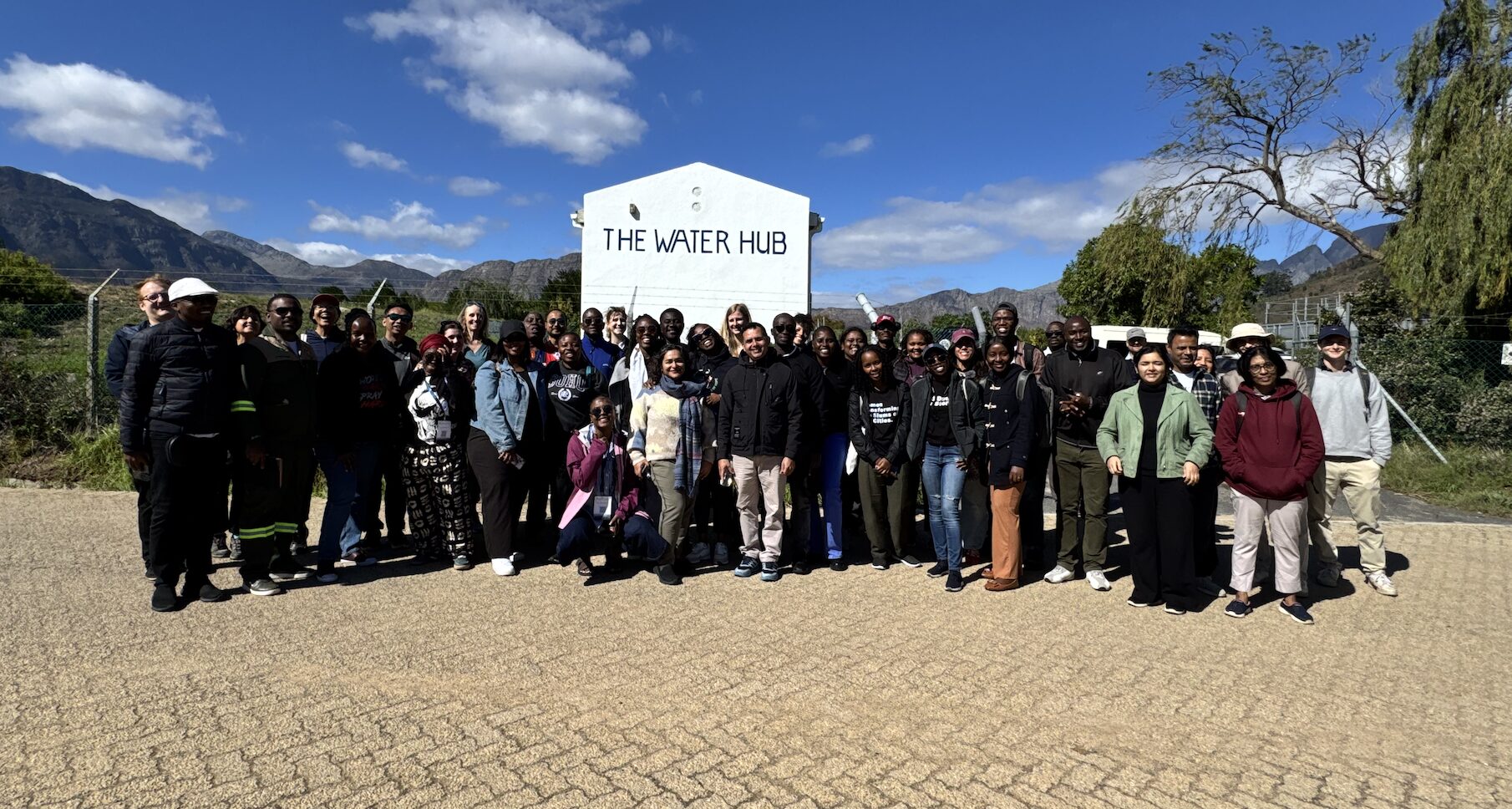
Excursion – The Water Hub, Franschhoek
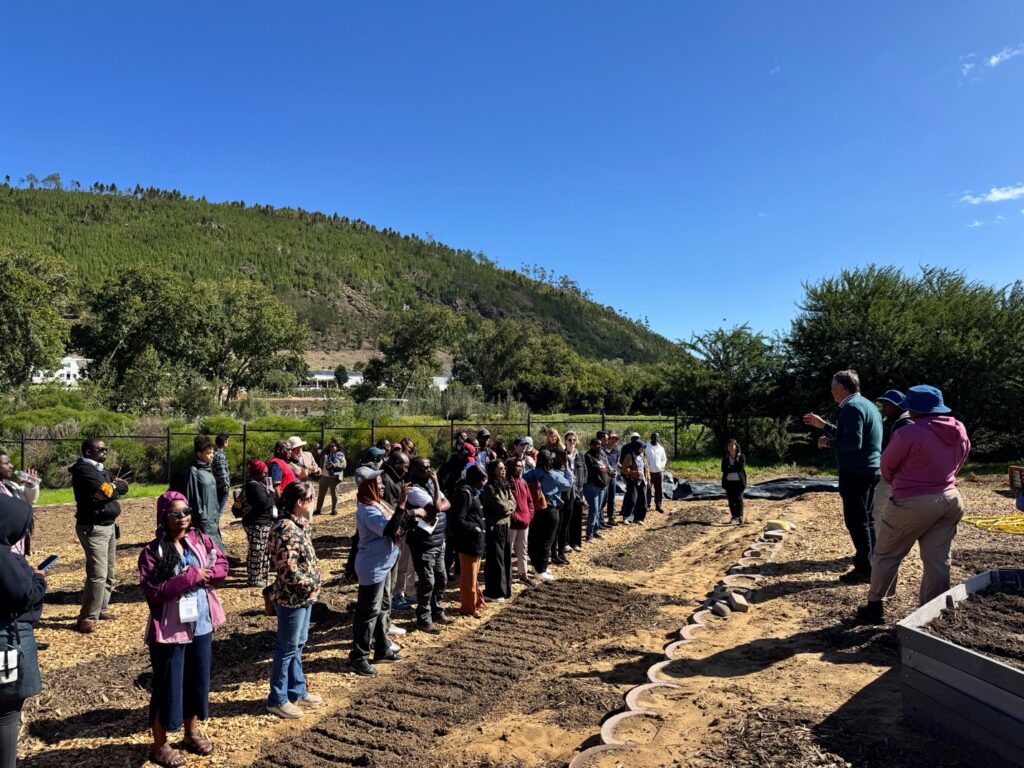
Photo credit: Jamie Adams _South South North
By Day 3, participants had two days of conceptual and analytical grounding behind them. The Water Hub visit was a test of the frameworks already in play: could participants now see, in a working system, the spheres of control and influence, the feedback loops, the role of knowledge brokers, the evidence of co-production? The Water Hub is an unusually instructive site for this purpose. Born directly from Cape Town’s Day Zero drought crisis of 2018 – when the city came within weeks of running out of water – it represents the translation of crisis-driven research into physical infrastructure, governance systems, and community practice. It also made visible the relational work involved: the years of trust-building between universities (local and overseas), municipalities, farmers, and water boards that made the system possible, a clear image of evidence to action at play.
Co-production: Theory, Tools, Facilitation and Synthesis
Day 4 progressed from co-production theory through embedded research as a case study to practical tools and roleplay to parallel synthesis clinics offering streams on transdisciplinary knowledge products, IPCC synthesis processes, and BASIN’s synthesis approach and addressed a real tension in designing learning for diverse cohorts: not everyone needs the same content. One of the highlights for the day was a co-production session that addressed a tension that runs through the entire R4I agenda: the difference between co-production as a principle and co-production as a practice. The building blocks framework – covering stakeholder mapping, mess mapping, trust-building, iterative design, and accountability – gave the foundations. An embedded research case study then showed what sustained institutional co-production looks like over multi-year timescales in city governance contexts.
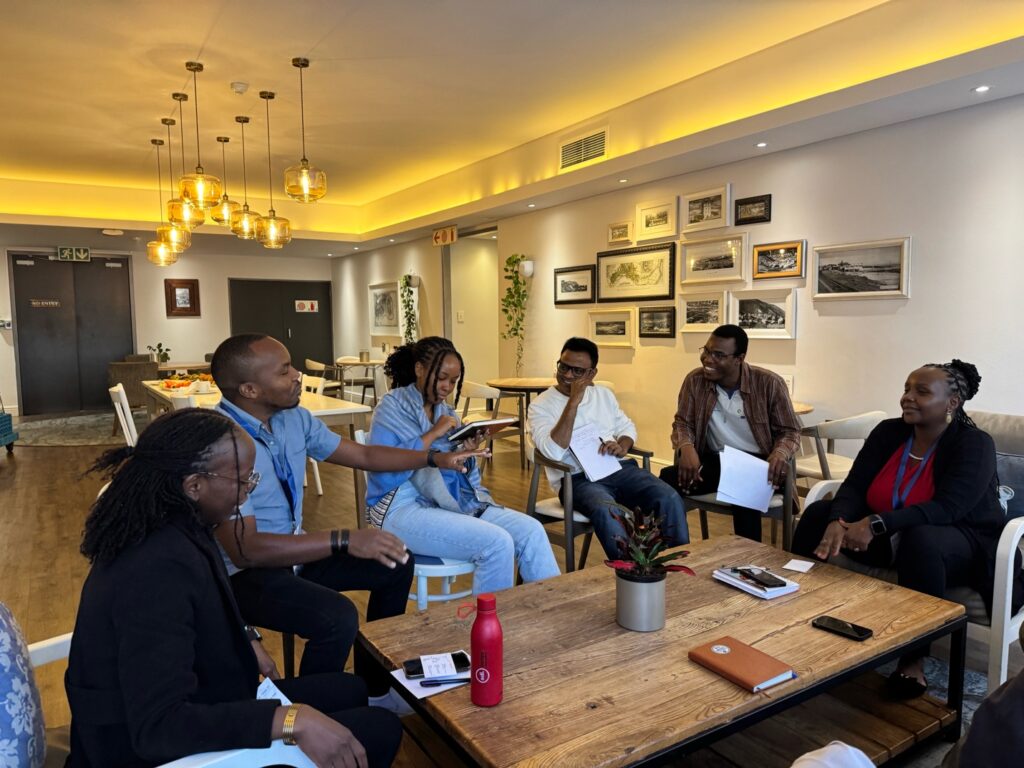
Photo credit: Jamie Adams _South South North
The use of the Organisational Zoo cards to assign participants animal personas with distinctive communication styles and decision-making tendencies created a safe space where the real dynamics of co-production – power, personality, pace, and competing institutional logics – were reflected without the defensiveness that often accompanies direct discussion of those same dynamics in a project setting. One of the highlights of the day was a simple ‘Yes, And – not Yes, But’ enegiser that let participants practise both stances – blocking and qualifying, then building and expanding.
Stories from Practice, Reflection and Closing
Day 5, rather than participants receiving content from facilitators, they produced it themselves. The story skits – in which groups dramatised real challenges from their own practice – created a space where the hardest realities of adaptation research could be named without the social pressure that accompanies formal presentations: power dynamics that resist change, stakeholders who remain unengaged, and institutional barriers that cannot be overcome in project timescales. Doctor-Patient Clinic then turned those named challenges into a structured peer consultation process, generating specific, contextualised, actionable recommendations from peers who understood the realities being described.
Where Design Became Learning
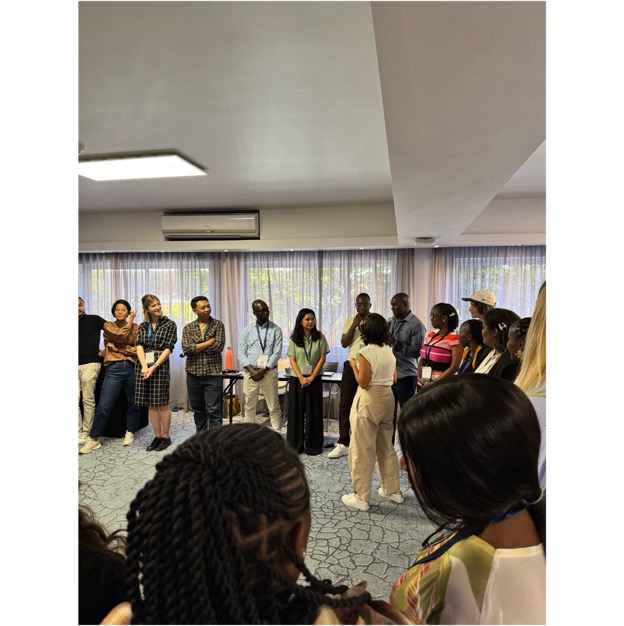
Photo credit: Jamie Adams-South South North
Beyond the content of the sessions, the Seasonal School’s design embodies several principles that are transferable to other capacity-strengthening contexts.
The seasonal school practised what it taught.
Co-production, iterative learning, peer knowledge, and reflective practice were the methods by which the school operated. Content was co-designed with the R4I Hub and Innovative Facilitation, and participants and other CLARE projects were invited to specific days. Participants co-facilitated energisers and contributed to content delivery. This coherence between method and message is a significant design strength, because it made the principles experiential rather than merely conceptual.
Embodied and experiential learning has distinctive value.
The Organisational Zoo, the communication passing game, the sphere game, and the Water Hub excursion were each cited as among the most impactful elements of the week. This is consistent with what the learning science literature tells us about the durability of embodied learning, but it remains underapplied in professional development contexts. The Seasonal School provides a strong practical model for integrating experiential design throughout a five-day programme rather than using it as occasional relief from more ‘serious’ content.
Sequencing determines what learning is possible.
From personal reflection through analytical frameworks, through field immersion through practical tools, through peer synthesis – the design was not by chance. Each day created the conditions for the next. The Water Hub visit was more valuable because it came after the Spheres Framework. The Doctor-Patient Clinic was more productive because it came after four days of shared vocabulary and relational trust. Sequencing of this kind requires deliberate design and the willingness to resist the pressure to ‘cover content’ at the expense of building the conditions for learning.
Reading the room is a design responsibility, not an improvised skill.
When the facilitation team is reading the room carefully enough to know when a change in session is required, it draws the attention of the group. Sustaining energy and attention across five intensive days required recognising disengagement early and shifting register before energy drains away. This and daily MEL debriefs, in which the facilitation and organising teams reflected each evening on engagement levels, pacing, and participant signals, and adjusted the following day accordingly. What participants experienced as a naturally flowing programme was, in fact, continuously calibrated. The practical implication for future editions is that reading the room cannot be left to individual facilitator intuition alone; it needs to be structured into the programme’s daily rhythm as a collective, reflective practice, with the flexibility to adapt sequencing, pace, and format in real time.
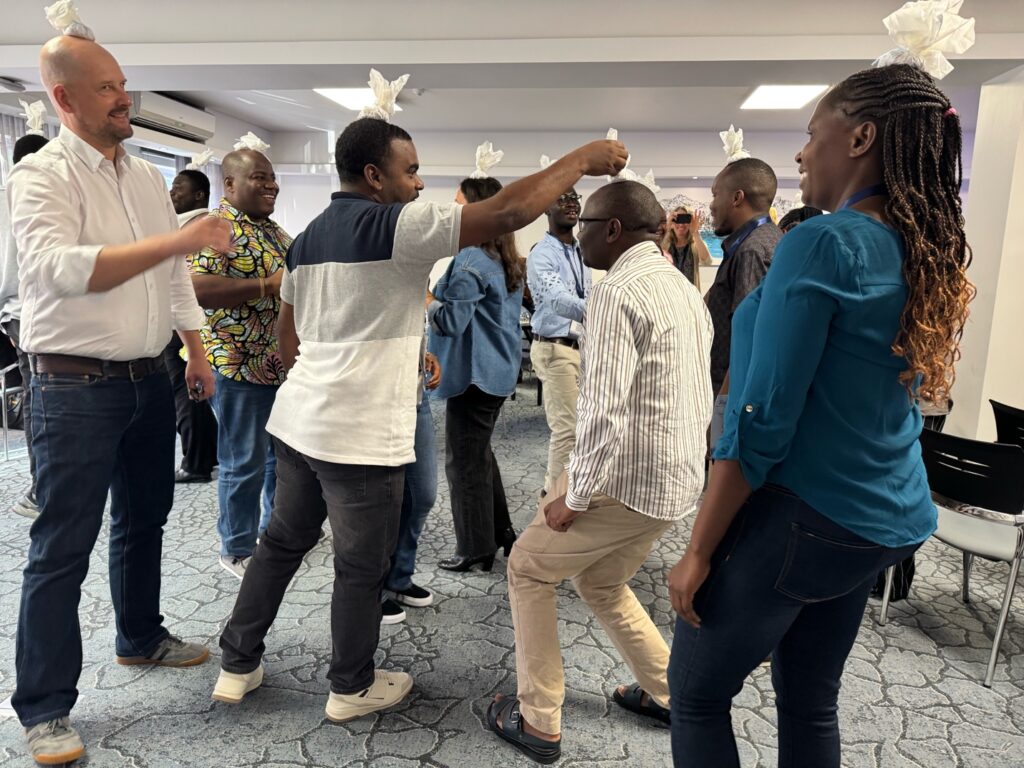
Photo Credit: Jamie Adams-South South North
Intentional icebreakers and energisers are not warm-up acts
The use of icebreakers and energisers was not merely entertaining but designed to surface the same dynamics that the subsequent session would address conceptually. The Mix-It Game that opened the facilitation session on Day 4 was not simply a way to wake the room up after lunch; it was a structured encounter with the constraints, creativity, and collective problem-solving that effective facilitation requires participants to navigate. The communication passing game on Day 2, in which a concept travelled silently down a line of participants and arrived unrecognisable, did more to demonstrate the complexity of knowledge dissemination in sixty seconds than a slide deck could do in ten minutes. When energisers are designed this way, they function as compressed case studies: the debrief that follows generates insight grounded in a shared, recent, embodied experience rather than an abstract hypothetical.
What We Need to Do Better
Things we saw that need to be taken into account are that language access and disability inclusion are structural equity issues and need to be integrated into programming. The seasonal school was also never meant to be a once-off event; continuity through virtual sessions, peer-to-peer exchanges, etc., should be integrated to enhance learning from the point.
Conclusion: A Beginning, Not an Endpoint
The CLARE CS Hub Seasonal School 2026 achieved what it set out to do — and the evidence for that claim is not simply participant satisfaction but the specificity, coherence, and consistency of the learning it produced. Across five days, 34 researchers and practitioners built a shared analytical vocabulary, practised the relational and facilitative skills that effective co-production requires, tested frameworks against real-world examples, and formed the peer relationships that will continue long after the school is over.
But the more important question is what happens next. A five-day school can shift thinking, build skills, and strengthen connections. It cannot, on its own, change the institutional incentive structures that reward publications over partnerships, or the project timelines that leave too little room for iterative co-production, or the funding architectures that define impact in ways that make the most important forms of adaptation invisible. Those are structural challenges that require structural responses.
What the Seasonal School can do – and what this one demonstrably did – is equip people to push back against those structures more effectively, with better tools, clearer frameworks, and a community of peers who share both the analysis and the commitment. That is a necessary, if not sufficient, condition for the kind of impactful adaptation research that CLARE exists to support.

Categories
Countries
CLARE Pillars
CLARE Themes
CLARE Topics
Published
CLARE Projects
CLARE Partners