
Co-creation Labs for collective learning and co-design: Insights from the CLARE webinar series
/
Co-creation Labs are one of the key methods being used in the CLARE programme to bridge the gap between research and action to promote equitable, locally relevant research that leads to impact on the ground.
Several CLARE projects run Co-creation Labs for collective learning and co-design. These labs involve working collaboratively to create new ideas, bring together a range of stakeholders including marginalised communities, and encourage sharing ideas in an atmosphere of trust.
A two-part series of virtual sessions held as part of the CLARE webinar series shared learnings on this innovative method.
Held on 3 June 2026, the first session focused on “How to design equitable, transformative spaces”. This session brought together members of the CLARE community to share insights on how to design co-creation labs, making sure that every voice is heard and ensuring labs work towards system transformation.
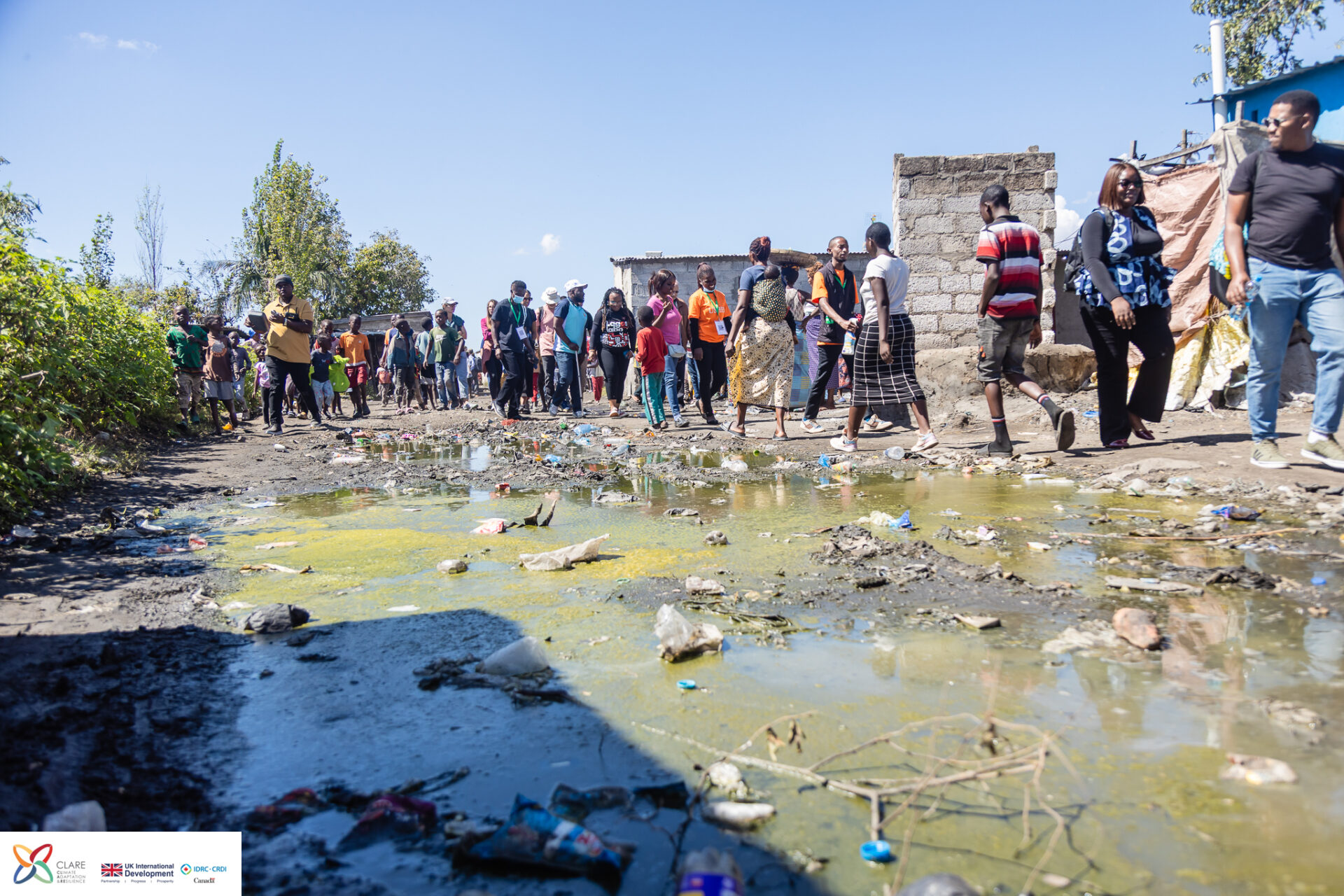
This session featured Rana Waheed of the RECOVER project, who shared the presentation “Where every voice is heard”. Gilbert Siame of the Tuwe Pamoja and MECHANICS projects shared case study from Lusaka, Zambia that illustrated an experimental approach. Finally, Shruti Jain and Imogen Bellwood-Howard of the CLARITY project spoke on working towards systems transformation.
“The most important outcome was that community experiences directly informed policy recommendations. Together participants identified priorities around governance reforms, infrastructure improvements, transparency, affordability, and climate resilience.” – Rana Waheed
Watch Part 1 of this two-part series:
The second session, held on 29 June, centred on “Lessons for collaboration and co-learning”. This session benefitted from insights from Lorraine Dongo of the CO-CAT project, who focused on encouraging co-learning, Renate Meyer of the REPRESA project, who addressed enabling transdisciplinary participation, and Catherine Sutherland of INACCT Resilience, who shared insights on allowing context-specific issues to be explored.
“Our experience so far suggests that co-learning is more than a method of engagement. It provides the conditions for institutions to collectively explore, question, and understand the complex factors shaping climate adaptation research capacity.” – Lorraine Dongo
Watch Part 2 of the two-part series:
Don’t forget to register for the next sessions in the CLARE webinar series.
Categories
Countries
CLARE Pillars
CLARE Themes
CLARE Topics
Published
CLARE Projects
CLARE Partners