
Story of Change: Scaling an approach to supporting African-led climate synthesis research for policy
Published on
Authored by Farai Kapfudzaruwa and Christopher Trisos
CLARE Stories of Change are snapshots of how research and capacity strengthening initiatives that the programme supports are contributing to specific changes on the ground in support of resilience to climate change and natural hazards. They help illustrate how CLARE is enabling socially inclusive and sustainable climate resilience, as outlined in the CLARE Theory of Change.
What changed?
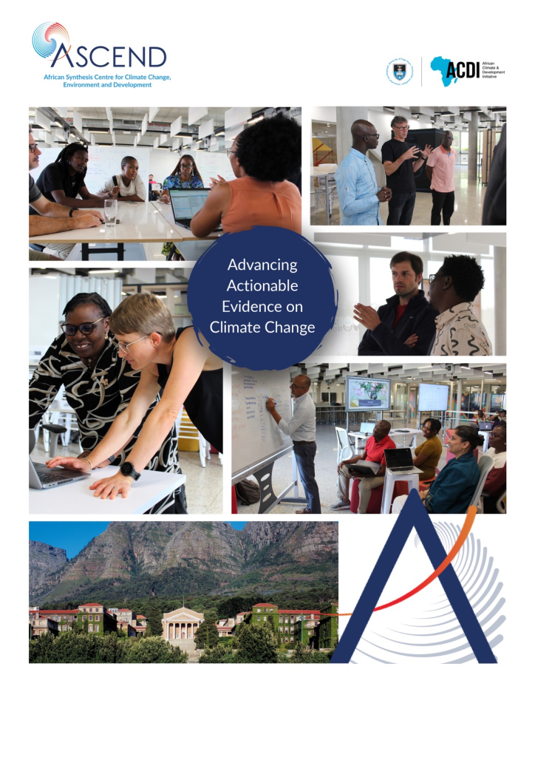
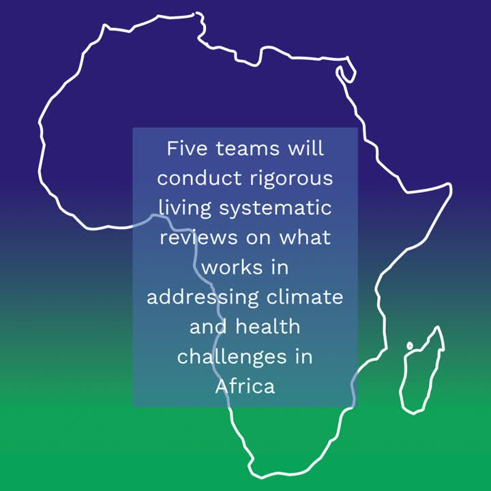
In 2025, What Works Climate Solutions (WWCS) – a global initiative that promotes rigorous evidence on climate solutions that work to inform evidence-based policymaking – adapted an approach developed by the African Synthesis Centre for Climate Change, Environment and Development (ASCEND) under the BAOBAB project. WWCS’s call for an African-led systematic review on climate and health adopted many of the design features that were central to ASCEND’s earlier calls for synthesis teams on diverse topics. These features included requiring African leadership of teams; a focus on synthesizing existing evidence and making it actionable for policy and decision-making; seeking transdisciplinary teams with representation of academic researchers, policymakers, practitioners, and civil society members on the continent; and a targeted investment in capacity strengthening of teams supported, in particular early career individuals The uptake of ASCEND’s model by WWCS demonstrates the influence of the BAOBAB approach and recognition of its value in generating rigorous and relevant climate evidence.
Why does it matter?
Synthesizing climate evidence is increasingly critical for ensuring evidence informs responses to climate change. However, evidence from the Global South, including indigenous knowledge and opportunities for African organizations and scholars to lead and conduct synthesis research in transdisciplinary teams are limited, contributing to persistent gaps in capacities, representation, and influence within global knowledge-production processes.
While CLARE aims to directly contribute to addressing this gap by supporting ASCEND through the BAOBAB project, uptake of the model by WWCS demonstrates influence beyond the immediate scope of the project, extending ASCEND’s approach to address the important field of climate-related health challenges while mobilizing additional resources for African-led evidence synthesis.
The WWCS call also included an explicit focus on informing the Intergovernmental Panel on Climate Change (IPCC) process, which is critical given the historical under-representation of African evidence and perspectives in global assessments and the fact that the continent is highly vulnerable to climate change impacts.
What did CLARE do to contribute?
With funding from both the CLARE programme and the StepChange initiative under the BAOBAB project, ASCEND developed their call model as well as their approach to convening and supporting African-led synthesis teams. Beginning in 2024, ASCEND launched their own calls for eight synthesis teams. The design of the calls and support programmes were informed by a combination of lessons from previous synthesis initiatives across the world, the specific need to strengthen African-led evidence synthesis, demand for rapid decision-relevant evidence on complex climate related challenges, the recognition that synthesis requires team science, and the importance of strengthening African research capacity.
ASCEND also leveraged its strategic relationships with WWCS to inform their own thinking about how to support African-led synthesis. Whilst the WWCS community has strengths in generating evidence, the ASCEND model demonstrated the importance of African and Global South experts leading the synthesis agenda to set questions, lead teams and shape context specific outputs and outcomes. Furthermore, The WWCS’ s 2026 call moved beyond commissioning reviews by recognizing synthesis as a capacity building opportunity – a key trait of the ASCEND model. To recognize the value of ASCEND’s synthesis model and its emphasis on Global South leadership.
ASCEND will also host the 2027 What Works Climate Solutions Summit in Cape Town, South Africa, with up to 500 attendees expected at the summit for climate policy, research, and the global evidence synthesis community. This will be the first time the summit is held in the Global South and will provide an important opportunity for Global South researchers and policymakers to address key evidence gaps for climate change policy, including a substantial increase in emphasis on what works for adaptation.
About BAOBAB
BAOBAB provides technical and capacity strengthening support for African-led transdisciplinary teams to synthesize existing data and knowledge on climate change risks and response options. In doing so, it aims to strengthen the science-policy-practice interface on climate adaptation in Africa, strengthen capacities of African researchers to conduct socially inclusive climate adaptation synthesis research, and contribute to developing a strong pipeline of African researchers, policymakers and practitioners to lead in future global, regional, and local climate change and environmental assessments. This project is jointly funded by CLARE and the Step Change initiative.
Learn more:
Categories
Countries
CLARE Projects
CLARE Pillars
CLARE Themes
CLARE Topics
CLARE Partners