
Story of Change: Strengthening Rwanda’s NDC 3.0 and application to the Fund for responding to Loss and Damage (FRLD) with evidence
Published on
Authored by Blanche Butera and Paul Watkiss
CLARE Stories of Change are snapshots of how research and capacity strengthening initiatives that the programme supports are contributing to specific changes on the ground in support of resilience to climate change and natural hazards. They help illustrate how CLARE is enabling socially inclusive and sustainable climate resilience, as outlined in the CLARE Theory of Change.
What changed?
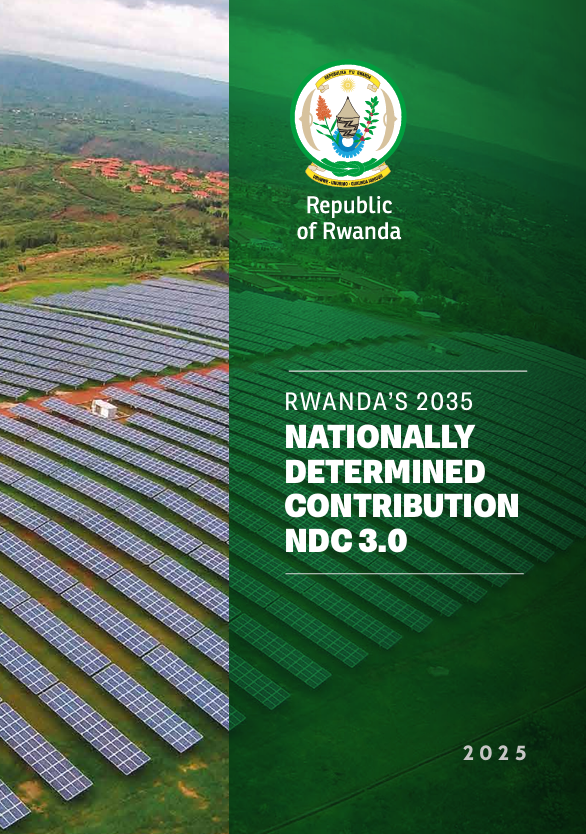
The ECONOGENESIS project has directly informed and influenced Rwanda’s third nationally determined contribution (NDC 3.0). The ECONOGENESIS team led the writing of the loss and damage chapter, drawing directly on results and economic analysis produced by the project. The chapter provides an overview of the climate drivers for loss and damage across Rwanda’s climatic zones, as well as the magnitude of current loss and damage of both slow onset events— including soil erosion, droughts, and rising temperatures—and extreme weather events such as landslides, flooding, and wind and hailstorms. It also includes a quantified analysis of the economic and non-economic losses already being experienced, drawing on ECONOGENESIS valuation methods.
Based on this analysis, the Government identified four priority interventions in the NDC3.0 to strengthen Rwanda’s loss and damage response, namely:
- positioning the country to access resources from the International Fund to Respond to Loss and Damage (FRLD) through the Rwanda Green Fund window;
- upgrading Rwanda’s National Disaster and Incident Management System;
- co-developing and piloting a Technical Assistance Roadmap with the UNFCCC’s Santiago Network;
- and operationalizing a national Climate-Risk Database that will standardize data-sharing among multiple national partners and inform evidence-based planning.
Following the publication of NDC3.0, the ECONOGENESIS team have been working with the Government on the first of these priorities, supporting the development of a proposal to the FRLD. This proposal is focused on the East of the country, and draws on the direct survey results from the ECONOGENESIS project. The proposal was successful submitted in May 2026.
Why does it matter?
Rwanda’s NDC 3.0 is a key national climate policy document, setting out the country’s priorities for mitigation, adaptation, and loss and damage. In particular, the loss and damage chapter of the NDC 3.0 explicitly acknowledges the losses and damages that are occurring already – as well as the limits of adaptation.
To address these rising losses and damages, an international fund has been created (the FRLD). This provides an opportunity for developing countries to receive funding to address rising loss and damage. Applications to the fund need to provide information on losses and damages, and the ECONOGENESIS project provided the evidence for this, drawing on the extensive surveys the project has completed. This evidence highlights economic losses, but also important non-economic losses such as on health and well-being.
As well as providing evidence to back up the chapter and the proposal, ECONOGENESIS contributed a gender-responsive and distributional analysis of loss and damage, which was included. This is critical because climate change impacts and loss and damage are not experienced uniformly, but are heavily influenced by social factors such as gender equity and poverty. By providing an analysis that considers how these differences affect loss and damage, ECONOGENESIS has produced information that can be used to provide targeted support to those who are most affected by climate impacts.
What did CLARE do to contribute?
In response to a request from the Government of Rwanda to inform the NDC 3.0 and improve data on loss and damage in Rwanda, ECONOGENESIS surveyed 2,450 households across 21 districts, assessing the impacts of various climate hazards and the responses to these extreme events. The analysis considered how these impacts and responses varied based on gender and poverty level, producing a distributional analysis of impacts across society.
These surveys were used to provide the first primary-data estimates in Rwanda of climate change loss and damage, disaggregated by gender and poverty. ECONOGENESIS’s analysis estimates that the total annual costs of loss and damage for all Rwandan households are $330 million – around 2.2% of Rwanda’s GDP. This figure is higher than previous estimates and demonstrates the high levels of loss and damage already occurring in the country.
The analysis also found that households in Rwanda experience severe economic costs from extreme weather events and that most households do not fully recover after shocks, experiencing permanent loss and damage. These impacts are unequally distributed, with female-headed households and lower income households experiencing disproportionate impacts. Households are already adapting and are taking action to reduce risks, but for many, especially female-headed and lower income households, these actions are financially out of reach.
About ECONOGENESIS
ECONOGENESIS conducts global level analysis, complemented with country-level studies in Nepal, Rwanda and Tanzania, to address the gap in knowledge around the economic costs of climate change and the costs of adaptation, including an analysis of how these are distributed, including by gender and social group. It also advances new approaches for scaling up adaptation finance. The project has a strong focus on co-design, and thus works closely with key actors from government, private sector and civil society. The project is strengthening capacity in adaptation planning and programming by generating new information, working directly with stakeholders using co-creation methods, and providing training opportunities, including for early career researchers.
Learn more:
Categories
Countries
CLARE Projects
CLARE Pillars