
Inclusive, co-created research delivers effective local adaptation
/
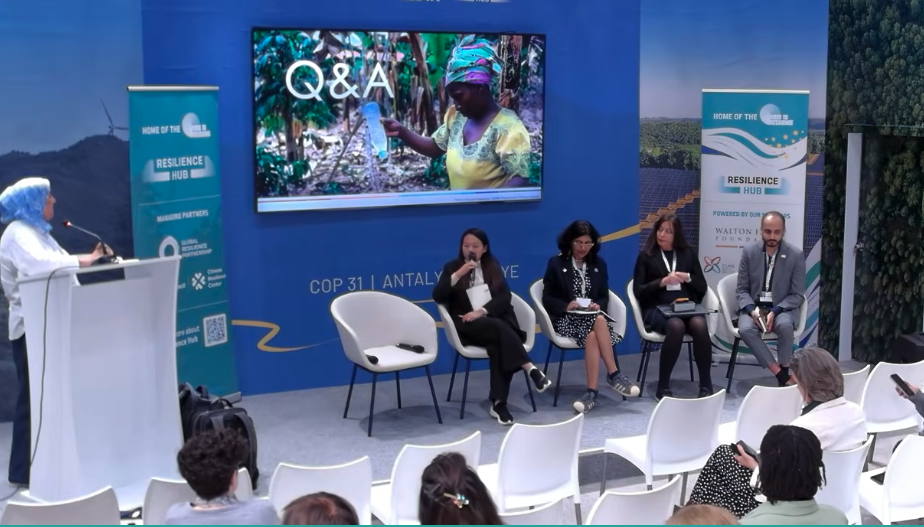
How can research drive meaningful and lasting climate adaptation? That question was at the centre of a flagship CLARE event at the COP31 Resilience Hub that brought together government leaders, researchers, and practitioners to reflect on lessons from across the programme.
The session explored how co-created research is strengthening resilience in climate-vulnerable communities while generating knowledge that can inform adaptation efforts around the world.
Moderated by Shehnaaz Moosa, a Director at SouthSouthNorth, the discussion featured insights from the following speakers:
- Hon. Dr. Gilbert Siame, Zambia’s Minister of Green Economy and Environment (previously part of MECHANICS and Tuwe Pamoja projects)
- Meggan Spires of ICLEI Africa (INACCT Resilience project)
- Heemani Mukhia of the Prakriti Resource Centre (iCRA project)
- Nidhi Nagabhatla of the United Nations University (RECOVER project)
- Jessica Troni of the United Nations Environment Programme (RAIA project)
- Aditya Bahadur of the Red Cross Red Crescent Climate Centre (Adaptation Research Alliance)
- Bruce Currie-Alder of the International Development Research Centre
A central message emerging from the discussion was that effective adaptation depends on partnerships that place communities at the heart of the research process, strengthen local agency and create pathways for knowledge to translate into action.
From research to impact
A recurring theme throughout the discussion was the importance of translating research into tangible adaptation outcomes. Reflecting on Zambia’s experience, Hon. Dr. Gilbert Siame highlighted CLARE’s ability to move beyond knowledge generation to enabling practical solutions, while emphasizing the need for long-term investment and continuity to sustain and scale impact.
“The seed has been planted. The impact has been generated. Solutions and prototypes are on the table. Scaling is happening. The journey has not ended.”
Hon. Dr. Gilbert Siame, Minister of Green Economy and Environment, Zambia
Co-creating the questions, not just the solutions
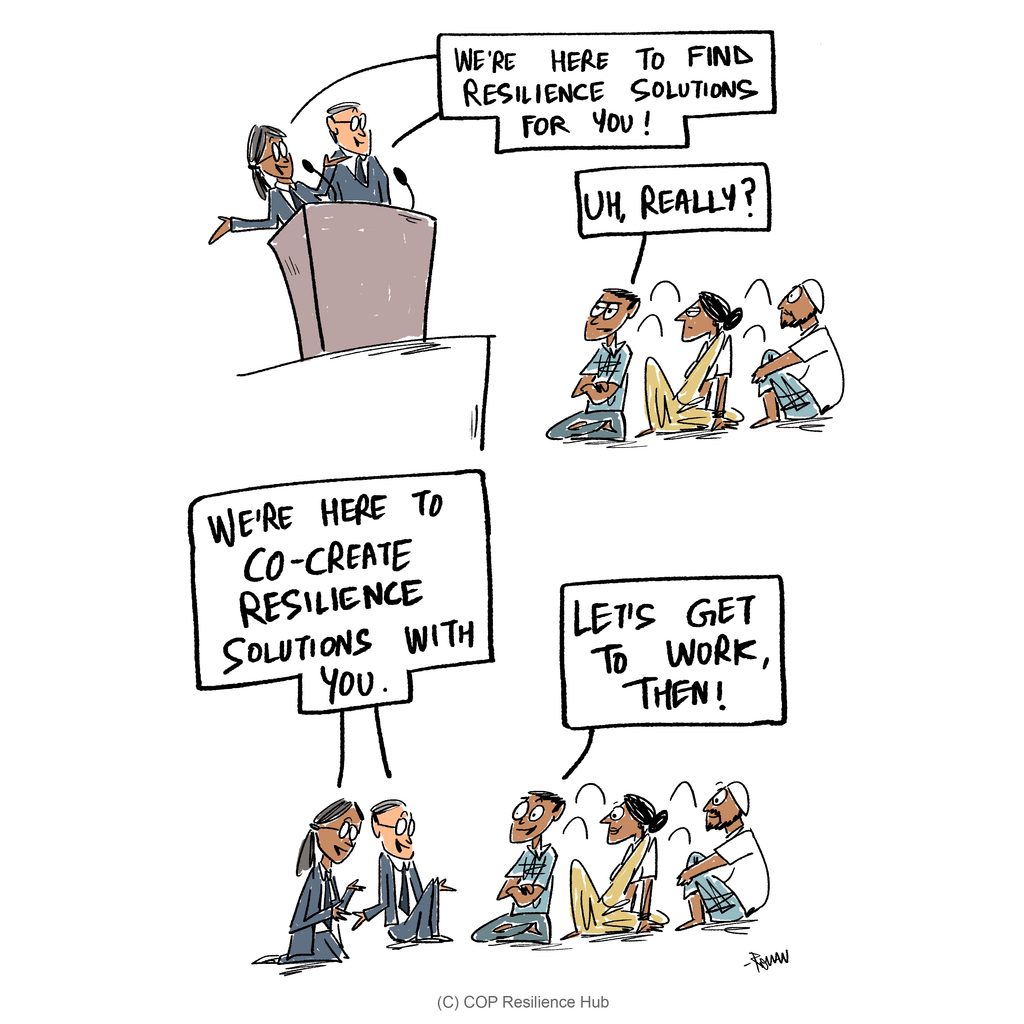
Drawing on examples from across CLARE, speakers emphasized that effective adaptation begins with communities helping define research priorities rather than being consulted to co-create solutions only once projects are underway. The discussion highlighted that genuine co-creation needs equity, fairness and power sharing – and that starts with setting the agenda.
“We often co-create solutions, but we’re not co-creating the questions.”
Shehnaaz Moosa, SouthSouthNorth on behalf of the CLARE R4I Hub
Impact is strongest when communities become partners and agents of change
Speakers highlighted that lasting adaptation depends on shifting power, agency and decision-making to communities themselves. The CLARE projects with the strongest transformational impacts were those that challenged exclusionary norms, elevated marginalized voices and strengthened local leadership. Participants stressed that capacity strengthening should enable communities and institutions to continue adapting long after individual projects have ended.
Intersectionality and local institutionalisation make adaptation work in practice
Discussion of CLARE research highlighted the importance of understanding how climate risks intersect with existing inequalities. Lessons from the iCRA project showed that the availability of services does not always translate into access, particularly for women, older people and other marginalized groups.
Speakers also emphasized that lasting adaptation depends on embedding approaches within local institutions and nurturing the trusted relationships and networks that support action over time.
“It was not about bringing something new into these cities, it was about building on what already worked and making it better so it was sustainable beyond the funding.”
Meggan Spires, ICLEI Africa
Enabling anti-fragility
Participants examined the barriers that can prevent communities from becoming more resilient, including financing systems, insurance mechanisms, political cycles and unequal power structures. Speakers noted that nature-based and resilience-building solutions often require longer time horizons than political and funding cycles allow. They called for approaches that shorten the gap between knowledge and implementation, support active learning, strengthen local intermediaries and create incentives for transformative, rather than incremental, adaptation.
“We shouldn’t underestimate the role that learning and research need to play in building back better in order to avoid the mistakes that might have happened the first time around.”
Aditya Bahadur, Red Cross Red Crescent Climate Centre
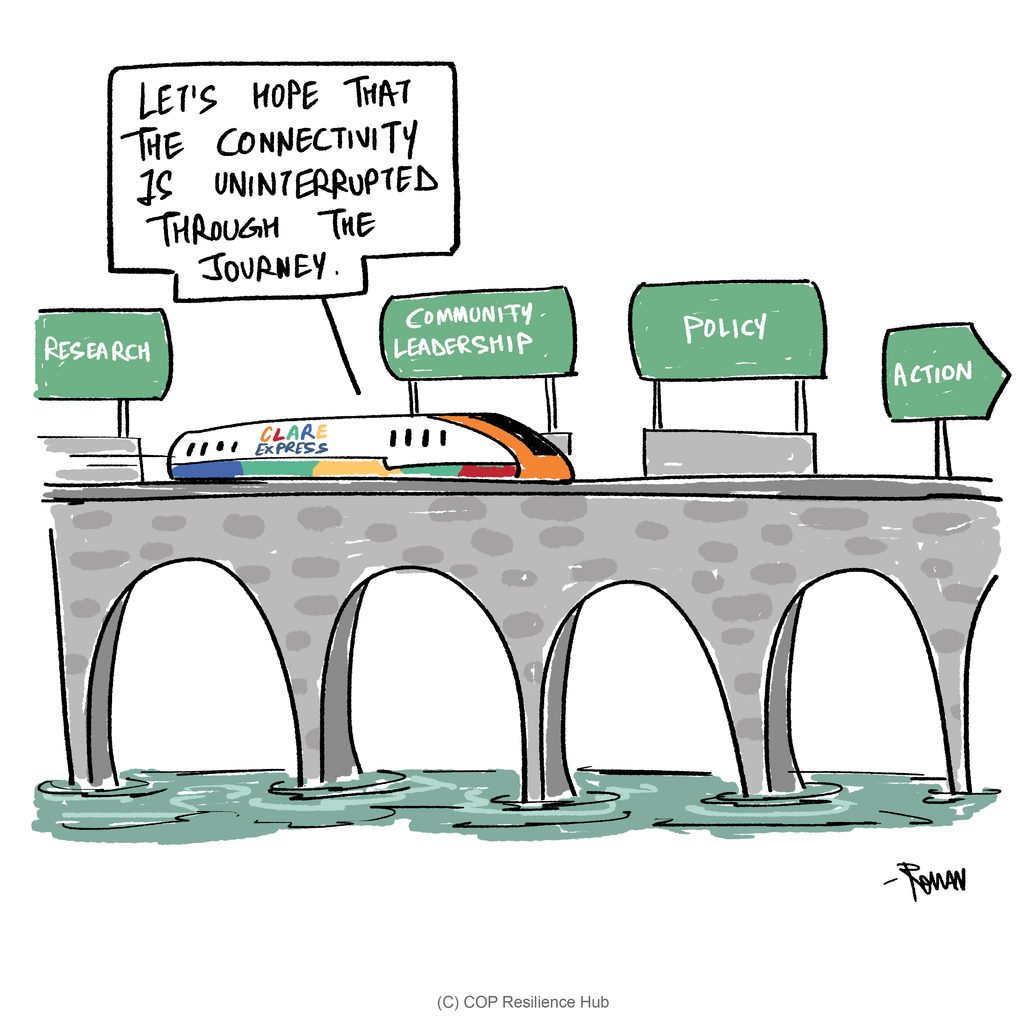
Visual highlights from the session
A series of cartoons produced by artist Rohan Chakravarty during the session captured key themes and reflections from the discussion, offering a visual interpretation of the insights shared by speakers and participants.
Categories
Countries
CLARE Pillars
CLARE Themes
CLARE Topics
Published
CLARE Projects
CLARE Partners