
Story of Change: Bridging climate change knowledge and financial risk management in Uganda
Published on
Authored by Grace O’Donovan, South South North (Research for Impact Hub)
CLARE Stories of Change are snapshots of how research and capacity strengthening initiatives that the programme supports are contributing to specific changes on the ground in support of resilience to climate change and natural hazards. They help illustrate how CLARE is enabling socially inclusive and sustainable climate resilience, as outlined in the CLARE Theory of Change.
What changed?
The Central Bank of Uganda (BoU) now has access to climate risk information and is better equipped to integrate climate risks into its policy and decision-making. New partnerships and commitments to ongoing knowledge sharing and exchange, facilitated by the CLARE Research for Impact (R4I) Opportunities Fund, have formed between the bank and local scientists, including the Ugandan National Meteorological Authority. These collaborations have enabled access to climate risk data, as well as greater understanding by the BoU on how to use climate data in financial risk analyses. This progress will enable the BoU to implement its climate change risk policy.
Why does it matter?
A 2024 IMF analysis underscores the importance of integrating climate data into financial systems in Uganda to ensure long-term economic stability and resilience: climate change could reduce Uganda’s GDP by more than 4 percentage points by the end of the century, while pushing public debt from 47.5% to over 66% of GDP.
In 2017, the Network of Central Banks and Supervisors for Greening the Financial System (NGFS) called for action to build understanding of climate-related risks and ensure financial systems are resilient to climate risks. In response, the Central Bank of Uganda adopted a climate risk policy aimed at integrating climate risks into the design and deployment of its supervisory, micro-prudential, and macro-prudential monetary tools, and implementation frameworks. Strengthening the BoU’s ability to assess and manage climate risks paves the way for more resilient and sustainable financial practices to drive sustainable national adaptation actions.
What did CLARE do to contribute?
By supporting engagements between BoU senior decision makers, local climate scientists, and economists, the R4I Hub generated opportunities for central bank departments to receive tailored expertise to guide their focus on meeting the BoU’s climate risk goals.
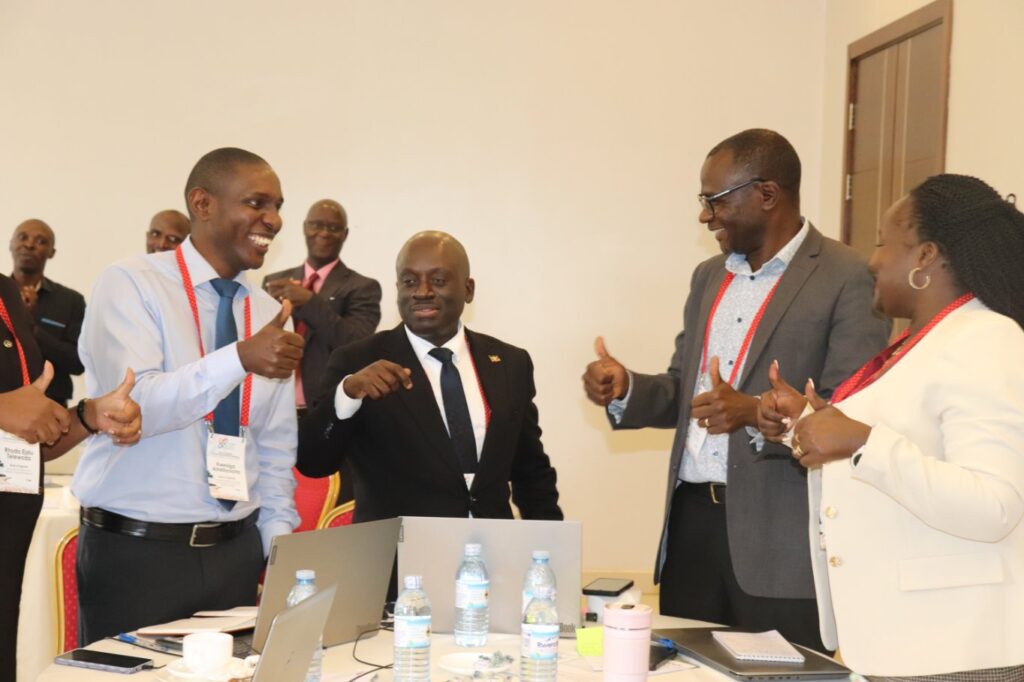
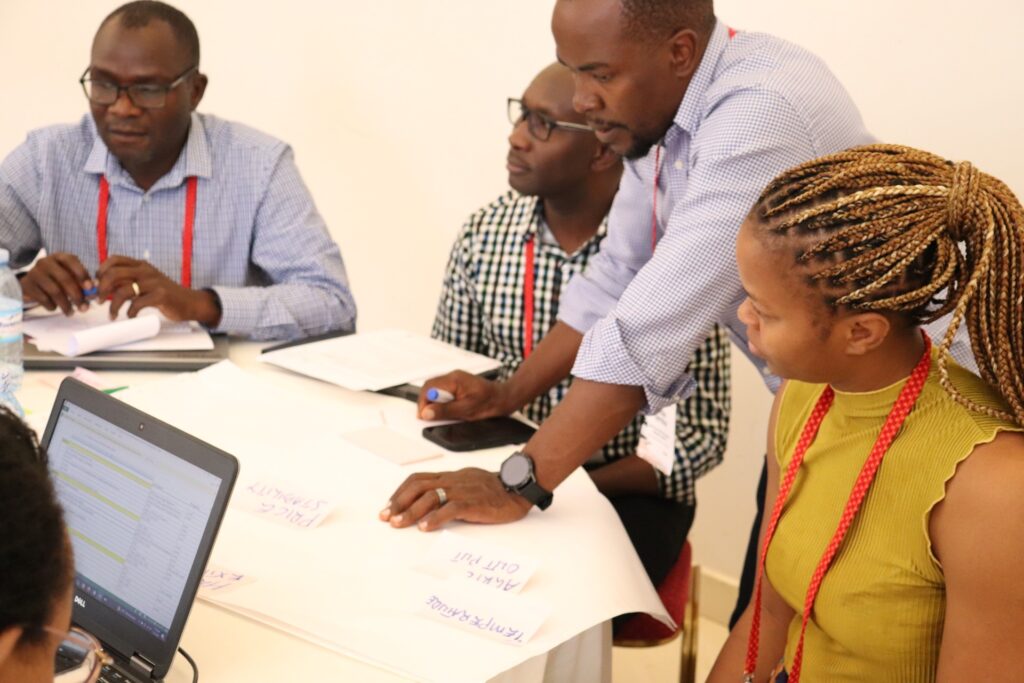
The R4I Hub did that by supporting an exploration of needs between the bank’s senior decision makers, local climate scientists, and economists, including through an initial virtual session for senior BoU decision-makers, economists, and researchers in October 2024, as well as a two-day in-person workshop in Entebbe in November 2024.
The workshop brought together key professionals from Uganda’s climate and financial sectors, including the BoU’s Director of Statistics and officials from the Supervised Financial Institution’s (SFI) Supervision Department, the Climate Change Department, the Ugandan National Meteorological Authority (UNMA), and Climate Action Network Uganda. It also engaged technical experts in climate finance, offering guidance towards understanding Uganda’s climate risks (such as flooding, drought, and extreme heat), the importance of building central banks’ internal capacity to conduct physical climate risk assessments, and how to access and interpret relevant climate data sources and models. Additionally, each central bank department had the opportunity to receive tailored expertise to guide their focus of work towards meeting the BoU’s climate risk goals. This specific approach aimed to enhance the BoU’s risk analysis capability and their capacity to develop a climate risk implementation plan, equipping them with the appropriate tools and methodologies to identify, quantify and mitigate climate risks.
Learn more:
About the CLARE R4I Hub and R4I Opportunities Fund
The CLARE R4I Hub supports research for impact objectives of CLARE projects, works to amplify knowledge emerging from CLARE, and to broker existing knowledge in response to demand from decision makers. The R4I Opportunities Fund supports short-term, small-scale interventions that meet the needs of decision makers in Africa and Asia to adapt to climate change through the use of existing research and evidence.
Photo credit: Research for Impact (R4I) Hub
Categories
Countries
CLARE Projects
CLARE Pillars
CLARE Themes
CLARE Topics
CLARE Partners