
ASEAN Member State Representatives Meet CLARE-ASEAN Research Partners for Interactive Discussions on Project Progress and Early Findings
/
By Ms. Sumnima Ghimire and Prof. Shobhakar Dhakal
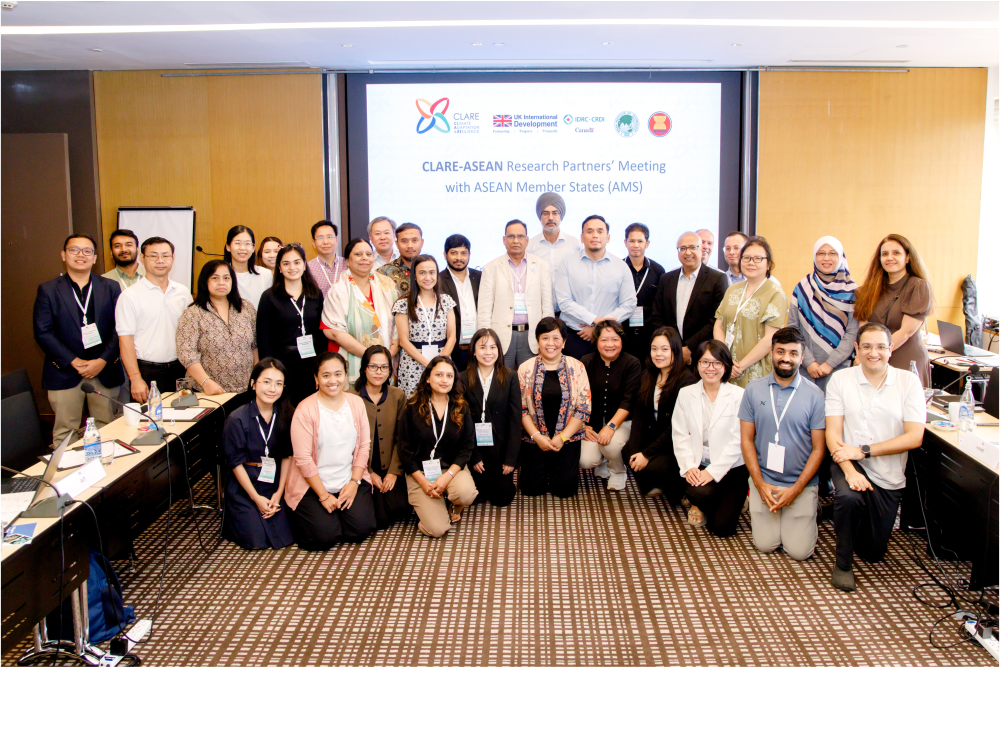
On 27 June 2026, CLARE-ASEAN convened the Project Partners’ Meeting with ASEAN Member States (AMS), bringing together AMS representatives from five member states, the Asian Institute of Technology (AIT), and the four cross-national research teams. Held in-person, the meeting provided a valuable platform for dialogue, knowledge exchange, and feedback.
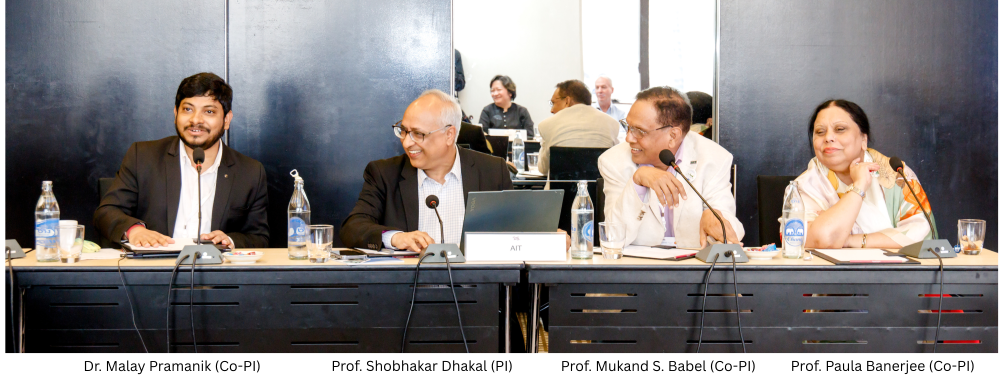
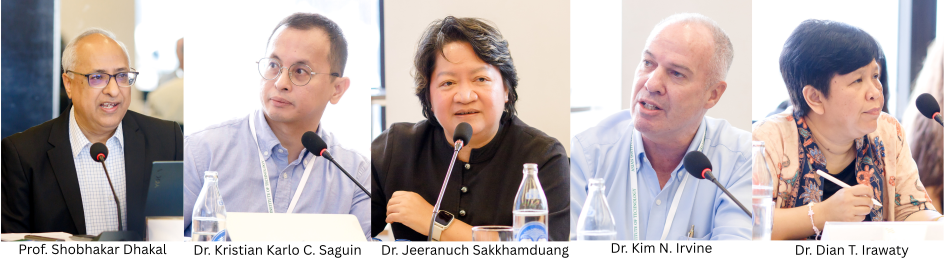
The meeting featured presentations on overall initiative by Professor Shobhakar Dhakal, Project Lead of CLARE-ASEAN, followed by the four CLARE-ASEAN action-research projects—Be-Housing, HAMR, CAPE, and NbCLARE, highlighting their progress, emerging findings, lessons learned, and early results. Project updates were presented by respective project leads: Dr. Kristian Karlo C. Saguin (CAPE), Dr. Jeeranuch Sakkhamduang (HAMR), Dr. Kim N. Irvine (NbCLARE), and Dr. Dian T. Irawaty (Be-Housing).
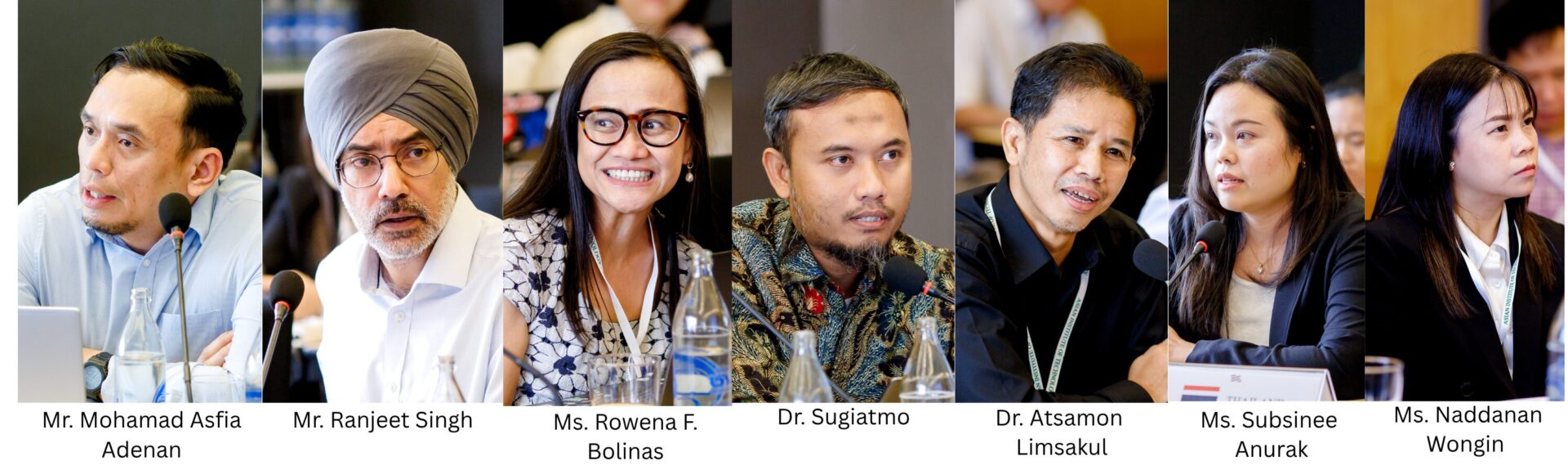
The presentations were followed by interactive discussions that enabled ASEAN Member States to engage directly with the research teams, share national and regional priorities, and explore opportunities for translating research into policy and practice. Representatives from ASEAN Member States, nominated by the respective focal points of the ASEAN Working Group on Climate Change (AWGCC) included Mr. Mohamad Asfia Adenan (Ministry of Natural Resources and Environmental Sustainability, Malaysia), Mr. Ranjeet Singh (Ministry of Sustainability and the Environment, Singapore), Ms. Rowena F. Bolinas (Department of Environment and Natural Resources, the Philippines), Dr. Sugiatmo (Ministry of Environment, Indonesia), and Dr. Atsamon Limsakul, Ms. Subsinee Anurak, and Ms. Naddanan Wongin (Ministry of Natural Resources and Environment, Thailand).
The discussions generated valuable recommendations from AMS representatives on strengthening the link between research and policy by aligning evidence from ongoing projects with ASEAN priorities and regional policy processes. AMS representatives highlighted the importance of the projects’ bottom-up approach, noting that locally grounded research provides meaningful evidence of community needs, implementation challenges, and practical solutions that can inform climate adaptation planning at higher policy levels.
AMS representatives also underscored the collective potential of the four projects to generate policy-relevant evidence across key thematic areas, including urban heat management, nature-based solutions, climate-resilient housing, and participatory climate governance. They highlighted that, collectively, the emerging findings could contribute to the development of broader policy indicators at the ASEAN level while providing practical, context-specific insights to inform planning and evidence-based decision-making across countries and cities. The meeting also provided some leads to sustain these efforts beyond the project period and emphasized the need to engage donors and partners to upscale its findings.
By fostering direct engagement between researchers and policymakers, the meeting reinforced CLARE-ASEAN’s commitment to bridging science, policy, and practice. It provided an important opportunity for ASEAN Member States to help shape regional priorities while strengthening the alignment between evidence generation and policy needs. The collaborative exchanges throughout the meeting demonstrated the value of sustained research–policy engagement in advancing evidence-informed climate adaptation across the ASEAN region.
About the Featured CLARE-ASEAN Projects
Be-Housing (Beyond Housing Types: Comparative Study of Urban Poor Settlements for Urban Heat Adaptation and Inclusive Urban Future in South-East Asia Countries)
NbCLARE (Nature-Based Solutions for Climate Adaptation and Resilience: A Framework to Enhance Design and Implementation of Nature-based Solutions through Integration of Evidence-Based Practices and Policies)
HAMR (Heat Adaptation in the Mekong Region: Bridging Science, Policy, and Sustainable Design in Thailand, Cambodia and Vietnam)
CAPE (Climate Action and Participatory Experiments for Urban Resilience in the Philippines and Vietnam)
More details: https://clareprogramme.org/project/clare-asean/
Categories
CLARE Pillars
CLARE Themes
CLARE Topics
Published
CLARE Projects
CLARE Partners