
Coming together for adaptation: insights from CLARE at Adaptation Futures 2025
/
Authored by CLARE Admin and Grace O’Donovan of the CLARE Research for Impact (R4I Hub)
At Adaptation Futures 2025, the CLARE community came together to drive conversations on how to enable socially inclusive and sustainable climate adaptation and resilience, addressing topics from heat health to intersecting vulnerabilities and the adaptation finance gap.
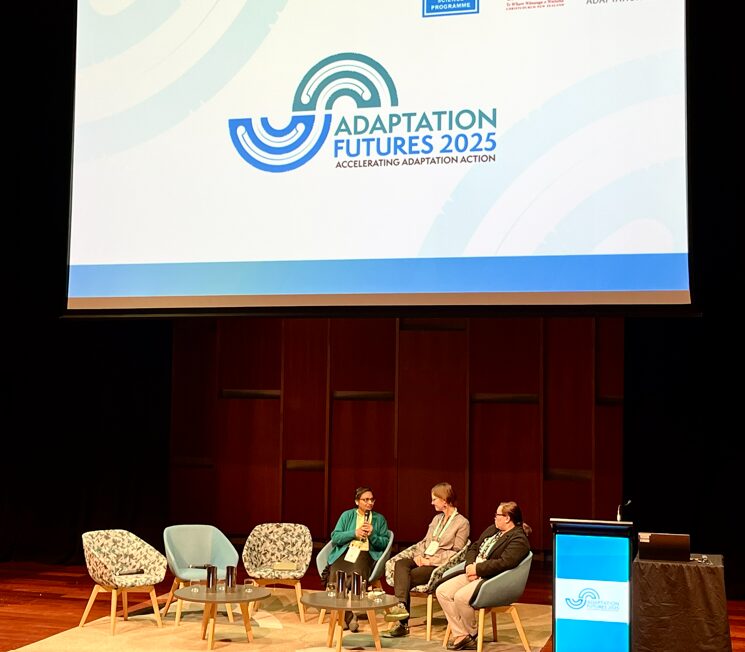
The eighth edition of Adaptation Futures took place from October 13 to 16, 2025 in Ōtautahi Christchurch, New Zealand. More than 90 countries were represented at the conference, with over 200 sessions focusing on a range of themes related to climate adaptation.
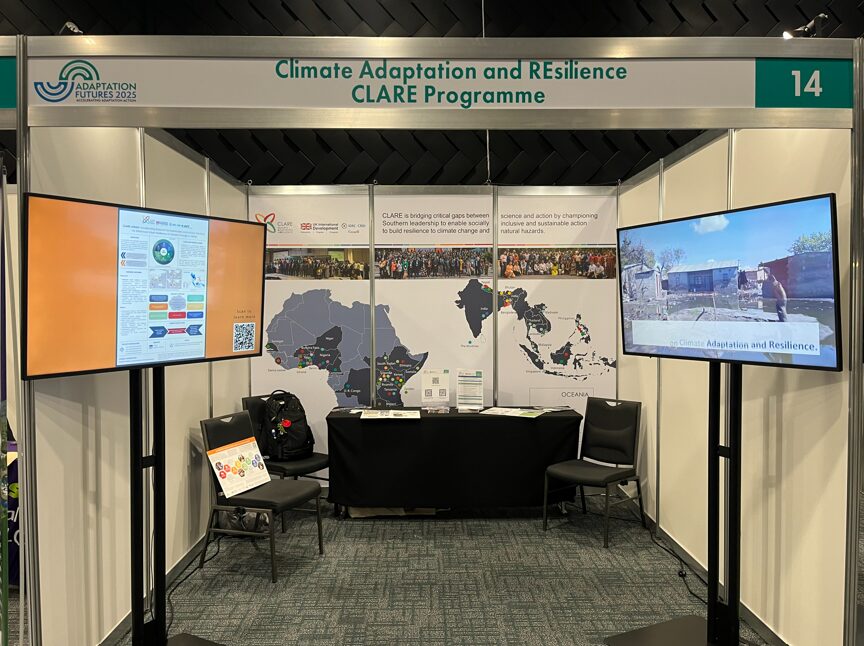
The CLARE programme had one of the largest research presences at Adaptation Futures, across more than 15 sessions. Three flagship CLARE sessions focused on engaging the adaptation community on the programme’s impact and evidence to date.
- ‘Co-creation’ Labs for Urban Climate Adaptation and Resilience shared experiences from CLARE projects, highlighting how ‘Co-Creation’ Lab approaches are supporting urban resilience through the inclusive and transdisciplinary co-development of adaptation solutions.
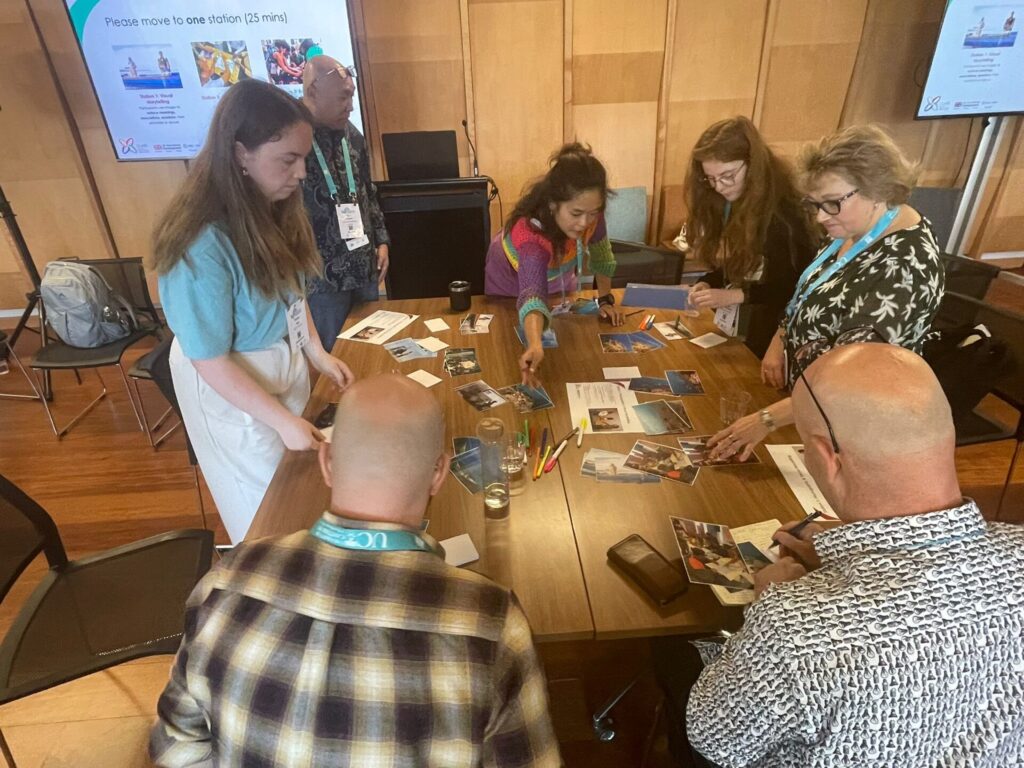
- ‘Engaging Hearts and Minds through Arts-Based Approaches and Play for Adaptation’, hosted by the CLARE Capacity Strengthening Hub, showcased how CLARE projects use innovative arts-based approaches and games to co-explore lived experiences and climate impacts faced by communities, featuring approaches like photovoice, storytelling, and Play-Doh sculpting.
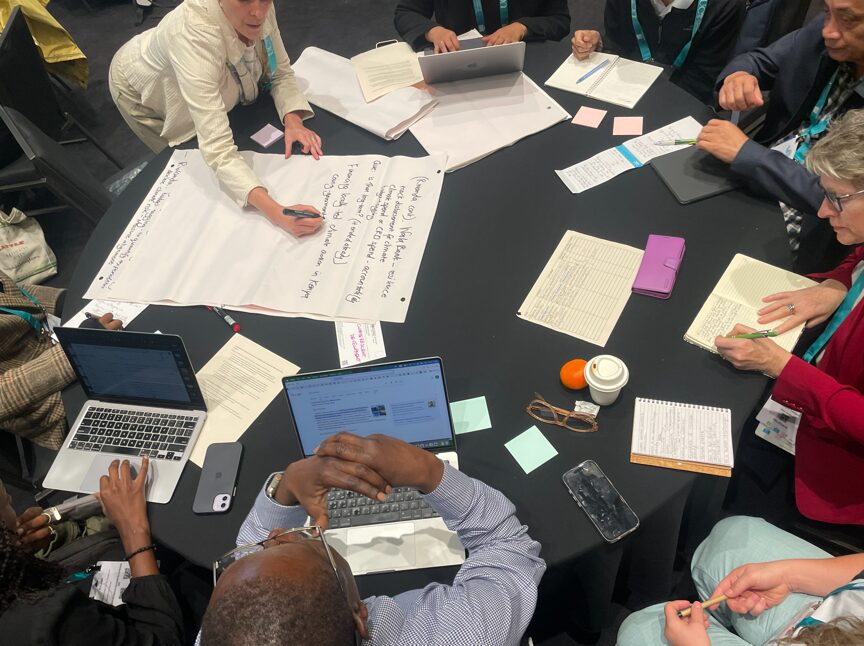
- ‘Lived Experiences Across Timescales: Weaving Together Insights on Climate Adaptation and Resilience’ engaged participants to co-create reflections on common research questions (on lived experiences, linking timescales, and climate resilient development) identified across the CLARE research portfolio.
Reflections from Adaptation Futures 2025
Grace O’Donovan from CLARE’s Research for Impact (R4I) Hub shares insights and reflections from her experience at Adaptation Futures 2025, where she hosted the session “How can city-level Heat Health Action Plans build local resilience to heatwave risks. This session presented the work of an R4I Opportunities Fund project on urban heat health alongside technical experts from Kenya and ICLEI South Asia.
Researchers, practitioners and policymakers came together in Ōtautahi Christchurch – a city transformed and rebuilt after its devastating 6.3 magnitude earthquake in 2011 – to ask one critical question: ‘what just, integrated and transformative adaptation pathways are possible in an era of compounding crises?’
Walking amidst the vibrant artwork and life emerging from the cracks of the city’s former ruins, we were viscerally challenged to look at the unexpected ways in which people, communities, economies and landscapes can find new forms of existence, collaboration and adaptation in precarious conditions. Now-thriving eels (a source of kaimoana, ‘food’) greeted us from the city’s winding Ōtākaro Avon River. After their population was nearly decimated by 900,000 tonnes of silt from the earthquake, the eels returned thanks to collaborative restoration efforts between the city and the Ngāi Tahu (local iwi tribe), which drew on Mātauranga Māori (Māori knowledge) of riparian habitats. This restoration work reminded us daily of the surprising capacity for life to thrive in the wake of destruction.
From the diverse voices, especially from the Pacific indigenous communities and the strong Māori presence at the conference, we were called to recognise that “the whenua (the land) is still the whenua” – its meaning perseveres – even as landscapes are irrevocably changed.
The resounding message from the week (and the eels) was clear: adaptation asks us to come together to face the crises of our time in moral, collective action grounded in justice, relationality and an ethic of care. As heard in the opening plenary, adaptation is “survival, it is dignity”. In a post-earthquake Christchurch, it has been the strength of shared responsibility, relationality and reciprocity that has enabled not only the city’s efficient recovery, but its preparedness for future risks.
As Youssef Nassef, Direction of Adaptation at the UNFCCC, reminded us: “It is difficult to have the wisdom to see into the future, but it is time for humanity to have learned from its mistakes. We need to move to ‘no-box’ thinking to free us to think about what the future really is. The future doesn’t happen to you – you happen to the future”.
Grace O’Donovan reflects on several themes that surfaced repeatedly throughout Adaptation Futures 2025:
Transformative adaptation
Throughout the conference, there were calls to redefine adaptation and move away from technical solutions based on reactive, siloed responses towards deeper systems change that challenge power imbalances and injustices. Our decision-making is still focused on projects that enable short-termism, rather than what it means to be adaptive that can be interpreted in context.
Several sessions asked us to reframe what adaptation looks like – ranging from economic views, such as seeing adaptation as investment to incentivise the use of capital, to more indigenous and place-based approaches, such as through wellbeing and relationships with the sea/land. Other suggestions included moving away from viewing adaptation strictly within the realm of ‘climate’, rather seeing it as a necessary function of justice, not just in terms of hazards and risk.
Policies, morality and justice
It was clear that adaptation cannot be depoliticised. A strong topic of discussion was around understanding climate action (and thus adaptation) as a legal obligation, rather than as a function of policy, as noted in the recent International Court of Justice decision where climate action is understood as a national obligation to ensure the protection of life and dignity.
One session addressed the Continuity-Transformation trap, where our reluctance to change privileges institutional status quos over equity. The relationship between moral and legal accountability was also emphasised through the medium of storytelling. When adaptation is instilled in all frameworks, including human rights, ethics and culture, storytelling becomes an essential tool to convey how adaptation is not only a moral and legal obligation but a right to live with dignity. As one session noted, storytelling is about knowledge justice.
Finance and governance
As Youssef Nassef noted, 10% of climate finance goes below the national level, 1% goes to health, 0.1% goes to gender, and more broadly, such small percentages are spent on the issues we actually believe are top priorities. He stated that economic will must stand behind political will. Innovative financial models could focus more on addressing externalities and avoiding increased debt. Finance and governance are not independent. Nassef also asked us to question how we validate what works for communities. New thinking sees adaptation is rooted in trust and multi-species justice, offering nature a ‘seat at the table’. Local finance mechanisms, such as Christchurch’s Climate Resilience Fund, are grounded and contextual, addressing who has been excluded under past policies.
Relationships and indigenous knowledges
A focus on trust and relationships ran throughout the conference, bridging issues of place and loss with interconnectedness and indigenous knowledges. Relationships between project partners and universities were showcased across sessions, but there was further emphasis on the need for relationships to continue long after projects have concluded. The World Adaptation Science Programme spoke about gaps in implementation, trust and communication. Trust and relationships form the foundation of adaptation, and this is still largely under-emphasised. Collaboration is not limited to knowledge exchange, but rather the shared human experience. This means moving beyond scientistic approaches by drawing in culturally meaningful methods that use language and systems thinking that promotes inclusivity.
Trust and respect also mean that practitioners and researchers uphold knowledge-sharing boundaries where indigenous knowledges are respected and not viewed as simply symbolic. In the conference’s opening remarks, Nassef advocated for indigenous knowledge not to be ‘integrated’, which can erase forms of difference, but to rather engage in plurality and collaboration to work alongside nature. Christchurch’s Kia Tūroa Te Ao: Climate Resilience Strategy 2021, which brings together Ngāi Tahu and Māori voices, was illustrated as an example of taking collective ownership of adaptive strategies.
Relational adaptivity rooted in trust and relationships was evident throughout sessions as well as through the indigenous performances at the conference. Canadian First Nations leaders, through a powerful performance, emphasised the principles of unity and ‘never walking alone’. The Yellowhead Institute’s ‘From Risk to Resilience’ report calls for a shift to place-based and reciprocal frameworks that honour indigenous knowledges and ways of being.
Key takeaways
Adaptation Futures 2025 showed that amidst the incredible work being done in the adaptation space, there is still a long way to go.
In particular, the following key takeaways emerged from the conference:
- The importance of plurality and equity in respect of difference.
- Trust and relationships: partnerships cannot be short-term and limited to project timelines. Trust is at the root of adaptation.
- Storytelling and arts-based approaches can contribute to climate action, honour indigenous knowledges, and humanise adaptation
- Locally led justice addresses historic imbalances in who benefits and who is excluded
Categories
Countries
CLARE Pillars
CLARE Themes
CLARE Topics
Published
CLARE Projects
CLARE Partners