



Financing Urban Climate Adaptation in ASEAN Cities: Reflections from the CLARE-ASEAN Regional Workshop
/
By Ms. Sumnima Ghimire, Dr Priya Singh, and Prof. Shobhakar Dhakal
Climate finance has become a critical enabler of urban climate adaptation across ASEAN cities. Yet despite growing recognition of climate risks, significant gaps remain between adaptation needs and the ability of cities to secure, govern, and sustain the financial resources required for implementation. Across ASEAN, financing systems remain fragmented, unevenly accessible, and often poorly aligned with the long-term nature of urban adaptation challenges.
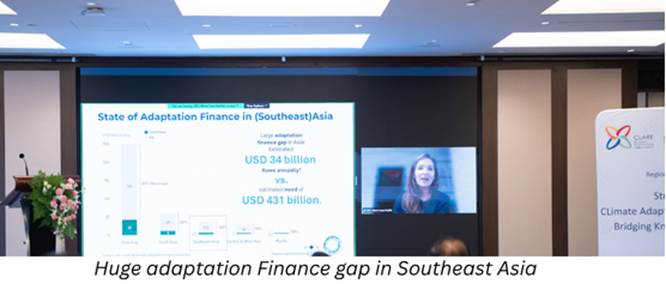
Many cities across the region are increasingly capable of identifying climate vulnerabilities and developing adaptation priorities. However, translating these priorities into financially viable and implementable projects remains a persistent challenge. Effective adaptation financing depends on a range of enabling conditions, including project preparation systems, technical capacity, governance coordination, and institutional readiness. Adaptation finance cannot be understood solely as a question of capital availability, as implementation outcomes are equally influenced by governance structures, fiscal decentralization, and institutional readiness at the city level.
Financial systems, institutional arrangements, and governance structures continue to shape adaptation outcomes across ASEAN cities. While cities are expected to respond to risks associated with urban heat, flooding, ecological degradation, infrastructure disruption, and public health impacts, many local governments continue to operate with limited fiscal autonomy and weak authority over financing decisions. Adaptation finance frequently remains concentrated within national institutions, donor-supported programmes, and externally driven initiatives, leaving municipalities dependent on fragmented funding channels and administratively burdensome approval processes. At the same time, adaptation planning and investment systems often remain disconnected. Climate action plans, vulnerability assessments, and adaptation strategies have become increasingly common across ASEAN cities, yet many lack corresponding financing pathways and implementation mechanisms. Strengthening project preparation systems is therefore essential to translate adaptation priorities into coherent, implementable, and financially credible interventions that can attract long-term investment and support on-the-ground implementation.
The uneven capacities of cities further influence access to adaptation finance. While larger metropolitan centres may benefit from stronger institutional systems, technical expertise, and access to international development networks, many secondary and intermediary cities continue to face significant administrative, financial, and governance constraints. Local authorities frequently struggle with proposal development, feasibility assessments, financial management systems, and long-term project administration, highlighting that access to adaptation finance depends not simply on funding availability, but also on the capacity of local institutions to engage with financing systems in the first place.
Country insights revealed that financing challenges extend beyond resource availability. Across Thailand, Vietnam, Cambodia, and Lao PDR, participants noted persistent gaps between technical assessments and implementation, with adaptation projects often dependent on external funding and limited city-level financial autonomy. These constraints affect the ability of local governments to translate climate risk assessments into investment-ready adaptation programmes.
The political economy of adaptation finance is also a challenge that prioritizes broader development priorities. Funding systems tend to favour large-scale and highly visible infrastructure investments, while ecosystem restoration, community-based adaptation, social protection measures, and neighbourhood-level resilience initiatives often receive comparatively limited support. Such imbalances risk overlooking vulnerabilities associated with insecure housing, informal labour systems, ecological degradation, weak public services, and unequal access to urban infrastructure.
New financing instruments, including blended finance arrangements, municipal green bonds, public-private partnerships, and climate-related investment mechanisms, are increasingly being explored across the region. However, financial innovation alone cannot substitute for institutional reform, as it is equally shaped by governance credibility, policy continuity, inter-agency coordination, and political commitment as by access to capital itself. The long-term nature of climate adaptation presents an additional challenge for conventional financing systems. Adaptation requires sustained investment in preventative measures and resilience-building processes, yet many financing mechanisms continue to operate through short project cycles and expectations of immediate results. Many adaptation benefits, including avoided losses, reduced exposure, strengthened resilience, and improved ecological stability, often become visible only over extended periods, making them difficult to capture within traditional investment frameworks.
Questions of equity and accessibility also remain central to adaptation finance. Communities facing the greatest exposure to climate risks frequently possess the weakest access to financial protection systems, institutional support, and adaptive resources. More locally accessible financing mechanisms, including community adaptation funds, microfinance initiatives, ecosystem-service financing, local cooling infrastructure, and decentralized renewable energy financing schemes, can help support adaptation pathways that are both socially responsive and locally grounded.
Institutional fragmentation continues to present a major barrier to effective adaptation finance. Weak coordination between planning agencies, finance ministries, infrastructure authorities, environmental departments, and local governments often limits the integration of adaptation finance within broader urban governance systems. Strengthening urban resilience, therefore, requires greater alignment between local adaptation priorities, national climate strategies, financing mechanisms, and implementation frameworks, recognizing that climate finance is not simply a question of funding availability, but also of governance, institutional capacity, development priorities, and political commitment.
CLARE-ASEAN organized a Regional Workshop and Dialogue on Strengthening Urban CLimate Adaptation and REsilience in ASEAN: Bridging Knowledge-Policy-Action Gaps, 12–13 May 2026, at Crowne Plaza Bangkok Lumpini Park.
Categories
CLARE Pillars
CLARE Themes
CLARE Topics
Published
CLARE Projects
CLARE Partners