


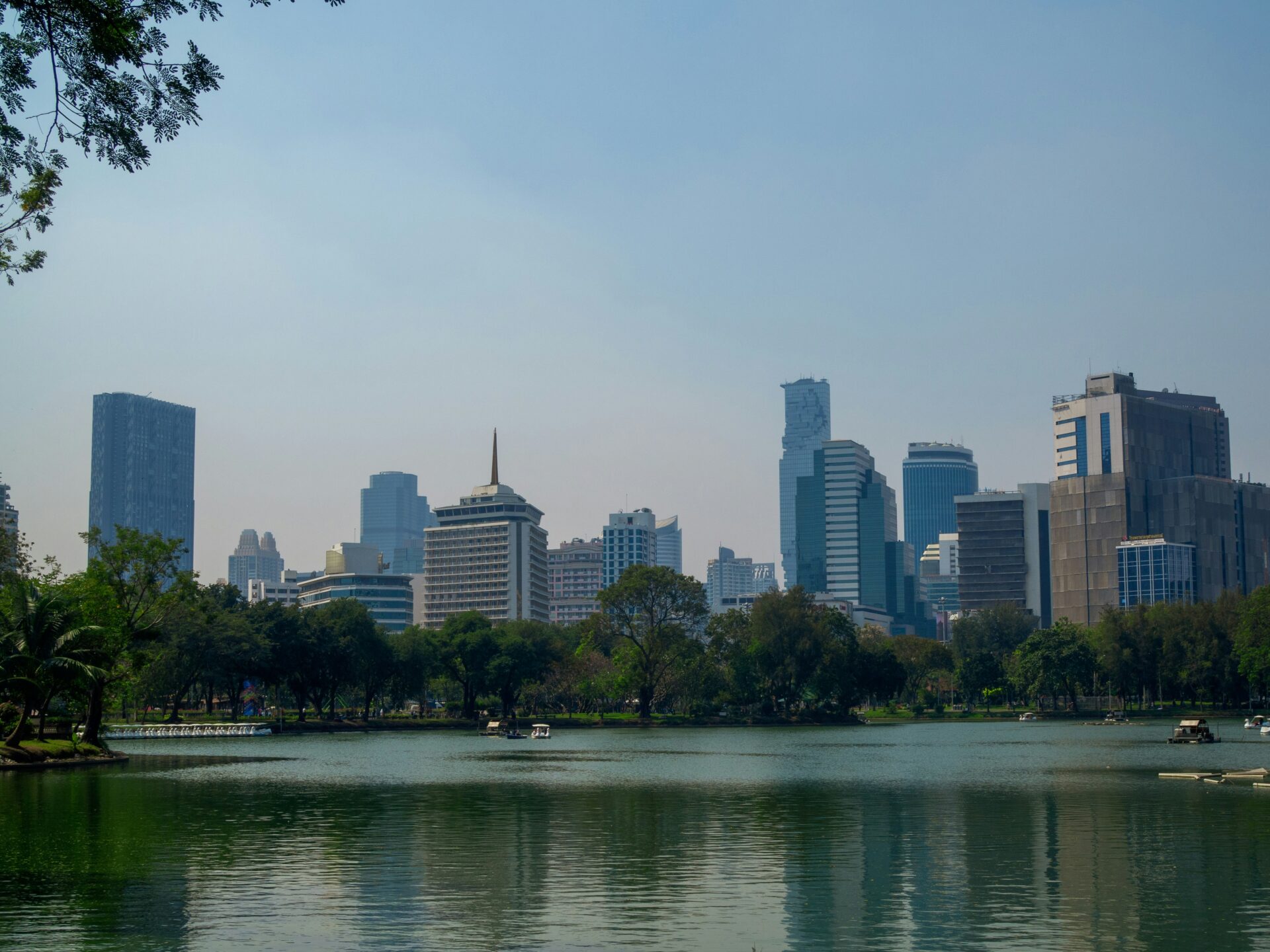
Nature-Based Solutions (NbS) for Strengthening Urban Climate Adaptation and Resilience: Reflections from the CLARE-ASEAN Regional Workshop
/
By Ms. Sumnima Ghimire, Dr Priya Singh, and Prof. Shobhakar Dhakal
Nature-based Solutions (NbS) are increasingly emerging as a critical component of urban climate adaptation and resilience across ASEAN cities. As climate risks intensify alongside rapid urbanization, ecological systems can no longer be viewed as residual or aesthetic components of urban development, but rather as essential urban infrastructure that supports long-term resilience.
Across the region, rapid urban expansion, ecological degradation, and increasing climate vulnerability are placing growing pressure on cities. Expanding built environments, declining vegetation cover, fragmented drainage systems, encroachment upon wetlands and water bodies, and poorly regulated peri-urban growth are contributing simultaneously to rising heat exposure, flooding risks, ecological stress, and infrastructural instability. Within this context, conventional infrastructure-led adaptation approaches are proving increasingly inadequate in responding to the scale and interconnected nature of urban climate risks.
NbS offer opportunities to address multiple dimensions of urban risk simultaneously. Wetlands, mangrove systems, urban forests, blue-green corridors, permeable landscapes, and ecosystem-sensitive urban design can support flood regulation, reduce heat stress, improve environmental quality, strengthen biodiversity, and enhance broader urban liveability. Rather than being treated as symbolic greening initiatives or decorative additions to infrastructure, NbS should be increasingly recognized as long-term resilience investments capable of generating environmental, social, and economic co-benefits.
Context-sensitive and place-based approaches remain central to the effective implementation of NbS. Ecosystem-based interventions align most effectively when designed in relation to local ecological conditions, hydrological systems, settlement patterns, and community needs. Urban wetland restoration, mangrove rehabilitation, urban greening initiatives, watershed protection, and flood-sensitive ecological planning illustrate different forms of NbS across ASEAN cities. Ecological systems cannot be approached through standardized templates alone, given the diversity of urban forms, governance structures, and environmental conditions across the region.
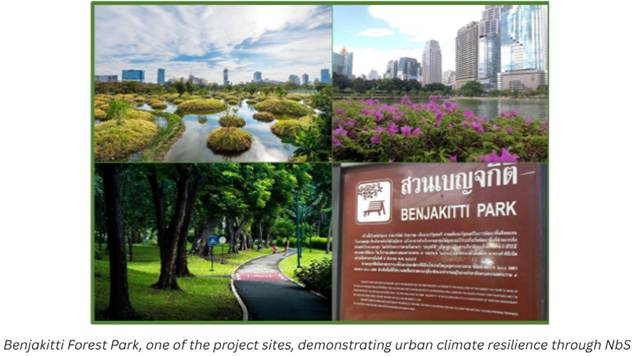
Country experiences further illustrate how ecosystem-based interventions are being applied across diverse urban and ecological contexts across ASEAN. In Bangkok, Benjakitti Forest Park illustrated how green and blue infrastructure can support flood regulation and urban cooling, while wetland systems in Ho Chi Minh City and That Luang Marsh in Vientiane highlighted the role of ecological systems in water management and urban resilience. In Indonesia, mangrove ecosystems were identified as critical buffers against coastal flooding and erosion, underscoring the multiple benefits that ecological restoration can provide.
Despite their potential, the implementation of NbS remains shaped by institutional and governance challenges. Across many cities, NbS continue to be applied unevenly and are often confined to fragmented pilot projects or demonstration initiatives. Urban planning systems continue to prioritize conventional grey infrastructure, even where ecosystem-based approaches show long-term benefits.
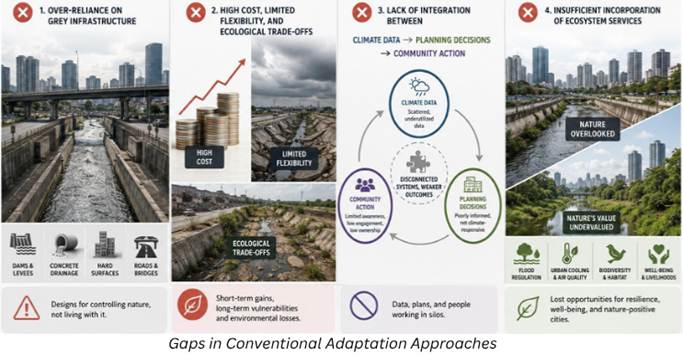
The limitations of conventional adaptation approaches are often overlooked, and ecological systems continue to be treated as supplementary environmental elements rather than integral components of urban resilience planning, limiting their integration into mainstream urban development. Coordination gaps also persist across planning departments, environmental agencies, water authorities, infrastructure ministries, transport systems, housing institutions, and local governments. Ecological interventions remain vulnerable to competing land-use priorities, speculative urban expansion, and development pressures favouring short-term infrastructure growth. Without integration into master plans, zoning regulations, infrastructure frameworks, and municipal budgeting systems, NbS risk remaining peripheral to urban development processes.
On the other hand, financing and long-term sustainability of NbS remain key constraints. NbS often face expectations of immediate measurable outcomes, despite the benefits that unfold over longer time horizons. This has increased the importance of stronger evidence systems that capture climatic, social, ecological, and economic benefits. Cost-benefit analysis, ecosystem-service valuation, climate-risk modelling, and localized environmental monitoring provide important tools for strengthening investment and policy support for NbS implementation. At the same time, overly technocratic approaches risk detaching NbS from local realities. Everyday practices of use, maintenance, stewardship, and community engagement remain central to their effectiveness. Scientific assessment combined with local ecological knowledge, participatory governance, and sustained community involvement can strengthen outcomes, particularly where institutional trust and accountability are limited.
Questions of inequality and socio-spatial exclusion remain central to shaping NbS in urban spaces. Ecological upgrading can generate uneven benefits and, in some cases, contribute to rising land values and displacement pressures. Green infrastructure and ecological amenities are often concentrated in wealthier districts, while informal settlements, low-income neighbourhoods, and peri-urban areas remain underserved and more exposed to environmental risks.
Examples across ASEAN cities demonstrate both the potential and constraints of NbS implementation. Urban wetlands functioning as flood buffers, mangrove restoration supporting coastal protection and livelihoods, urban forests reducing thermal stress, and watershed management strengthening resilience demonstrate the role of NbS in practice. Their long-term success depends on sustained maintenance systems, institutional continuity, regulatory enforcement, and financing mechanisms that support long-term stewardship rather than short-term project cycles.
As ASEAN cities continue to evolve, NbS emerge as integral components of urban adaptation and resilience planning. The resilience of ASEAN cities depends not only upon engineering responses and technological systems, but also on their capacity to protect, restore, govern, and sustain ecological systems within rapidly transforming urban environments.
CLARE-ASEAN organized a Regional Workshop and Dialogue on Strengthening Urban CLimate Adaptation and REsilience in ASEAN: Bridging Knowledge-Policy-Action Gaps, 12–13 May 2026, at Crowne Plaza Bangkok Lumpini Park.
Categories
Countries
CLARE Pillars
CLARE Themes
CLARE Topics
Published
CLARE Projects
CLARE Partners