

Lusaka Declaration synthesizes collective evidence from CLARExchange 2025 on climate resilience in informal settlements
/
The newly published ‘Lusaka Evidence-to-Action Declaration’ brings together key insights and recommendations from the CLARExchange Forum 2025 to support climate resilience in informal settlements. The Lusaka Declaration calls for immediate action to move from evidence to impact, laying out recommendations to enable climate resilience in Africa and the entire global South.
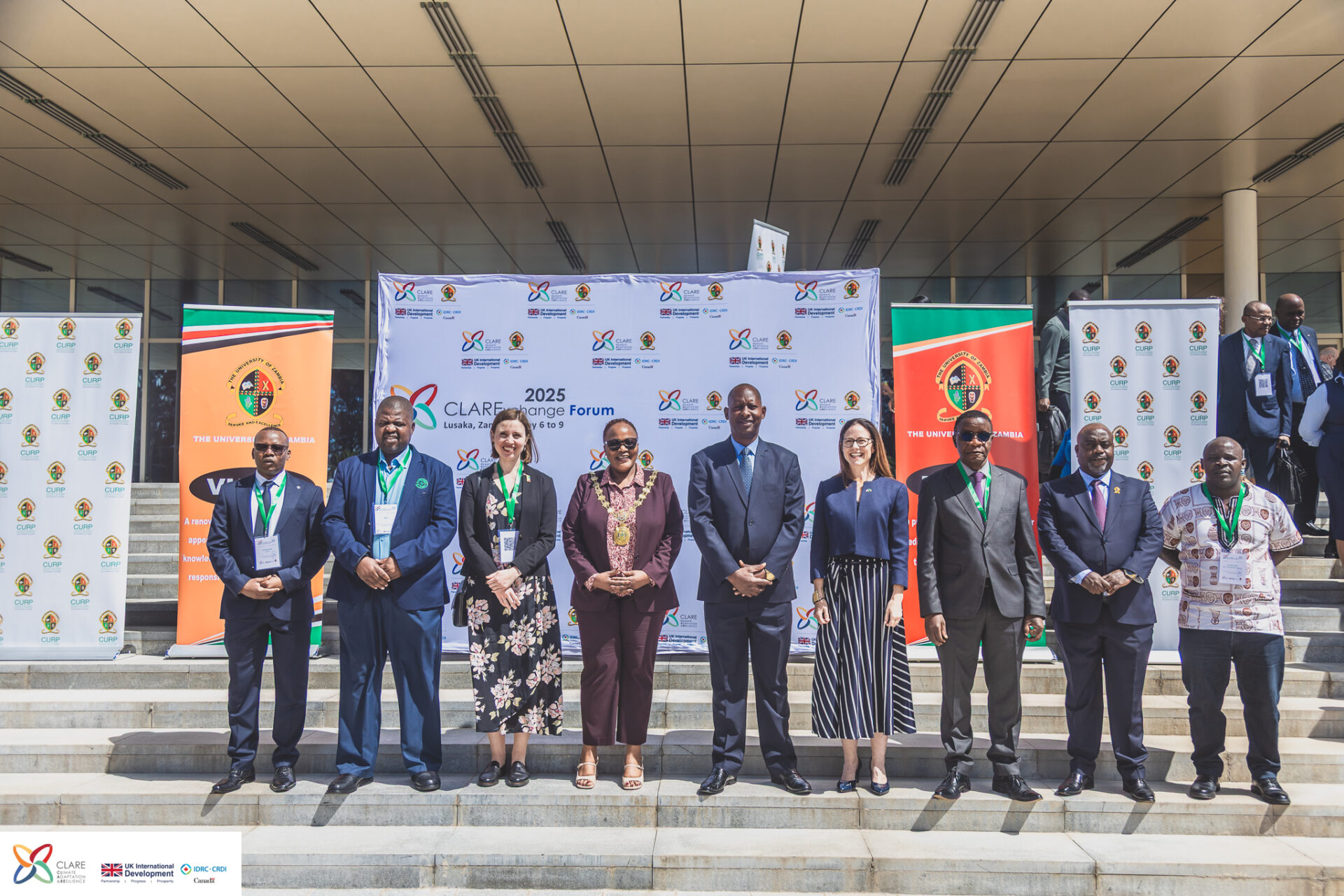
The CLARExchange Forum 2025 took place from 6 to 9 May 2025, bringing together more than 180 members of the CLARE global community for their first in-person gathering. Held in Lusaka, Zambia, CLARExchange was co-hosted by the UK’s Foreign, Commonwealth and Development Office and Canada’s International Development Research Centre together with the University of Zambia.
Led by the University of Zambia, the Lusaka Declaration brings together collective evidence and synthesis from CLARExchange sessions to affirm the pressing need to strengthen resilience in informal settlements and outline actionable recommendations for doing so. The Declaration represents the CLARE community convened at CLARExchange 2025, composed of researchers, policymakers, community leaders, practitioners, women, and youth from over 35 countries.
The Lusaka Declaration responds to a call by the CLARExchange Forum 2025’s guest of honour, Hakainde Hichelema, the President of the Republic of Zambia, who was represented by Zambia’s Minister of Green Economy and Environment. The President called for a rapid transition from evidence to action and for increased Southern leadership and investment in climate action.
Residents in informal settlements live in a constant state of ‘living extremes’
The Lusaka Declaration affirms the shared commitment of the CLARE community to resilience for those living and working in informal settlements who face disproportionate climate risks that impact health, livelihoods, food security, economies, and jobs. Informal settlements face some of the most devastating impacts of climate shocks, especially in Africa and Asia.
The CLARExchange Forum 2025 highlighted collective work being carried out across the CLARE portfolio to support sustainable and inclusive climate resilience in informal settlements. Several CLARE projects, including CoHeRe, INACCT Resilience, MECHANICS, PALM-TREEs, RURBANISE, Tuwe Pamoja, and Urban TRACS, are working with residents of informal settlements to co-create effective and insightful climate solutions.
Residents of informal settlements stand at the frontlines of intensifying climate impacts. The Lusaka Declaration grounds its calls for action in evidence of the crisis facing informal settlements, which shows that residents live in a constant state of ‘living extremes’. The Declaration describes the elements of this crisis, from compounded vulnerabilities to wide-reaching socio-economic impacts, and identifies foundational features for transforming climate research into impactful action.
Calls to action and strategic commitments for strengthening resilience in informal settlements
The Lusaka Declaration lays out the call to action to strengthen the resilience of residents of informal settlements. It calls to:
- Mobilise and support community-led and locally grounded innovation
- Strengthen inclusive multi-hazard early warning systems (MHEWS)
- Redefine masculinity and gender roles
- Bridge the institutional and financing gap
- Enable strategic communication and storytelling
The Declaration also charts a pathway for influence, outlining strategic commitments and outreach efforts to influence local- and global-level dialogues, in the aim of moving from knowing about climate risks to intentionally acting.
“By standing in solidarity with communities in informal settlements and valuing their agency, we can move from witnessing vulnerability to catalysing lasting positive change.” — Lusaka Evidence-to-Action Declaration
Read the full Lusaka Declaration:
Categories
Countries
CLARE Pillars
CLARE Themes
CLARE Topics