
Story of change: Using impact-based forecasting for community-led protective action in the face of Cyclone Remal
Published on
Authored by the SURF-IT project team
CLARE Stories of Change are snapshots of how research and capacity strengthening initiatives that the programme supports are contributing to specific changes on the ground in support of resilience to climate change and natural hazards. They help illustrate how CLARE is enabling socially inclusive and sustainable climate resilience, as outlined in the CLARE Theory of Change.
What changed?
Communities in Southwest coastal regions of Bangladesh affected by Cyclone Remal in May 2024 were able to take protective action at two weak embankment points thanks to ongoing work by the SURF-IT project. The project team was able to predict and engage communities around potential embankment breach points in advance of the cyclone’s landfall. The actions taken by the community were informed by a localized, impact-based forecasting system being developed by the SURF-IT project and leveraging hydrological data from the Bangladesh Water Development Board (BWDB). If left unaddressed, these breach points could have resulted in substantial losses to lives and property.
Through this collaborative effort, the community successfully reinforced vulnerable sections of the embankment, preventing breaches and safeguarding their assets. As a result, around 200 households benefited directly from this initiative, significantly reducing the potential damage and loss that could have occurred during the cyclone.
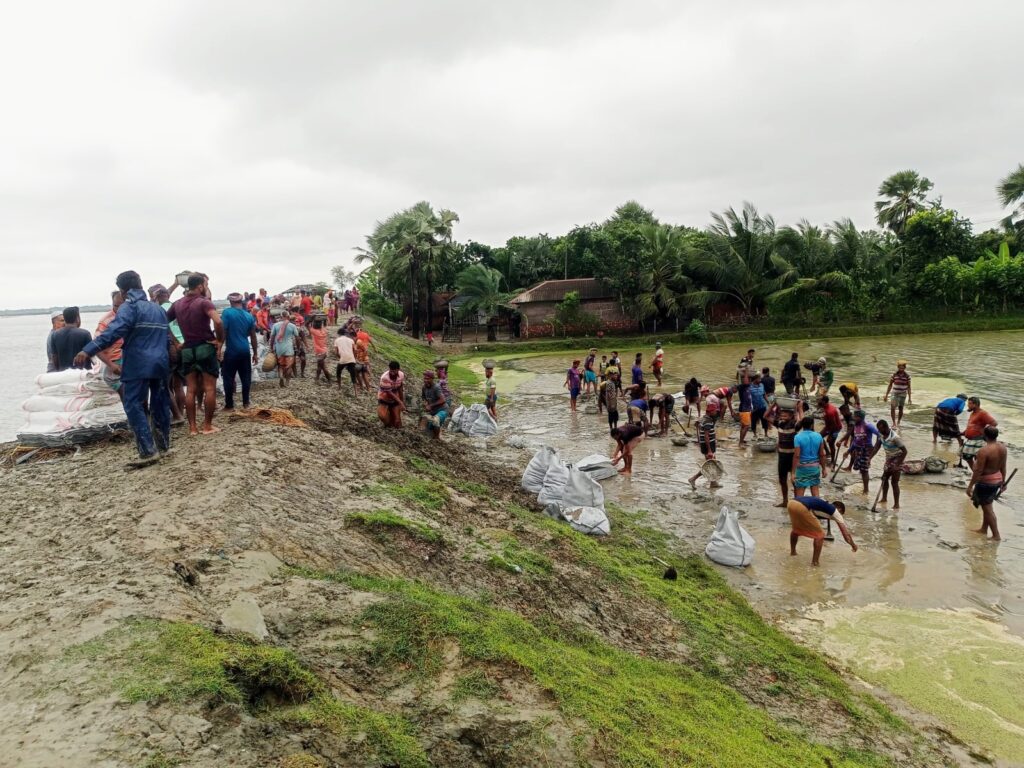
Photo credit: SURF-IT project team
Why does it matter?
Bangladesh faces an average of five cyclones annually, with at least one or two making landfall, bringing devastating storm surges. The landfall of Cyclone Remal was one instance that underscored the urgent need for effective storm surge forecasting and early action in Bangladesh’s coastal regions. Cyclone Remal affected approximately 4.6 million people across 19 districts, leading to 16 fatalities and extensive damage to homes, agricultural land, and sanitation infrastructure. This disaster served as a stark reminder of the dangers posed by storm surges, bringing renewed attention to the critical work being done by the SURF-IT project. The project’s efforts to develop AI-driven surge forecasting and community-based early warning systems are not only timely but essential for protecting vulnerable coastal populations.
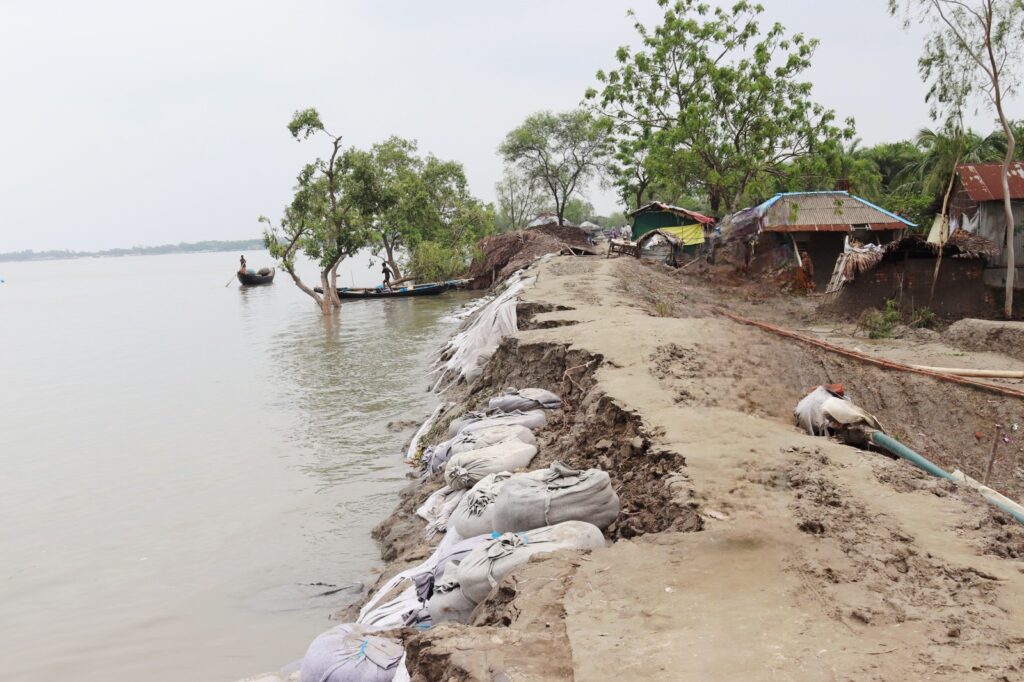
Photo credit: SURF-IT project team
What did CLARE do to contribute?
SURF-IT developed the model that, while still in development, enabled this successful response to Cyclone Remal. The response not only bolstered community resilience but also validated the AI model and forecast development tools that the team is developing, strengthening the research team’s confidence in their effectiveness.
Given that the SURF-IT project area is highly vulnerable to frequent cyclones and tidal surges, the knowledge and tools developed by the project have the potential for broader application. The success of the early warning and embankment reinforcement efforts during Cyclone Remal highlights the scalability of these interventions. The lessons learned from this event can be applied to other coastal regions, ensuring that similar strategies are implemented to mitigate future risks.
By continuing to refine the AI-driven forecasting models and engaging communities in disaster preparedness, the SURF-IT project aims to provide coastal populations with the tools and knowledge they need to protect themselves from the growing impacts of climate change. The long-term goal is to ensure that these innovations not only benefit the current project areas but are integrated into national disaster preparedness strategies to protect even more communities across Bangladesh.
Learn more:
- Blog- AI-Driven Surge Prediction: Safeguarding Bangladesh’s Coastal Communities
- Blog – Assessing the Impact of Tidal Surges on Rural Households: Findings from a Baseline Study
- Blog – Community-Led Embankment Management in Coastal Bangladesh
About SURF-IT
SURF-IT aims to support the development of impact-based forecasts of water surge levels in selected inland tidal estuaries of Southwest coastal regions of Bangladesh, with the option of scaling it nation-wide. Those forecasts promise to significantly improve the existing Early Action Protocols to reduce the impact of the surge on coastal people, especially on women and vulnerable groups, benefitting more than half a million people by the end of the project.
Categories
Countries
CLARE Projects
CLARE Pillars
CLARE Themes
CLARE Topics
CLARE Partners