
Story of Change: From local evidence to global action – SUCCESS research informs climate displacement planning across the Climate Vulnerable Forum
Published on
Authored by Tasneem Siddiqui, Mohammad Rashed Alam Bhuiyan, Ekhtekharul Islam and Mahmudol Hasan Rocky
What changed?
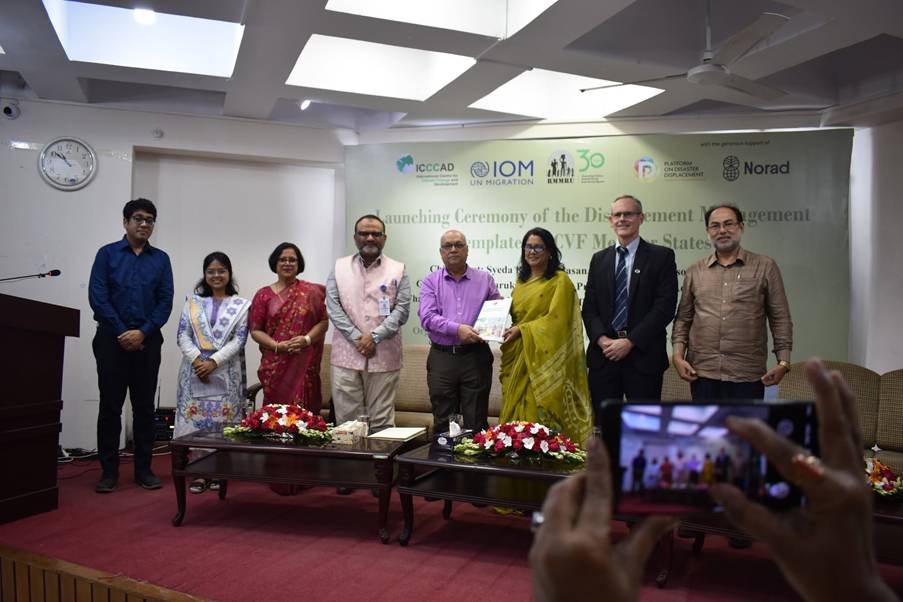
The SUCCESS project is influencing how some of the world’s most climate-vulnerable countries prepare for internal displacement. The Climate Vulnerable Forum (CVF), a partnership of 74 countries disproportionately affected by climate change, has committed to using a planning template for managing climate-related internal displacement developed by the Refugee and Migratory Movements Research Unit (RMMRU), a SUCCESS project partner, building on prior experience working with the Government of Bangladesh on its national strategy for displacement management.
The template encourages a rights-based approach for CVF countries to manage internal displacement, considering three phases:
- Prevention: Reducing risk before displacement occurs, for example by improving early warning systems, mapping displacement hotspots; promoting livelihood resilience and disaster-resistant crops;
- Protection During Displacement: Focuses on upholding human rights and dignity for displaced persons, for example by delivering emergency relief and basic services, establishing clear legal frameworks for safeguards, and guaranteeing access to safe employment and income generation;
- Durable Solutions: Securing long-term stability, for example by facilitating safe voluntary return, supporting local integration in host communities, and implementing well planned relocations.
The template is designed to be adaptable to different national contexts, offering flexible guiding questions so individual governments can tailor policies to their unique geographic, social, and economic realities. Inclusion is also strongly considered, as the template emphasises a bottom-up, consultative process to develop national frameworks in a way that ensures the active participation of displaced populations and accounts for considerations of differential vulnerability related to age, gender, and disability.
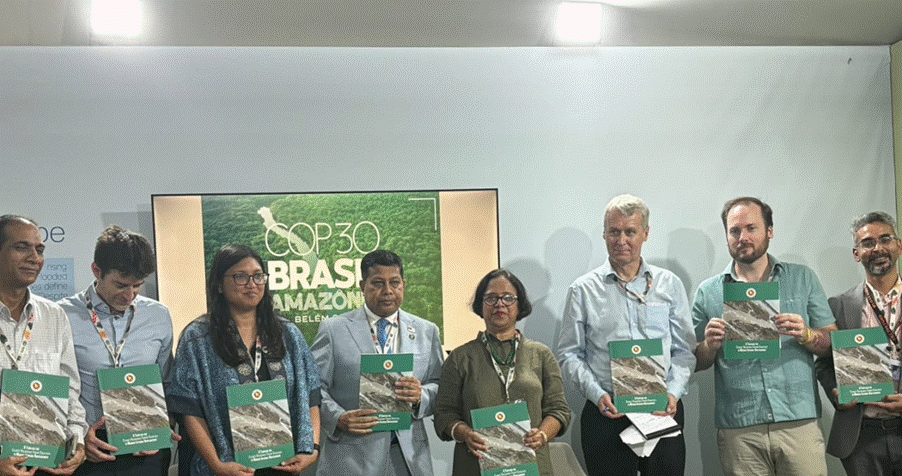
The Director General of the CVF has committed to working with the template to support member countries in developing their own national approaches to managing internal displacement under a changing climate. The official handover of the template by the Government of Bangladesh and RMMRU to the CVF took place at a COP30 side event in November 2025, marking an important step towards wider uptake across CVF member countries. At this early stage, some countries have already begun to take steps towards working with local populations to address parts of the phases specified above, for example using the guiding questions to inform mapping of regional displacement hot spots.
Displacement is not just Bangladesh’s problem – all […] member countries of the Climate Vulnerable Forum are dealing with displacement issues in one way or another. Indeed, ensuring adaptation for displaced populations is the single greatest challenge of climate change. It will be a tremendous honour for us if other countries follow Bangladesh’s model (created based on Bangladesh’s national strategy for displacement management) and undertake their own displacement management programs.
– Syeda Rizwana Hasan, former advisor for the Ministry of Environment, Forest and Climate Change, Bangladesh
Why does it matter?
Climate-related internal displacement is already affecting millions of people and is expected to increase as climate impacts intensify. The World Bank estimates that up to 216 million people could become internal climate migrants by 2050, highlighting the need for governments to move beyond responding to displacement after it occurs and instead plan for it before climate impacts force people from their homes.
In contexts where populations choose to migrate to reduce their exposure to climate risk, migration can be an adaptation strategy. In other contexts, climate-related stressors can force populations to move abruptly or leave them unable to relocate despite growing climate risks; in these cases, their choice to migrate is limited or non-existent, which often leads to precarious conditions. Strengthening planning for climate-related displacement is therefore critical to supporting populations vulnerable to climate change impacts.
The planning template developed through SUCCESS has the potential to help countries take a more proactive and rights-based approach to managing climate-related internal displacement. If adopted by CVF member states, the template would provide a practical tool for governments to strengthen planning for climate-related internal displacement and support efforts to protect the adaptive capacity of internal migrants.
More broadly, this milestone demonstrates how evidence generated through locally grounded research can inform policy and practice beyond national borders. What began as research in Bangladesh now has the potential to support adaptation planning across a large coalition of climate-vulnerable countries.
What did CLARE do to contribute?
The CVF specifically requested that RMRRU develop the template for use by its member states based on RMMRU’s recognized expertise and legacy of related work with the Government of Bangladesh. RMMRU had previously contributed to Bangladesh’s pioneering national strategy for displacement management and subsequent action plan on climate-induced displacement under a prior project on climate justice. RMMRU’s work with SUCCESS provided an opportunity to build on this experience and draw on additional evidence and lessons generated through the project, scaling the work in Bangladesh to inform policy and action across the CVF.
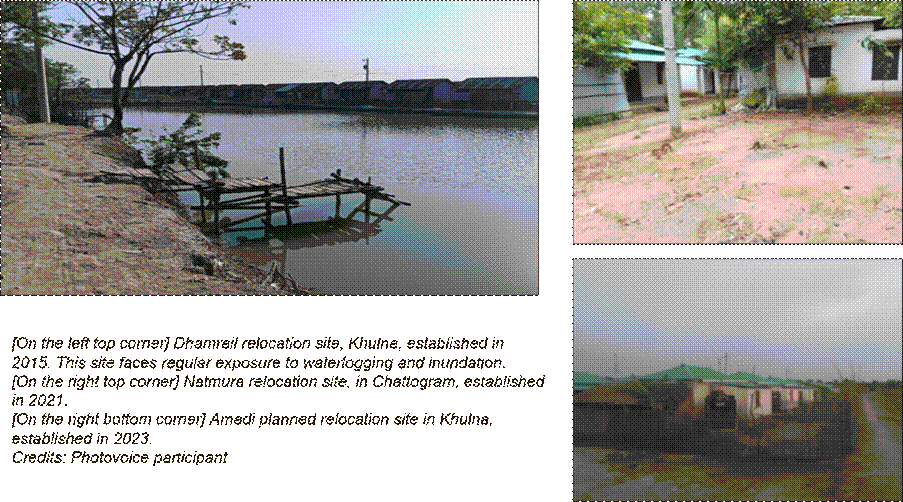
To inform this work, the SUCCESS team drew on evidence it generated on climate-induced planned relocation interventions across Bangladesh as well as in Bhutan, Nepal, and in collaboration with the related CLARE CLAPS project, in India. The work focused on understanding the decision-making logics behind relocation programmes and their impacts on community wellbeing, precarity, and adaptive capacity. Through extensive fieldwork including in-depth interviews, group discussions, and photovoice methodology, the research provides critical insights into how planned relocation functions as a climate adaptation strategy in practice, which the team leveraged to inform work on the template.
RMMRU used this evidence to work in close collaboration with an International Advisory Committee with representation from academia, policymakers, development agencies, and human rights organizations, who helped shape the template into something they would be willing and able to apply in their efforts to develop national approaches to managing climate-related internal displacement.
This contribution exemplifies CLARE’s emphasis on research for impact, as it supports research that not only advances knowledge but also uses emergent evidence on an ongoing basis to equip decision-makers with practical tools to strengthen climate adaptation. By working directly with decision-makers and other key stakeholders, adapting existing approaches to meet their needs, and seizing on emergent opportunities to translate research findings into a practical planning resource, SUCCESS has created new opportunities for locally led research to inform climate adaptation planning at regional and global levels.
RMMRU is planning further dissemination of this template in collaboration with the CLARE programme through regional workshops and webinars targeted at government officials, development agencies, human rights organizations, academia, and civil society organizations for CVF countries. RMMRU also plans to create a digital feedback platform to ensure a continuous dialogue between RMMRU and the implementing countries.
About SUCCESS
SUCCESS seeks to generate new knowledge on the evaluation of adaptations that involve migration, mobility and immobility and to promote evidence-based narratives on the role of migration in the challenge of adapting to climate risks.
Learn more:
- Framework launched for CVF countries to tackle climate-induced displacement (The Dhaka Tribune, 23 June 2025)
- RMMRU unveils displacement framework for climate vulnerable countries (The Daily Star, 23 June 2025)
- Supporting adaptation related to migrant populations (brief)
Categories
Countries
CLARE Projects
CLARE Pillars
CLARE Themes
CLARE Topics
CLARE Partners