

Story of change: From forecasts to action – strengthening local capacity for inclusive climate adaptation in Uganda
Published on
Authored by Florence Kyoheirwe Muhanguzi, Susan Namirembe Kavuma and Ezra Joab Agaba of the WOSFER project team and the Southern Hemisphere evaluation team
CLARE Stories of Change are snapshots of how research and capacity strengthening initiatives that the programme supports are contributing to specific changes on the ground in support of resilience to climate change and natural hazards. They help illustrate how CLARE is enabling socially inclusive and sustainable climate resilience, as outlined in the CLARE Theory of Change.
What changed?
The WOSFER project has contributed to strengthening the agency of community members in Uganda’s cattle corridor to use climate information to support socially inclusive adaptation. Through WOSFER, local stakeholders in Lyantonde and Katakwi districts have become better equipped to translate climate information into practical action and support adaptation within their communities. These local stakeholders include agricultural officers and community development officers, who are translating and applying climate information in local advisory practice; digital champions and community mentors, who are supporting women farmers in using new knowledge and adopting new practices; as well as women smallholder farmers and their spouses, who are applying new information and tools in household and farm decisions.
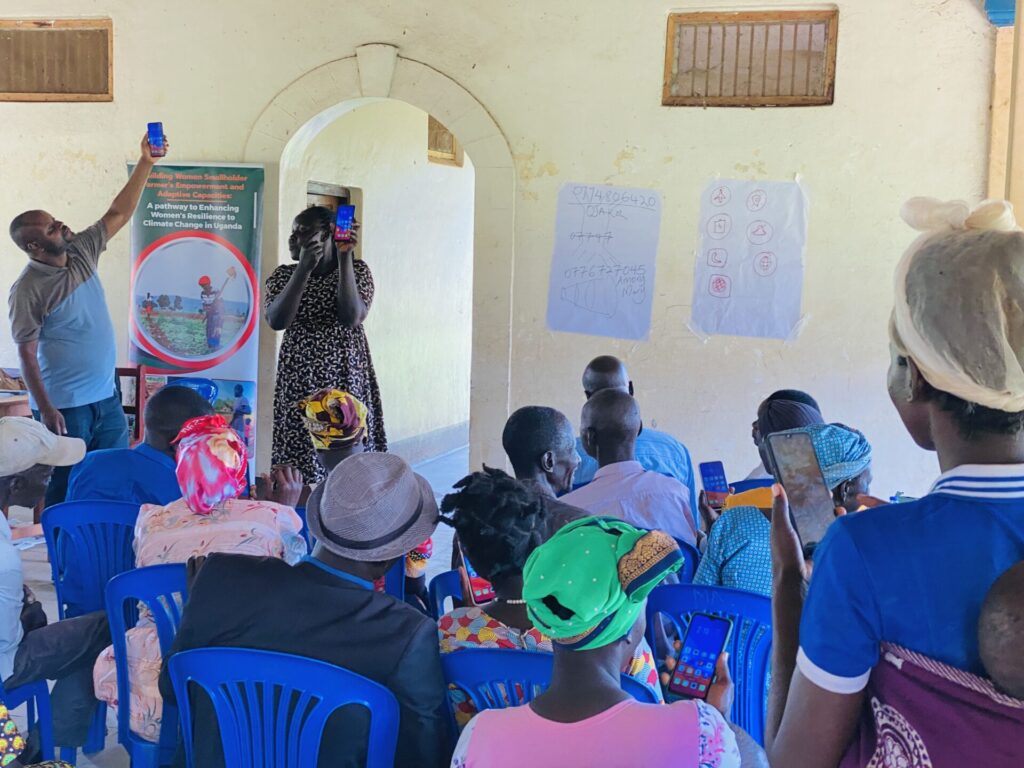
Photo credit: WOSFER project team
Since participating in the WOSFER project, women farmers have improved climate resilient agricultural practices through earlier planting, improved water and soil conservation, better communication with agricultural officers, increased confidence and joint decision-making in the household. Their spouses have also benefited from these measures, as well as reduced conflict and improved household harmony. Meanwhile, local development officers have benefitted through new advisory routines and closer relationships with community members using the information they offer.
“Before the project, I was not involved in decision making. For example, the husband would just sell a goat without telling me anything or informing me… But now we sit first, discuss, and agree on the best option.”
– a woman engaged in WOSFER, interviewed by the Southern Hemisphere evaluation team
Why does it matter?
Climate change threatens the livelihoods and food security of households that depend on smallholder agriculture in Uganda’s cattle corridor. While all smallholder farmers in the region are highly exposed to the negative impacts of drought, flooding, pests, and diseases, women farmers also face gendered issues such as unequal control over land, lack of access to technology and income, limited mobility, and lack of input in household decision-making. In its baseline study, WOSFER documented low women’s empowerment and decision-making capacity in both Katakwi and Lyantonde, low food security, high incidence and impact of drought, and low overall resilience – in short, women had limited or no strategies to protect themselves and their families from climate shocks. WOSFER contributions to the changes in agency described above have potential to help address this gap, demonstrating that gender-transformative approaches and intentional integration of capacity strengthening for intended research users can lead towards socially inclusive climate change adaptation.
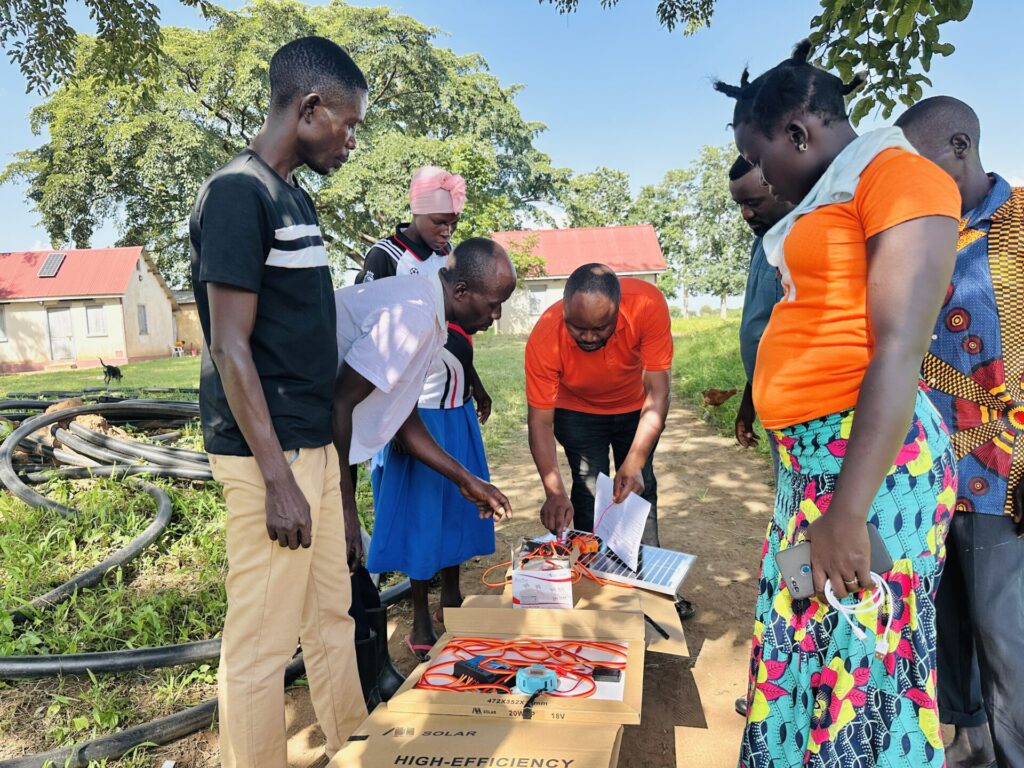
Photo credit: WOSFER project team
What did CLARE do to contribute?
WOSFER co-developed a digital platform for storing and disseminating weather information with local practitioners and community members, while simultaneously offering broader capacity strengthening on how to use the platform and providing the smart phones and solar charging kits that local women would need to use it. The project also provided women smallholder farmers and their spouses with training in gender transformative participatory empowerment, digital technology, and climate smart agriculture.
Complementarily, WOSFER trained community actors including agricultural officers, community development officers, female digital champions, and community members on how to provide peer support and mentor households on an ongoing basis. In total, the WOSFER team trained 14 digital champions to support the farmers with their digital devices as well as 64 mentors (32 couples) to support them in using tools and guidelines produced by the project.
By combining climate information and climate-smart agriculture with household engagement, peer support, and community mentorship, the project has shown how adaptive capacity can be strengthened in ways that are both socially inclusive and locally relevant.
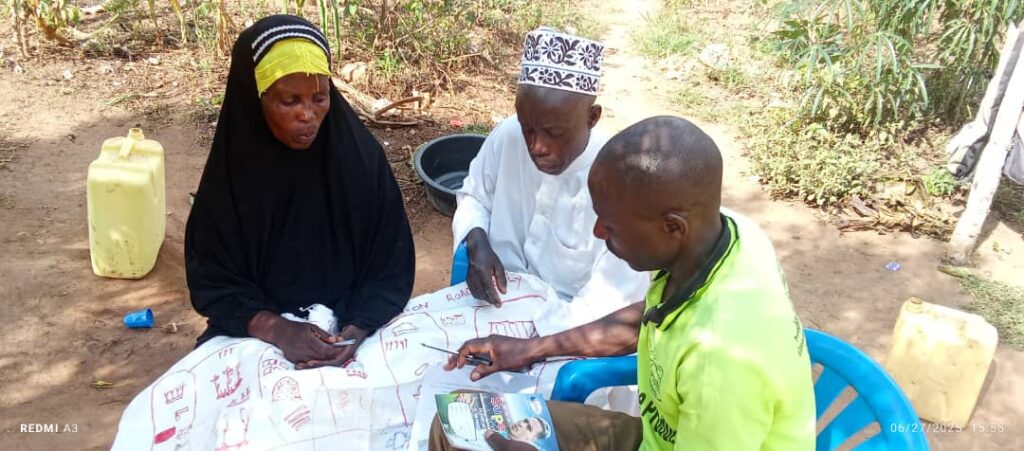
Photo credit: WOSFER project team
About WOSFER:
WOSFER seeks to strengthen the empowerment and adaptive capacity of women smallholder farmers in Uganda’s cattle corridor using gender-transformative approaches, climate-smart agriculture, accessible weather information, community engagement and policy outreach.
Learn more:
- “We now have a voice, we now have a choice:” A young woman farmer’s journey to being in charge of her own life, one click at a time | CLARE – CLimate Adaptation & REsilience
- “Even a house can’t stand if the pillars are not equal….” Promoting Transformational Change for Effective Adaptation to Climate Shocks in Uganda’s Rural Farming Communities | CLARE – CLimate Adaptation & REsilience
Categories
Countries
CLARE Projects
CLARE Pillars