
How CLARE research drives climate resilience | CLARE – CLimate Adaptation & REsilience
/
Since its launch in September 2026, the Climate Adaptation and Resilience (CLARE) programme has supported academic researchers, practitioners, policymakers, and communities to co-produce evidence and solutions that strengthen resilience to climate change.
Today, the CLARE community consists of more than 1,500 people, spanning more than 190 partner organizations working across 56 countries. So far, this community has developed and tested over 95 adaptation solutions, produced more than 270 publications, and engaged more than 21,000 people through capacity strengthening activities.
Learn more about how CLARE research drives climate resilience in this report.
How is this vast portfolio contributing to socially inclusive climate adaptation and resilience?
Drawing on stories of change in policy, practice, and capacities from across the CLARE portfolio, several common threads are becoming apparent across the programme’s contributions to supporting climate adaptation and resilience in diverse contexts.
While evidence continues to emerge as projects complete their final activities, and their influence continues to evolve, early sensemaking provides a glimpse into how CLARE as a portfolio is contributing to more effective, socially inclusive, and evidence-informed climate adaptation.
CLARE work has made key contributions in:
- Moving away from reacting to climate shocks toward anticipating and managing climate risks.
- Strengthening the social systems and processes that enable people to use technical solutions alongside the technical solutions themselves.
- Ensuring that locally generated, community knowledge informs adaptation planning, especially at local and municipal levels.
- Informing national and international decision-making to enable inclusive adaptation through policy.
- Helping ensure that adaptation policies and practices better reflect and address gender, age, disability, livelihood, and other dimensions of vulnerability.
- Investing in capacities and relationships that enable evidence to inform practice as an integral part of the research process.
Read on for a deeper exploration of how work across the CLARE portfolio has led to changes that lay the groundwork for lasting resilience.
From Crisis Response to Climate Risk Management
In part due to the increasing frequency and urgency of responding to extreme events and climate shocks, one of the earliest and clearest areas of influence of CLARE-supported work that became apparent is contributing to a shift from reacting to climate shocks toward anticipating and managing climate risks.
Governments, humanitarian agencies, and communities are increasingly using climate information and early warning innovations developed or improved through CLARE to act before disasters occur.
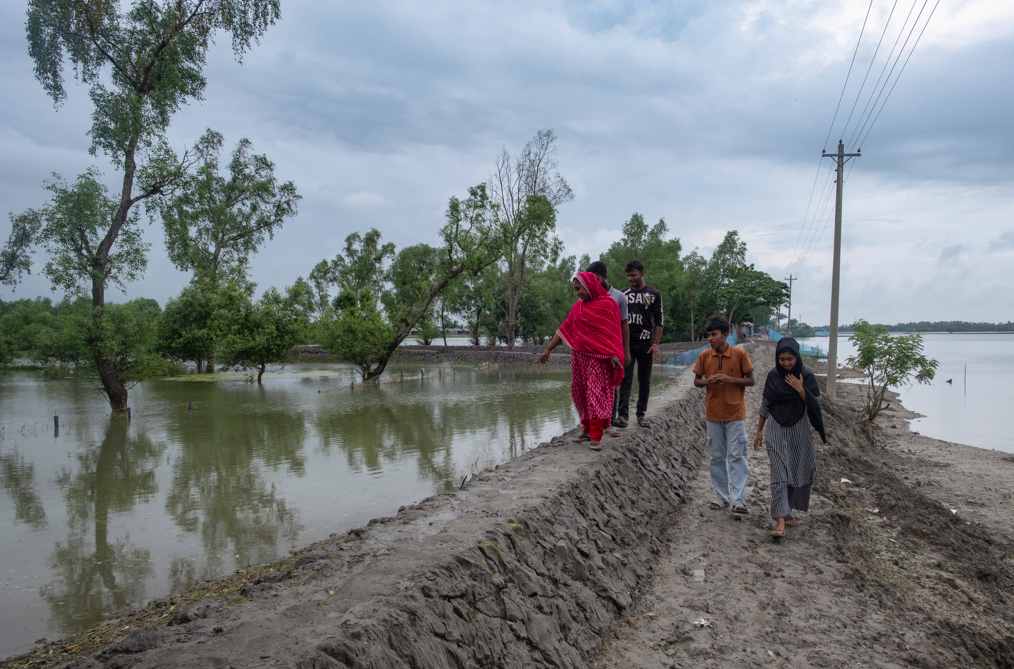
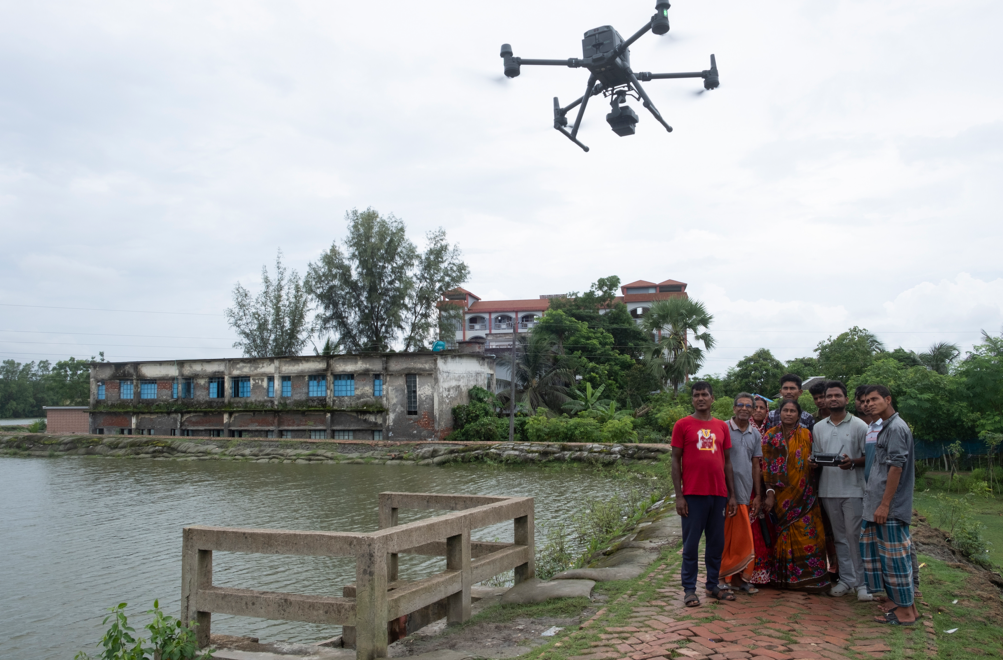
Examples include using localized impact-based forecasting systems to protect vulnerable community members and property during Cyclone Remal in Bangladesh, and the integration of anticipatory action and gender equality considerations into Kenya’s National Drought Management Manual, and use of hydrological status and flood outlook evidence by the Ministry of Water resources and Irrigation of South Sudan to issue a public early warning notice of upcoming flooding.
CLARE-supported research has also informed broader international discussions on people-centred and action-oriented early warning systems through contributions to the UN-led Early Warnings for All initiative.
Supporting Social Innovations Alongside Technical Solutions
CLARE has supported the development of technical solutions—such as hydrological models, using artificial intelligence for forecasting, and web-based tools—while also demonstrating the importance of institutionalizing evidence-informed social innovations alongside them to connect climate evidence with action.
For example, projects have supported the institutionalization of a community hydrology training curriculum within government farmer education programmes in India, the expansion of village savings and loans associations using climate information to inform savings and investment decisions in northern Ghana, and the adoption of innovative facilitation tools that help communities navigate complex climate discussions.
These examples demonstrate CLARE’s recognition that strengthening the social systems and processes that enable people to use evidence and act upon it are a critical complement to technical solutions.
Bringing Community Knowledge into Local and Municipal Decision-Making
Another strong message emerging from the portfolio is the value of locally generated knowledge in informing adaptation planning, particularly at local and municipal levels. Across numerous contexts, CLARE-supported projects have helped bring community perspectives into formal decision-making processes through approaches such as participatory mapping, vulnerability assessments, citizen-generated evidence, and co-produced planning.
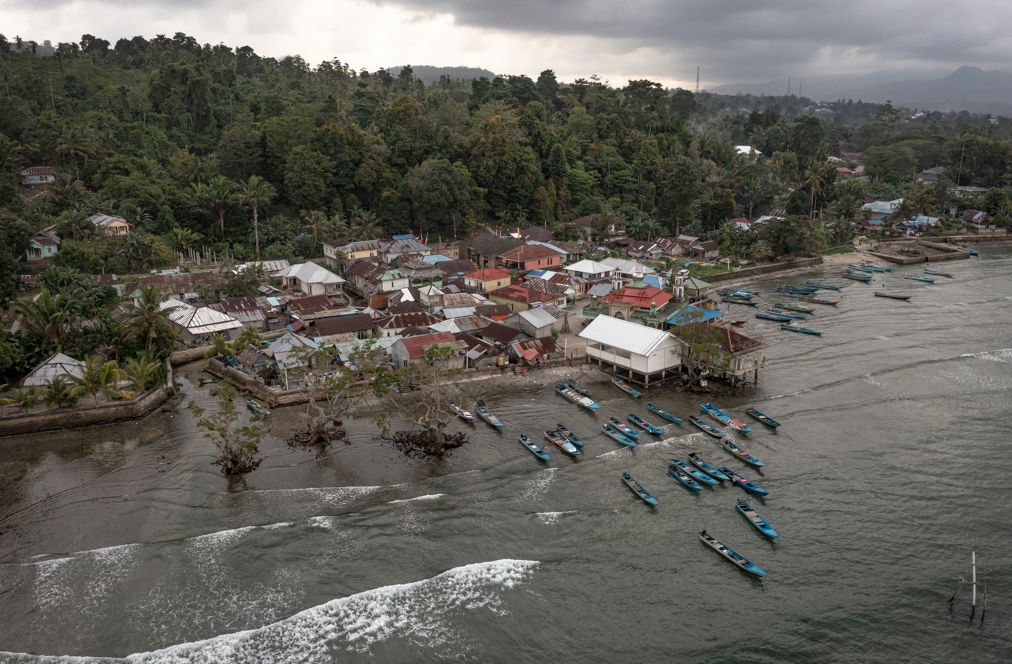
For example, in Mozambique, locally generated flood-risk information has informed urban resilience planning in the city of Beira. In Indonesia, villages are using climate vulnerability assessments to guide investments in resilience and livelihoods.
Collectively, these and other examples suggest CLARE is helping to enable movement away from purely top-down adaptation planning toward approaches that recognise lived experience and local expertise as essential sources of knowledge that strengthen socially inclusive resilience to climate change.
Influencing Consideration of Climate Adaptation in National and International Policy
CLARE-supported evidence is also contributing to policy processes at national and international levels.
At the national level, projects have informed the loss and damage chapter of Rwanda’s Nationally Determined Contribution (NDC) 3.0, and helped integrate climate-related considerations into Nepal’s National Migration Policy. Other teams are in the process of contributing evidence to national planning processes on invitation from national governments recognizing the relevance of the evidence they are producing.
At the international level, CLARE research has informed climate finance and adaptation discussions, including contributions to the first UNFCCC Global Stocktake and negotiations around the New Collective Quantified Goal on climate finance. Other projects have helped shape approaches to climate displacement planning among member states of the Climate Vulnerable Forum.
These examples demonstrate how locally grounded evidence can influence decision-making well beyond project locations.
Addressing Differential Vulnerability to Climate Change with Evidence on Gender Equality and Inclusion
Adaptation outcomes are not experienced equally. Climate risks intersect with gender, age, disability, livelihood, and other dimensions of vulnerability. Across the portfolio, evidence and capacity strengthening efforts from CLARE projects are helping ensure that adaptation policies and practices better reflect and address these differences.
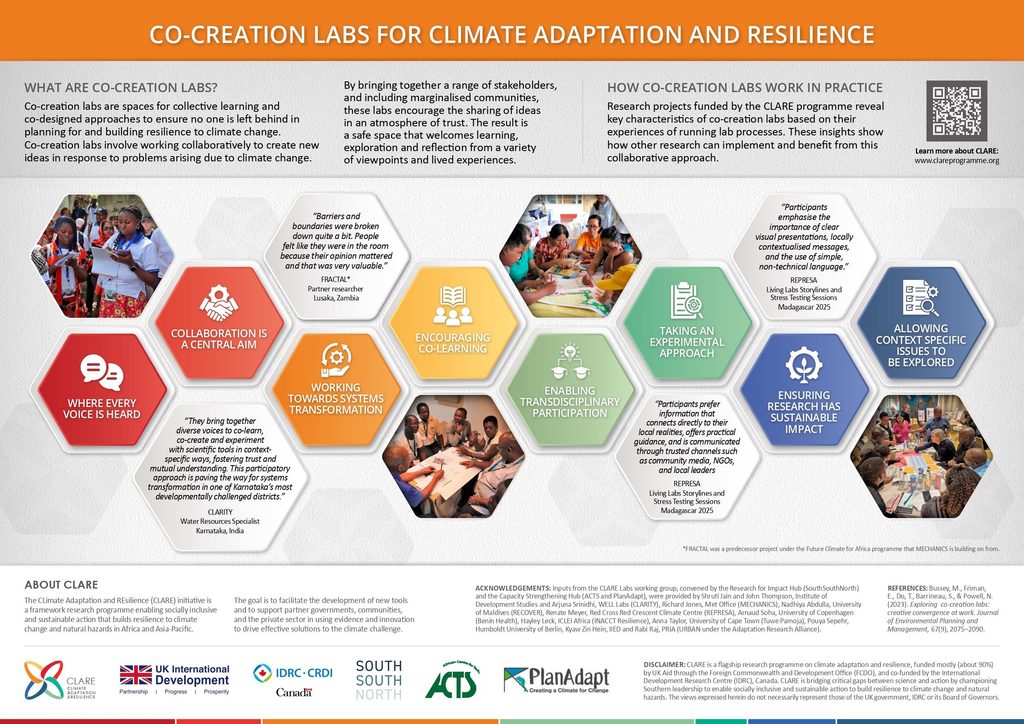
Examples include institutionalizing child-centred resilience programming in Madagascar, regional fisheries guidance informed by evidence on gendered climate vulnerabilities in the coral triangle, and strengthened decision-making and climate-resilient farming practices among women farmers in Uganda.
These outcomes reinforce the importance of designing adaptation responses that are both climate-responsive and socially inclusive.
Strengthening Capacities across the Climate Adaptation Evidence Ecosystem
From the outset, CLARE recognized that evidence is only part of the challenge. Equally important is ensuring that people and institutions have the capacity to put it into use.
Across CLARE, there is growing evidence that the programme’s focus on capacity strengthening has contributed to strengthening research teams’ capacities to co-produce research that is well positioned for use, as well as capacities of those applying the findings to act on their learning.
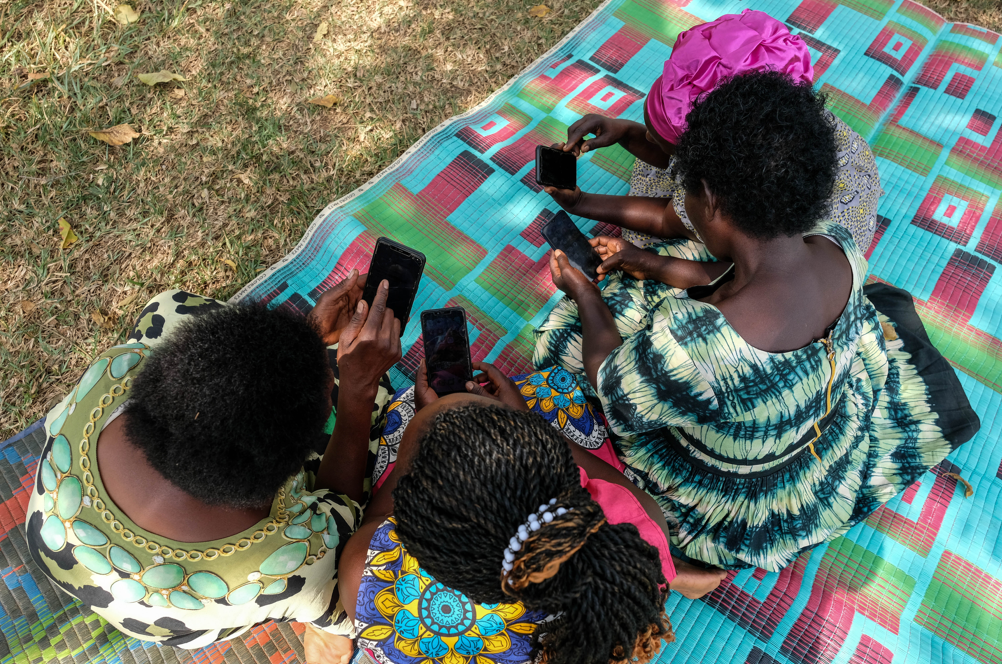
Examples include strengthened climate resilience planning within community organizations in the Philippines, more participatory climate services in Malawi, and enhanced capacity within Uganda’s central bank to incorporate climate risks into financial decision-making.
These outcomes highlight the importance of investing not only in research but also in the systems, capacities and relationships that enable research to inform practice.
Looking Ahead
These outcome areas represent an early snapshot of CLARE’s contributions to change as we understand them in 2026. As projects complete their final months of work and reporting, we look forward to learning and sharing more about the programme’s contributions to informing socially inclusive climate adaptation policy and practice.
Categories
Countries
CLARE Pillars
CLARE Themes